Driveway Sealcoating Morris, Sussex & Somerset County, NJ

Your Driveway Protected Through Every Winter
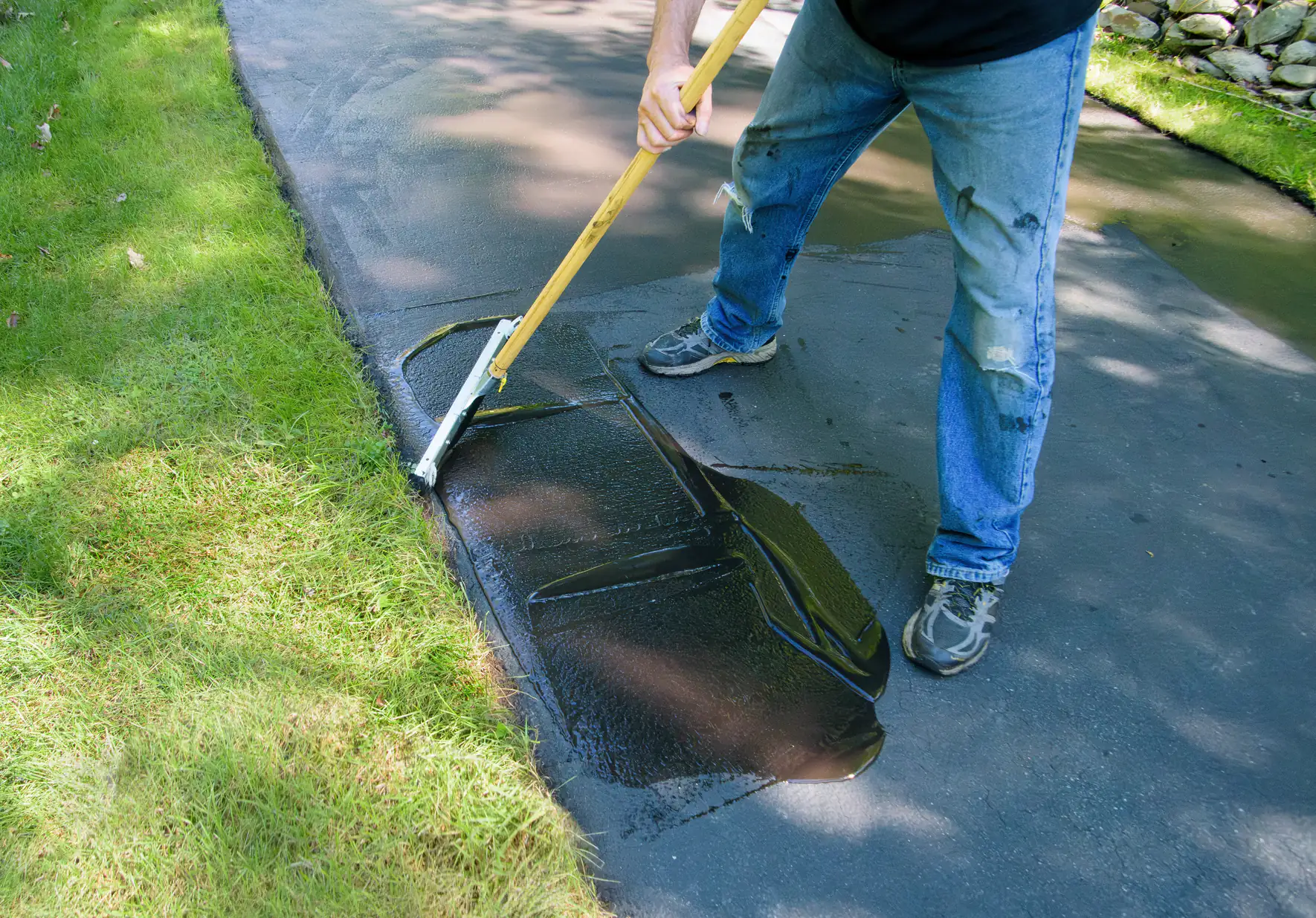
Professional sealcoating shields your asphalt from freeze-thaw damage, prevents water infiltration that voids warranties, and restores that rich black finish—without the guesswork or stress.
A person in ripped jeans uses a long-handled tool to spread black sealant on a driveway, with green grass along the edge and rocks visible in the background.

Licensed Crews Only

Our fully licensed and insured teams protect you from liability while ensuring every job meets New Jersey building codes and industry standards.

Local Climate Knowledge

We understand Morris, Sussex, and Somerset County weather patterns and apply techniques that withstand your area's specific freeze-thaw challenges.

Clear Project Communication

You'll know exactly what's happening at every stage, with realistic timelines and direct access to answers when questions come up.

Proper Preparation First

We focus on thorough surface prep, crack repair, and drainage before applying sealer—because shortcuts today mean expensive problems tomorrow.
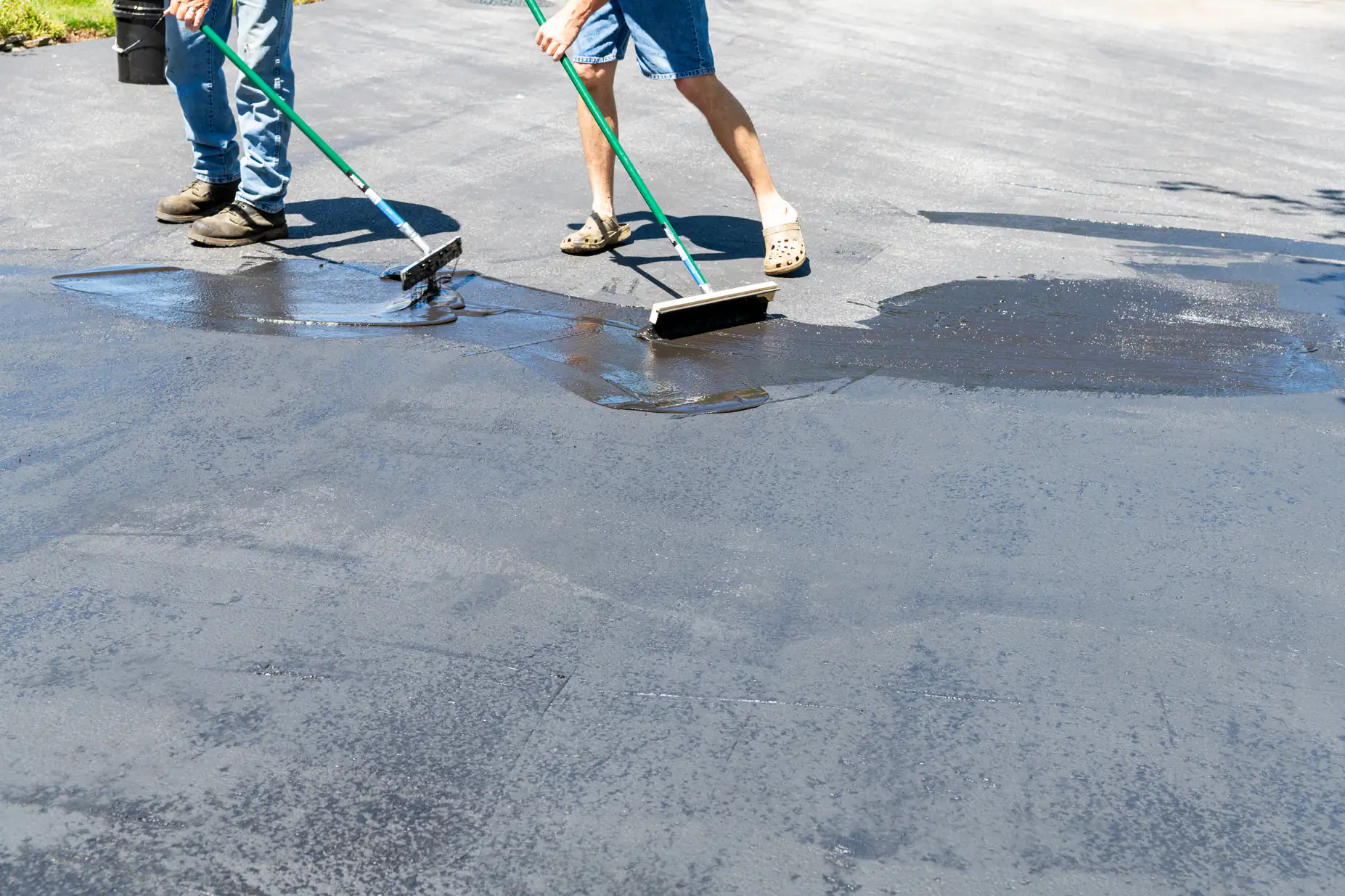
Two people wearing shorts and jeans use long-handled brushes to spread black sealant on a driveway under bright sunlight. The surface appears shiny and wet where the sealant has been applied.

Professional Asphalt Sealcoating Services Morris, Sussex & Somerset County, NJ

What Sealcoating Actually Does for Your Driveway

Driveway sealcoating creates a protective barrier over your asphalt that blocks water, resists chemicals, and slows UV damage. Think of it as weatherproofing for pavement. Without it, moisture seeps into tiny cracks, freezes during winter, and expands with enough force to turn hairline damage into structural problems. The process involves cleaning your driveway thoroughly, repairing cracks, and applying a specialized sealer that bonds to the asphalt surface. For homeowners across Morris County, Sussex County, and Somerset County, this isn’t optional maintenance—it’s how you protect a significant investment from New Jersey’s harsh seasonal cycles that cause 40% more freeze-thaw damage than central and southern parts of the state. Most paving warranties require sealcoating within 6-12 months of installation and every 2-3 years after that. Miss those windows and your coverage disappears, leaving you to cover repair costs that could have been prevented.

Hear from Our Customers

Benefits of Driveway Sealing

What You Get from Regular Sealcoating

Beyond the fresh appearance, professional driveway sealing delivers protection that saves money and extends the years you get from your asphalt.

Your paving warranty stays valid because you're meeting the required maintenance schedule that contractors build into their coverage terms.

Water can't penetrate the surface to reach your base layer, preventing the expensive structural damage that requires replacement.

Road salt and ice melt chemicals roll off instead of eating through your asphalt and accelerating winter deterioration.

That dark, uniform appearance returns instead of fading to patchy gray that makes your whole property look neglected.

Small surface cracks get filled now, before they widen into problems needing hot rubber repair or complete section replacement.

You spend $300-500 every few years instead of facing $1,500+ emergency repairs or $3-7 per square foot for full replacement.

A large white number 1 is centered on a solid black circle with a plain light gray background, symbolizing top-rated Paving Contractors in Morris, NJ and serving Sussex & Somerset County.

Share project details

Call us or get a free online quote to help us identify your project needs.

A bold white number 2 is centered inside a solid black circle on a light gray background, representing Sussex & Somerset County, NJ Paving Contractors Morris.

We'll follow up

If you requested an online quote, you can expect a callback within 24-48 hours of your request.

A large white number 3 is centered inside a solid black circle on a plain light background, representing Paving Contractors Morris, Sussex & Somerset County, NJ.

The floor is yours

Connect with an expert and share all project specifics.

A bold white number 4 is centered inside a solid black circle on a light gray background, representing Paving Contractors Morris, Sussex & Somerset County, NJ.

Plan your project

Like what you hear? We'll provide next steps and expert guidance.
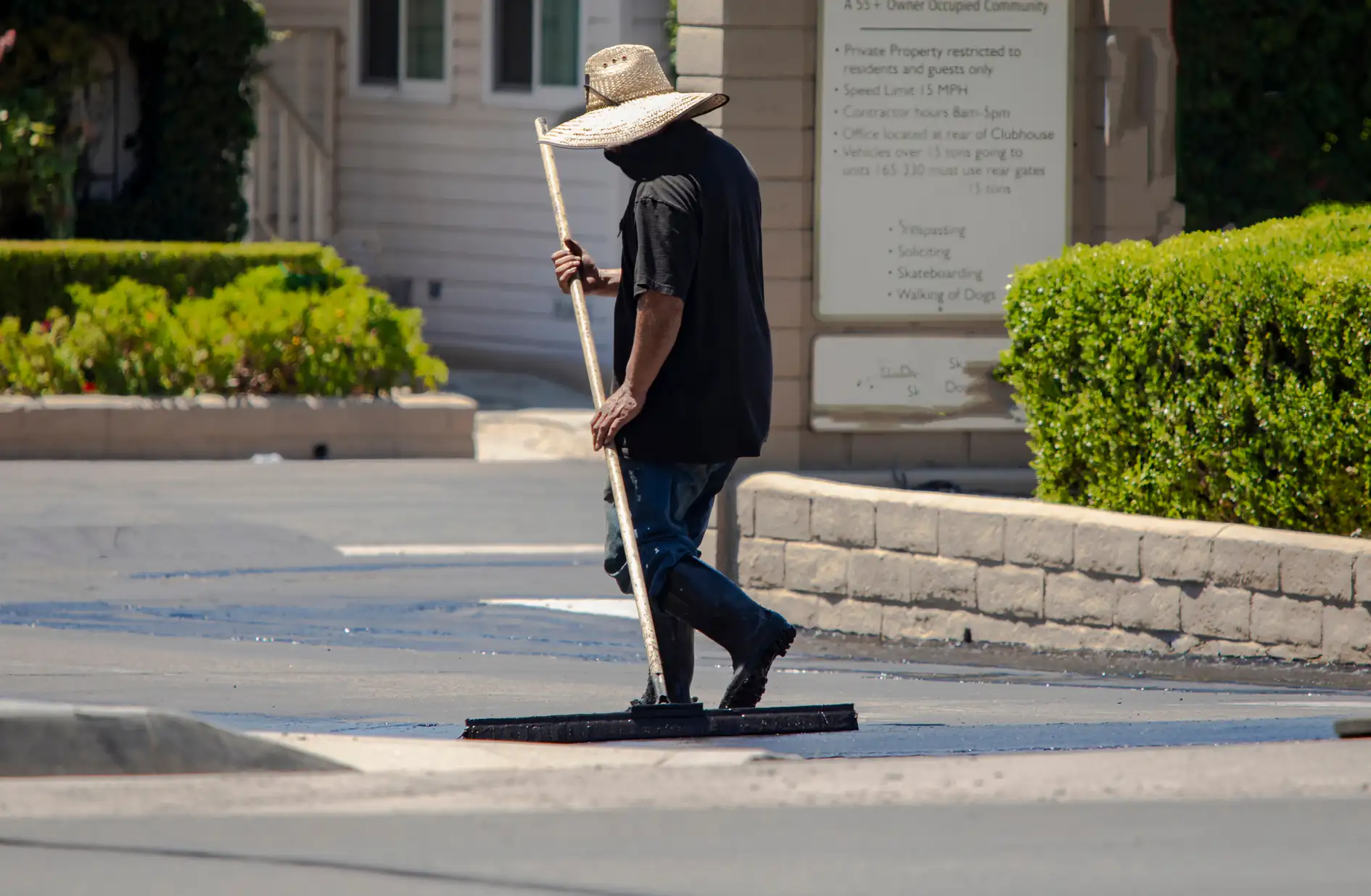
A person wearing a wide-brimmed hat and dark clothing uses a large squeegee to spread material on a paved surface, possibly sealing or cleaning it, near a landscaped area and buildings.

Sealcoating Process and Timing

When Your Driveway Actually Needs Sealing

  • Gray, faded asphalt is a sign the protective oils have worn away, leaving the surface exposed to cracking and damage.
  • Other warning signs include a rough texture, small surface cracks, and water soaking in instead of beading on top.
  • New driveways should wait 6 to 12 months before the first sealcoating application so the asphalt can cure properly.
  • Sealing too early can trap natural oils, weaken adhesion, and reduce the lifespan of the sealcoat.
  • After the first application, sealcoating every 2 to 3 years helps protect against wear, with high-traffic and full-sun driveways needing more frequent service.

What's Included in Professional Sealcoating

The Difference Between a Quick Coat and Real Protection
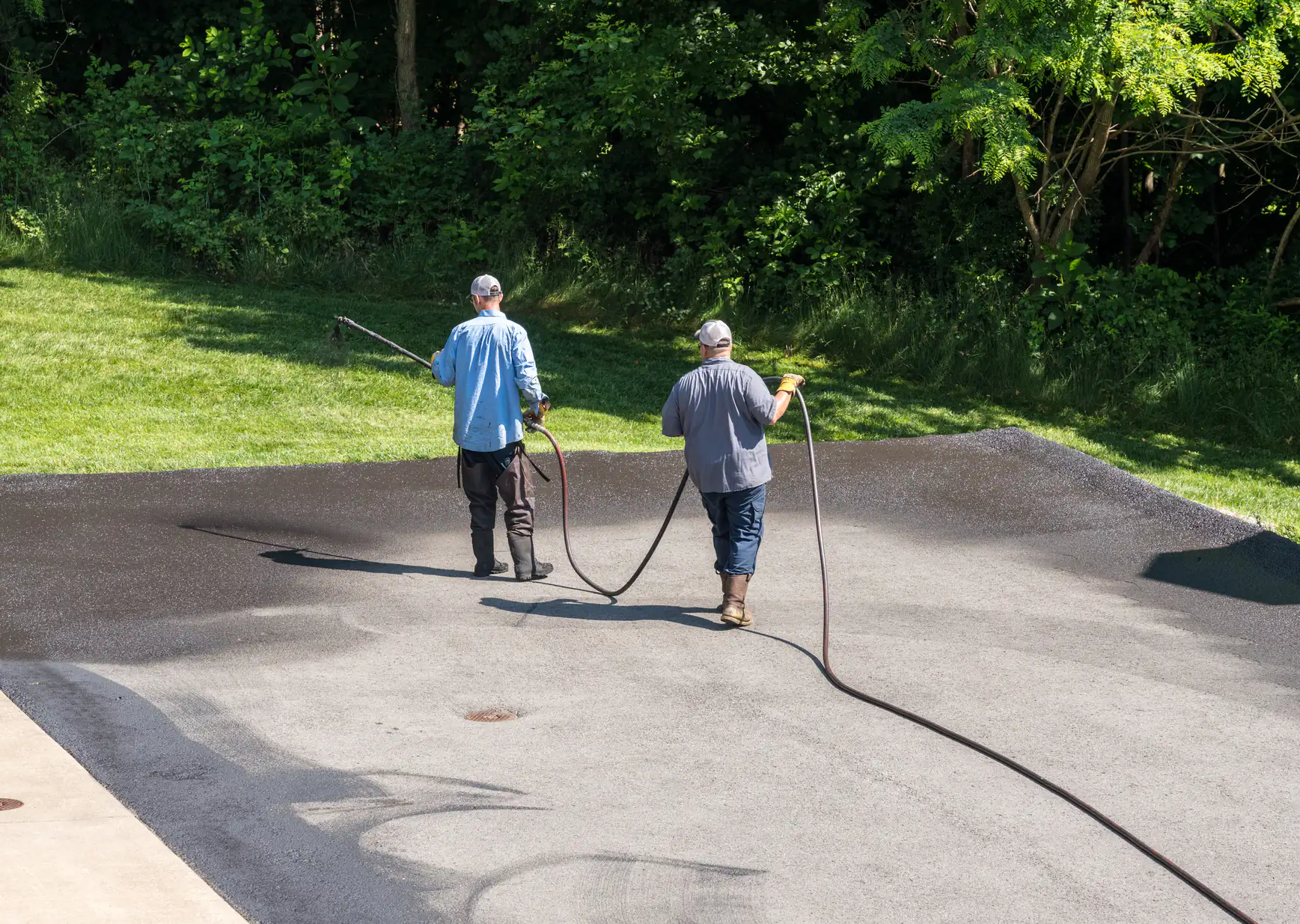
Professional driveway sealcoating starts with thorough cleaning. We’re talking about removing every bit of dirt, debris, and oil residue because sealer won’t bond to a contaminated surface. We use blowers and stiff brooms, sometimes power washing if there’s significant buildup. Next comes crack repair. Any crack wider than a hairline gets filled with rubberized material before we apply sealer. Sealcoating doesn’t fix cracks—it prevents new ones and protects the surface. If we skip this step, those cracks just telegraph through the new sealer and continue spreading. Then we apply the actual sealcoat. We use commercial-grade products with proper sand and latex additives. We apply by hand for even coverage and adequate thickness—spray application goes on thinner and doesn’t last as long. Most driveways need two coats for New Jersey’s climate, with drying time between applications. The whole process takes 1-2 days depending on size and weather. You’ll need to stay off the driveway for 24-48 hours while it cures. After that, you’ve got 2-3 years of protection before the next application.
Two workers in casual clothing and hats are applying a dark sealant to a driveway with hoses, with green grass and trees in the background.
Driveway Sealcoating FAQs

Common Questions About Our Service

Every 2-3 years is the standard recommendation for residential driveways in northern New Jersey. The exact timing depends on a few factors—how much traffic your driveway sees, how much direct sun exposure it gets, and how well the last sealcoat is holding up. If you’re seeing faded color or small cracks starting to form, don’t wait the full 3 years. Our climate is tough on asphalt. The freeze-thaw cycles we get through winter do more damage than most other regions, so staying on schedule matters more here than it would in milder areas. If your driveway was just installed, wait 6-12 months before that first sealcoat. The asphalt needs time to cure properly. After that initial application, mark your calendar for 2-3 years out and inspect it annually to catch any early warning signs.
No, sealcoating doesn’t repair existing cracks—it prevents new ones from forming and protects the surface from further damage. Think of it as preventive maintenance, not corrective repair. Any cracks you currently have need to be filled before we apply sealer. That’s actually part of proper sealcoating service. We clean out the cracks, fill them with hot rubberized material that stays flexible through temperature changes, and then apply the sealcoat over the entire surface. The crack filler stops water from getting down into your base layer where it causes real structural problems. The sealcoat then protects the whole surface from UV damage, water infiltration, and chemical exposure. If your driveway has significant cracking, potholes, or areas where the asphalt is crumbling, you might need patching or repair work before sealcoating makes sense. We’ll let you know during the assessment if that’s the case. There’s no point in sealing over serious damage—you need to address the underlying problem first.
For a typical two-car driveway in Morris, Sussex, or Somerset County—somewhere around 400-600 square feet—you’re looking at $200-500 for professional sealcoating. That includes cleaning, crack filling, and two coats of quality sealer. The range comes down to your driveway’s current condition, size, and how much prep work is needed. If we’re dealing with a lot of cracks, oil stains that need special primer, or a larger driveway, the cost goes up. Smaller driveways sometimes hit minimum service fees. The per-square-foot cost typically runs $0.15-$0.40 depending on those same factors. Two coats cost more than one, but they also last significantly longer—3-4 years instead of 1-2 years. In New Jersey’s climate, that extra coat is worth it. You’ll see some companies advertising cheaper prices. Usually that means they’re thinning the sealer, applying a single thin coat, or skipping the crack repair. Those shortcuts might save you $100 today, but you’ll be resealing next year instead of in three years. Compare that to $1,500+ for structural repairs or $3-7 per square foot for replacement, and the value becomes clear.
Yes, and this is something most homeowners don’t realize until it’s too late. When you have a new driveway installed, the contractor’s warranty almost always includes maintenance requirements. Typically that means sealcoating within 6-12 months of installation, then every 2-3 years after that. Miss those deadlines and your warranty becomes void. So if your driveway develops premature cracking, settling, or other issues that should be covered, you’re paying for repairs out of pocket because you didn’t maintain the required sealcoating schedule. The warranty paperwork usually spells this out, but it’s easy to miss in the fine print. Some contractors are better about explaining it upfront than others. The reason for requiring it is simple—sealcoating genuinely does extend the life of asphalt and prevent damage. It’s not just about making money on maintenance. Unsealed asphalt deteriorates faster, develops more problems, and costs more in warranty claims. By requiring regular sealcoating, we’re protecting our work and your investment. Keep records of when you have sealcoating done. If you ever need to make a warranty claim, you’ll need proof that you kept up with the maintenance schedule.
Late spring through early fall gives you the best conditions—specifically May through October when temperatures stay consistently between 50°F and 85°F. The sealer needs warm, dry weather to cure properly. If it’s too cold, it won’t bond correctly. If it rains within 24-48 hours of application, you’ve got problems. Fall is actually ideal if you’re thinking strategically. Getting your driveway sealed in September or early October means it’s fully protected before winter hits. That’s when the real damage happens—water getting into cracks, freezing, expanding, and turning minor surface issues into structural problems. Spring sealing works too, but you’re essentially repairing winter damage instead of preventing it. You’ll pay for the sealcoating either way, so why not do it before winter and avoid the damage altogether? Summer is fine from a weather standpoint, but that’s peak season for paving contractors. You might wait longer for scheduling and potentially pay slightly more. Spring and fall tend to have better availability. Just avoid scheduling too late in fall. Once temperatures start dropping consistently below 50°F at night, conditions aren’t ideal for proper curing.
You can buy sealcoating products at home improvement stores and do it yourself, but there’s a significant difference in results and longevity. The consumer-grade sealers available to homeowners are thinner and less durable than commercial products we use. They also don’t include the same additives—sand for traction, latex for flexibility, polymers for adhesion. Professional equipment makes a difference too. We have proper agitation systems that keep the sealer mixed correctly, application tools that achieve even coverage and adequate thickness, and the experience to prep the surface properly. Most DIY jobs fail because of poor surface preparation, not bad sealer. If there’s any oil residue, dirt, or moisture on the asphalt, the sealer won’t bond correctly. It’ll start peeling within months. The cost difference isn’t as big as you might think either. A DIY job runs $100-150 in materials for a typical driveway. Professional service costs $200-500 but lasts 2-3 times longer and usually includes crack repair. When you factor in the time, physical labor, and risk of mistakes, professional sealcoating makes sense for most homeowners. Save the DIY approach for small projects. For your main driveway, hire someone who does this full-time.
A large white number 1 is centered on a solid black circle with a plain light gray background, symbolizing top-rated Paving Contractors in Morris, NJ and serving Sussex & Somerset County.

Site Assessment and Preparation

We inspect your driveway's condition, identify cracks or damage needing repair, and clean the entire surface to ensure proper sealer adhesion.

A bold white number 2 is centered inside a solid black circle on a light gray background, representing Sussex & Somerset County, NJ Paving Contractors Morris.

Crack Filling and Repairs

All cracks get filled with hot rubberized material that flexes with temperature changes, preventing water infiltration and further spreading before sealcoat application.

A large white number 3 is centered inside a solid black circle on a plain light background, representing Paving Contractors Morris, Sussex & Somerset County, NJ.

Professional Sealer Application

We hand-apply commercial-grade sealer in two coats for maximum protection, ensuring even coverage and proper thickness that lasts through multiple winters.

Cities we provide Driveway Sealcoating In