
Hear from Our Customers
New Jersey hits your driveway with 55 to 75 freeze-thaw cycles every winter. Water gets into small cracks, freezes, expands by 9%, then thaws and lets more water in deeper. That cycle turns hairline cracks into potholes and soft spots into structural failures.
Sealcoating creates a waterproof barrier before winter starts. It keeps moisture out, prevents oxidation from UV exposure, and protects against road salt and oil stains. Your asphalt stays flexible instead of brittle.
The difference shows up in spring. Driveways that got sealed in fall look the same. Driveways that didn’t are covered in new cracks, divots, and edge damage that’ll cost real money to fix. A properly applied sealcoat extends your driveway’s life by 3 to 5 years and maintains the curb appeal that keeps your property value where it should be.
Platinum Paving is a third-generation, family-owned asphalt contractor based in Morris County. We’ve spent over 20 years working on driveways throughout Pine Brook, Parsippany, Morristown, Dover, and the surrounding areas.
We know what North Jersey weather does to asphalt because we’ve seen it every season for decades. We use high-grade sealant materials applied by hand for even coverage, and we don’t cut corners on surface prep or curing time. Our crews show up when scheduled, finish on time, and clean up completely.
You’ll get upfront pricing with no surprise charges later, and a 24 to 48 hour callback guarantee when you request a quote online. We’re licensed, insured, and grounded in the same communities we serve.
First, we inspect your driveway to check for cracks, oil stains, and drainage issues. If there are cracks wider than a quarter-inch, we fill them with hot rubberized crack filler before sealcoating. That step matters because sealant alone won’t hold back water in open cracks.
Next, we clean the surface completely. We remove dirt, debris, vegetation, and any loose asphalt. Oil stains get treated with a primer so the sealant adheres properly. A clean surface is the difference between sealcoating that lasts two years and sealcoating that lasts five.
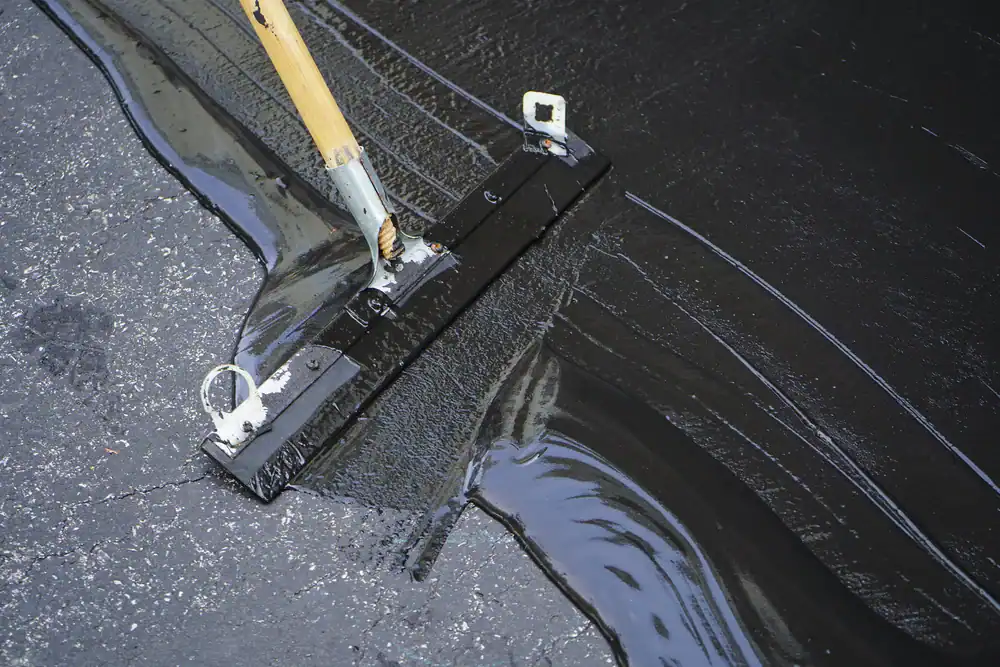
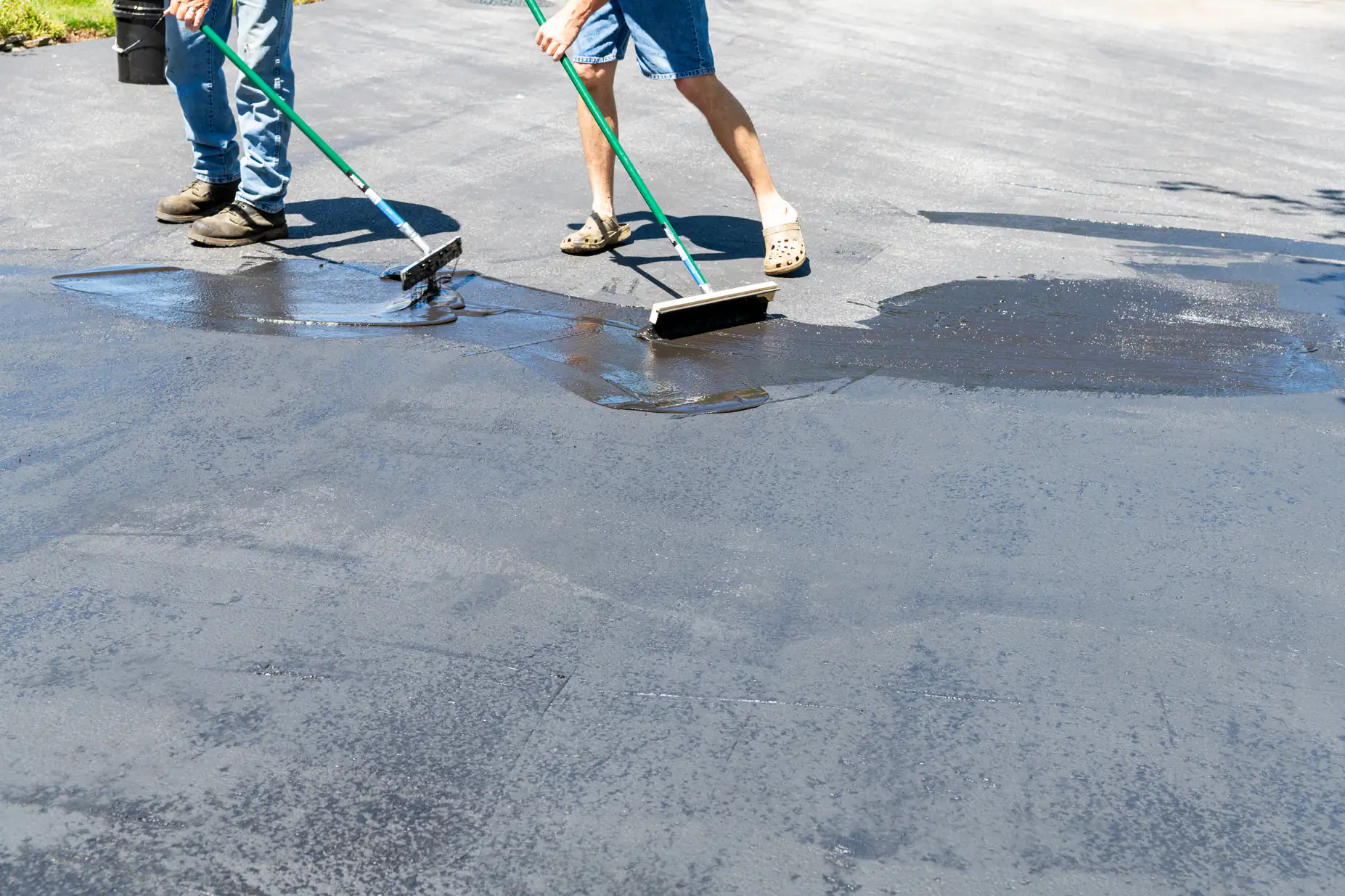
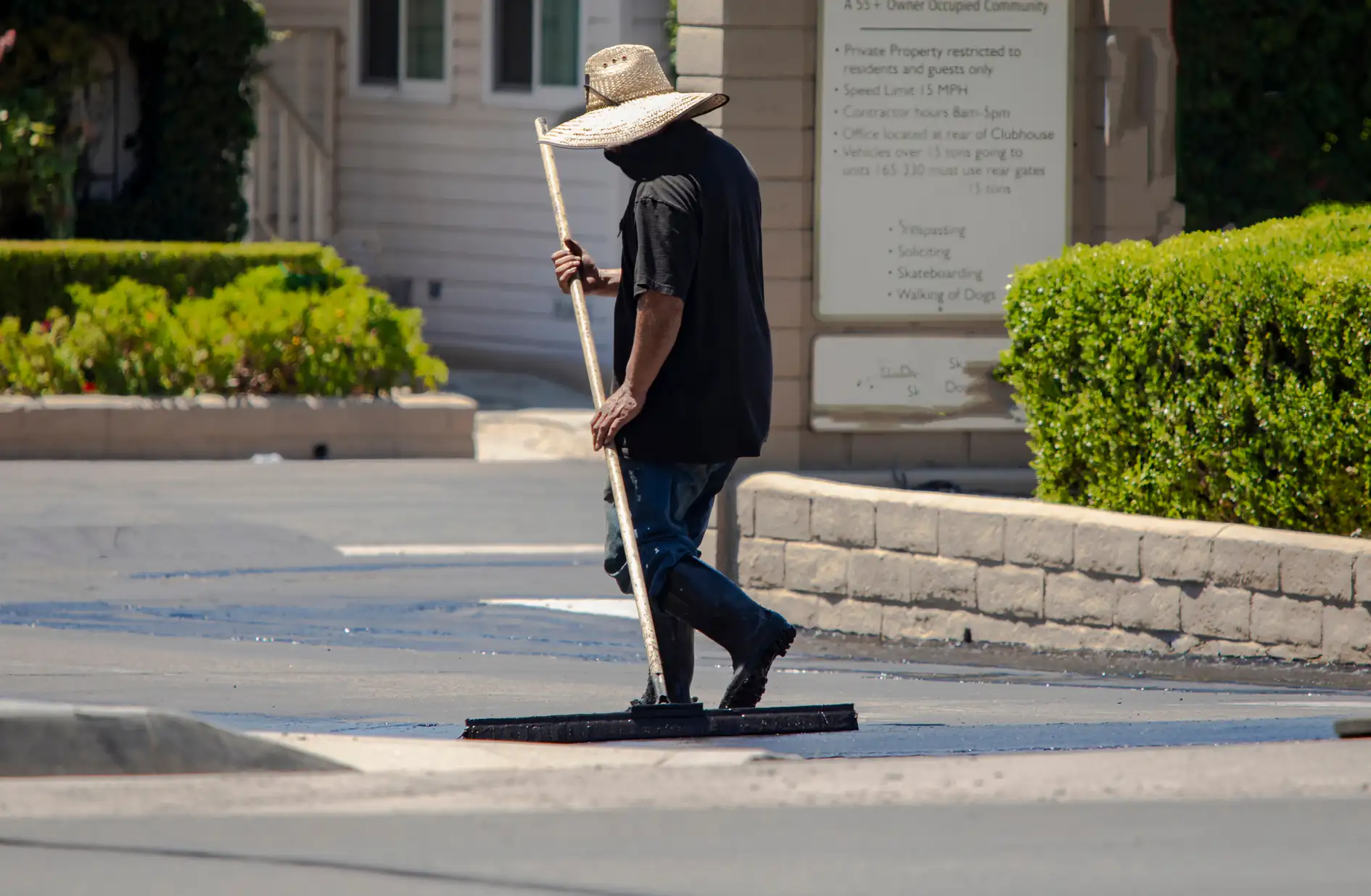
Then we apply the sealcoat by hand using squeegees. Hand application gives you even coverage and cleaner edges than spray methods. We typically apply two coats, letting the first dry before adding the second. The whole process takes one to two days depending on driveway size and weather conditions.
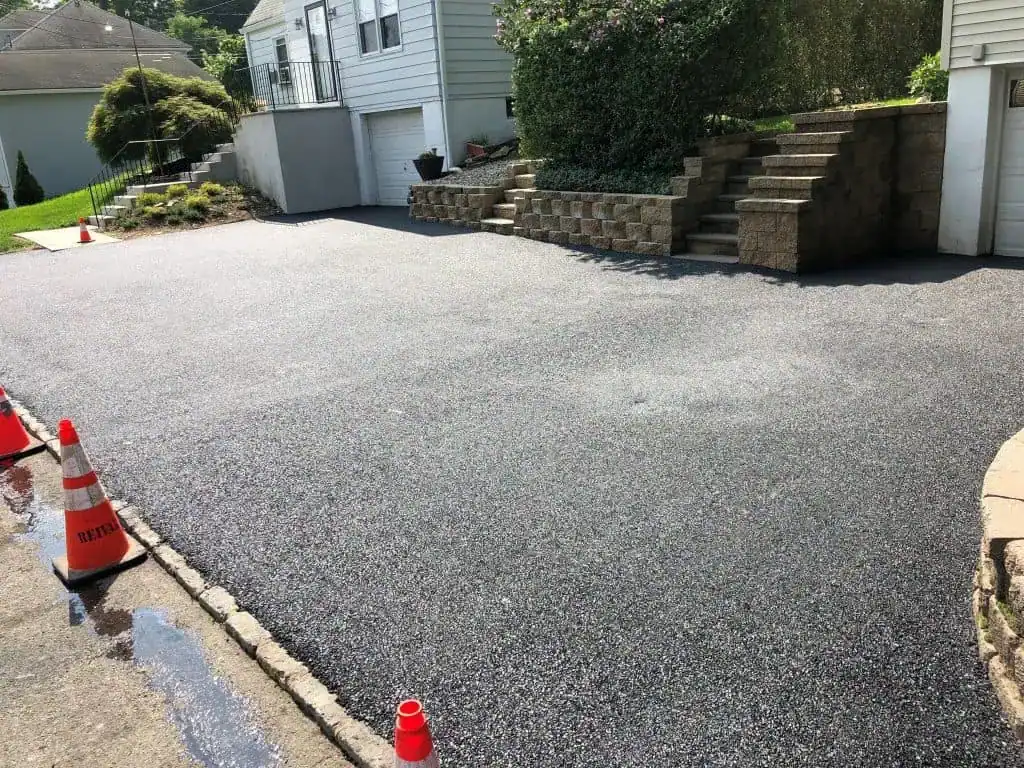
After application, your driveway needs 24 to 48 hours to cure before you can drive on it. We’ll give you a specific timeline based on temperature and humidity. Once cured, the sealcoat creates a protective layer that keeps water out and your asphalt intact through winter.
Ready to get started?
Every sealcoating job includes crack filling for cracks up to a half-inch wide. Larger cracks or structural damage gets quoted separately because those need different repair methods before sealing makes sense. We’re not going to seal over problems that need real fixes.
You also get complete surface cleaning and oil stain treatment. We edge along garage doors, walkways, and landscaping so you get clean lines without overspray or sealer where it doesn’t belong. Our crews protect your property and clean up all materials and equipment when finished.
We use commercial-grade coal tar or asphalt emulsion sealers depending on your driveway’s condition and your budget. Both products work well in Morris County’s climate when applied correctly. We’ll explain the difference and recommend what makes sense for your specific situation.
The cost of asphalt sealing in Pine Brook typically runs $200 to $500 for residential driveways, depending on size and condition. That’s a fraction of what you’d pay for patching, resurfacing, or full replacement down the road. Most driveways should be resealed every two to three years to maintain protection, though that timeline shifts based on traffic, weather exposure, and how well the driveway was maintained before.

Fall is the best time to sealcoat your driveway in Pine Brook and throughout Morris County. You need temperatures consistently above 50°F during the day and no rain in the forecast for at least 24 hours after application. September and October usually offer those conditions.
Sealcoating in fall gives the material time to cure properly before winter hits. That curing process is critical because it’s what creates the waterproof barrier that protects against freeze-thaw damage. If you wait until spring, you’re repairing winter damage instead of preventing it.
Spring is the second-best option, but contractors get slammed with repair work from homeowners who skipped fall sealing. You’ll wait longer for scheduling, and you’ve already lost a winter’s worth of protection. Summer works too, but extreme heat can make application tricky and curing times longer.
Most residential driveways in Morris County cost between $200 and $500 to sealcoat, which breaks down to about $0.15 to $0.40 per square foot. A standard two-car driveway around 600 square feet usually runs $250 to $350 including crack filling and two coats of sealer.
The price changes based on your driveway’s current condition. If you’ve got extensive cracking, oil stains, or areas that need patching first, that adds to the cost. Driveways that haven’t been sealed in five or more years often need extra prep work.
Compare that to repair costs. Fixing a section of failed asphalt runs $1,500 to $3,000. Resurfacing an entire driveway costs $2,000 to $5,000. Full replacement can hit $5,000 to $10,000 depending on size. A $300 sealcoating job every two to three years is cheap insurance against those bigger bills.
Professional sealcoating lasts two to three years in Morris County under normal conditions. That timeline assumes proper application, adequate curing time, and typical residential use. Driveways with heavier traffic or full sun exposure might need resealing closer to the two-year mark.
The lifespan depends heavily on application quality. Sealcoating applied to a dirty surface or during bad weather fails within a year. Hand-applied sealant with proper surface prep and two coats lasts significantly longer than single-coat spray applications.
You’ll know it’s time to reseal when the surface starts looking faded or gray instead of deep black. Small cracks appearing or water no longer beading up on the surface are other signs. Resealing on schedule—before serious wear shows up—is what extends your overall driveway life by 10 to 15 years compared to driveways that never get sealed.
You can buy sealant at home improvement stores and do it yourself, but professional application usually costs less in the long run. DIY sealcoating fails more often because of improper surface prep, wrong product selection, or application during poor weather conditions.
The biggest issue is surface preparation. Most homeowners skip crack filling or don’t clean thoroughly enough. Sealant won’t bond to dirty asphalt or bridge open cracks. You end up with a coating that peels or fails within a year, and then you’re paying for professional work anyway.
We also have access to commercial-grade materials that outperform retail products. We know how to read weather conditions, apply the right thickness, and ensure proper curing. A professional job typically lasts twice as long as DIY work. When you factor in your time, equipment rental, and the cost of redoing failed DIY sealcoating, hiring us from the start makes more financial sense.
Unsealed asphalt oxidizes from UV exposure and becomes brittle. That brittleness leads to surface cracking, which lets water penetrate down to the base layer. Once water reaches the base, you’re dealing with structural problems that sealcoating can’t fix.
In Morris County specifically, freeze-thaw cycles accelerate the damage. Water in those cracks freezes and expands every winter night, then thaws during the day. After 55 to 75 cycles per winter, small cracks become large ones. Large cracks become potholes. Edge cracking turns into chunks of asphalt breaking off.
The repair costs add up fast. What could have been prevented with a $300 sealcoating job turns into $1,500 in crack repairs, then $3,000 in patching, then $5,000 to $10,000 for resurfacing or replacement. Driveways that get sealed every two to three years last 20 to 25 years. Driveways that never get sealed often need replacement in 10 to 12 years.
Sealcoating is specifically for asphalt driveways. The coal tar or asphalt emulsion products we use in sealcoating are designed to bond with asphalt and won’t work properly on concrete. Concrete driveways need different protection methods.
For concrete, you’d use a concrete sealer, which is a completely different product. Concrete sealers are typically silane/siloxane-based or acrylic-based, and they work by penetrating the concrete or forming a protective film on top. They protect against moisture, salt damage, and staining, but the application process and materials are nothing like asphalt sealcoating.
If you have a concrete driveway in Pine Brook and you’re looking for protection, ask us specifically about concrete sealing services. The goals are similar—prevent water damage, extend lifespan, maintain appearance—but the products and methods are entirely different. Make sure any contractor you hire understands which material you have and uses the right approach for it.