
Hear from Our Customers
Your driveway takes a beating every winter in Rockaway. Water seeps into cracks, freezes, expands by 9%, and tears your asphalt apart from the inside. By spring, those hairline cracks become potholes. By next winter, you’re looking at structural damage that costs real money to fix.
Sealcoating creates a waterproof barrier before that cycle starts. It blocks moisture infiltration, protects against road salt erosion, and gives your asphalt the flexibility it needs to handle temperature swings without cracking. Most driveways last about 25 years, but proper sealcoating pushes that past 30 years.
The math is simple. Removing and repaving costs $6-$8 per square foot in Morris County. Professional driveway sealcoating runs $0.15-$0.40 per square foot. You’re looking at 2,143% more value for a fraction of the cost. That’s not marketing speak—that’s the difference between a $300 maintenance job and a $15,000 replacement.
Fall is your window. Temperatures are stable, conditions are dry, and the sealer cures properly before winter arrives. Miss it, and you’re gambling with next spring’s repair bill.
We’ve worked in Morris County since before most driveway sealer companies knew how to handle New Jersey winters. We understand how temperature swings near Lake Hopatcong affect base stability. We know why drainage can’t be an afterthought in Rockaway, and which installation methods actually hold up when conditions turn harsh.
We use high-grade hot mix asphalt applied at the right temperature and compacted for density. Our sealcoating materials are chosen specifically for northern New Jersey’s climate—not whatever’s cheapest that week. Every job gets two coats because that’s what lasts 3-4 years instead of 1-2.
You’ll get clear pricing upfront, no surprise charges, and a 2-year warranty on materials and workmanship. We show up when we say we will, finish on schedule, and leave your property cleaner than we found it.
First, we inspect your driveway for existing damage. Cracks get filled before we seal—otherwise you’re just covering up problems that’ll resurface in months. We use hot rubberized crack filler that moves with your asphalt instead of breaking apart.
Next, we clean the surface completely. Oil stains, dirt, vegetation—anything that prevents sealer adhesion gets removed. This step matters more than most homeowners realize. Sealer won’t bond to a contaminated surface, and you’ll see premature wear in high-traffic areas.
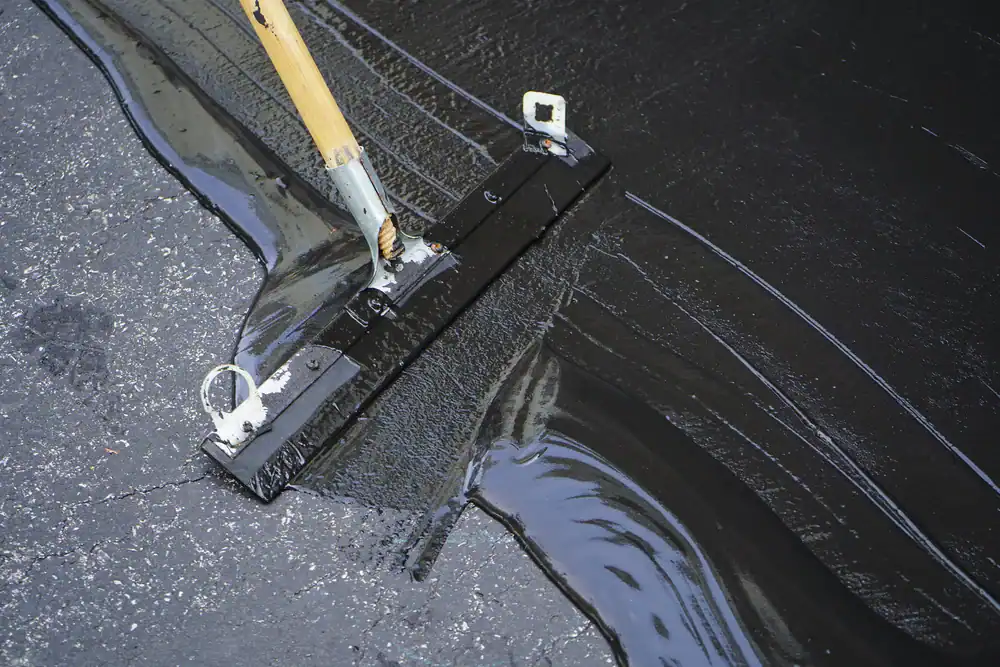
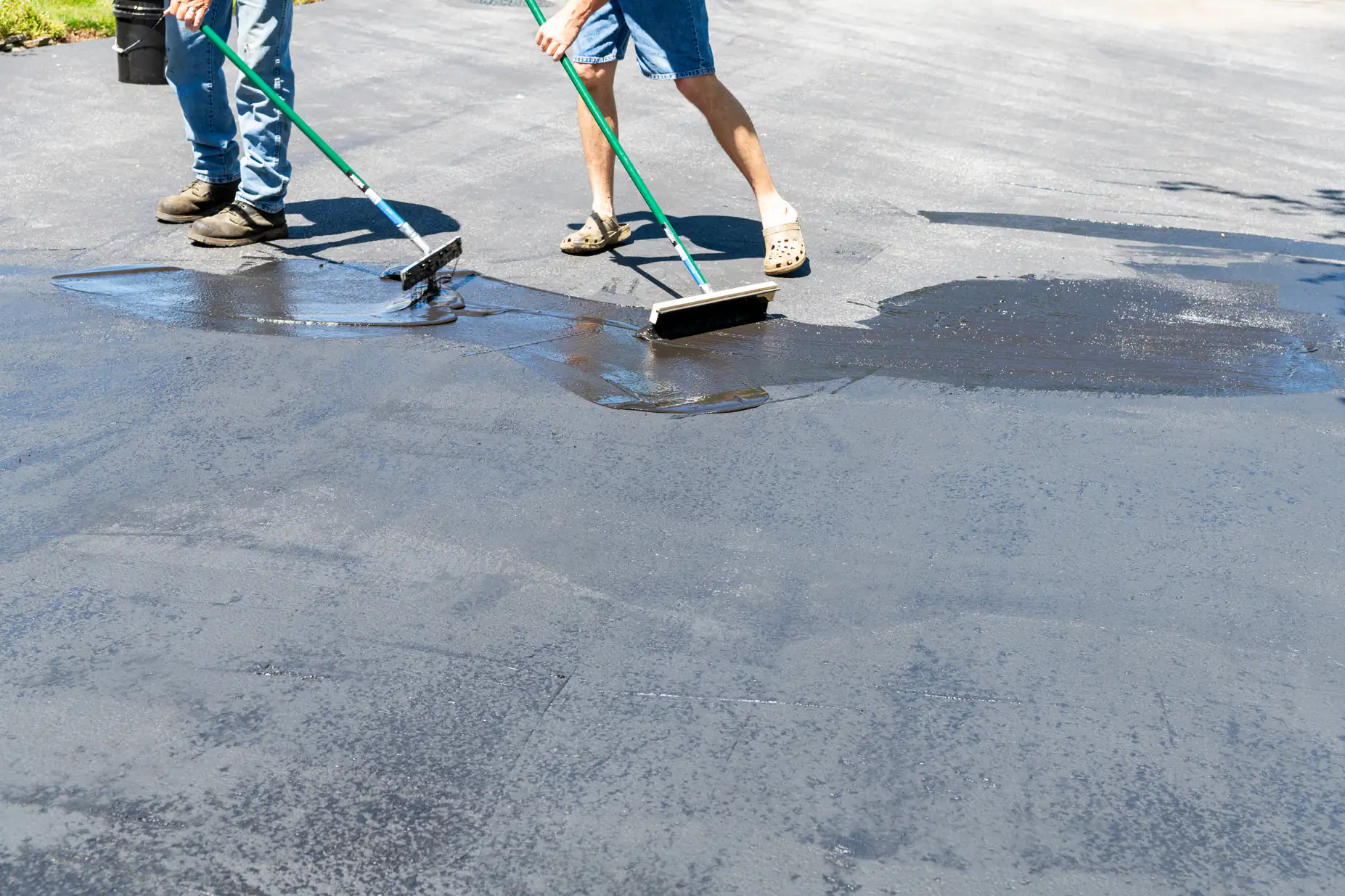
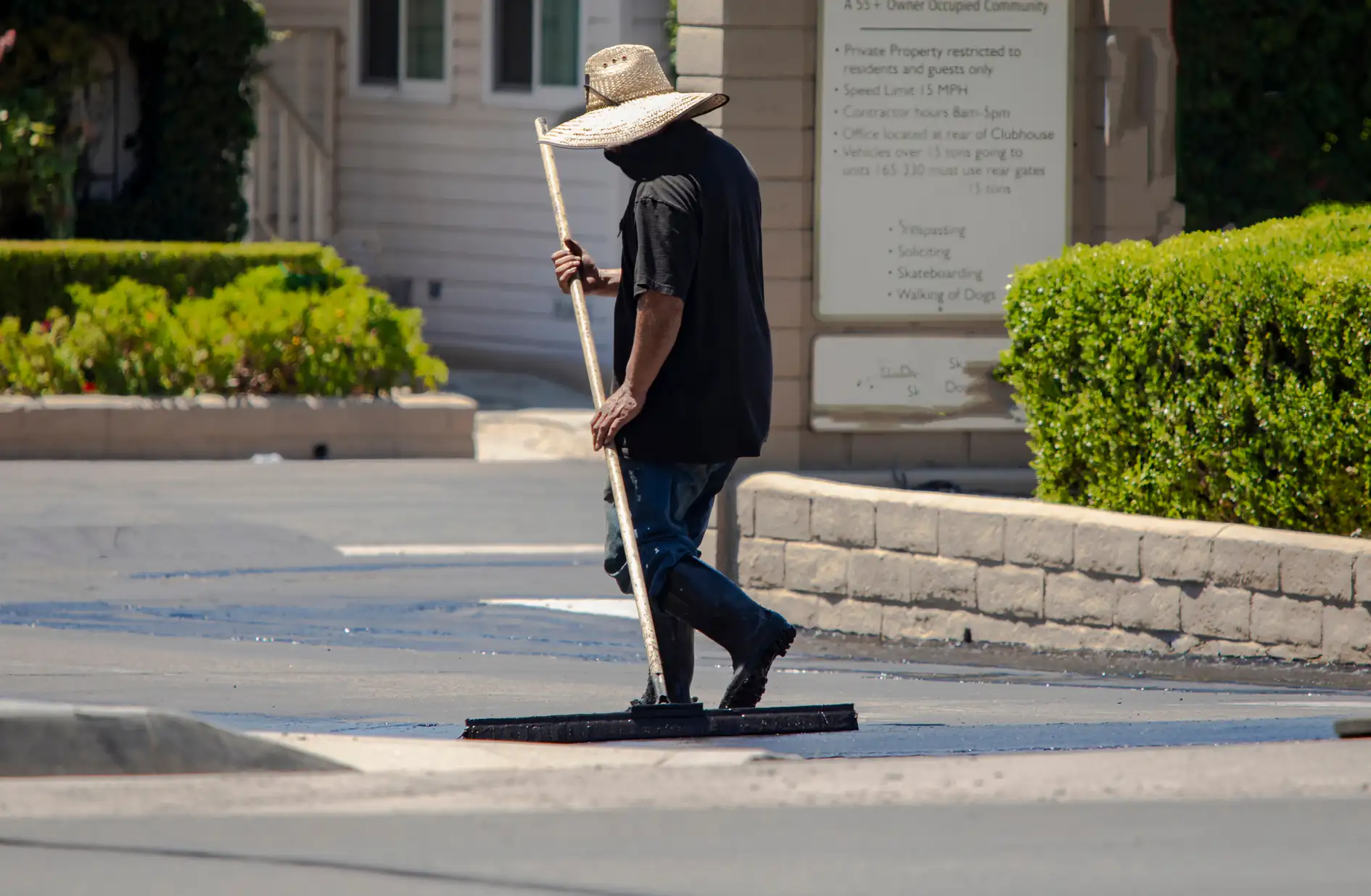
Then we apply two coats of commercial-grade sealer. The first coat penetrates and bonds. The second coat builds thickness and durability. We use professional spray equipment for even coverage and proper mil thickness—not the squeegee-and-bucket approach that leaves thin spots and streaks.
Curing takes 24-48 hours depending on temperature and humidity. We’ll tell you exactly when you can drive on it. Rush it, and you’ll damage the finish before it’s fully hardened.
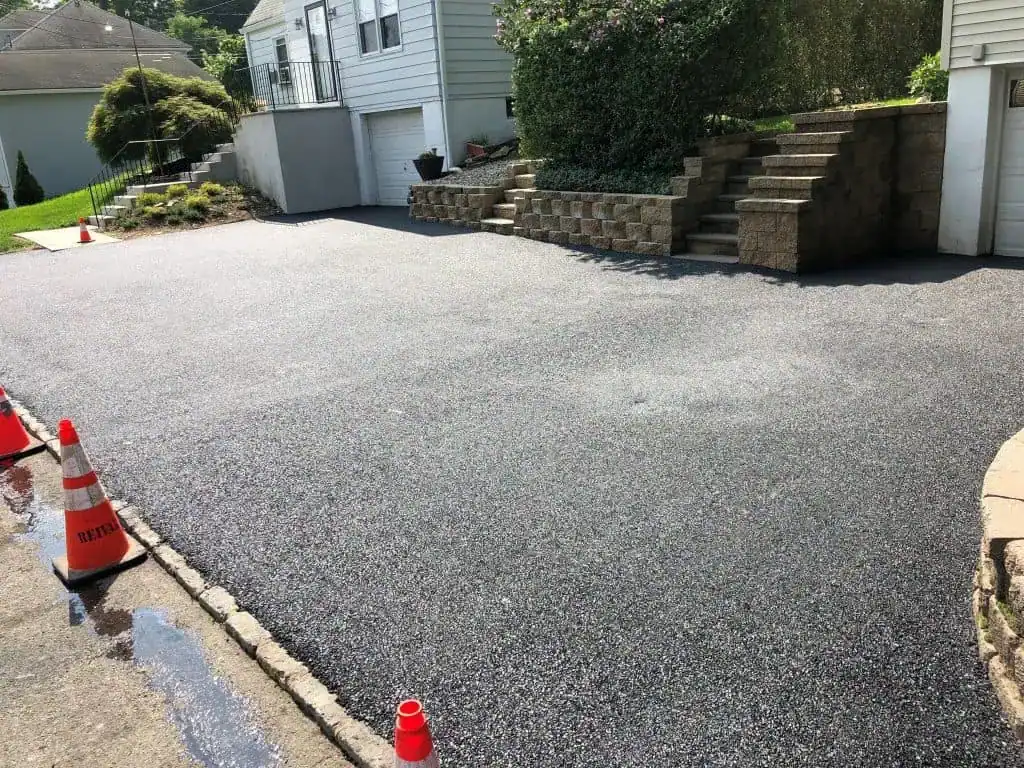
The result is a matte black surface that looks brand new, sheds water like it should, and stands up to everything Morris County weather throws at it.
Ready to get started?
Every sealcoating job includes crack filling up to ¼ inch. Larger cracks need repair work before sealing, and we’ll tell you that upfront—not after we’ve already started. Surface cleaning and prep are included. Edge work along garage doors, walkways, and landscaping is done by hand to protect your property.
You get two full coats of sealer applied at proper thickness. We don’t cut corners with single-coat applications that wear out in a year. The sealer we use is formulated for northern New Jersey’s freeze-thaw cycles, not some generic product that works fine in Virginia but fails here.
In Rockaway and throughout Morris County, we see driveways that face heavy shade, poor drainage, and steep grades. Those conditions affect how we prep and seal. A driveway in full sun near Route 80 needs different attention than one tucked behind trees near Lake Hopatcong. We adjust our process based on your specific conditions.
You also get a 2-year warranty covering materials and workmanship. If the sealer fails prematurely because of something we did wrong, we fix it. If it fails because you parked on it four hours after we left, that’s on you—and we’ll explain the difference before we start.

Most residential driveways in Rockaway run between $200-$500 for professional two-coat sealcoating. That breaks down to about $0.15-$0.40 per square foot depending on your driveway’s size, condition, and how much crack filling is needed before we seal.
A typical two-car driveway around 600 square feet costs $240-$300 with standard prep work. If you’ve got significant cracking, drainage issues, or oil stains that need extra treatment, expect to add $100-$200. We’ll walk your property and give you an exact number before any work starts—no ballpark estimates that magically increase once we’re halfway done.
New Jersey prices run 15-20% higher than national averages because of labor costs and the extra prep work our climate demands. But compare that $300 maintenance cost to the $4,000-$6,000 you’ll spend on repaving when your driveway fails prematurely. Sealcoating every 3-4 years is the cheapest insurance you can buy for asphalt.
Fall is your best window—specifically September through early November before temperatures drop below 50°F at night. You need consistent temperatures above 50°F for at least 24-48 hours after application so the sealer cures properly. Too cold, and it won’t bond. Too hot, and it dries too fast.
Spring works too, but you’re racing against unpredictable weather and dealing with winter damage that needs repair first. Summer heat can make application tricky—sealer gets sticky and harder to work with when it’s 90°F out. Fall gives you moderate temperatures, low humidity, and dry conditions that let sealcoating cure correctly.
Here’s what matters more than the season: your driveway needs to be completely dry and at least 90 days old if it’s new asphalt. Moisture trapped under fresh sealer will cause premature failure. We’ve seen driveways sealed too soon that started peeling within months. If your asphalt is new, wait until next fall. If it’s established, get it done before winter so you enter the freeze-thaw season with full protection.
Two coats of quality sealer last 3-4 years on residential driveways in Morris County. Single-coat applications barely make it 1-2 years before you’re seeing wear patterns and losing protection. That’s why we don’t offer single-coat service—it’s not worth your money or our reputation.
How long your sealcoating actually lasts depends on traffic, sun exposure, and how well you maintain it. A driveway with two cars coming and going daily wears faster than one that sees weekend use. Full sun breaks down sealer faster than shade. If you’re diligent about sweeping off debris and hosing away salt residue in winter, you’ll get closer to four years.
Commercial parking lots need resealing every 2-3 years because of heavier traffic and larger surface areas that take more abuse. The same sealer that protects your home driveway for four years might only last two in a commercial application. We adjust our recommendations based on your actual use—not some generic timeline that doesn’t account for real-world conditions in Rockaway.
You can buy sealer at any home improvement store and do it yourself. Whether you should is a different question. DIY sealcoating usually costs $100-$150 in materials for an average driveway, but you’re doing all the labor, you don’t have professional equipment, and most homeowners skip critical prep steps that determine whether the sealer actually lasts.
Here’s what goes wrong: improper crack filling that fails within months, inadequate surface cleaning that prevents adhesion, uneven application that leaves thin spots, and single-coat coverage that wears out fast. Squeegee application can’t match the even coverage and proper mil thickness you get from professional spray equipment. Most DIY jobs start showing problems within a year.
Professional driveway sealcoating contractors bring commercial-grade materials, proper equipment, and experience that matters in New Jersey’s climate. We know how to prep for Morris County conditions, which crack fillers actually work in freeze-thaw cycles, and how to apply sealer at the right thickness. You’re paying $200-$300 more than DIY, but you’re getting 3-4 years of real protection instead of a cosmetic fix that looks good for six months. If your time and the risk of doing it wrong are worth less than $300, go for it. If not, hire someone who does this correctly.
Sealcoating blocks water infiltration, which is the primary cause of asphalt failure in Rockaway. Water seeps into porous asphalt, freezes when temperatures drop, expands by 9%, and cracks your pavement from the inside out. Each freeze-thaw cycle makes existing damage worse. By spring, you’ve got potholes and base failure that require expensive repairs.
The sealer also protects against UV oxidation that breaks down asphalt binders and turns your driveway gray and brittle. Road salt accelerates this deterioration—it’s necessary for winter safety but brutal on unsealed asphalt. Oil and gas spills soften asphalt and create weak spots that crumble under traffic. Sealcoating creates a barrier against all of these threats.
You’re also preventing premature aging. Asphalt naturally degrades, but the rate of degradation depends entirely on protection. An unsealed driveway in Morris County might need replacement in 15-20 years. Properly maintained with regular sealcoating, that same driveway can last 30+ years. The difference is whether you’re spending $300 every few years on prevention or $15,000 on replacement because you let damage compound. Sealcoating doesn’t fix structural problems, but it prevents most of the damage that leads to them.
Concrete and asphalt need different approaches. Concrete sealers are penetrating or film-forming products that protect against moisture, salt, and staining—but they’re not the same coal tar or asphalt emulsion products we use on asphalt driveways. The application process is different, the curing time is different, and the maintenance schedule is different.
Concrete driveways benefit from sealing, especially in northern New Jersey where freeze-thaw cycles and road salt cause scaling and spalling. But concrete sealing is typically done every 2-3 years with a penetrating sealer or every 3-5 years with a film-forming sealer, depending on the product and exposure. The cost runs similar to asphalt sealcoating—$0.15-$0.40 per square foot for professional application.
If you’ve got a concrete driveway in Rockaway, you’re looking at different products and a different process than asphalt sealcoating. We handle both, but the conversation starts with understanding what you actually have and what protection it needs. Some contractors only work with asphalt. Some only do concrete. We do both because Morris County properties have both, and you shouldn’t need to call two different companies to protect your driveway properly.