
Hear from Our Customers
You know the drill. Every spring in East Orange, you walk outside and find new cracks that weren’t there in October. Water got in, froze, expanded, and now you’re looking at damage that’s only going to get worse.
Driveway sealcoating creates a barrier between your asphalt and everything trying to destroy it. That means protection from water penetration, UV damage, oil spills, and the freeze-thaw cycles that turn small cracks into expensive problems. The average driveway lasts about 15 years without maintenance. With proper sealing every 2-3 years, you’re looking at 25+ years from the same surface.
The math is straightforward. A sealcoating job runs $200-$500 depending on your driveway size. Full replacement costs $5,000 to $15,000. You’re either spending a few hundred now or a few thousand later.
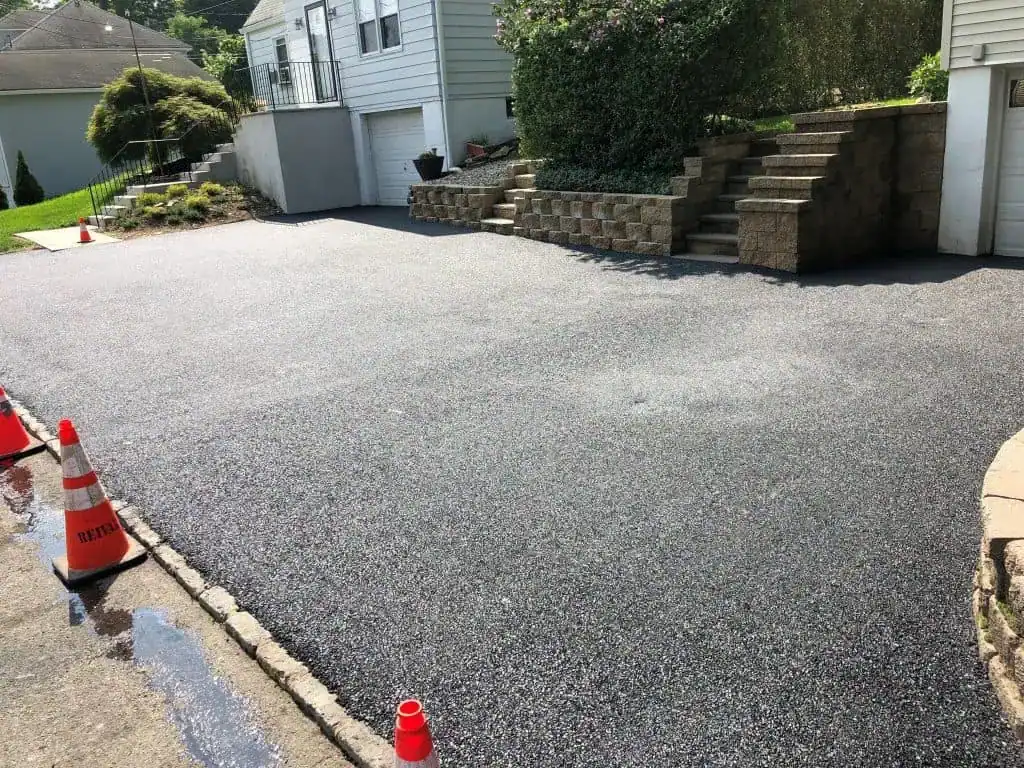
Your driveway also looks better immediately after sealing. That fresh black finish doesn’t just protect the asphalt—it restores the appearance that makes your property look maintained instead of neglected.
We’ve worked in East Orange and throughout Morris, Essex, and Somerset Counties since before most sealcoating companies had websites. We’re not new to North Jersey winters or what they do to asphalt.
We know the properties here. Most homes in East Orange were built in the 1940s and 50s, which means most driveways are dealing with decades of wear, settling, and weather damage. That’s not something you fix with a single coat of bargain sealer from a truck that showed up unannounced.
You’ll get clear pricing before we start, a realistic timeline for the work, and materials that actually hold up to the climate. We use high-grade asphalt sealer applied at the right temperature, not whatever’s cheapest. And if you request a quote online, you’ll hear back within 24-48 hours—not three weeks later when you’ve already hired someone else.
First, your driveway gets cleaned. That means removing dirt, debris, oil stains, and anything else that would prevent the sealer from bonding properly. If there are cracks wider than a quarter-inch, those get filled before sealing. Skipping this step is how you end up with sealer that peels off in sheets six months later.
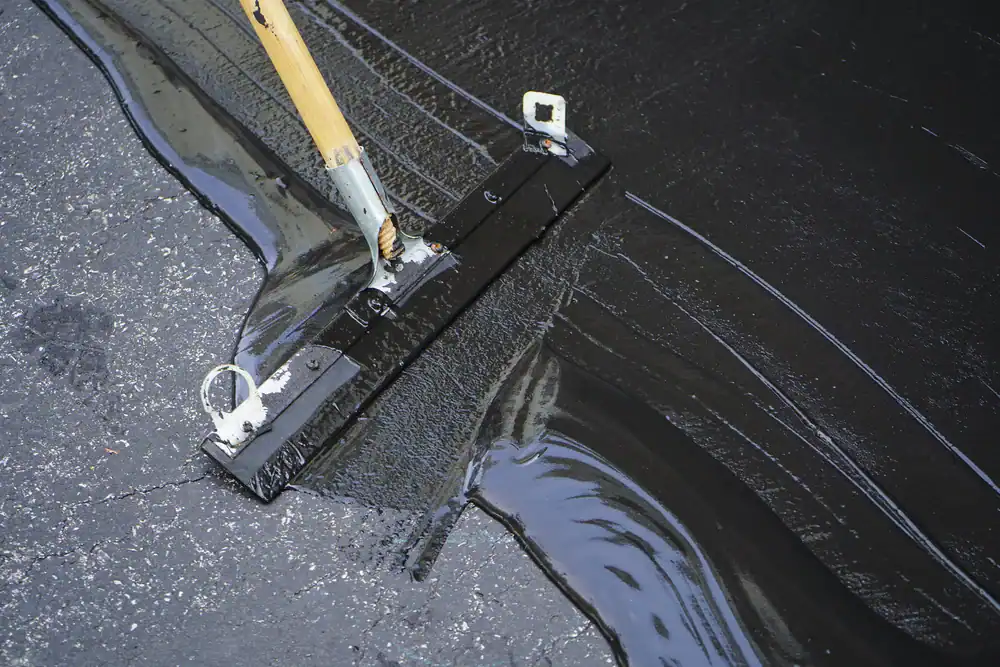
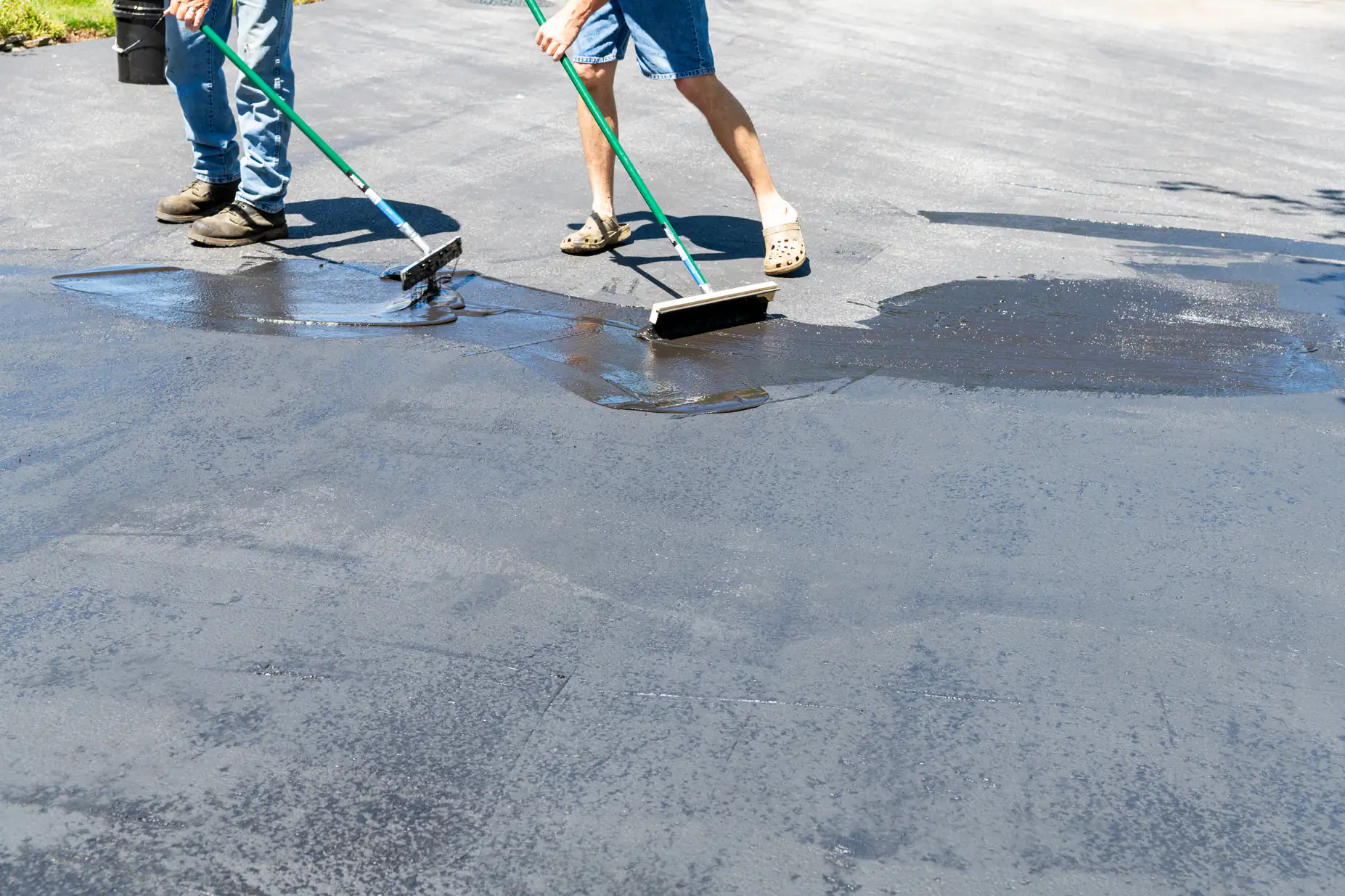
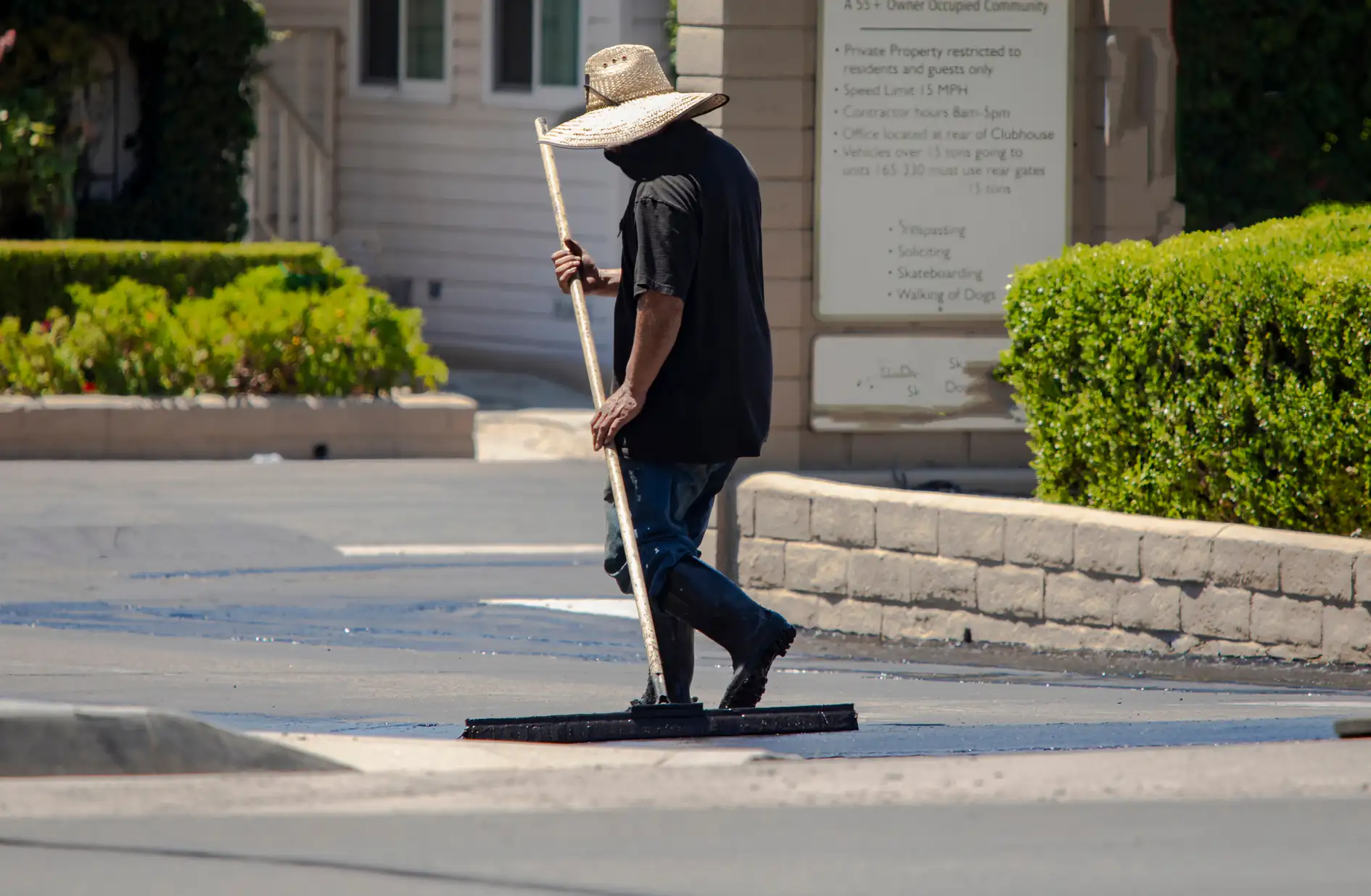
Next comes the sealer application. We apply it evenly across the entire surface using commercial-grade equipment—not a paint roller and a Home Depot bucket. The sealer needs to cure for 24-48 hours depending on temperature and humidity. That means staying off it completely. No walking, no driving, no “just pulling in real quick.”
After it cures, you’ve got a sealed surface that’s ready for normal use. The sealer creates a protective layer that keeps water out, resists oil and gas spills, and shields the asphalt from UV rays that break down the binder. You’re not adding structural strength—you’re preventing the damage that weakens the structure over time.
Most driveways in East Orange need resealing every 2-3 years. If yours gets heavy use or sits in full sun all day, you might need it sooner. If it’s shaded and sees light traffic, you might stretch it to three years. But waiting longer than that means you’re back to repairing damage instead of preventing it.
Ready to get started?
Driveway sealing costs in East Orange typically run between $0.15 and $0.25 per square foot. For an average two-car driveway (around 600 square feet), you’re looking at $200-$400 for the sealcoating itself. If you need crack filling, that’s additional—usually $1-$3 per linear foot depending on crack width and depth.
Here’s what that price includes: surface cleaning and prep, crack filling where needed, two coats of commercial-grade sealer, and proper curing time. What it doesn’t include is major repairs. If your driveway has potholes, sunken sections, or structural damage, those need to be fixed before sealing. Sealer isn’t a repair product—it’s a protective coating.
The timing matters in New Jersey. Fall is ideal for sealcoating because temperatures are moderate and conditions are usually dry. Spring works too, but you’re racing against unpredictable weather. Summer is fine if it’s not too hot—sealer can dry too fast in 90+ degree heat, which affects how well it bonds. Winter is out. You need temperatures above 50°F for proper application and curing.
You’ll also want to know what happens if it rains. If rain hits before the sealer cures (usually 24 hours), it can wash away the coating or create an uneven finish. We check the forecast and won’t start a job if rain is likely within the curing window. If someone shows up and starts sealing with storms in the forecast, that’s a red flag.

You’ll get 2-3 years from a properly applied sealcoat in East Orange, sometimes longer if your driveway doesn’t take much abuse. The lifespan depends on traffic, sun exposure, and how harsh the winter is.
A driveway that sees two cars daily and sits in partial shade will hold up longer than one with four cars and full sun exposure. New Jersey winters are the real test—Essex County gets significant freeze-thaw cycles that stress any pavement. Sealcoating slows that damage but doesn’t stop it completely.
If you’re seeing significant wear before two years, either the sealer was low quality, it wasn’t applied correctly, or your driveway has underlying issues that need repair. Sealer shouldn’t peel, flake, or wear through in patches after just one winter. That’s a sign something went wrong during application.
Cheap sealing uses diluted sealer, skips proper prep, and applies one thin coat. Professional sealing uses commercial-grade material at full strength, includes thorough cleaning and crack repair, and applies two coats for actual protection.
The guys who knock on your door offering to seal your driveway for $99 are using watered-down sealer that might last one season. They’re not cleaning the surface properly, not filling cracks, and not using enough product to create a protective barrier. You’ll save money upfront and spend more fixing the damage later.
Professional sealcoating costs more because it includes the work that makes the sealer last. That means pressure washing or blowing off debris, filling cracks with rubberized filler, applying sealer at the manufacturer’s recommended thickness, and giving it proper cure time. The material itself costs more too—commercial-grade coal tar or asphalt emulsion sealer runs $20-30 per five-gallon pail, not $8 for a bucket of mystery liquid.
Yes, but the cracks need to be filled first. Sealcoating goes over the crack filler, not into the cracks themselves. If you just seal over cracks without filling them, water still gets in and the damage continues under the sealer.
Small cracks (less than a quarter-inch) can often be sealed over without separate filling. Anything wider needs crack filler—a rubberized material that flexes with temperature changes and keeps water out. Deep cracks or ones that are actively moving might need more extensive repair before sealing makes sense.
If your driveway looks like a road map with cracks running everywhere, sealcoating might not be the right solution yet. You could be past the point where maintenance helps and into the range where you need actual repair or replacement. We’ll tell you that instead of taking your money for a sealcoat that won’t solve the problem.
Late spring through early fall, with September and October being ideal in East Orange. You need temperatures above 50°F during application and for 24 hours after, plus no rain in the forecast.
Fall is the best window because temperatures are moderate, humidity is lower, and you’re less likely to get surprise thunderstorms. You’re also protecting your driveway right before winter, which is when it needs that protection most. Spring works too, but weather is less predictable and you might have to reschedule if conditions don’t cooperate.
Summer sealcoating is fine if it’s not extremely hot. Above 90°F, sealer can dry too quickly and not bond properly to the asphalt. Early morning applications help in summer—you get the work done before peak heat. Winter is completely off the table. Cold temperatures prevent proper curing and you’ll end up with sealer that fails within months.
Plan on 24-48 hours before driving on it, and at least 4-6 hours before walking on it. Actual cure time depends on temperature, humidity, and how thick the sealer was applied.
Warm, dry weather means faster curing. Cool or humid conditions mean you need to wait longer. If your contractor says you can drive on it in 12 hours, they’re either using a fast-dry product (which typically doesn’t last as long) or they’re wrong. Most commercial-grade sealers need a full day minimum.
Walking on it too soon leaves footprints. Driving on it too soon leaves tire marks and can pull up the sealer in spots. Both ruin the finish and reduce the protective benefit you paid for. If you absolutely need to use your driveway during the curing period, don’t seal it yet. Wait until you can actually stay off it for two days.
No. Sealcoating is a protective coating, not a repair material. It goes on as a thin layer—usually about the thickness of a few sheets of paper. That’s not filling anything structural.
Potholes need to be patched with asphalt before sealing. Sunken areas need to be leveled. Crumbling edges need to be rebuilt. If your driveway has these issues and you just seal over them, you’ll have a freshly sealed driveway that still has potholes and sunken spots. The sealer might make them slightly less obvious for a few weeks, but it’s not fixing the underlying problem.
Think of sealcoating like waxing a car. It protects the paint and makes it look better, but it doesn’t fix dents or rust. If your driveway needs actual repair, get that done first. Then seal it to protect the repairs and the rest of the surface. Doing it backward wastes money and doesn’t solve what’s actually wrong.