
Hear from Our Customers
You’re not looking for a temporary fix. You need protection that actually lasts through Somerset County’s harsh winters without turning into a cracked mess by spring.
That’s what proper driveway sealcoating does. It creates a waterproof barrier that stops moisture from seeping into those tiny cracks and pores. When temperatures drop and that water freezes, it expands by about 9%, pushing your asphalt apart from the inside out. One freeze-thaw cycle becomes sixty cycles per winter, and suddenly you’re staring at potholes that weren’t there in November.
Two coats of quality sealer give you three to four years of real protection. Your driveway stays smooth, black, and sealed against water, UV rays, road salt, and everything else New Jersey throws at it. You’re spending a few hundred dollars now instead of several thousand on emergency repairs later. That’s not just smart maintenance, it’s one of the best returns on investment your property can give you.
We work exclusively in Morris, Somerset, and Sussex Counties. We’re not a franchise or a crew passing through. We live here, our reputation is built here, and we understand exactly what Somerset County’s climate does to asphalt.
Over two decades, we’ve seen what works and what fails. We know the soil conditions around Blackwells Mills, the drainage challenges properties face, and how to prep surfaces so sealcoating actually bonds and lasts. You get clear pricing upfront, a 24-48 hour callback guarantee, and a crew that shows up when we say we will.
We use high-grade materials applied at proper temperatures because shortcuts show up fast in this climate. You’re not getting a sales pitch. You’re getting honest advice about whether your driveway needs sealing now or if it can wait another season.
First, we evaluate your driveway in person. We’re checking for drainage issues, structural damage, oil stains, and whether the surface is actually ready for sealcoating. If it’s not, we’ll tell you what needs to happen first.
Preparation matters more than most contractors admit. We clean the entire surface, removing dirt, debris, and vegetation. Cracks get filled with hot rubberized crack filler, not the cheap stuff that peels out in six months. Oil spots get treated with a primer so sealer actually sticks.
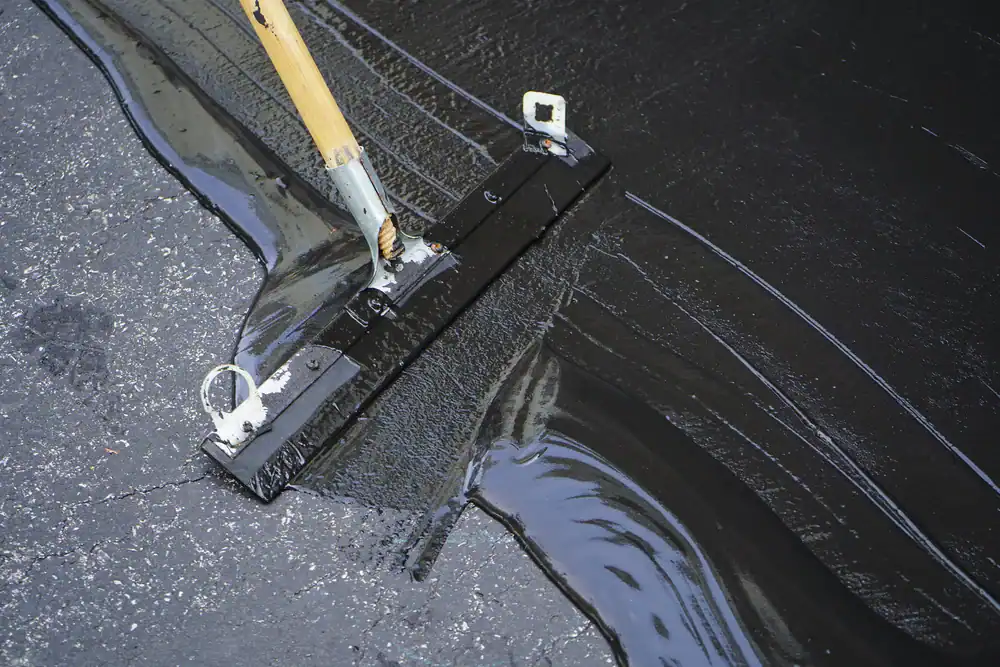
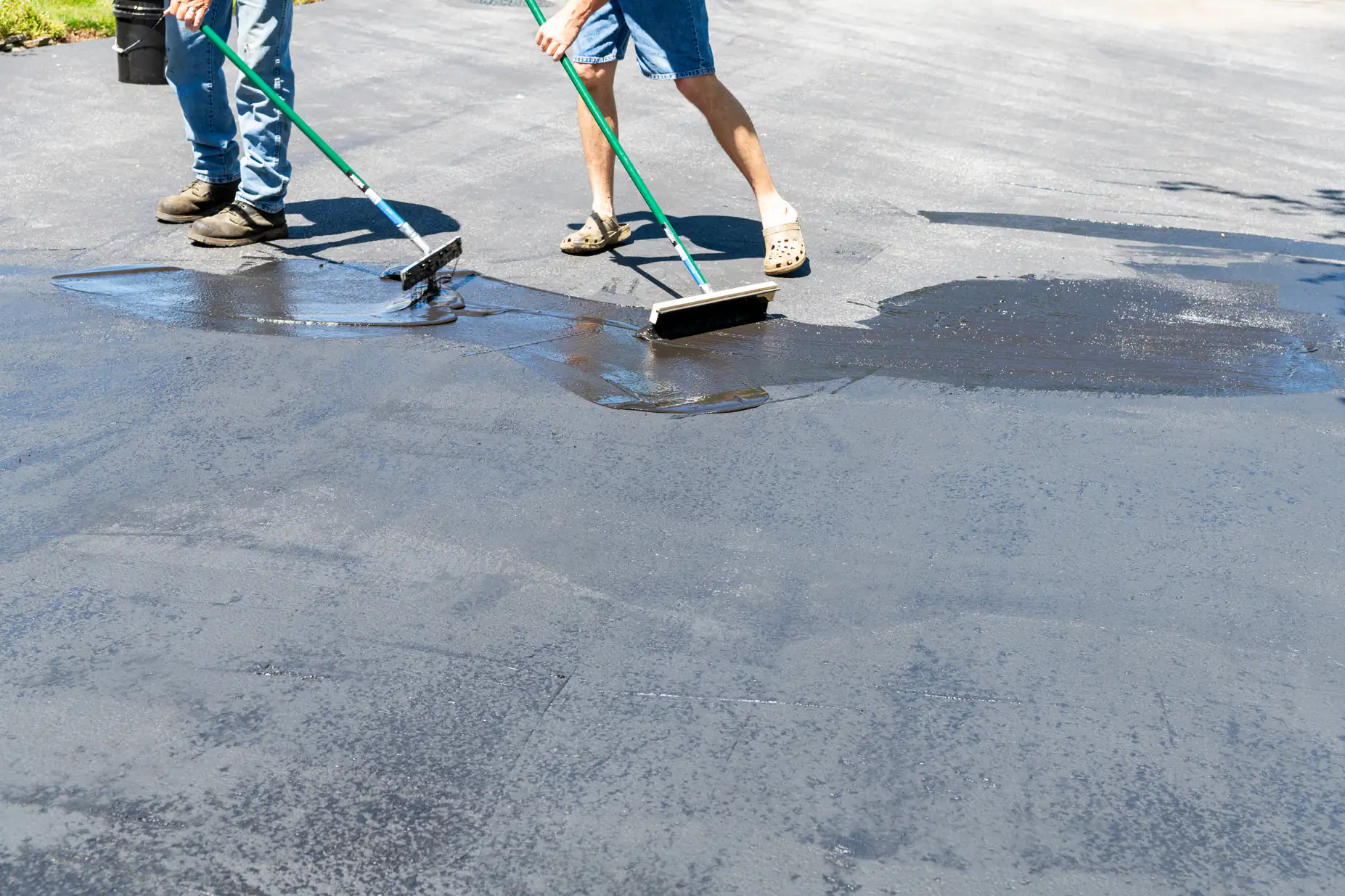
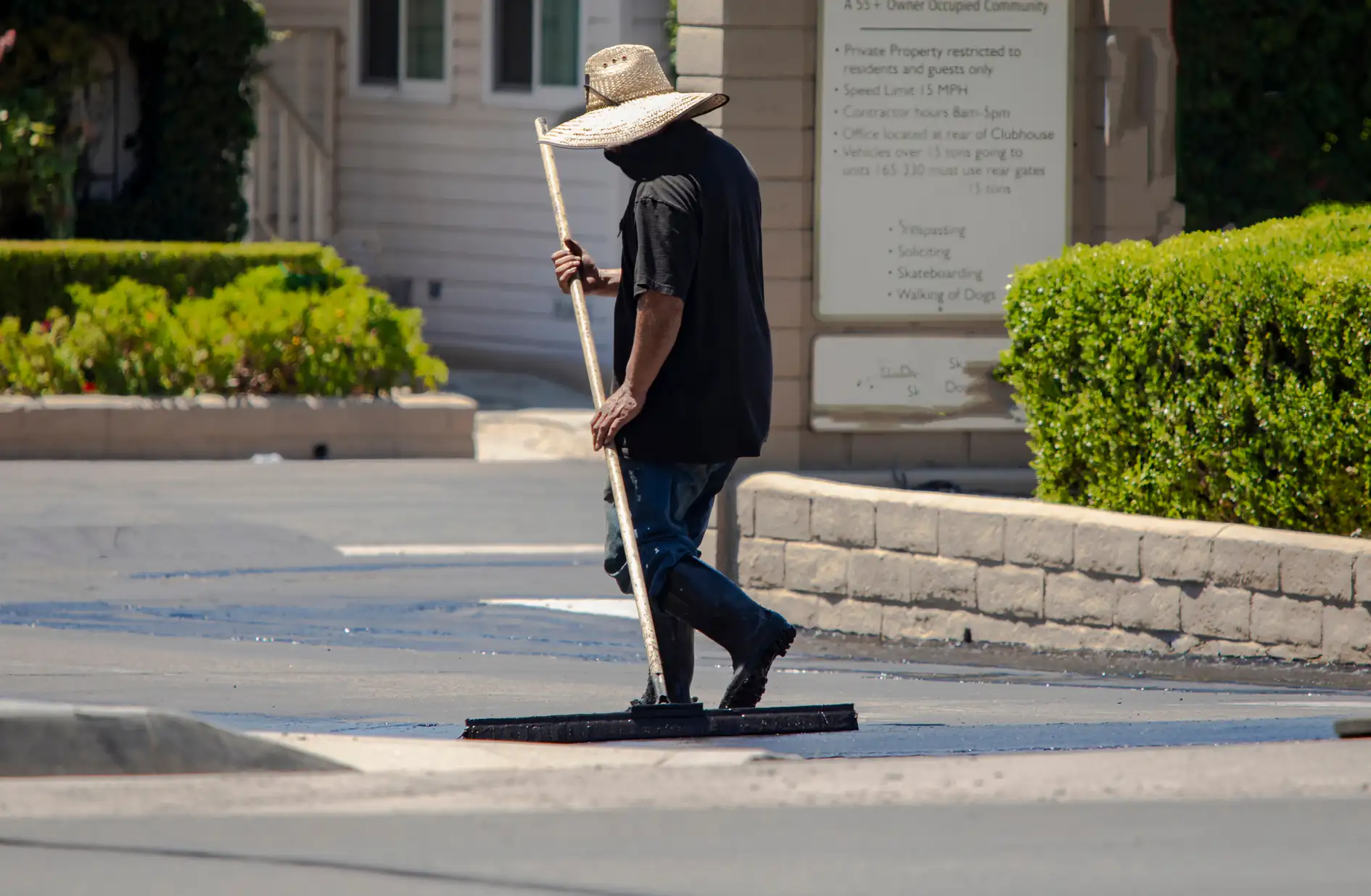
Then we apply two coats of commercial-grade sealer. The first coat penetrates and bonds. The second coat builds thickness and durability. We’re not spraying one thin layer and calling it done. Two coats are standard here because one coat doesn’t survive New Jersey winters.
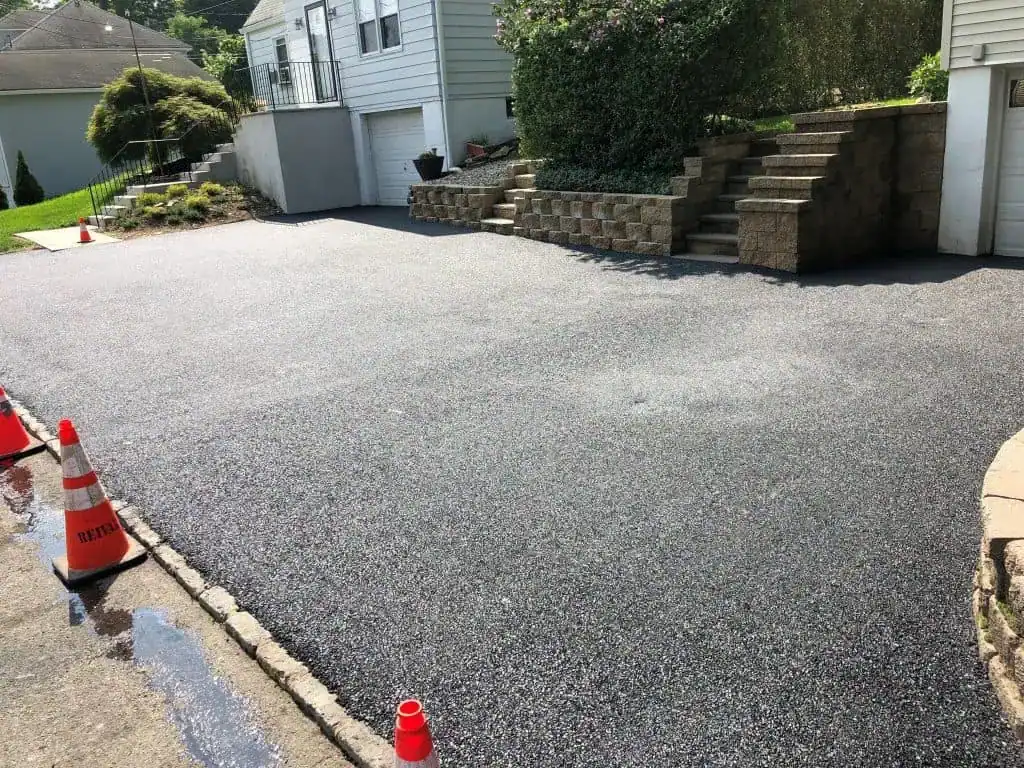
Curing takes 24 to 48 hours depending on temperature and humidity. You’ll need to keep vehicles off during that time. After that, your driveway is sealed and protected. We clean up completely, and you’re left with a smooth, black surface that looks new and performs like it should for the next three to four years.
Ready to get started?
Every sealcoating project includes a full surface cleaning, crack filling with hot pour rubberized material, and two coats of premium asphalt sealer. We’re not skipping steps to save time. You’re paying for the job done right.
Around Blackwells Mills, most residential driveways run between $300 and $800 depending on size and condition. That’s roughly 2% to 5% of what the asphalt underneath cost to install. When you consider that sealcoating can extend your driveway’s life by 50% to 100%, the math makes sense fast.
New Jersey prices run about 15% to 20% higher than national averages because labor costs more here and the climate demands better materials. You’re not overpaying. You’re getting what actually works in a state that sees 60 to 80 freeze-thaw cycles every winter.
We also handle oil stain treatment, which matters more than most people realize. Petroleum breaks down asphalt binder. If you’ve got oil spots and we seal over them without treating them first, the sealer won’t bond. It’ll peel off in sheets. We prime those areas so everything stays intact.

Most residential driveways in Blackwells Mills cost between $300 and $800 to sealcoat professionally with two coats. The price depends on square footage, current condition, and how much crack filling is needed before sealing.
A standard two-car driveway around 600 square feet usually runs $400 to $600. Larger driveways or those with significant cracking and damage cost more because the prep work takes longer. If your driveway has deep cracks, potholes, or structural issues, you might need repairs before sealcoating makes sense.
New Jersey prices are higher than national averages because the climate is harder on asphalt and labor costs more here. But compare that $500 sealcoat to the $8,000 to $12,000 you’d spend replacing the entire driveway. Sealcoating every three to four years extends the life of your asphalt by years, sometimes decades. That’s a 2,000% return on a small maintenance investment.
Late spring through early fall is the ideal window for driveway sealing in New Jersey. You need temperatures consistently above 50°F during the day and no rain in the forecast for at least 24 hours after application.
September and October are the best months if you can schedule it. The weather is dry, temperatures are moderate, and you’re getting that protective layer down right before winter hits. Sealcoating in fall means your driveway is sealed against moisture before the first freeze-thaw cycle starts in November.
Avoid sealing in summer when temperatures hit 90°F or higher. Sealer dries too fast and doesn’t bond properly. And never seal in winter or early spring when overnight temperatures still drop below freezing. The sealer won’t cure correctly, and you’ll end up with a surface that peels or wears off in months instead of years.
Two coats of quality sealer last three to four years on residential driveways in Somerset County. One coat might give you 18 to 24 months, which is why we always recommend two coats for New Jersey driveways.
The lifespan depends on traffic, weather exposure, and how well the surface was prepped before sealing. A driveway with two cars driving on it daily in full sun will wear faster than a lightly used driveway in partial shade. But even under heavy use, proper sealcoating gives you multiple years of protection.
You’ll know it’s time to reseal when the surface starts looking faded and gray instead of black, or when you see water soaking in instead of beading up. Those are signs the protective layer is wearing thin. Resealing before it’s completely gone prevents water from penetrating deep into the asphalt and causing structural damage.
You can buy DIY sealcoating products at home improvement stores, but the results usually don’t compare to professional application. The sealer sold to homeowners is thinner and doesn’t include the same additives that commercial-grade products have.
Professional crews use equipment that applies sealer evenly at the right thickness. We also know how to prep surfaces correctly, which matters more than the sealer itself. If you don’t clean properly, fill cracks with the right material, or treat oil stains, your sealer won’t bond. It’ll peel off in sheets or wear through in under a year.
The bigger issue is coverage. Most homeowners apply sealer too thin trying to stretch the product, or too thick in some areas and too thin in others. You end up with an uneven finish that doesn’t protect consistently. For a few hundred dollars, you’re getting professional-grade materials, proper equipment, experienced application, and a finish that actually lasts three to four years instead of one.
Your driveway’s lifespan drops by half, sometimes more. An unsealed asphalt driveway in New Jersey typically lasts 8 to 12 years before it needs replacement. A properly maintained driveway with regular sealcoating lasts 15 to 20 years or longer.
Water is the main enemy. It seeps into tiny cracks and pores in the asphalt. When temperatures drop below freezing, that water expands by 9%, creating pressure that widens cracks and creates new ones. Each freeze-thaw cycle makes the damage exponentially worse. By spring, small cracks have turned into large fissures, and fissures have turned into potholes.
UV rays also break down the asphalt binder that holds everything together. Your driveway fades from black to gray, becomes brittle, and starts crumbling at the edges. Road salt accelerates the deterioration even faster. Once the damage reaches the base layer, you’re looking at expensive repairs or full replacement. Sealcoating every few years prevents all of that for a fraction of the cost.
We don’t sealcoat driveways in winter. Sealer needs temperatures above 50°F to cure properly, and New Jersey winters don’t provide that consistently enough for the product to bond and harden correctly.
If we applied sealer when it’s too cold, it wouldn’t dry. It would stay soft, track into your house, stick to your tires, and likely peel off in chunks once temperatures finally warmed up. You’d be paying for work that fails within weeks, and we’re not doing that to anyone.
Our sealcoating season runs from late April through October, depending on weather conditions. If you’re thinking about getting your driveway sealed, the best time to schedule is late summer or early fall. That gives you maximum protection right before winter hits, which is exactly when you need it most in Somerset County.