
Hear from Our Customers
Your driveway takes a beating in Belle Mead, NJ. Between 40-50 freeze-thaw cycles every winter, summer heat pushing past 90°F, and over 45 inches of rain annually, unprotected asphalt doesn’t stand a chance. Water seeps into tiny cracks, freezes, expands by 9%, and turns minor surface issues into expensive structural problems.
Professional driveway sealcoating stops that cycle. A quality two-coat application creates a flexible, waterproof barrier that keeps moisture out and prevents UV rays from drying and cracking the surface. You’re not just making it look darker—you’re adding 3-5 years of life to your driveway.
The math is straightforward. Sealcoating costs around $300-500 for most residential driveways in Belle Mead. Repaving that same driveway runs $5,000 or more. When you seal every 3-4 years, you’re spending pennies compared to what you’d pay for full replacement. And you’re keeping your property looking sharp while you do it.
We’re a third-generation, family-owned paving contractor based right here in Morris County. For over 20 years, we’ve been sealing driveways across Belle Mead and surrounding communities—not because we’re the cheapest option, but because we do it right the first time.
Our sealcoat contains over 50% solids with a polymer modification system. Most contractors use standard sealer at 47% solids. That difference means thicker coverage, better protection, and longer-lasting results. We hand-apply every job to ensure uniform thickness—no thin spray coats that wear off in a season.
You’ll get an upfront quote with no surprise charges, a 24-48 hour callback guarantee, and a written 2-year warranty on materials and workmanship. We show up on time, finish when we say we will, and leave your property cleaner than we found it.
First, we inspect your driveway for cracks, potholes, and drainage issues. Minor cracks get filled with rubberized crack filler before we seal. Larger damage might need patching or repair work—we’ll tell you upfront if that’s the case.
Next, we clean the entire surface. Oil stains, dirt, vegetation, and loose debris all have to go. If the surface isn’t clean, the sealer won’t bond properly. We use commercial-grade cleaners and power equipment to prep the asphalt correctly.
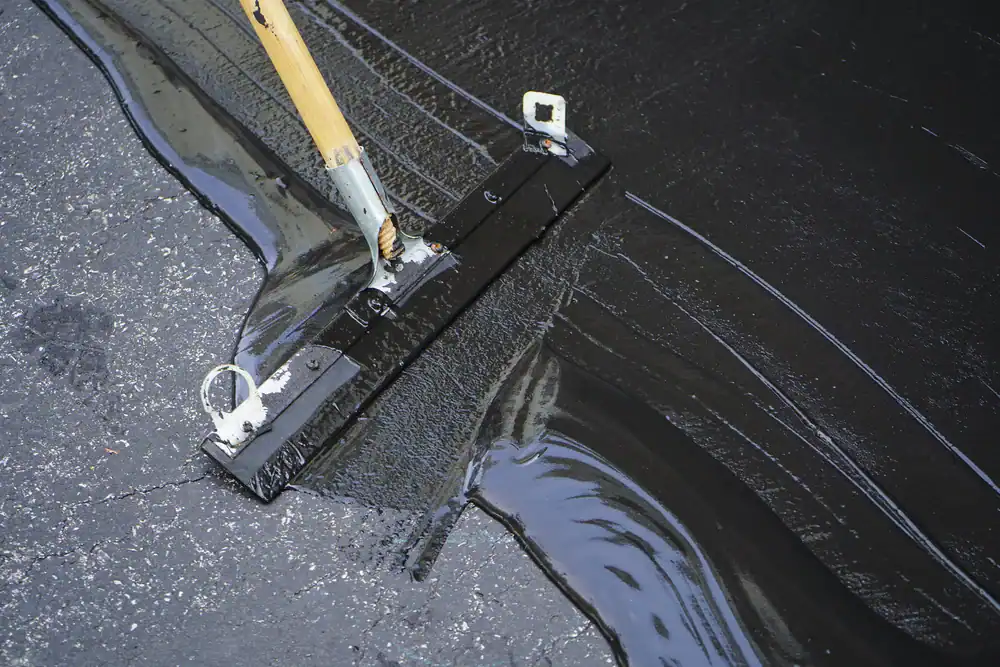
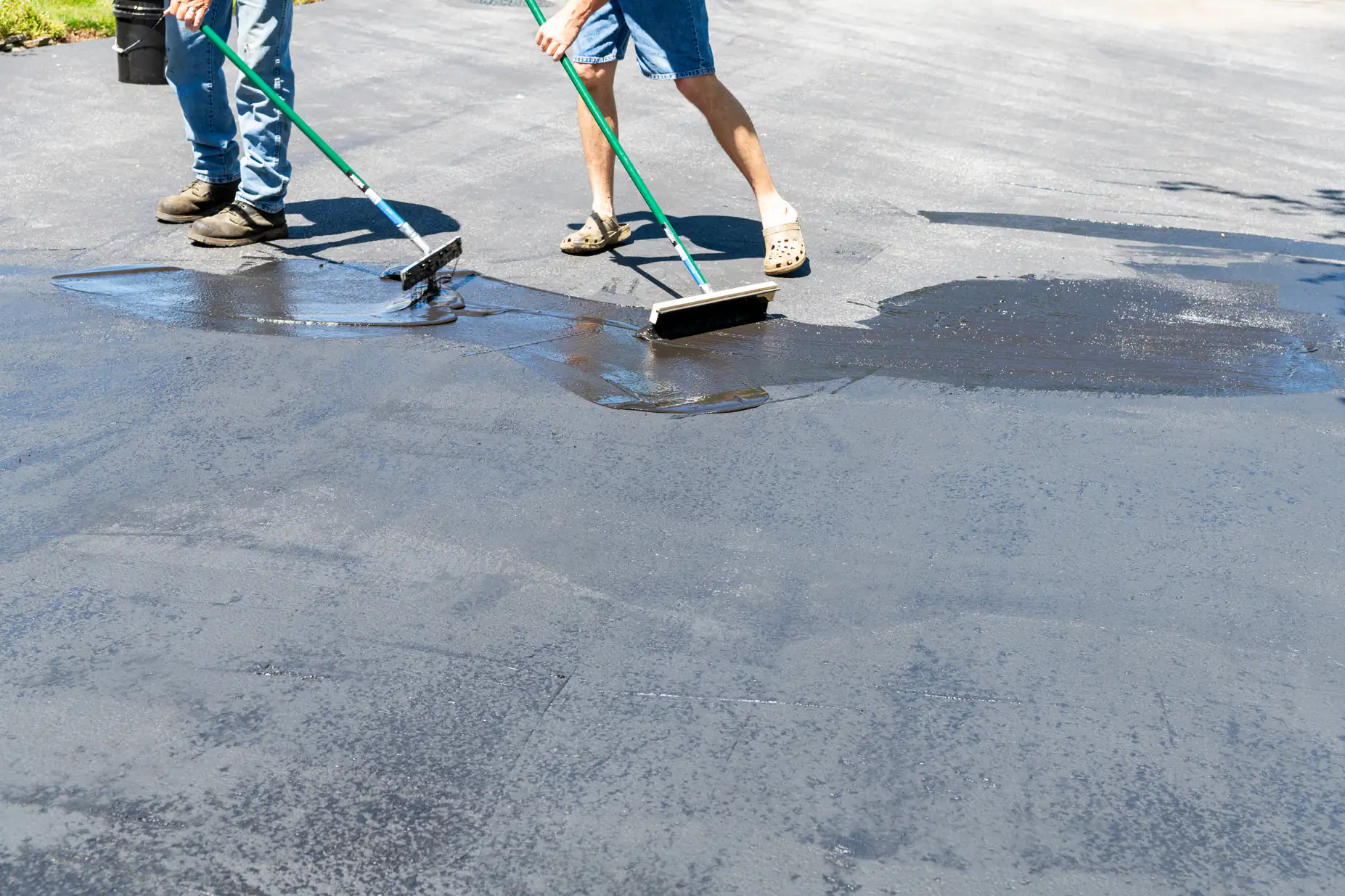
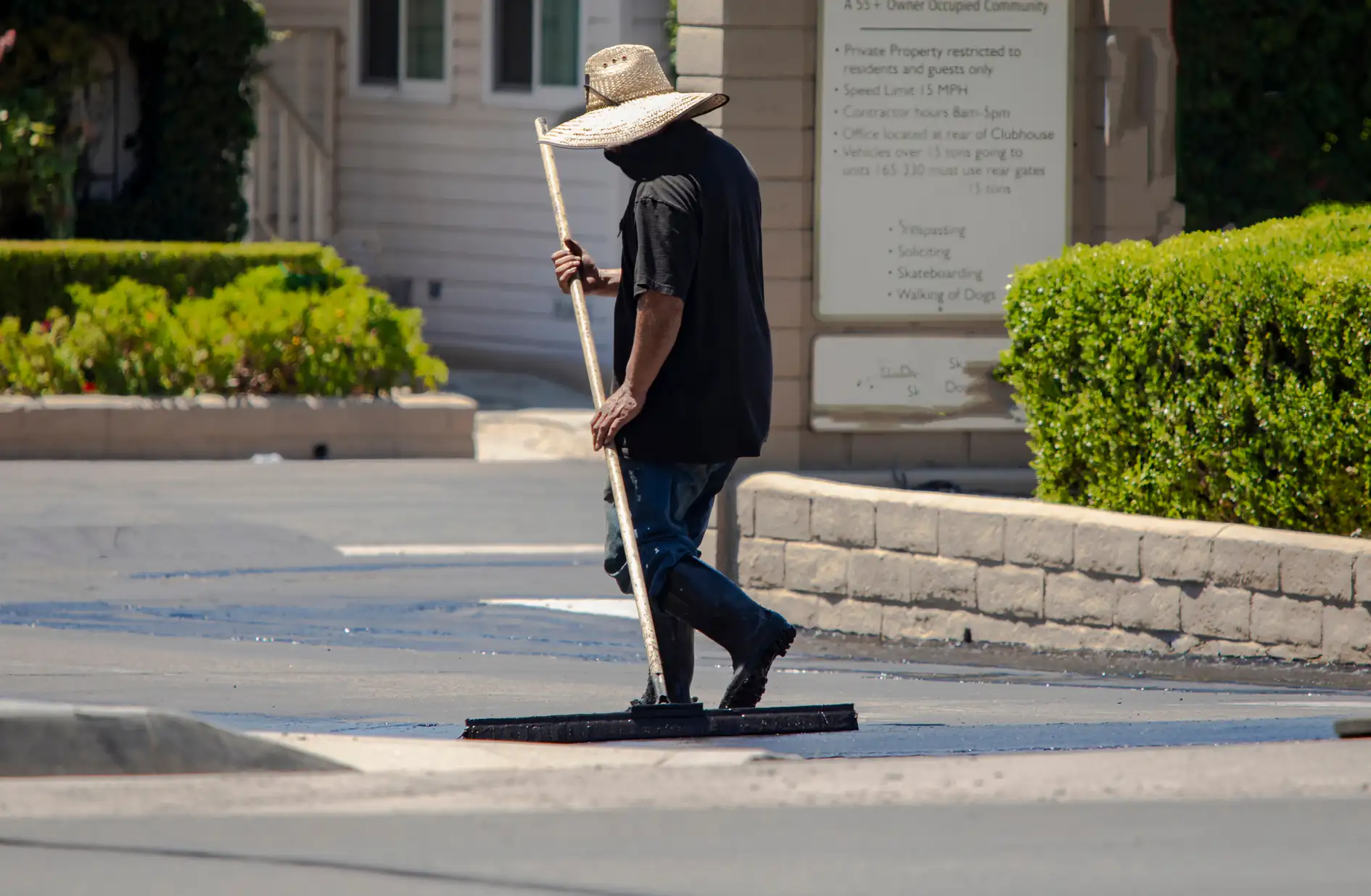
Then comes the sealcoating itself. We hand-apply two coats of our proprietary sealer using squeegees, not sprayers. The first coat soaks into the asphalt and fills surface voids. The second coat creates that protective top layer. Each coat needs 24 hours to cure, so the whole process takes about two days depending on weather.
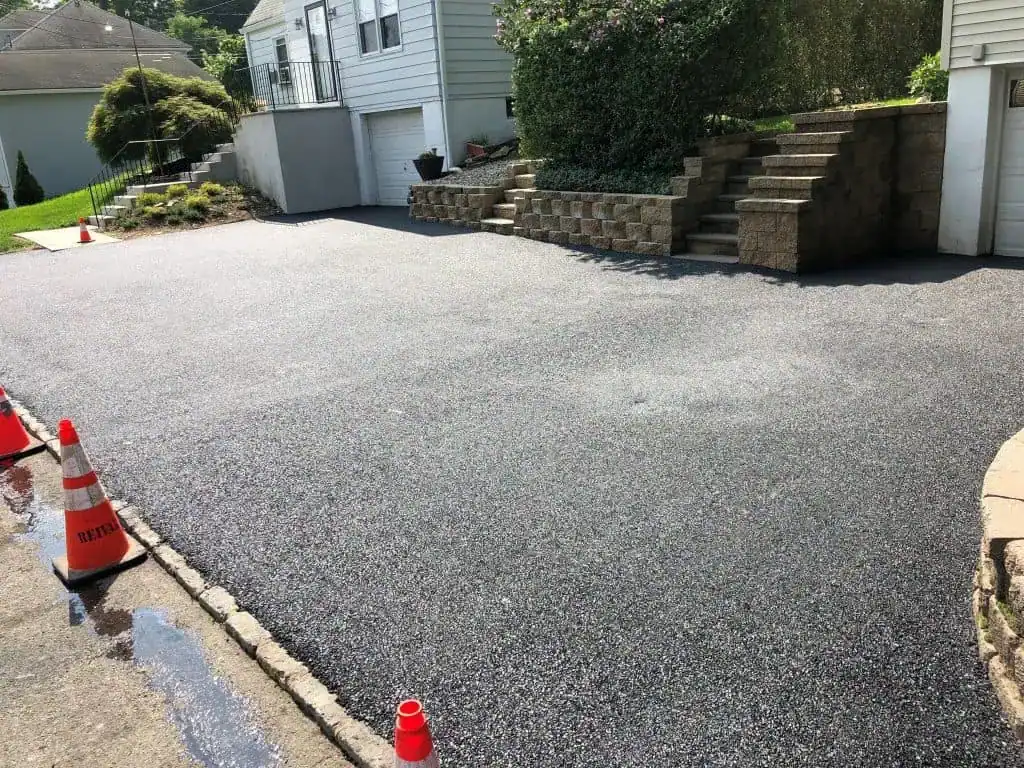
You’ll need to stay off the driveway for 24-48 hours after the final coat. After that, you’ve got a fresh, protected surface that’s ready for whatever Belle Mead weather throws at it.
Ready to get started?
Driveway sealcoating in Belle Mead typically runs $0.15-$0.40 per square foot. Most residential driveways fall between $300-500 for a complete two-coat application. That price includes crack filling, surface cleaning, two coats of premium sealer, and our 2-year warranty.
Here’s what separates a $300 sealcoat from a $150 one: material quality and application method. Cheap sealer is mostly water. It looks shiny for a few weeks, then wears off or turns gray. Our sealer has higher solids content and polymer additives that flex with temperature changes instead of cracking.
Hand application matters too. Spray jobs go on fast but thin. You’re getting maybe half the coverage of a hand-applied coat. That means shorter protection and faster wear. We take the extra time because it’s the difference between 2 years of protection and 4.
Belle Mead’s climate demands quality work. You’re not in Florida where freeze-thaw isn’t an issue. You need sealcoating that can handle New Jersey winters—and that requires better materials and proper application. The upfront cost difference is minor. The protection difference is massive.

Every 3-4 years for residential driveways with normal use. That timeline assumes you’re using quality sealer applied correctly—not the bargain stuff that wears off in 18 months.
New asphalt is the exception. Wait at least 6-12 months before sealing a brand new driveway. Fresh asphalt needs time to cure and release oils. Seal it too early and you’ll trap those oils, which prevents proper bonding.
If your driveway sees heavy use—multiple vehicles, frequent traffic, commercial delivery trucks—you might need to seal every 2-3 years instead. Check for fading color and water absorption. If water soaks in instead of beading up, it’s time to reseal.
Late spring through early fall, with September and October being ideal in Belle Mead. You need temperatures above 50°F during application and for 24-48 hours after. You also need dry weather—no rain in the forecast for at least 24 hours.
Fall is optimal because temperatures are moderate and stable. Spring can work, but you’re gambling on unpredictable weather. Summer is fine temperature-wise, but extreme heat can make sealer dry too fast, causing application issues.
Avoid sealing in late fall or winter. Even if you get a warm day, overnight temperatures can drop below 50°F and prevent proper curing. That leads to early failure—peeling, flaking, and poor adhesion. Over half of sealcoat jobs in the Northeast fail early because of bad timing. Don’t be part of that statistic.
Asphalt and concrete need completely different products. Asphalt sealcoating uses coal tar or asphalt emulsion sealers. Concrete driveways use penetrating sealers or acrylic coatings designed specifically for concrete.
If you have a concrete driveway, you’re looking at concrete sealing, not asphalt sealcoating. The process is different, the materials are different, and the results are different. Concrete sealers protect against moisture, staining, and surface damage—but they don’t add that dark black finish you see on sealed asphalt.
We handle both asphalt and concrete sealing. Just make sure you’re clear about which surface you have when you call. Using asphalt sealer on concrete (or vice versa) is a waste of money and won’t protect anything.
Quality two-coat applications last 3-4 years on residential driveways in Belle Mead. That’s with proper prep work, premium materials, and correct application. Cheap single-coat jobs might last 1-2 years before they start failing.
Several factors affect longevity. Traffic volume matters—more cars mean faster wear. Sun exposure plays a role too. Driveways in full sun fade faster than shaded ones. And maintenance makes a difference. If you let oil stains sit or never clean your driveway, the sealer breaks down faster.
You’ll know it’s time to reseal when the surface starts looking gray instead of black, or when water stops beading up and starts soaking in. Don’t wait until you see major cracking. By then, you’re past preventive maintenance and into repair territory—which costs a lot more.
Thickness and durability. Hand-applied sealcoating goes on thicker and more uniform. Spray applications are faster but thinner—sometimes half the thickness of a squeegee-applied coat.
Thicker coverage means better protection and longer life. You’re creating a more substantial barrier against water, UV rays, and chemicals. Spray jobs look fine initially, but they wear through faster, especially in high-traffic areas like the apron where you turn in from the street.
Hand application also gives better control around edges, corners, and transitions. You’re less likely to get overspray on concrete walkways, garage floors, or landscaping. The process takes longer, which is why some contractors prefer spraying—it’s cheaper and faster for them. But you’re not paying for speed. You’re paying for protection that lasts.
Most residential driveways in Belle Mead run $300-500 for professional two-coat sealcoating. That includes crack filling, cleaning, premium sealer, and proper application. Larger driveways or those needing significant crack repair will cost more.
Price varies based on driveway size, condition, and access. A small 400 square foot driveway might run $200-300. A larger 1,000 square foot driveway could hit $500-600. If you need extensive crack filling or patching before sealing, add another $100-300 depending on damage severity.
Be skeptical of quotes significantly below $300 for an average driveway. You’re either getting watered-down sealer, a single thin coat, or a contractor cutting corners on prep work. All three scenarios mean you’ll be resealing sooner—or dealing with premature failure. The cheapest quote rarely delivers the best value.