
Hear from Our Customers
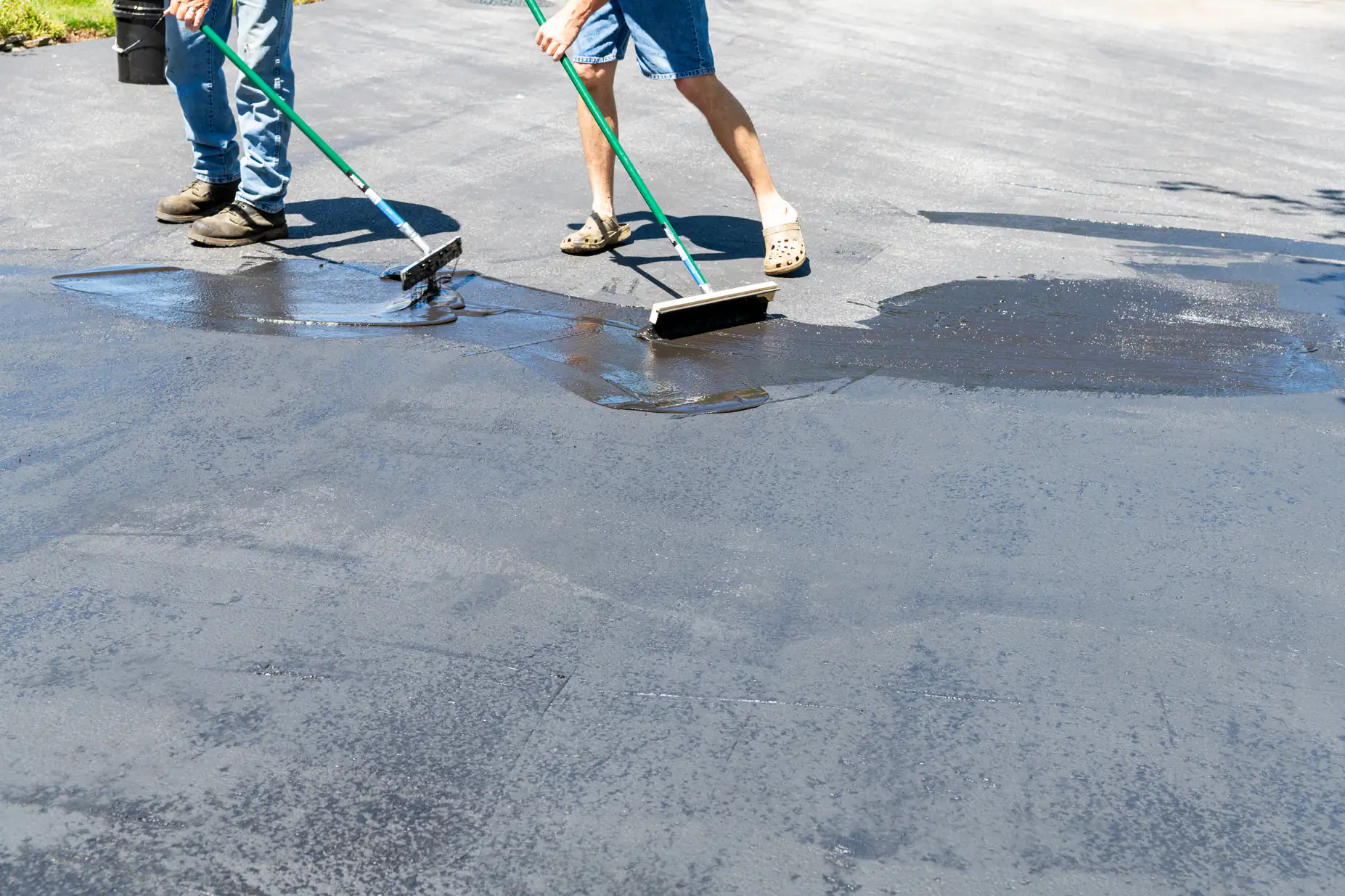
Sealcoating isn’t just about making your driveway look darker. It creates a protective barrier that stops moisture from seeping into the asphalt base, which is what causes those expensive cracks and potholes when temperatures drop below freezing.
Somerset gets hit hard with freeze-thaw cycles every winter. Water gets into small cracks, freezes, expands, and turns minor surface issues into structural problems that cost thousands to repair. Sealcoating blocks that water before it starts.
You also get protection from UV rays that dry out asphalt and make it brittle. Oil drips, gasoline spills, and de-icing chemicals won’t penetrate the surface. Your driveway stays flexible, resists cracking, and holds up against everything New Jersey weather throws at it. Most professional sealcoating jobs last two to three years before you need to reapply, which means you’re spending a few hundred dollars now instead of several thousand on resurfacing later.
We’re a third-generation, family-owned contractor based in Morris County. We’ve been handling asphalt and concrete work across Somerset, Morris, and Sussex Counties for over 20 years.
That means we know exactly how Somerset’s soil conditions affect drainage, how quickly weather can shift during application season, and what mix designs hold up best against the temperature swings you deal with here. We’re not learning on your driveway.
We’re licensed, insured, and we don’t subcontract the work. When you hire us, you get our crew, our equipment, and our standards. No surprises, no runarounds, and no damage to your garage door or landscaping because someone rushed the job.
First, we clean the entire surface. That means power washing or blowing off dirt, debris, oil stains, and anything else that would prevent the sealer from bonding properly. If the surface isn’t clean, the sealer won’t adhere, and you’ll have peeling and premature failure.
Next, we fill any cracks. Even small cracks need attention before sealcoating because sealer isn’t a crack filler—it’s a protective coating. We use hot rubberized crack filler that flexes with temperature changes and keeps water out.
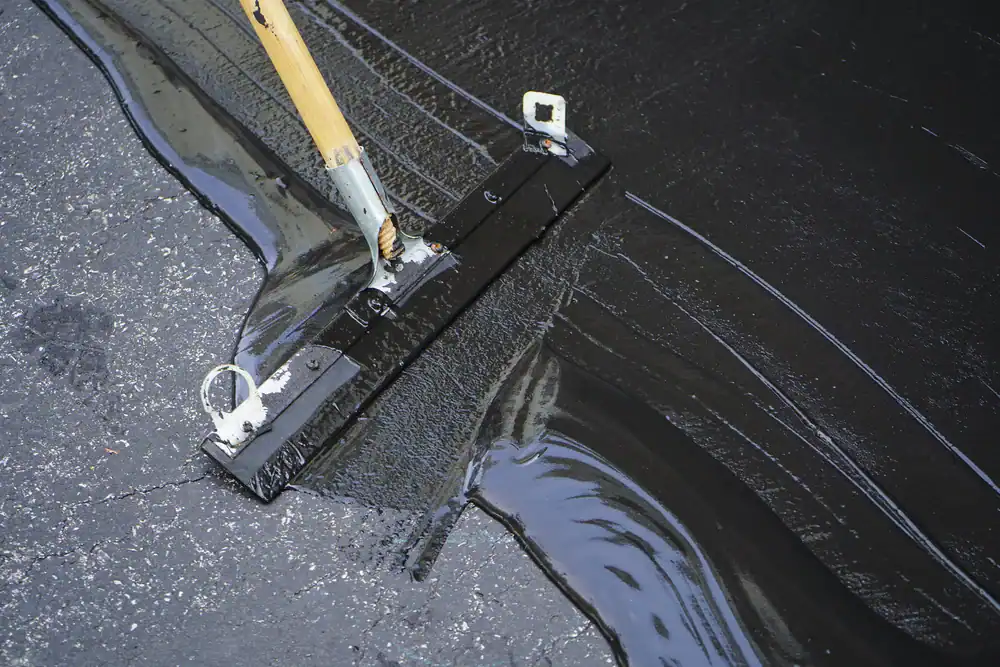
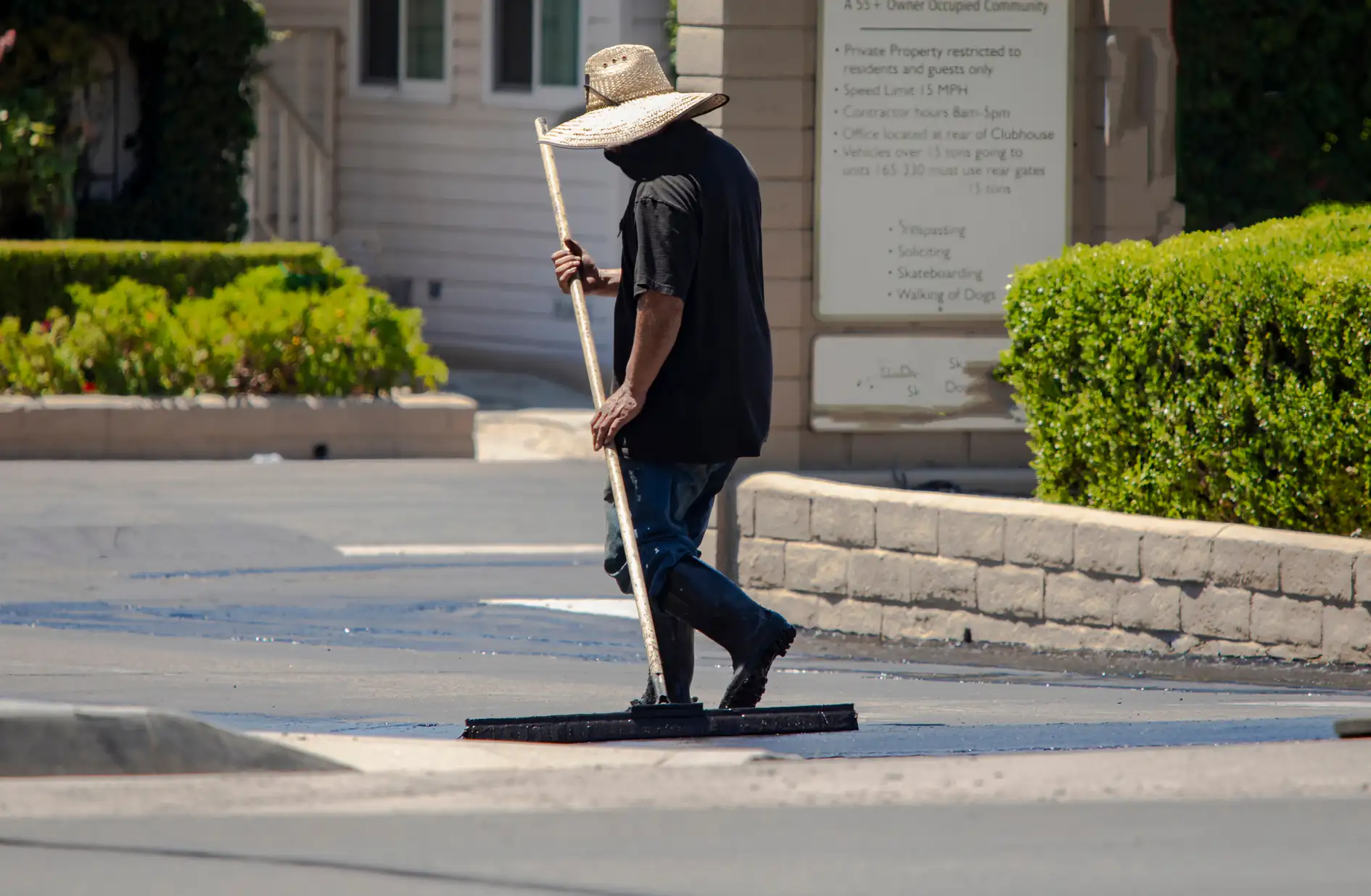
Then we apply the sealcoat using commercial-grade equipment. We’re not brushing it on with a broom or spraying it unevenly. Proper application means consistent coverage, no thin spots, and a finish that cures correctly. We typically apply two coats for residential driveways to ensure full protection.
After application, your driveway needs 24 to 48 hours to cure, depending on temperature and humidity. We’ll tell you exactly when it’s safe to drive on. Rushing it means tire marks and surface damage, so we schedule around weather windows that give you the best results.
Ready to get started?
Sealcoating in Somerset typically runs between $0.15 and $0.40 per square foot, depending on the condition of your driveway and how much prep work is needed. Most residential driveways cost between $200 and $500 for a complete job.
That price includes surface cleaning, crack filling, two coats of commercial-grade asphalt emulsion sealer, and proper curing time. You’re not paying for coal tar sealers that are restricted in several New Jersey municipalities—we use high-quality asphalt emulsion that’s safer and performs just as well.
Somerset homeowners deal with heavy freeze-thaw cycles, humid summers, and road salt tracked onto driveways all winter. Your driveway takes more abuse than most other parts of the country, which is why the national average cost doesn’t always apply here. New Jersey prices run about 15 to 20 percent higher because of labor costs and the level of wear your asphalt experiences.
If a contractor quotes you under $0.20 per square foot with no explanation of what’s included, that’s a red flag. You’re likely getting watered-down sealer, no crack filling, or a single thin coat that won’t last through one winter. Cheap sealcoating fails fast, and then you’re paying someone else to redo it correctly.

You should seal your driveway every two to three years, depending on traffic, weather exposure, and how well the previous sealcoat is holding up. If you’re seeing faded areas, small cracks forming, or water soaking into the surface instead of beading up, it’s time to reseal.
New driveways need their first sealcoat about six to twelve months after installation. Sealing too early traps oils in the asphalt that need to cure, which can cause premature deterioration. After that first application, stick to a regular schedule.
Somerset’s freeze-thaw cycles are tough on asphalt. Waiting too long between sealcoat applications means water gets into the base, freezes, and causes structural damage that sealcoating can’t fix. Staying on schedule is cheaper than paying for crack repairs or resurfacing.
Late spring through early fall is the best window for sealcoating in New Jersey. You need temperatures above 50°F during application and for at least 24 hours afterward, with no rain in the forecast.
Sealcoating in cooler weather means longer curing times and a higher risk of moisture getting into the sealer before it sets. If temperatures drop overnight, the sealer won’t bond correctly, and you’ll end up with a weak surface that fails early.
Summer is ideal because you get warm pavement, low humidity, and predictable weather patterns. Just avoid sealing during extreme heat—above 90°F—because the sealer can dry too fast and not level properly. We monitor weather closely and won’t start a job unless conditions are right, even if it means rescheduling.
No. Sealcoating protects the surface—it doesn’t repair structural damage. If you have cracks wider than a quarter-inch or potholes, those need to be filled and repaired before sealcoating.
We use hot rubberized crack filler for anything that’s actively separating or letting water through. For potholes, we cut out the damaged area, compact the base, and patch it with hot mix asphalt. Once repairs are done and cured, then we sealcoat over everything.
Trying to sealcoat over damaged asphalt is a waste of money. The sealer will settle into cracks and low spots, you’ll still have structural issues underneath, and the damage will continue spreading. Fix the problems first, then protect the surface.
Sealcoating typically takes 24 to 48 hours to cure enough for vehicle traffic, depending on temperature, humidity, and how thick the application is. Foot traffic is usually safe after 12 to 18 hours.
Warmer, drier conditions mean faster curing. If it’s cooler or more humid, you’ll need to stay off the driveway longer. We’ll give you a specific timeline based on the forecast and conditions the day we seal.
Driving on sealcoating before it’s fully cured will leave tire marks, scuff the surface, and damage the finish. It’s not just cosmetic—you’re compromising the protective layer you just paid for. Plan to park on the street for a day or two, and don’t let anyone cut through your driveway during that window.
Asphalt emulsion sealer is made from refined asphalt and is the environmentally safer option. Coal tar sealer is made from coal byproducts and has been restricted or banned in several New Jersey municipalities because of environmental and health concerns.
Both types protect your driveway from water, UV rays, and chemicals, but asphalt emulsion is what most professional contractors use now. It bonds well, lasts just as long, and doesn’t carry the same regulatory risks.
Some older contractors still push coal tar because that’s what they’ve always used, but it’s not worth the potential issues. Asphalt emulsion performs just as well, meets all local codes, and won’t cause problems if regulations tighten further in Somerset County.
Most residential driveways in Somerset cost between $200 and $500 to sealcoat, depending on size and condition. The price breaks down to about $0.15 to $0.40 per square foot, which includes cleaning, crack filling, and two coats of sealer.
If your driveway has significant cracking, oil stains, or drainage issues, expect to pay toward the higher end of that range. Extra prep work takes more time and materials, but skipping it means the sealcoat won’t last.
New Jersey pricing runs higher than the national average because of labor costs and how much wear asphalt takes here. If someone quotes you significantly below $150 for an average driveway, ask what’s included. You might be getting one thin coat, no crack filling, and a job that fails in six months.