
Hear from Our Customers
Your driveway stops bleeding money. That’s the short version.
When we seal your asphalt correctly, water can’t penetrate the surface. That means no freeze-thaw cycles cracking it apart all winter. No potholes forming by spring. No emergency calls to repair what could’ve been prevented.
You’re looking at 10 to 15 additional years of life from your driveway. In Roseland and across Morris County, where winter temperatures swing wildly and snow removal beats up asphalt, that protection matters. A sealed surface also resists oil stains from your vehicles, UV damage from summer sun, and the general wear that turns driveways gray and brittle.
The cost difference is dramatic. Sealcoating runs $200 to $500 for most residential driveways. Replacement costs $6 to $15 per square foot—often $8,000 to $12,000 total for an average driveway. You’re spending pennies now to avoid spending thousands later.
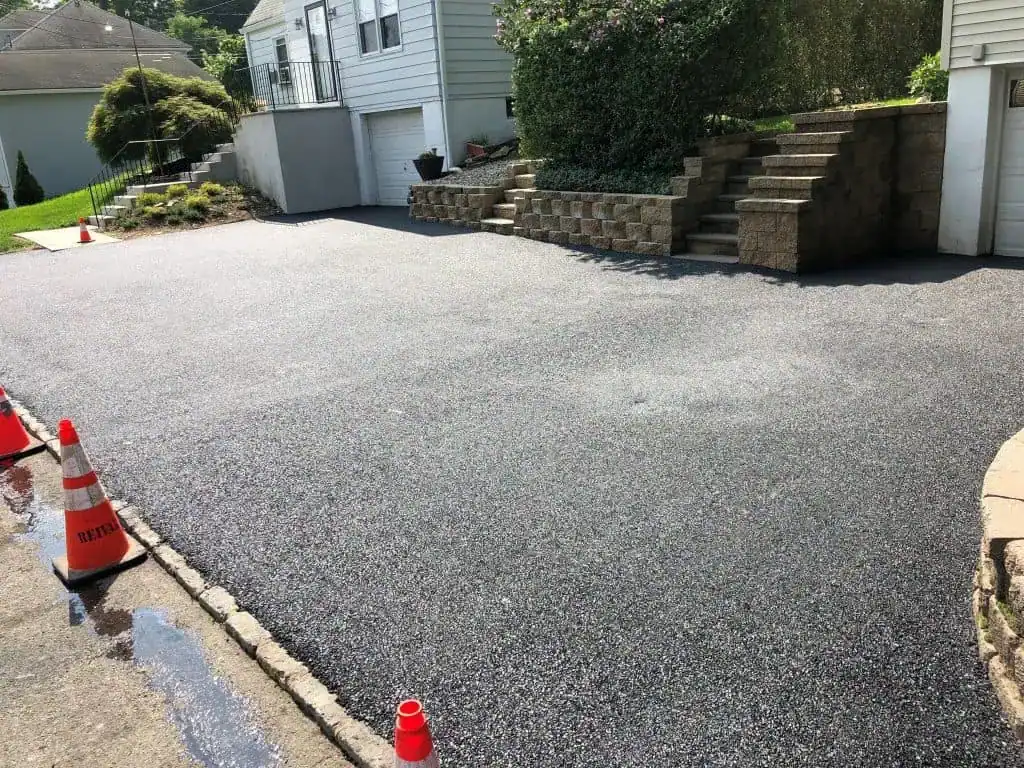
Plus, your driveway looks new again. That deep black finish doesn’t just protect the asphalt—it transforms your curb appeal instantly.
We’re a third-generation, family-owned paving company based in Morris County. We’re not a crew that shows up, slaps down some sealer, and disappears. We live and work here—our reputation is built on driveways throughout Roseland, Morristown, Madison, Caldwell, and the surrounding towns.
Over two decades, we’ve learned exactly how North Jersey weather attacks asphalt. We know which materials hold up and which application methods actually work when temperatures drop. That’s why we back our sealcoating work with a 5-year warranty.
You’ll get a detailed estimate before we start—no surprise charges, no vague line items. We show up when we say we will, finish on schedule, and leave your property cleaner than we found it. If you request a quote online, we’ll call you back within 24 to 48 hours.
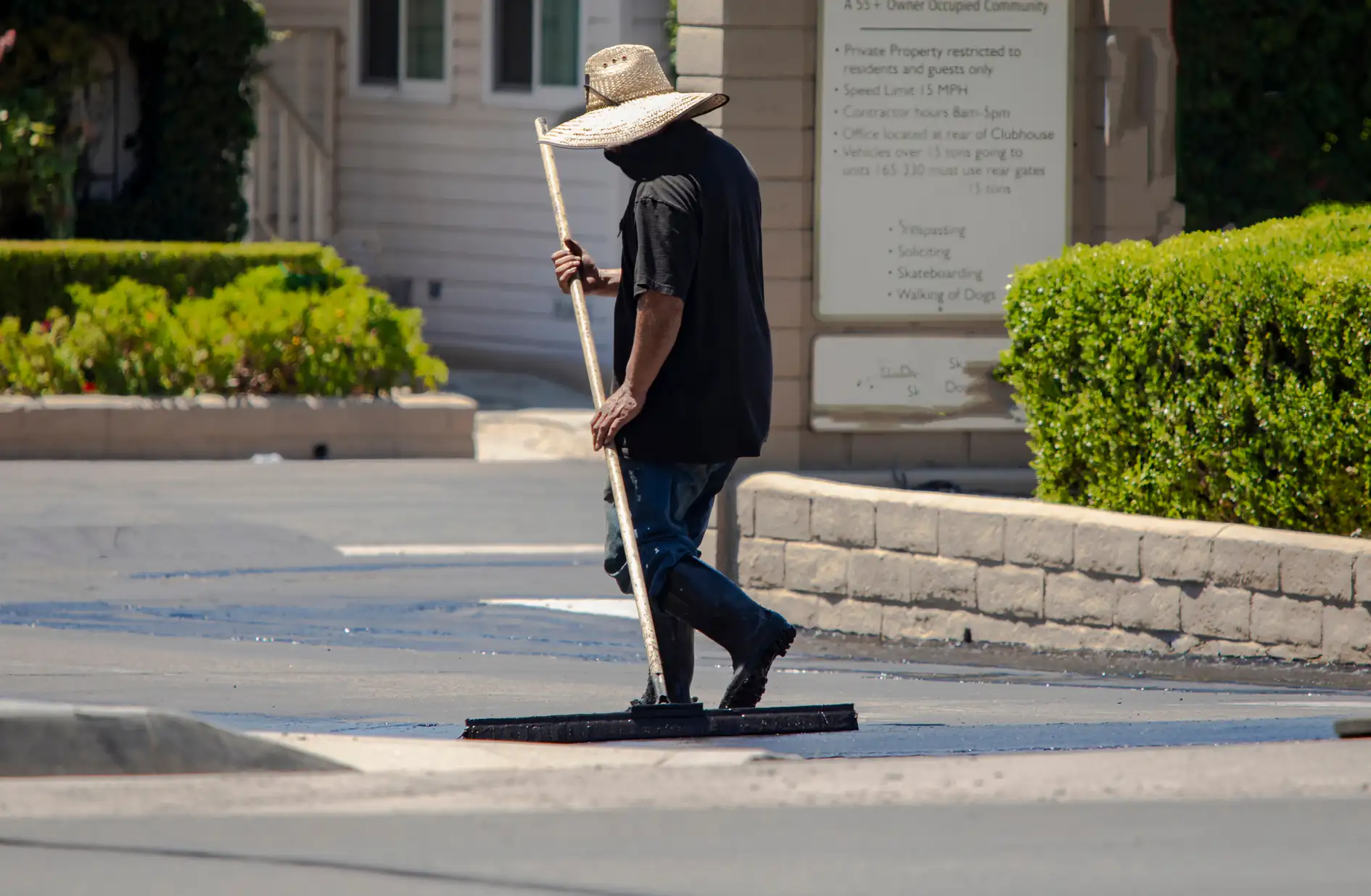
First, we inspect your driveway for damage. Small cracks get filled before we seal. Larger structural problems get flagged—we’ll tell you if sealcoating makes sense or if you need repairs first.
Next, we clean the surface thoroughly. Oil stains, dirt, vegetation, and debris all prevent sealer from bonding properly. We use commercial equipment to make sure the asphalt is completely clean and dry before application.
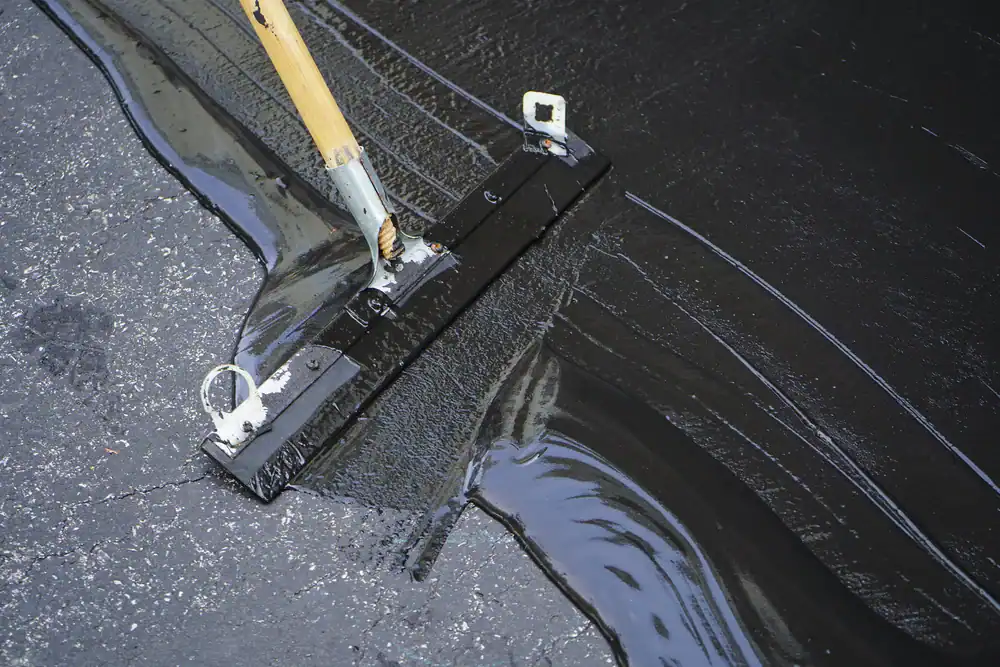
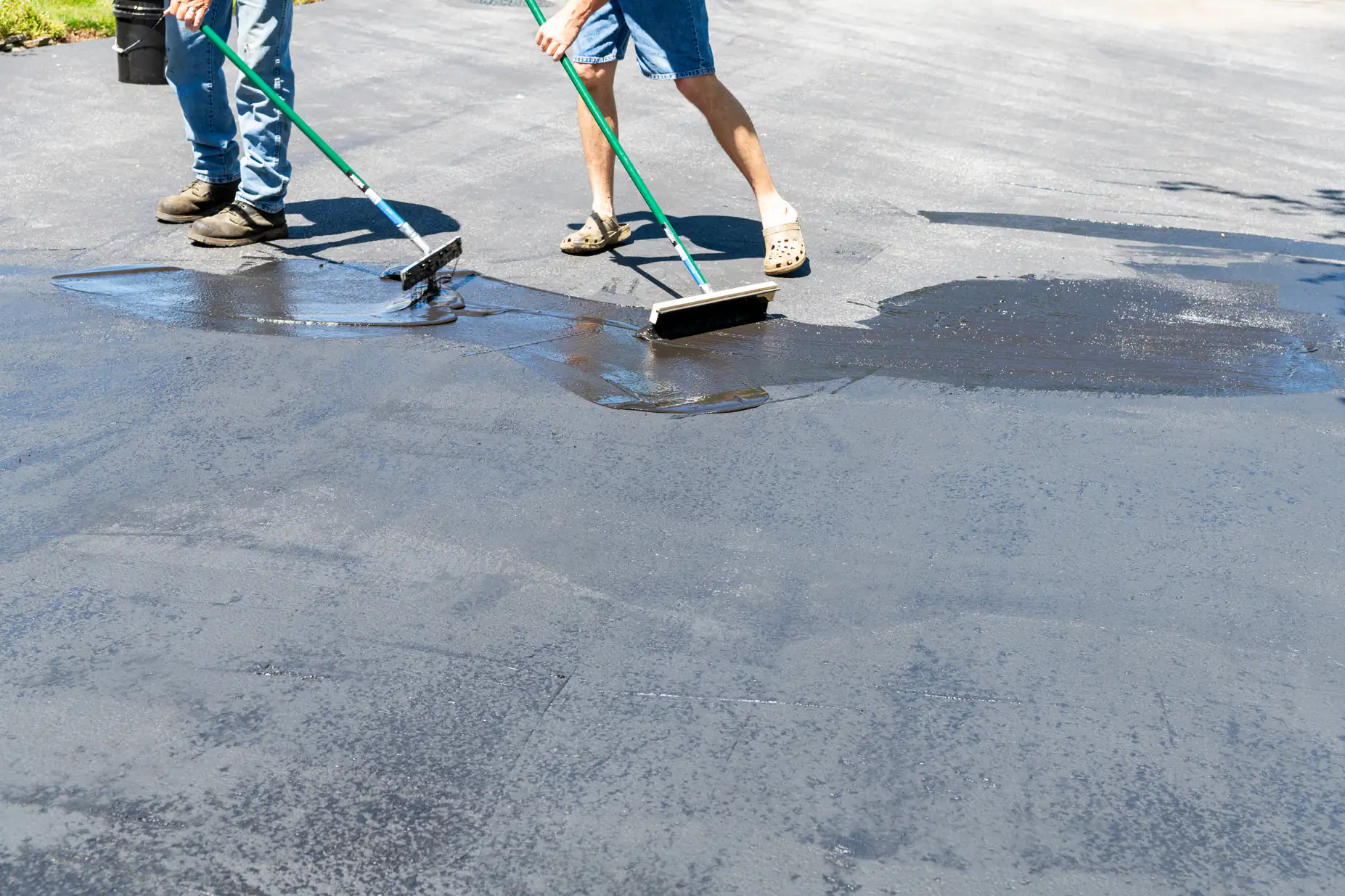
Then we apply commercial-grade sealer in two coats. The first coat penetrates and bonds to the asphalt. The second coat creates the protective barrier that blocks water, UV rays, and chemicals. We use professional-grade materials—not the stuff you buy in buckets at hardware stores.
The sealer needs 24 to 48 hours to cure, depending on temperature and humidity. We’ll give you specific instructions about when you can walk or drive on it. Most driveways are ready for light foot traffic after 24 hours and vehicle traffic after 48 hours.
Timing matters. We can only sealcoat when temperatures stay above 50°F and no rain is forecast for 24 hours. In Roseland, that means late spring through early fall—typically May through October.
Ready to get started?
You get a complete inspection before we quote the job. We’ll point out any cracks, drainage issues, or base problems that need attention. If your driveway has quarter-inch cracks or smaller, we’ll fill those as part of the sealcoating process. Larger repairs get quoted separately—we don’t hide that work in change orders later.
Our sealcoating service includes thorough cleaning, crack filling up to a quarter inch, two coats of commercial-grade sealer, and proper edging along garage doors and walkways. We protect your landscaping, garage floor, and any adjacent surfaces. When we’re done, we clean up completely.
In Roseland specifically, we see a lot of driveways that slope toward the street or have drainage concerns because of the terrain. We’ll assess how water moves across your driveway and let you know if you need additional work to prevent pooling. Standing water is sealcoating’s enemy—it needs to be addressed.
You’ll also get guidance on maintenance. A properly sealed driveway should be resealed every two to three years in New Jersey. We’ll tell you what to watch for and when to call us back. Most homeowners in Morris County find that regular sealcoating every three years keeps their driveways in excellent condition and avoids major repairs.

Most residential driveways in Roseland cost between $200 and $500 to sealcoat professionally. The exact price depends on your driveway’s size, current condition, and how much crack filling is needed before we seal.
We charge by the square foot—typically $0.15 to $0.40 per square foot in Morris County. A standard two-car driveway runs about 600 square feet, which puts you in the $240 to $300 range for straightforward sealcoating with minimal prep work.
If your driveway has significant cracking, oil stains, or drainage problems, the prep work increases the cost. We’ll give you a detailed written estimate that breaks down exactly what you’re paying for—surface prep, crack filling, sealer application, and any additional work. No surprises.
Compare that to replacement costs. Removing and repaving a driveway runs $6 to $15 per square foot in North Jersey—often $8,000 to $12,000 total. Sealcoating every few years is dramatically cheaper than letting your driveway deteriorate to the point where you need full replacement.
Professionally applied sealcoating lasts two to three years on most residential driveways in New Jersey. You’ll want to reseal every three years to maintain optimal protection against our freeze-thaw cycles and harsh weather.
The lifespan depends on several factors. Traffic volume matters—a driveway with multiple vehicles coming and going daily wears faster than one with light use. Weather exposure plays a role too. Driveways in full sun fade faster. Driveways that hold water or ice deteriorate quicker.
The quality of application makes a huge difference. Two coats of commercial-grade sealer, properly applied to clean and dry asphalt, will outlast a single coat of consumer-grade material. That’s why DIY sealcoating often fails within a year while professional work lasts three.
Here’s the maintenance schedule that works: sealcoat when your driveway is new or freshly paved, then again every two to three years after that. If you stay on that schedule, your driveway can last 25 years or more. Skip it, and you’re looking at major repairs or replacement in 10 to 15 years.
Late spring through early fall—typically May through October—is the ideal window for driveway sealcoating in Roseland. We need consistent temperatures above 50°F and no rain in the forecast for at least 24 hours after application.
Early fall is actually the sweet spot. September and early October give you warm days, cool nights, and lower humidity. The sealer cures properly, and you’re protecting your driveway right before winter hits. That’s when you need the protection most.
Spring works too, but you’re racing against unpredictable weather. A surprise cold snap or rainstorm can ruin a fresh sealcoat. Summer is fine, though extreme heat can make application trickier and the sealer may dry too fast.
Never sealcoat in winter or when temperatures drop below 50°F at night. The sealer won’t cure properly. It’ll stay soft, peel, or fail completely. You’ll waste your money and potentially damage your driveway further.
One more timing consideration: new asphalt needs six to twelve months to cure before sealcoating. If you just paved your driveway, wait until the following season. The oils in fresh asphalt need time to evaporate, or the sealer won’t bond correctly.
Yes, but the cracks need to be filled first. Sealcoating doesn’t repair structural damage—it protects the surface. If you seal over cracks without filling them, water still gets in and the damage continues underneath.
We fill cracks up to a quarter inch as part of our standard sealcoating service. Anything larger needs dedicated crack repair before we seal. For cracks between a quarter inch and a half inch, we use rubberized crack filler that flexes with temperature changes. For larger cracks or areas where the base is failing, we’ll recommend more extensive repairs.
Here’s what we can’t fix with sealcoating: potholes, sunken sections, crumbling edges, or areas where the base has failed. Those need actual asphalt repair or patching. Sealcoating over serious damage just hides the problem temporarily—it doesn’t solve it.
If your driveway has widespread cracking, alligatoring (that web-like pattern of interconnected cracks), or structural failure, we’ll tell you honestly whether sealcoating makes sense or if you’re better off repaving. Sometimes the damage is too far gone, and sealcoating becomes throwing good money after bad. We’d rather have that conversation upfront than take your money for work that won’t last.
They’re the same thing. “Driveway sealing,” “asphalt sealcoating,” and “sealcoating” all refer to applying a protective coating to asphalt pavement. The terms get used interchangeably, though “sealcoating” is the industry standard.
The confusion sometimes comes from concrete driveways. Sealing concrete is a different process with different materials. Concrete sealers are typically clear and designed to repel water and prevent staining. Asphalt sealcoating uses a coal tar or asphalt emulsion product that’s black and creates a thicker protective layer.
If you’re searching for “driveway sealing near me” or “driveway sealcoating near me,” you’ll find the same contractors offering the same service. We do asphalt sealcoating specifically—that’s what protects asphalt driveways from weather, chemicals, and wear.
One thing to watch for: some companies offer “driveway sealer” products for DIY application. Those consumer-grade materials don’t perform like commercial sealcoating. They’re thinner, don’t last as long, and require more frequent reapplication. Professional sealcoating uses commercial-grade products applied with proper equipment at the correct thickness. The results aren’t comparable.
Yes, and here’s specifically how. Sealcoating creates a waterproof barrier on your asphalt surface. When water can’t penetrate the pavement, it can’t freeze inside the cracks and expand. That freeze-thaw cycle is what destroys driveways in Roseland and throughout Morris County.
Every time water freezes, it expands by about 9%. That expansion forces cracks wider. When it thaws, more water seeps deeper into the pavement. The cycle repeats all winter—freeze, expand, thaw, seep deeper, freeze again. By spring, small cracks become potholes and the base starts failing.
Sealcoating stops that process at the surface. Water beads up and runs off instead of soaking in. Your asphalt stays intact through freeze-thaw cycles. The sealer also blocks road salt and de-icing chemicals that break down asphalt binder.
The protection isn’t permanent—that’s why you need to reseal every two to three years. As the sealer wears down from traffic, weather, and UV exposure, water penetration increases. Stay ahead of it with regular sealcoating, and your driveway handles New Jersey winters without major damage. Let it go, and you’re looking at expensive repairs within a few years.