
Hear from Our Customers
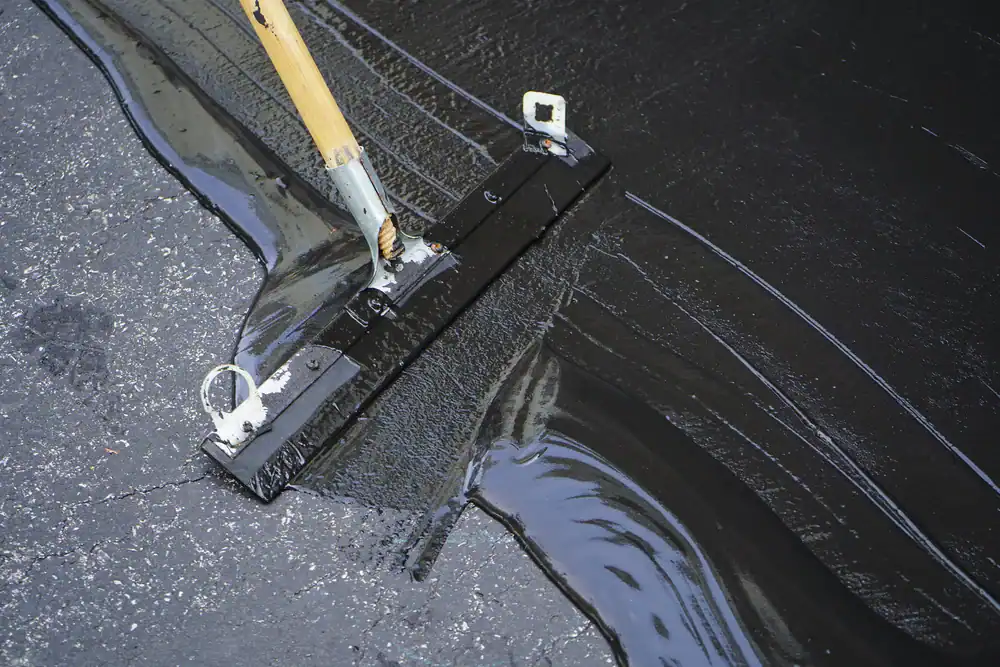
Your driveway takes a beating every winter. Water seeps into small cracks, freezes, expands, and turns minor surface issues into expensive structural problems. Road salt accelerates the damage. UV rays fade and weaken the asphalt all summer long.
Professional sealcoating creates a protective barrier that keeps water out and slows oxidation. It’s not a cosmetic fix. It’s preventive maintenance that can extend your driveway’s life from 15 years to 25+ years in New Jersey’s climate.
The math is simple. Sealcoating costs a few hundred dollars every three to four years. Replacing your driveway costs $3,000 to $7,000. One fall application can prevent thousands in future repairs by stopping small problems before they become big ones.
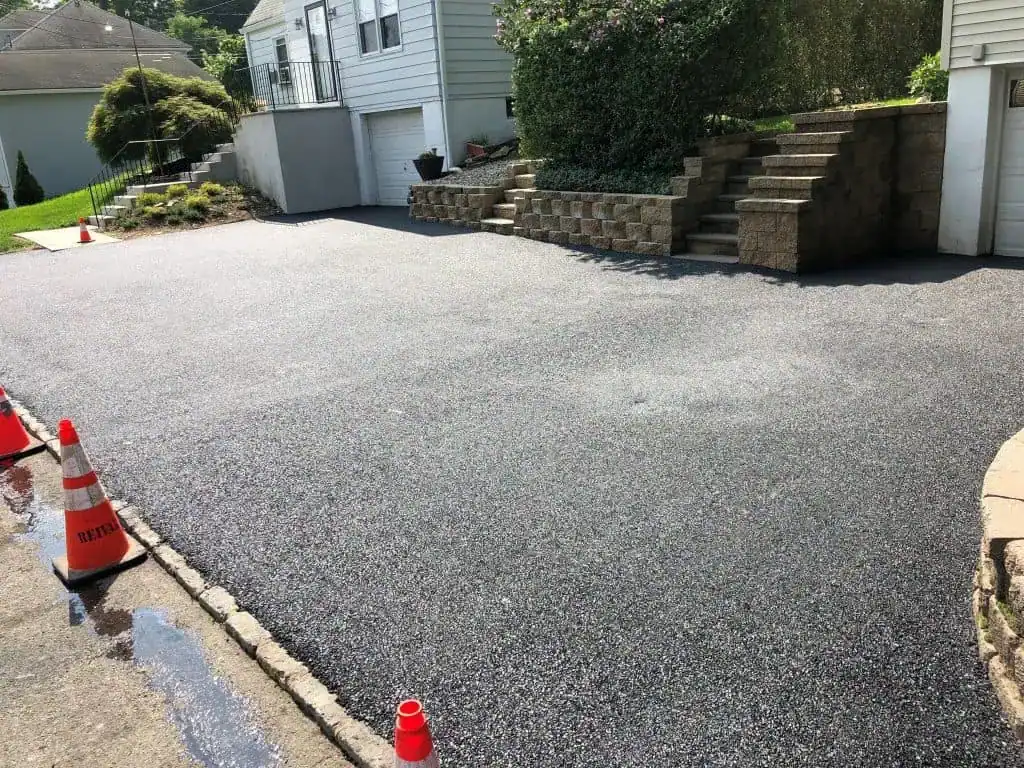
You get a driveway that looks freshly paved, resists oil stains and chemical damage, and holds up against everything Madison weather throws at it. That’s what proper sealcoating does when it’s applied right.
We’ve been working on driveways across Morris County for over 20 years. We’re a third-generation, family-owned contractor based right here in the area. We know Madison’s climate, we know what works, and we know what fails after one winter.
We use professional-grade sealers and state-of-the-art equipment because cheap materials don’t hold up in New Jersey. Our crew understands proper application temperatures, curing times, and how weather affects the final result. We back our work with a 5-year warranty because we’re confident in what we do.
You won’t get the runaround. We respond to quote requests within 24 to 48 hours, show up when we say we will, and explain exactly what your driveway needs without overselling services you don’t.
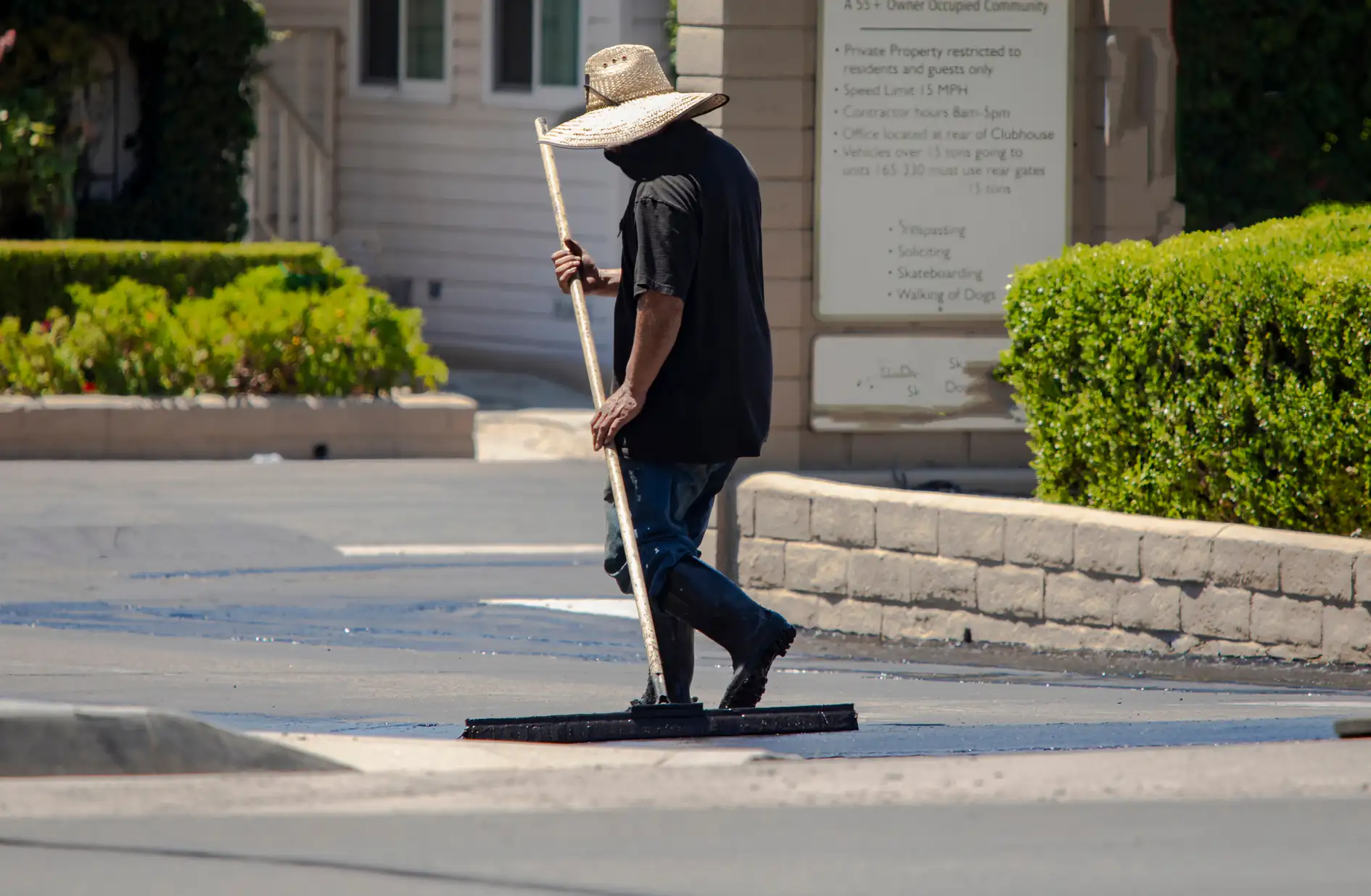
First, we inspect your driveway to check for cracks, oil stains, and drainage issues. If there are cracks wider than a quarter-inch, we’ll recommend filling them before sealcoating. Sealcoating won’t fix existing damage, but it will prevent new cracks from forming.
Next, we clean the surface thoroughly. Any dirt, debris, or vegetation gets removed because sealer won’t bond to a dirty surface. We treat oil spots with a primer so the sealer adheres properly in those areas.
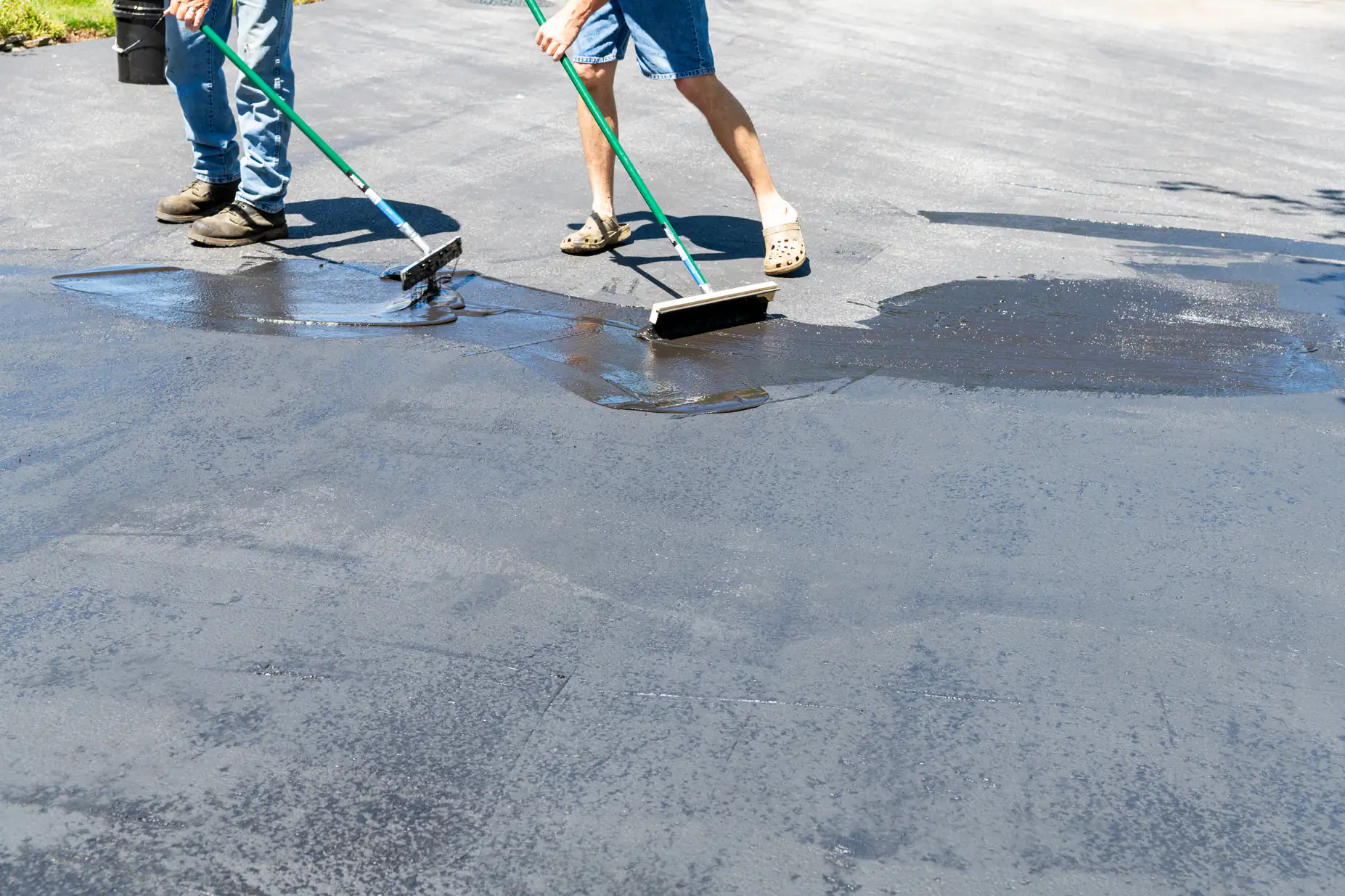
Then we apply two coats of commercial-grade sealer using professional spray equipment. The first coat seals the surface. The second coat adds durability and that rich, dark finish. We work in moderate temperatures with dry conditions so the sealer cures correctly.
You’ll need to stay off the driveway for 24 to 48 hours depending on weather. Cooler temperatures or high humidity extend curing time. We’ll give you a specific timeline based on the forecast. After that, your driveway is ready for normal use and protected for the next three to four years.
Ready to get started?
Every sealcoating job includes a full surface cleaning, oil spot treatment, and two coats of high-quality sealer. We don’t cut corners with single-coat applications or watered-down materials. Two coats provide the protection your driveway needs to survive Morris County winters.
Madison sees temperature swings that put extreme stress on asphalt. When water gets into your pavement and freezes, it expands with enough force to crack concrete. That’s why fall sealcoating is so important here. You’re creating a waterproof barrier before the first freeze.
We also edge carefully around garage doors, walkways, and landscaping. Overspray damages concrete and plants, so we take the time to protect those areas. You get clean lines and a professional finish that looks intentional, not sloppy.
If your driveway is new, we’ll let you know it needs to cure for three to six months before sealcoating. Sealing too early traps oils in the asphalt and prevents proper bonding. We’d rather schedule you for the right time than take your money and do the job wrong.

Most residential driveways in Madison run between $150 and $500 for professional sealcoating, depending on size and condition. The typical cost is $0.15 to $0.40 per square foot. A standard two-car driveway averages around $300 to $400 for a quality two-coat application.
New Jersey prices run about 15 to 20 percent above national averages because of higher labor costs and the extra wear our climate puts on asphalt. You’re paying for materials that can handle freeze-thaw cycles and contractors who know how to apply them correctly in our weather.
If someone quotes you significantly less, ask what you’re getting. Single-coat applications or diluted sealer might save you money upfront but won’t last. You’ll be resealing in a year instead of three to four years, which costs more in the long run.
Fall is the best time for driveway sealcoating in New Jersey. You get moderate temperatures, lower humidity, and dry conditions that allow proper curing. You’re also applying protection right before winter, which is when your driveway needs it most.
Sealer needs temperatures above 50 degrees to cure correctly, and you need at least 24 hours of dry weather after application. Fall typically offers those conditions without the extreme heat of summer or the unpredictable rain of spring.
Spring is your second-best option, but you’re repairing winter damage instead of preventing it. Summer works, but high temperatures can make the sealer dry too fast, and you’re more likely to have cars on the driveway during peak curing time. Fall applications typically last longer because the sealer cures under ideal conditions.
A professional two-coat sealcoating job lasts three to four years on residential driveways in New Jersey. Heavy traffic, harsh winters, and sun exposure all affect longevity. Driveways with less traffic and good drainage can go four years between applications.
You’ll know it’s time to reseal when the surface starts looking faded or gray instead of black. Small cracks may start appearing, or you’ll notice the asphalt is rougher than it used to be. Those are signs the protective layer is wearing thin.
Single-coat applications or low-quality sealer might only last one to two years. That’s why material quality and proper application matter. You want protection that actually lasts, not just a cosmetic improvement that wears off after one winter.
You can sealcoat a driveway with small cracks, but larger cracks need to be filled first. Sealcoating won’t fill or repair cracks wider than a quarter-inch. It prevents new cracks from forming, but it doesn’t fix existing structural damage.
We recommend crack filling before sealcoating if you have significant cracking. The crack filler bonds to the asphalt and creates a flexible seal that moves with temperature changes. Then the sealcoat goes over everything and locks it all in place.
If the cracks are extensive or the base is failing, sealcoating won’t solve the problem. You might need patching or even replacement in those areas. We’ll tell you honestly what your driveway needs. There’s no point in sealcoating a driveway that’s structurally failing.
Coal tar sealer is more durable and resistant to gas and oil, but it’s banned or restricted in several New Jersey municipalities due to environmental concerns. Asphalt-based sealer is the eco-friendly alternative that’s becoming the standard across the state.
Asphalt emulsion sealer still provides excellent protection against water, UV rays, and normal wear. It doesn’t resist petroleum products quite as well as coal tar, but for residential driveways, it performs great. Modern formulations have closed the performance gap significantly.
We use asphalt-based sealer that meets New Jersey environmental standards and provides the protection your driveway needs. It cures faster than coal tar, has less odor, and you’re not dealing with potential runoff issues. It’s the right choice for both performance and environmental responsibility.
Sealcoating is preventive maintenance, not just cosmetic improvement. Yes, it makes your driveway look better, but the real value is in protection. Unsealed asphalt oxidizes from sun exposure, absorbs water, and breaks down faster from chemicals and freeze-thaw damage.
A sealed driveway can last 25+ years in New Jersey. An unsealed driveway might only make it 15 years before needing replacement. That’s a decade of additional life from a maintenance task that costs a few hundred dollars every few years.
Small cracks that could have been prevented with a $300 sealcoating job become $1,500 repair projects when water gets into the base and causes structural damage. You’re either paying for prevention now or paying for repairs later. Prevention is always cheaper.