
Hear from Our Customers
Every winter in Oak Ridge brings 40 to 50 freeze-thaw cycles. Water seeps into small cracks, freezes, expands by 9%, and turns hairline fractures into potholes by March. That’s not bad luck—it’s what happens when asphalt isn’t sealed.
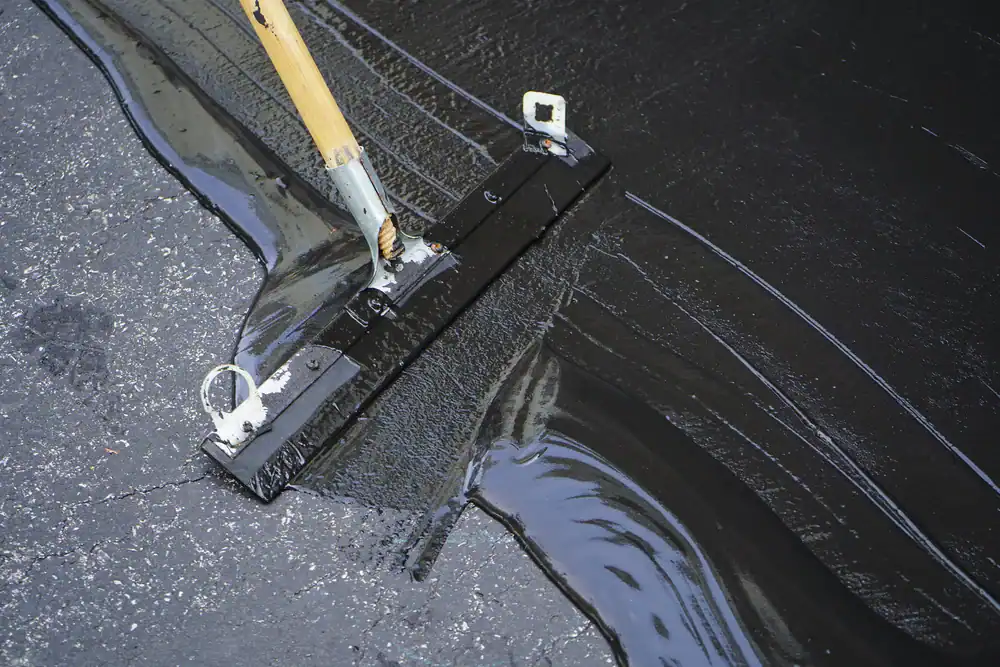
Sealcoating creates a waterproof barrier that keeps moisture out. It blocks road salt from breaking down the binding agents in your asphalt. And it gives you a dark, smooth surface that absorbs more heat, helping snow melt faster and reducing the freeze-thaw damage that costs homeowners thousands every spring.
A properly sealed driveway can last 25 years instead of 15. You’re not just making it look better—you’re protecting a significant investment in your property. Most Oak Ridge driveways run between $200 and $500 to seal, compared to $2,000 to $5,000 for repairs or resurfacing when cracks go untreated.
We operate throughout Morris, Sussex, and Somerset Counties. We’re based in Morris County, which means we understand the soil conditions, drainage issues, and weather patterns that affect driveways here.
Oak Ridge sits in an area where most homes were built in the 1970s and 1980s. Those driveways are aging, and many haven’t been maintained the way they should. We see the same problems repeatedly: poor drainage, cracked edges, faded surfaces that absorb too much water.
When you request a quote, you’ll hear back within 24 to 48 hours. We assess your driveway’s condition, check the grading and drainage, and give you clear pricing with no surprise charges. If sealcoating isn’t the right move yet—if you need crack filling or patching first—we’ll tell you that too.
First, we clean the surface. Oil stains, dirt, vegetation—all of it has to come off or the sealer won’t bond properly. We use commercial-grade equipment to make sure the asphalt is completely clean and dry before we start.
Next, we fill any cracks. Small cracks turn into big problems fast, so we address them before applying the sealer. We use hot rubberized crack filler that flexes with temperature changes instead of cracking apart in winter.
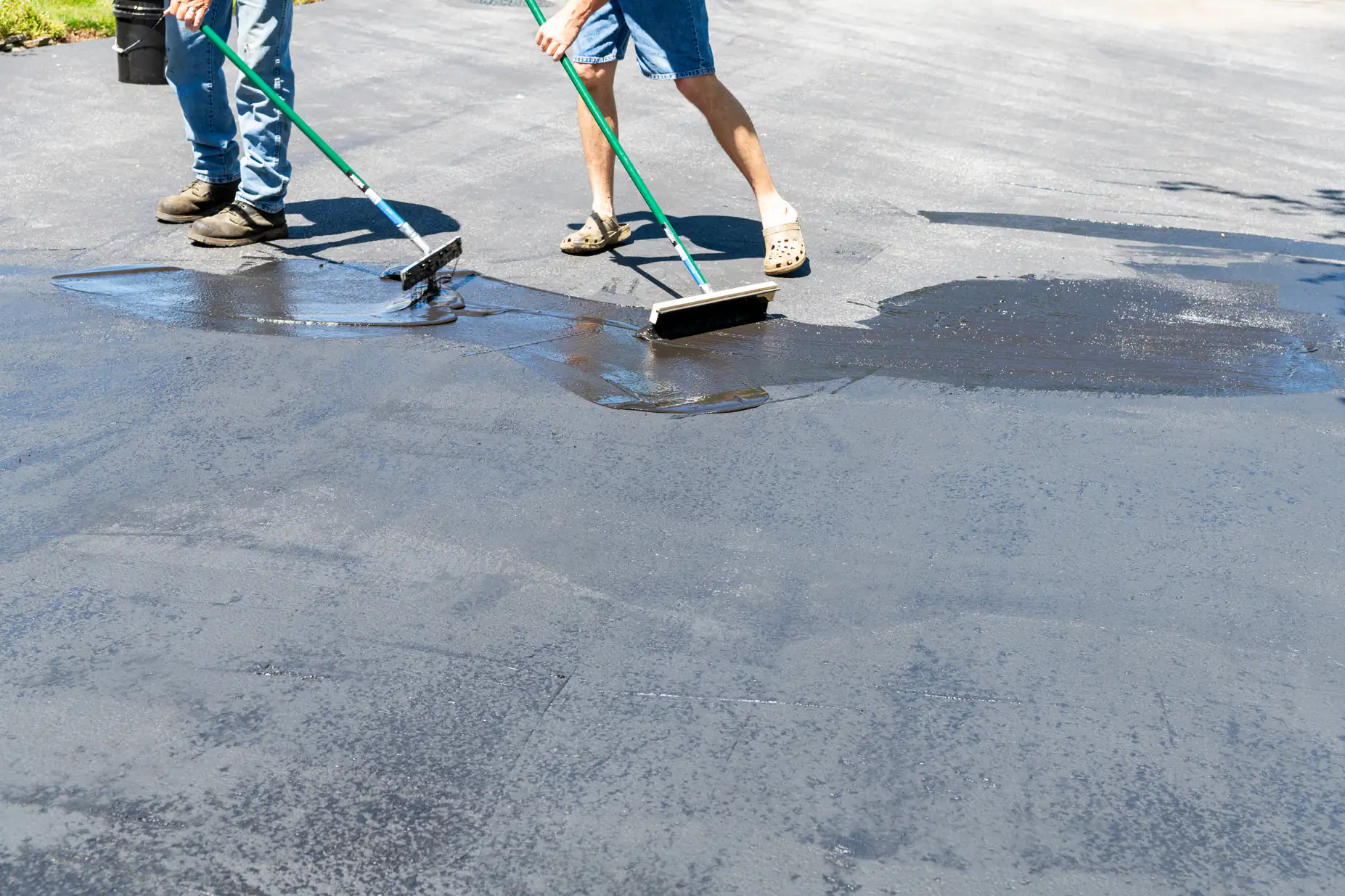
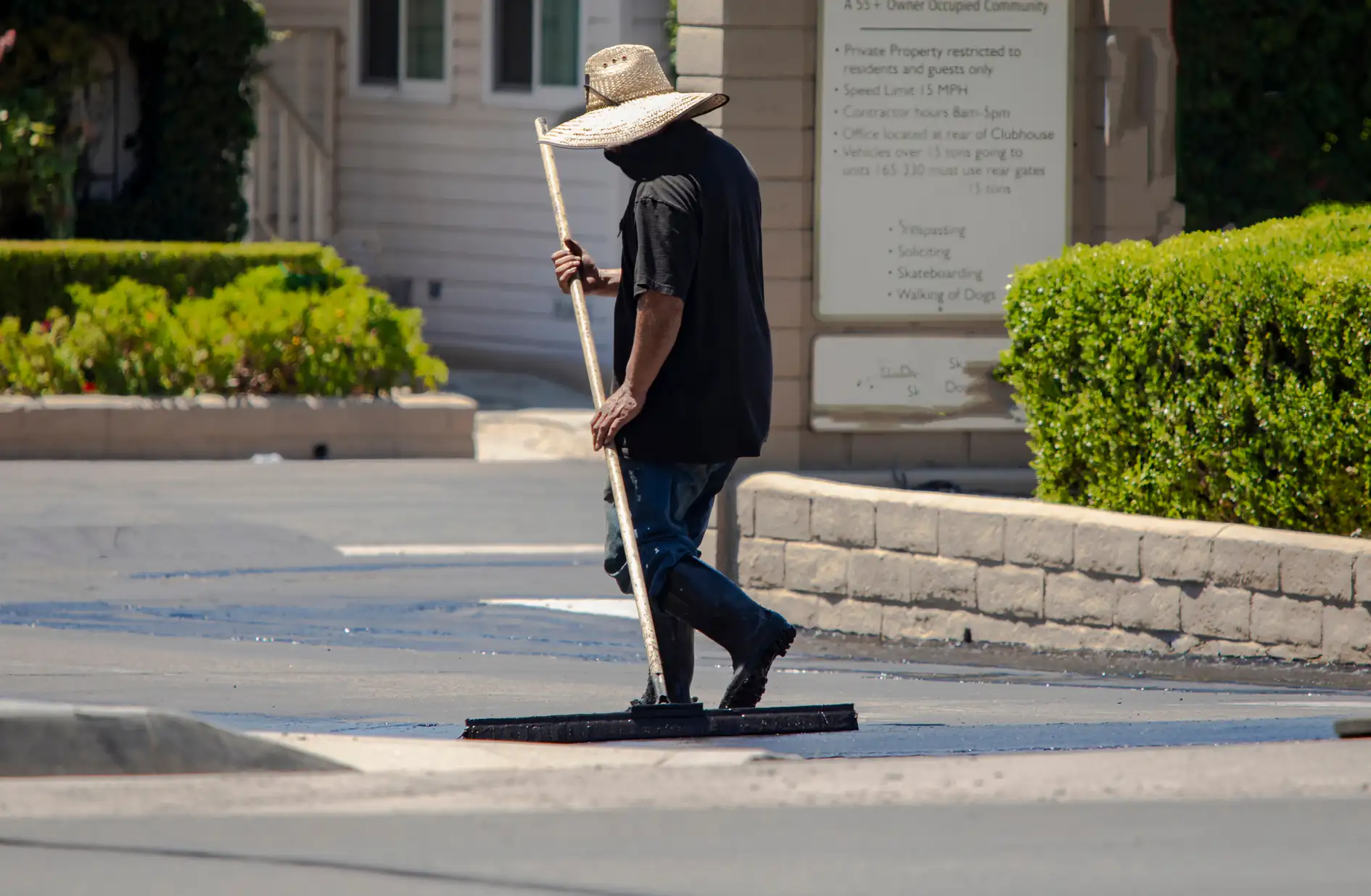
Then we apply the sealcoat. We use high-grade asphalt emulsion sealer—not the cheap stuff you find at hardware stores. It goes on in two thin coats for even coverage and maximum protection. The application has to happen when temperatures are between 50 and 85 degrees with low humidity, which is why late spring and early fall are ideal.
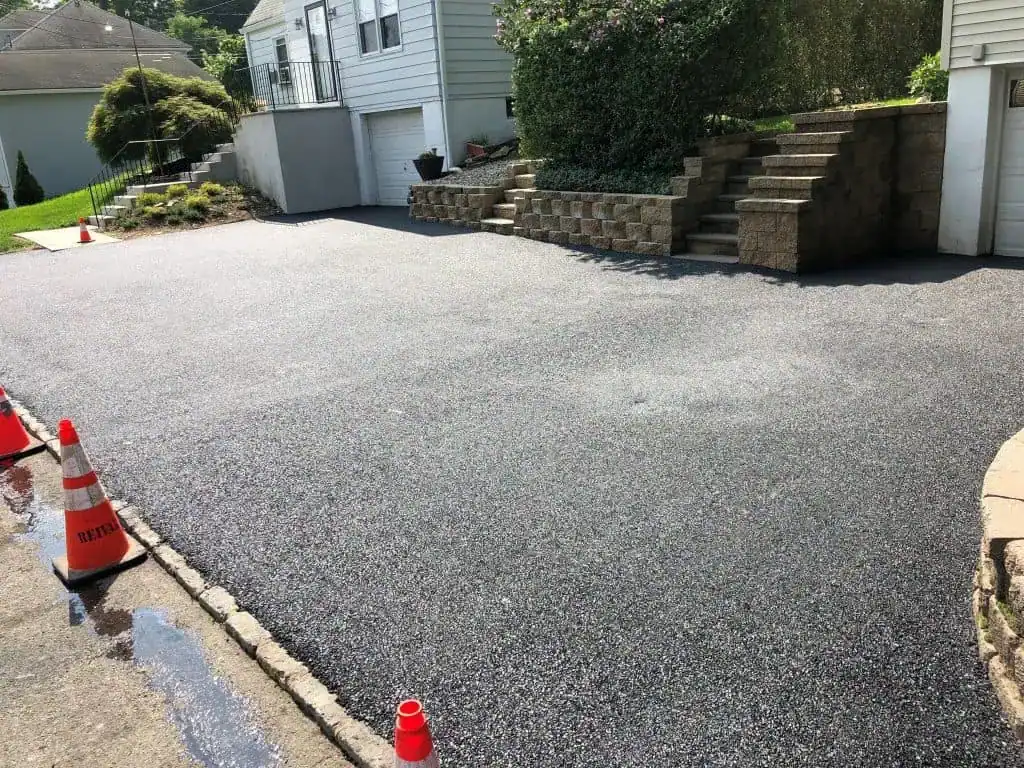
After application, your driveway needs 24 to 48 hours to cure before you can drive on it. We’ll give you a specific timeline based on weather conditions. Once it’s cured, you’ve got a sealed, protected surface that’s ready for whatever winter throws at it.
Ready to get started?
Every sealcoating job starts with a site assessment. We evaluate your driveway’s current condition, check for drainage problems, and identify any repairs that need to happen first. If your driveway has significant cracking or potholes, sealcoating alone won’t fix it—we’ll be upfront about what needs to be done.
The service includes thorough cleaning, crack filling, edging, and two coats of professional-grade sealer. We protect your landscaping, garage doors, and any adjacent surfaces from overspray. And we make sure the edges are clean and the finish is even.
Oak Ridge homeowners deal with specific challenges. The area’s clay-heavy soil can cause settling and drainage issues that put extra stress on driveways. We account for that when we assess grading and recommend maintenance schedules. Most driveways here should be resealed every two to three years, depending on exposure and traffic.
The cost of asphalt sealing in New Jersey runs about 15 to 20% higher than the national average because of our climate. You’re paying for materials and application methods that can handle brutal winters. That’s not a markup—it’s what works here.

Most driveways in Oak Ridge need resealing every two to three years. That timeline depends on a few factors: how much sun exposure your driveway gets, how much traffic it sees, and whether you’re dealing with any drainage issues that accelerate wear.
If your driveway faces south and gets full sun all day, the UV exposure will fade the sealer faster. If you’ve got multiple vehicles coming and going daily, or if you park heavy trucks or equipment on it, you’ll see more wear. And if water pools anywhere on the surface, that’s a red flag—standing water breaks down asphalt faster than almost anything else.
A good rule: if the surface is starting to look gray instead of black, or if you’re seeing small cracks appear, it’s time to reseal. Waiting too long means you’ll end up paying for repairs instead of just maintenance.
Late spring and early fall are your best windows. You need temperatures between 50 and 85 degrees, low humidity, and at least 24 hours of dry weather after application. That usually means late April through early June, or September through mid-October.
Summer can work, but if it’s too hot, the sealer dries too fast and doesn’t bond properly. If it’s too cool or humid, it takes longer to cure and you risk tracking or smudging. Rain within 24 hours of application will ruin the job entirely.
Fall is ideal because temperatures are moderate and humidity is typically lower. You also want to seal before winter hits so your driveway is protected during freeze-thaw cycles. Waiting until spring means you’re repairing damage instead of preventing it.
Sealcoating is specifically for asphalt driveways. Concrete driveways need a different type of sealer—usually a penetrating silane or siloxane sealer that soaks into the concrete rather than sitting on top like asphalt sealer does.
If you’ve got a concrete driveway, you still need to seal it. Concrete is porous, and water infiltration causes the same freeze-thaw damage you see with asphalt. But the products and application methods are completely different.
We handle both asphalt sealcoating and concrete sealing, but it’s important to know which one you need. If you’re not sure what your driveway is made of, we can tell you during the assessment. Some driveways are asphalt with a concrete apron at the garage, which means you’d need both services.
Most residential driveways in Oak Ridge cost between $200 and $500 to seal, depending on size and condition. The price breaks down to about $0.15 to $0.40 per square foot. A typical two-car driveway runs around 600 to 800 square feet, so you’re looking at $300 to $400 for a standard job.
If your driveway needs crack filling or patching before we can seal it, that adds to the cost. Significant repairs—like fixing potholes or addressing drainage problems—are separate from sealcoating and priced based on the scope of work.
New Jersey prices run higher than the national average because of climate demands. The materials we use have to withstand 40 to 50 freeze-thaw cycles every winter, plus road salt exposure. Cheaper sealers don’t hold up, which means you’d be resealing every year instead of every two to three years. We give you upfront pricing during the assessment so there are no surprises.
A professional sealcoating job typically lasts two to three years in Oak Ridge. That’s assuming normal wear and proper application. If your driveway gets heavy use or significant sun exposure, you might need to reseal closer to the two-year mark.
The sealer itself doesn’t fail all at once—it gradually wears away from traffic, UV exposure, and weather. You’ll notice the surface starting to fade from black to gray, and small cracks may begin to appear. That’s your cue to reseal before water infiltration becomes a problem.
Sealcoating every two to three years is a maintenance cost, not a repair cost. It’s a fraction of what you’d pay to fix cracks, potholes, or structural damage from water getting under the asphalt. Most homeowners spend $300 to $400 every few years on sealcoating versus $2,000 to $5,000 on repairs when they skip it.
Sealcoating is functional, not cosmetic. Yes, it makes your driveway look better—darker, smoother, cleaner. But the real value is in protection. Unsealed asphalt absorbs water, and water is what destroys driveways in New Jersey.
When water seeps into asphalt and freezes, it expands by 9%. That expansion widens cracks, breaks apart the surface, and creates potholes. Every freeze-thaw cycle makes the damage worse. Road salt accelerates the breakdown by eating away at the binding agents that hold asphalt together.
Sealcoating blocks water and salt from penetrating the surface. It keeps small cracks from becoming big problems. And it extends the lifespan of your driveway by 10 years or more. If you’re planning to sell your home, a freshly sealed driveway adds curb appeal and signals that the property has been maintained. If you’re staying, it saves you money by preventing expensive repairs down the line.