
Hear from Our Customers
Your driveway takes a beating. Forty to fifty freeze-thaw cycles every winter. Road salt tracked in from Washington Valley Road. Summer heat pushing 90°F that bakes the asphalt brittle. Then rain—45 inches a year—seeping into every crack.
Without protection, water gets in. It freezes, expands, and turns hairline cracks into potholes. What starts as a $300 sealcoating job becomes a $4,000 replacement in just a few years.
Sealcoating creates a waterproof barrier that blocks all of it. UV rays, oil drips from your car, salt, rain—none of it gets through. The asphalt stays flexible instead of crumbling. Your driveway goes from 25 years of life to well past 30.
And it looks better. That deep black finish makes the whole property look maintained. Not like you’re trying to impress anyone—just like you take care of what’s yours.
We’ve been working driveways across Morris County since 2001. We’re not the guys who knock on your door with “leftover material.” We’re the ones homeowners call when they want it done right the first time.
We mix our sealer in-house. Thicker, darker, longer-lasting than the watered-down stuff most contractors spray on. We hand-apply it because it creates a more uniform coat. And we back it with a 2-year warranty because we know it’ll hold.
You’ll get an upfront quote that includes everything—cleaning, crack filling, two coats of sealer. No surprise charges when we’re halfway done. We show up when we say we will, and we don’t leave until your driveway is protected.
First, we clean the surface. Not with a garden hose—with commercial equipment that removes dirt, oil, and debris that would prevent the sealer from bonding. If your driveway isn’t clean, the sealcoat won’t stick. That’s where most cheap jobs fail.
Next, we fill the cracks. We use hot rubberized crack filler that flexes with temperature changes instead of cracking out in six months. Every crack gets filled before we seal because water infiltration is what kills driveways in New Jersey.
Then we apply two coats of our custom-blended sealer by hand. The first coat soaks in and bonds to the asphalt. The second coat creates the protective layer that blocks water, UV rays, and chemicals. We let each coat dry completely—usually 24 hours between coats when weather cooperates.
The whole process takes two to three days depending on drying conditions. You’ll need to keep cars off for 48 hours after the final coat. After that, your driveway is protected for the next two to three years.
Ready to get started?
Every sealcoating job includes surface cleaning, crack filling with hot pour rubber, and two coats of our custom-mixed sealer applied by hand. No shortcuts.
In Long Valley, that matters more than you might think. The rural roads here mean more gravel, more dirt, and more debris that needs proper removal before sealing. Your driveway also deals with more shade from mature trees, which means slower drying times and more moisture exposure. We adjust our process for those conditions.
The cost typically runs $0.15 to $0.25 per square foot for most Long Valley driveways. A standard two-car driveway—about 500 square feet—costs between $200 and $400 depending on condition. Compare that to $3 to $5 per square foot for replacement, and you’re looking at 2,000% more value from sealcoating.
We schedule jobs between May and September when temperatures stay above 50°F at night. That’s the window where sealer cures properly. Outside those months, you risk streaking, early wear, and gray patches that look terrible and don’t protect anything.

Every two to three years for most driveways. That’s the sweet spot where the previous coat is still protecting but starting to wear thin.
If you wait longer than three years, you’re gambling with water damage. Once water gets into the asphalt and starts the freeze-thaw cycle, you’re looking at cracks that spread fast. At that point, you’re not just paying for sealcoating—you’re paying for crack repair first, then sealcoating.
Some contractors will tell you every year. That’s overkill and a waste of money. The sealer needs time to wear down before you reapply, or you end up with buildup that flakes off. Two to three years is what actually works in Morris County’s climate.
Hand application creates a thicker, more uniform coat. Spray application is faster and cheaper, but the sealer goes on thinner and doesn’t last as long.
When you spray, you’re covering more area with less material. That means less protection. You also get overspray on garage doors, landscaping, and anything else nearby. And in areas with texture or slight slopes, spray creates uneven coverage—thick in some spots, thin in others.
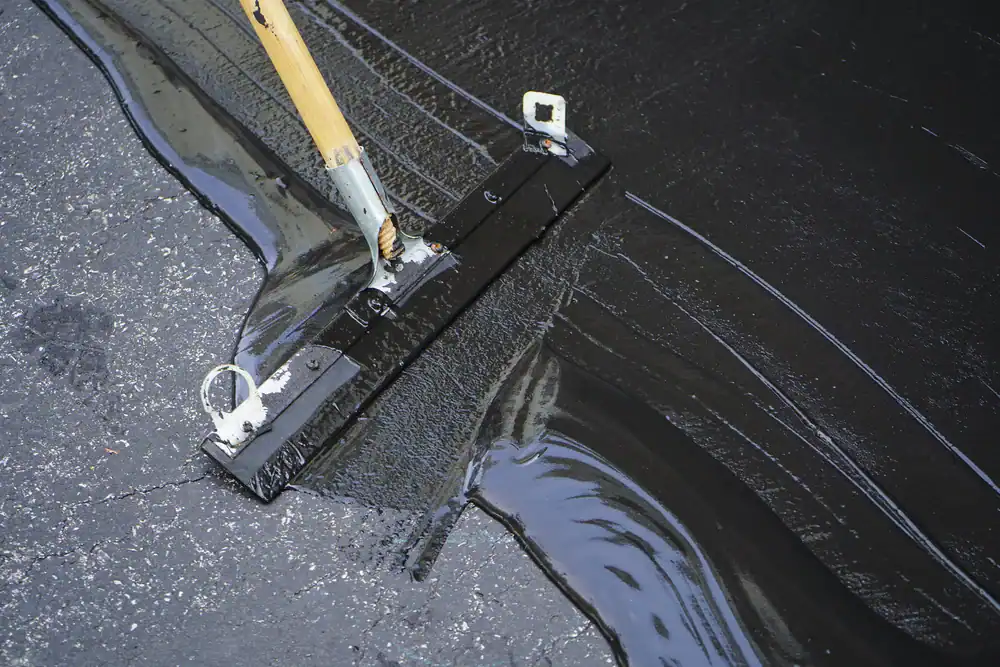
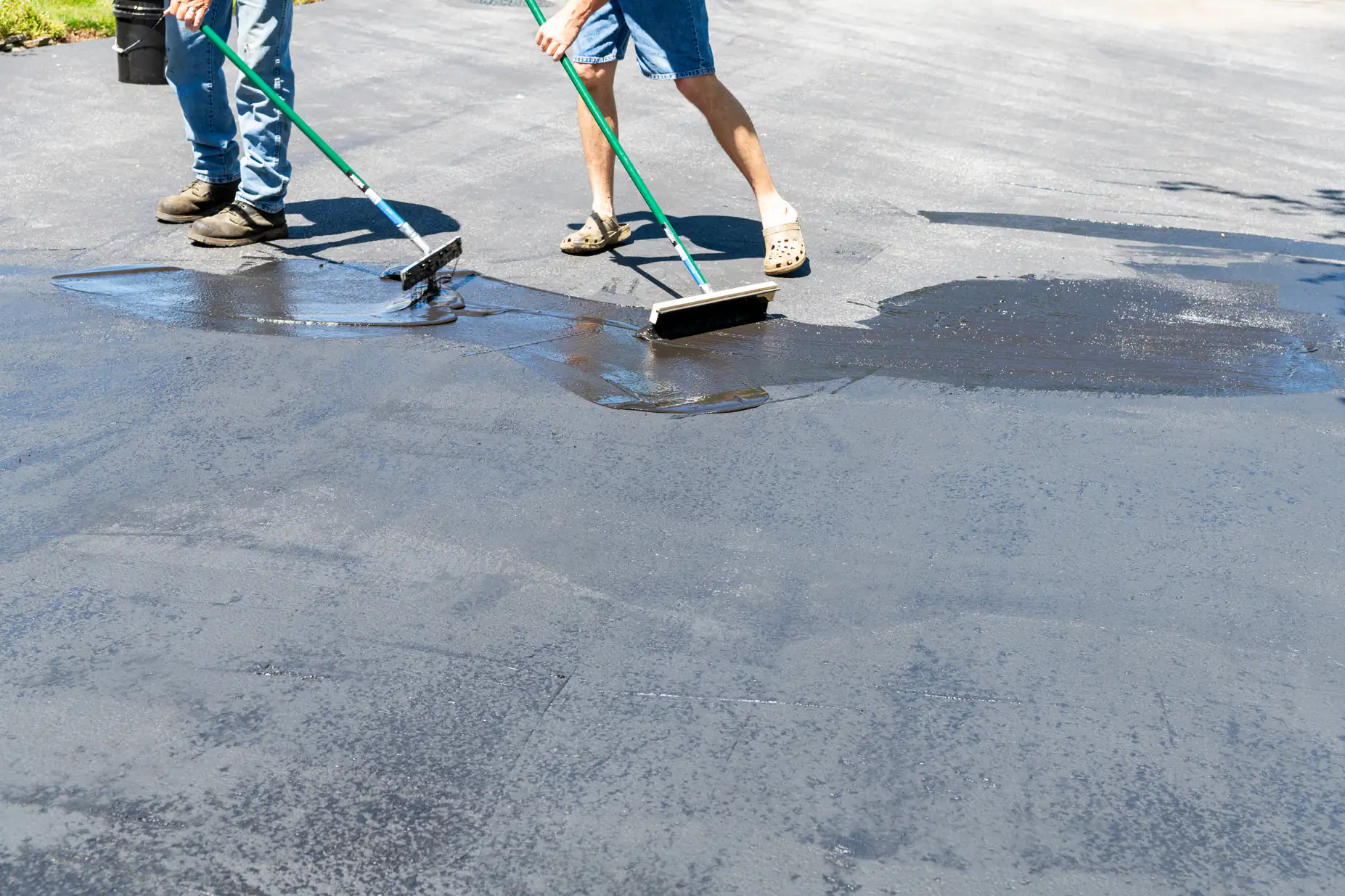
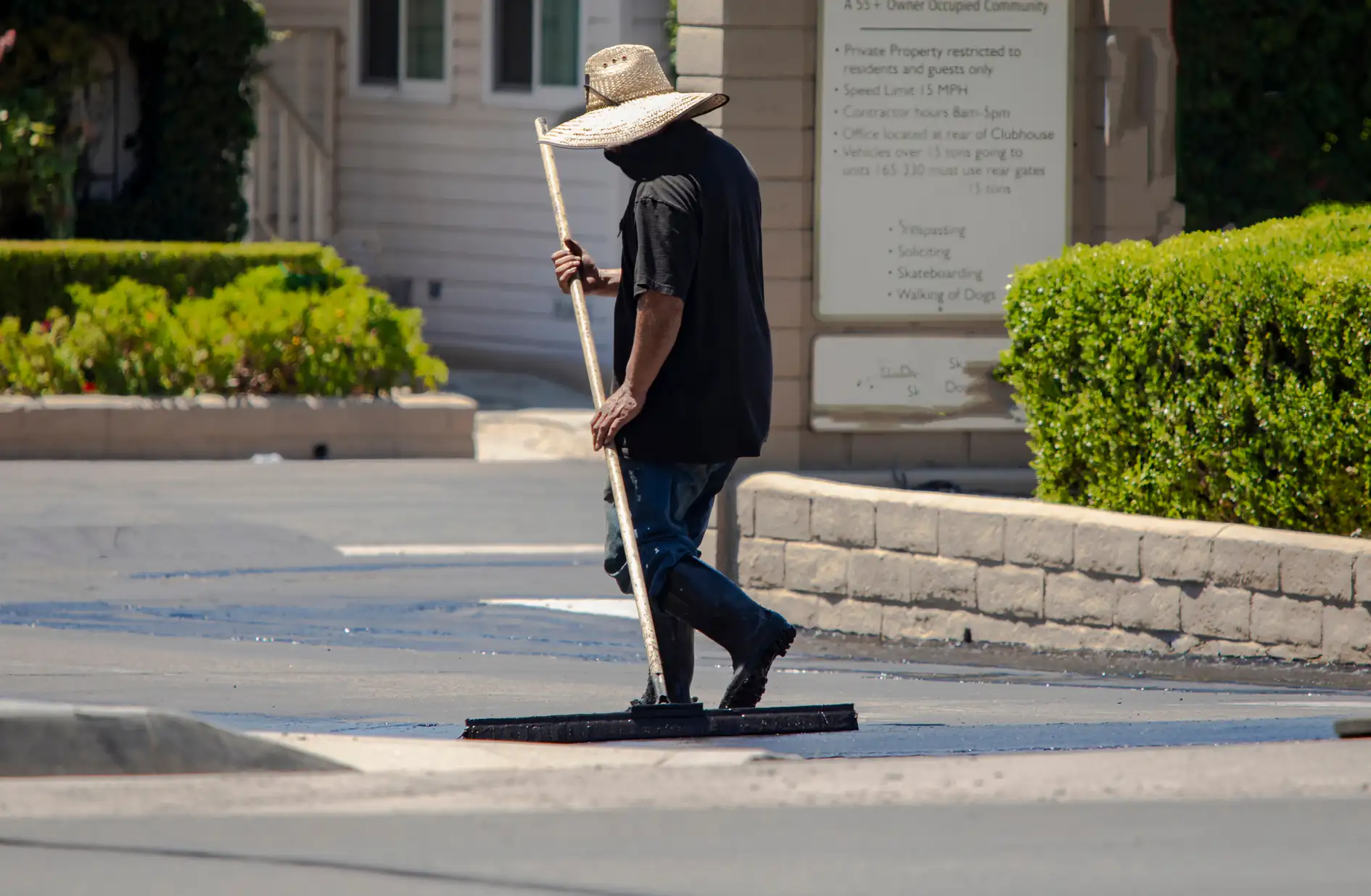
Hand application takes longer, but every square foot gets the same amount of sealer. You’re not dealing with overspray. And the squeegee method forces the sealer into the pores of the asphalt instead of just sitting on top. That’s why hand-applied jobs last a full year longer on average.
Yes, but the cracks need to be filled first. Sealcoating doesn’t fill cracks—it seals the surface. If you seal over cracks without filling them, water still gets in underneath.
We use hot rubberized crack filler that stays flexible when temperatures drop. The cheap cold-pour stuff you get at hardware stores hardens and pops out within months. Hot pour moves with the asphalt as it expands and contracts, so it actually stays in place.
If your driveway has major structural damage—like alligatoring or base failure—sealcoating won’t fix that. At that point, you need repair work or replacement. But for typical cracks from age and weather, filling and sealing extends the life significantly.
Two to three years with quality materials and proper application. Cheap jobs might last one year. Really cheap jobs start failing in months.
New Jersey’s climate is tough on sealcoating. You’ve got freeze-thaw cycles all winter, intense UV exposure in summer, and constant moisture. The sealer breaks down faster here than it would in milder climates.
That’s why material quality matters so much. Watered-down sealer—which is what most low-price contractors use—wears off fast. Our custom-blended mix has higher solids content, which means more actual protection per coat. It costs more upfront, but you’re not resealing every year.
Late spring through early fall—May through September in Long Valley. The sealer needs temperatures above 50°F at night to cure properly, and you need at least 24 hours without rain.
If you seal too early in spring, overnight temperatures can drop below 50°F and prevent proper curing. You end up with sealer that stays tacky, tracks into your garage, and wears off quickly. Too late in fall, and you risk the same problem.
Summer is ideal if you can handle keeping cars off the driveway for 48 hours. The heat helps the sealer cure faster and bond better. Just avoid the absolute hottest days—above 95°F—because the sealer can dry too fast and not penetrate properly.
Between $200 and $500 for most residential driveways, depending on size and condition. That includes cleaning, crack filling, and two coats of sealer.
A standard two-car driveway runs about 400 to 600 square feet. At $0.15 to $0.25 per square foot, you’re looking at $250 to $400 for a straightforward job. If your driveway has significant cracking or hasn’t been sealed in years, expect the higher end of that range.
Compare that to $3,000 to $5,000 for complete replacement, and sealcoating is the obvious choice for driveways in decent shape. Even if you seal every two years for 20 years, you’re still spending less than half what one replacement costs—and your driveway lasts longer because it’s been protected the whole time.