
Hear from Our Customers
You’re looking at your driveway right now and seeing the same thing most Budd Lake homeowners see. Small cracks that weren’t there last year. Fading where the color used to be deep black. Maybe some crumbling at the edges where water keeps pooling.
Here’s what most people don’t realize until it’s too late: those aren’t cosmetic issues. That’s your driveway telling you it’s breaking down from the inside. Morris County throws 40 to 50 freeze-thaw cycles at your asphalt every winter. Water gets in those cracks, freezes, expands, and turns minor damage into major problems.
Sealcoating stops that cycle before it starts. It seals the surface so water can’t penetrate. It blocks UV rays that dry out and crack your asphalt. It gives you a protective barrier against road salt, oil drips, and everything else trying to destroy your driveway.
The difference isn’t subtle. A sealed driveway in Budd Lake lasts 30+ years. An unsealed one starts falling apart around year 15. You’re either spending a few hundred dollars now or a few thousand later when you’re tearing the whole thing out and starting over.
We’ve spent over 20 years working driveways across Morris County. We’re not some national franchise that doesn’t understand what winter does to asphalt around here. We know Budd Lake. We know the soil conditions, the weather patterns, the specific challenges your driveway faces.
When we show up, we’re using high-grade sealant designed for New Jersey winters. Not the stuff you grab at a hardware store that cracks by spring. We apply it at the right temperature, in the right conditions, with equipment that actually gets an even coat across every square foot.
You’ll get an upfront quote that doesn’t change halfway through the job. We’ll tell you exactly what we’re doing and why. And we’ll finish when we say we will, because your driveway isn’t drivable until the sealant cures and you’ve got places to be.
First, we clean the entire surface. Every bit of dirt, debris, oil stain, and vegetation gets removed because sealant won’t bond to a dirty driveway. This isn’t a quick sweep—we’re talking thorough cleaning that actually prepares the surface.
Next, we fill any cracks. If water’s already getting into your asphalt, sealing over the top won’t fix it. We use rubberized crack filler that flexes with temperature changes instead of cracking right back open when winter hits.
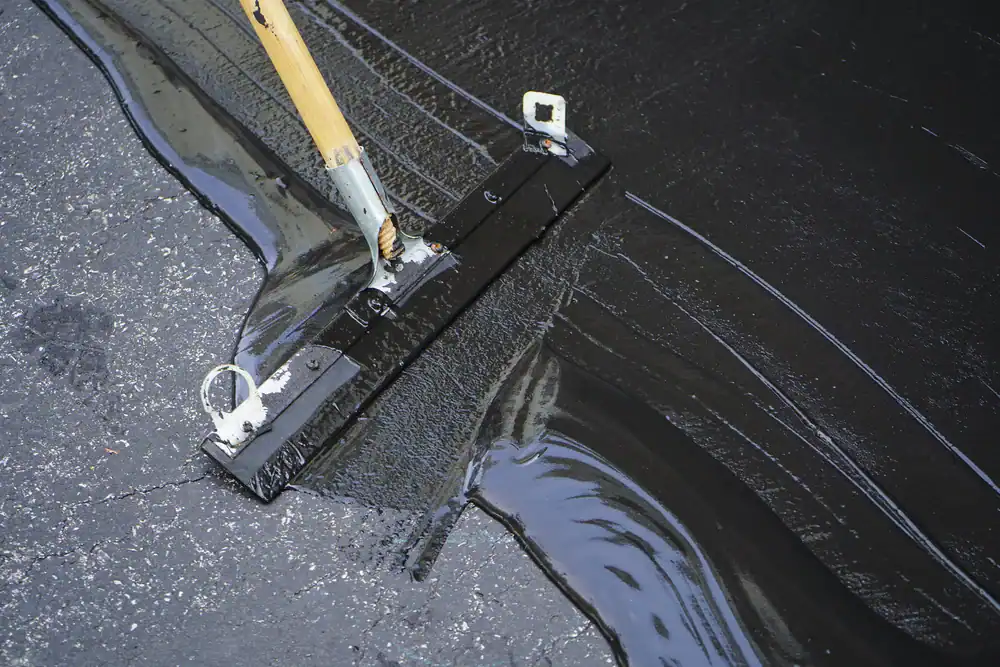
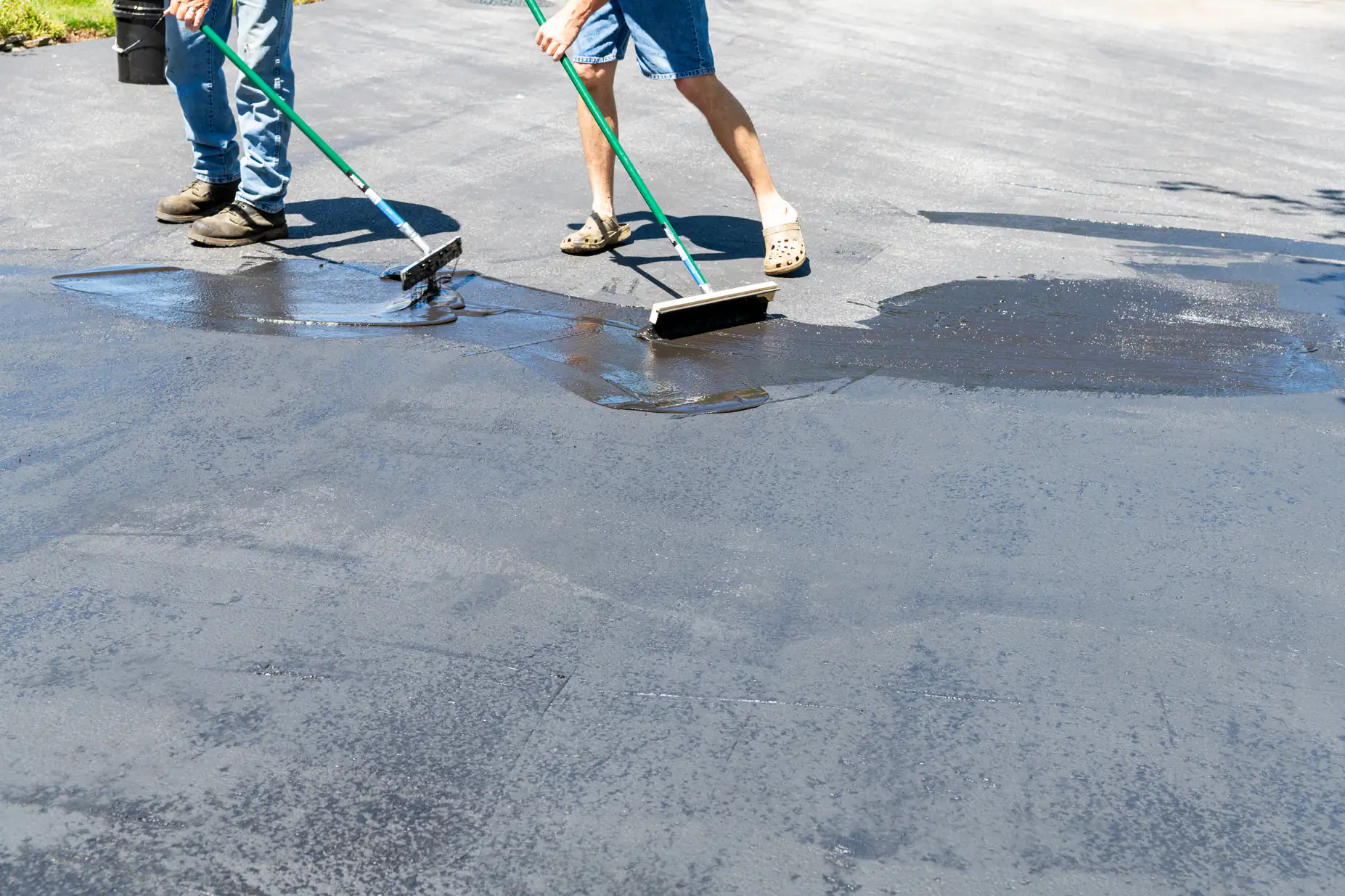
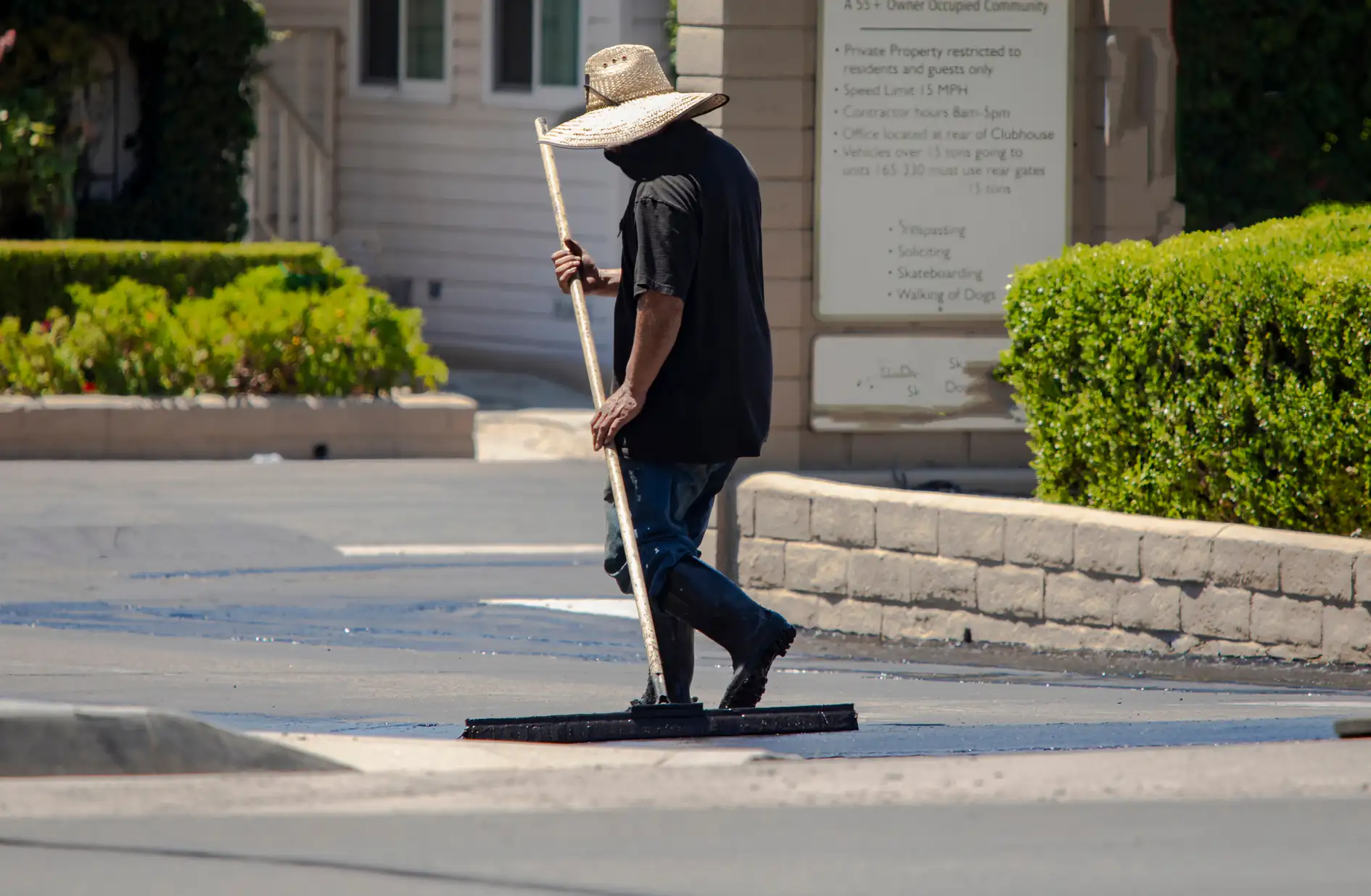
Then comes the sealcoating itself. We apply two coats for driveways in this area because one coat doesn’t hold up to Morris County winters. The first coat seals and protects. The second coat ensures even coverage and maximizes durability. Each coat needs time to dry before we apply the next, and we’re not rushing that process just to finish faster.
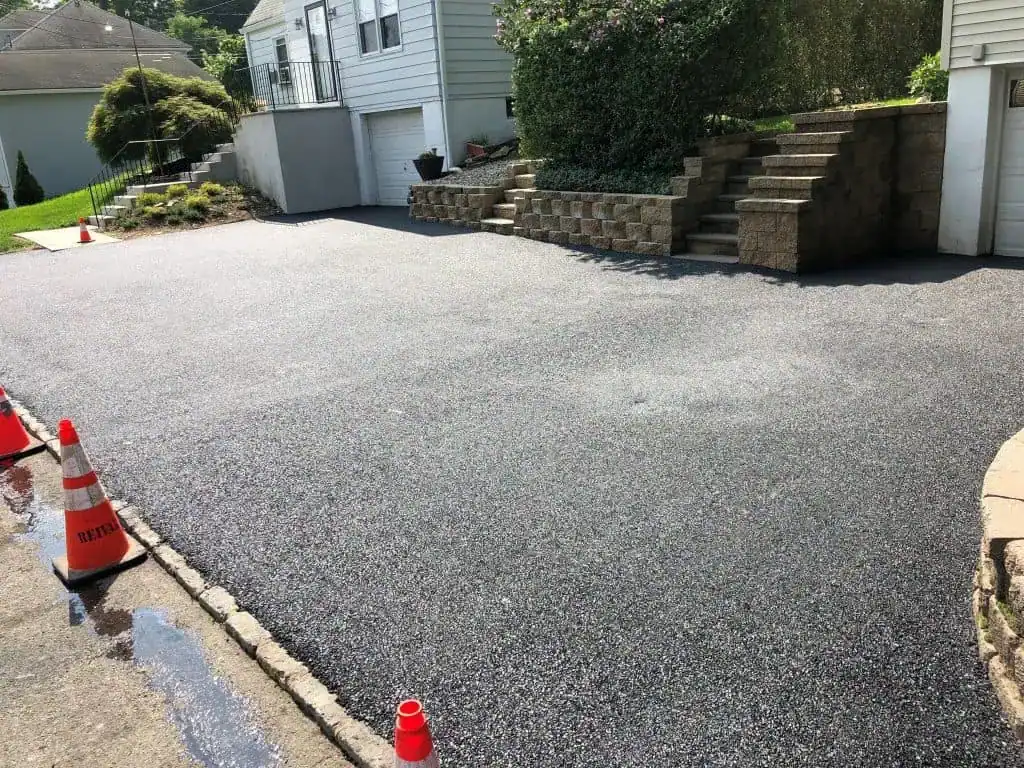
After application, your driveway needs 24 to 48 hours to cure depending on temperature and humidity. You can’t drive on it during that time. Once it’s cured, you’ve got a protective barrier that’ll last three to four years before you need to reseal.
Ready to get started?
Most residential driveways in Budd Lake run between $150 and $500 for professional sealcoating, depending on size and condition. That’s not a huge investment when you consider what you’re preventing. A full driveway replacement costs $6 to $8 per square foot. For an average two-car driveway, you’re looking at $3,000 to $5,000 or more.
Sealcoating gives you a return that’s hard to beat. You’re extending your driveway’s lifespan by 60% for about 20% of replacement cost. The math isn’t complicated—you’re getting years of protection for a fraction of what you’d spend fixing the damage later.
Timing matters more than most people think. Late summer through early fall is your window. Temperatures are moderate, conditions are dry, and you’re getting that protective layer in place before winter starts its damage. If you wait until spring, you’re not preventing anything—you’re just reacting to cracks that already formed.
Around here, you’re also dealing with specific regulations. Some Morris County municipalities restrict coal tar sealants, so we use asphalt-based products that meet local codes and still deliver the protection your driveway needs. You don’t have to worry about compliance—we already know what’s allowed in your area.

Every three to four years if you want to keep your driveway in good shape. That timeline assumes you’re using a quality two-coat application, not a single thin layer that wears off in half the time.
Here’s why that schedule matters in Morris County specifically. You’re dealing with harsh freeze-thaw cycles all winter, heavy summer heat, road salt exposure, and over 45 inches of rain per year. All of that breaks down your sealant faster than it would in milder climates.
If you let it go longer than four years, you’re not just losing the cosmetic benefits. You’re losing the actual protection, which means water starts penetrating your asphalt again. Once that happens, you’re back to crack formation and the expensive repairs that come with it. Staying on schedule is cheaper than playing catch-up.
The materials and the application method. The sealant you buy at a hardware store isn’t the same grade we use. It’s thinner, it doesn’t bond as well, and it breaks down faster under real-world conditions.
Application matters just as much. You need the surface properly cleaned and prepped. You need crack filling done right. You need even coverage across the entire driveway without thin spots or pooling. And you need the right weather conditions—temperature and humidity both affect how well sealant cures.
Most DIY jobs look okay for a few months, then you start seeing failures. Edges pull away. Thin spots wear through. Cracks reappear because they weren’t filled properly to begin with. A professional job costs more upfront but lasts three to four years instead of one to two. You’re not saving money if you’re redoing it twice as often.
Yes, but the cracks need to be filled first. Sealcoating goes over the surface—it’s not a crack repair product. If you just seal over existing cracks without filling them, water still gets in and you haven’t actually fixed anything.
We fill cracks with a rubberized filler that moves with your asphalt as temperatures change. Asphalt expands in heat and contracts in cold. If your crack filler doesn’t flex with those movements, it just cracks again. That’s why the cheap fillers fail so quickly.
Once cracks are properly filled and the filler has cured, then we sealcoat over the entire surface. You end up with a smooth, protected driveway where water can’t penetrate. But skipping the crack filling step means you’re wasting money on a sealcoating job that won’t deliver the protection you’re paying for.
Plan on 24 to 48 hours before you can drive on your driveway. The exact time depends on temperature, humidity, and how thick the application is. Warmer, drier conditions cure faster. Cool or humid weather takes longer.
You can usually walk on it after about four to six hours, but driving on it too early will leave tire marks and damage the finish. The sealant needs time to fully cure and harden. If you rush it, you’re compromising the protection you just paid for.
We’ll tell you exactly when it’s safe to use your driveway based on the conditions the day we seal it. Most jobs get done in the morning, which gives you the warmest part of the day for initial curing. If you need your driveway accessible by a certain time, let us know when you schedule and we’ll plan accordingly.
Sealcoating is specifically for asphalt driveways. Concrete needs a completely different type of sealer because the materials and how they break down are nothing alike.
Asphalt is petroleum-based and breaks down from UV exposure, water penetration, and chemical damage. The sealant we use is designed to bond with asphalt and protect against those specific threats. Concrete is a cement-based material that has different vulnerabilities—mainly moisture penetration and surface deterioration.
If you’ve got a concrete driveway, you need a concrete sealer, not asphalt sealcoating. We work with both materials and can tell you exactly what your driveway needs. But trying to use the wrong product on the wrong surface won’t give you any protection at all. The chemistry just doesn’t work that way.
If it rains before the sealant cures, you’ve got problems. Rain will wash away uncured sealant, leave streaks, create thin spots, and generally ruin the application. That’s why we check the forecast carefully before we start any sealcoating job.
We need at least 24 hours of dry weather after application for the sealant to cure properly. If there’s rain in the forecast, we’ll reschedule rather than risk a failed application. It’s frustrating to delay, but it’s a lot more frustrating to pay for a sealcoating job that washes away before it even sets.
Once the sealant is fully cured, rain won’t hurt it at all. In fact, a sealed driveway sheds water instead of absorbing it, which is the whole point. But during that initial curing period, moisture is the enemy. We plan every job around weather conditions to make sure you get the protection you’re paying for.