
Hear from Our Customers
Your driveway takes a beating. Between 55 to 75 freeze-thaw cycles every winter, summer heat pushing past 90°F, road salt tracked in all season, and over 45 inches of rain annually, Peapack and Gladstone driveways face conditions that break down asphalt fast.
Sealcoating creates a protective barrier against all of it. UV rays that fade and dry out your asphalt get blocked. Water that seeps into small cracks and expands when it freezes gets stopped at the surface. Chemicals from de-icing salt can’t penetrate and weaken the base.
When done right, sealcoating extends your driveway’s lifespan from 15 years to 25-plus years. That’s nearly 2,143% more value compared to letting it deteriorate and replacing it early. You’re looking at an investment of $0.15 to $0.40 per square foot that saves you thousands down the road.
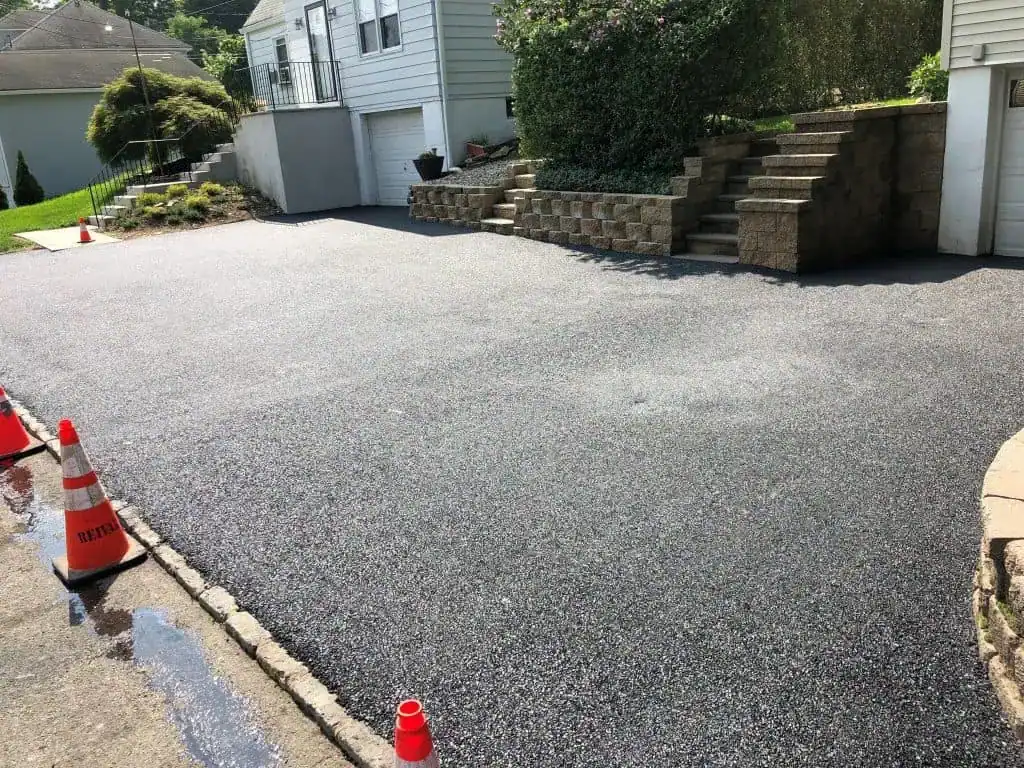
And it’s not just protection. A freshly sealed driveway goes from faded gray to a clean matte black finish that makes your whole property look maintained and cared for.
We’re a third-generation, family-owned asphalt contractor with over 20 years serving Morris, Somerset, and Sussex counties. We’re not a national franchise or a crew that disappears after one season.
We know what Somerset County driveways go through because we’ve been maintaining them for decades. We understand the timing windows that matter here—the narrow stretch between late May and mid-September when temperatures and humidity align for proper curing. We’ve seen what happens when contractors rush jobs in April or squeeze them in during October, and we’ve repaired the streaking, peeling, and early wear that results.
You’ll get clear upfront pricing with no surprise charges, a 24-to-48-hour callback guarantee when you request a quote, and work that’s done on schedule. We use high-grade materials and proper prep because we’re not trying to maximize profit per job—we’re trying to keep customers in Peapack and Gladstone coming back and referring us.
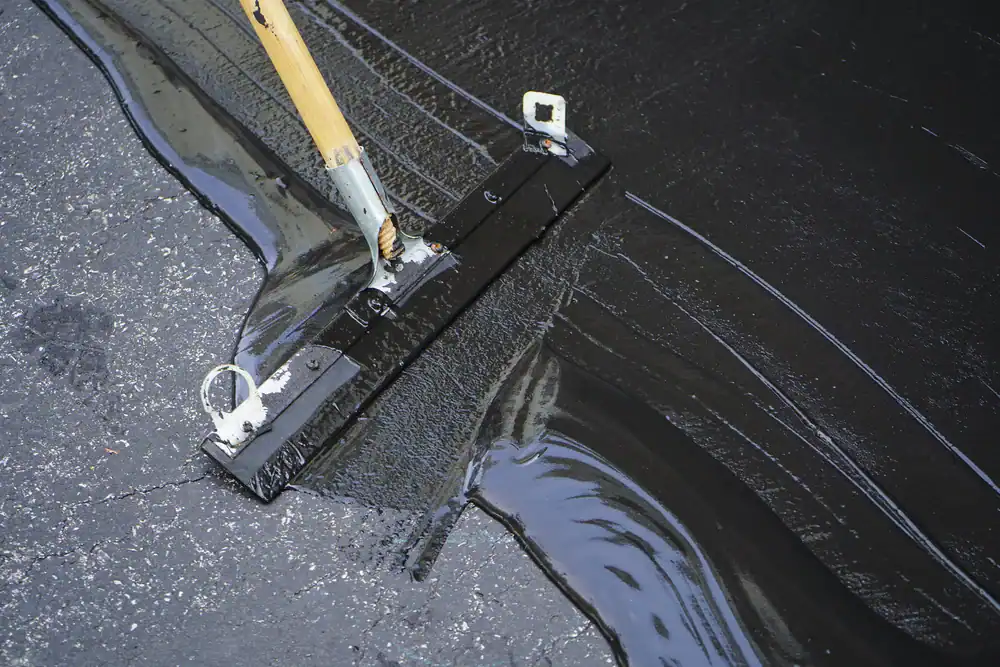
First, we power wash the entire surface to remove dirt, debris, oil spots, and anything else that would prevent the sealer from bonding. This step matters more than most homeowners realize—sealer applied over a dirty surface fails early.
Next, we fill every crack with hot rubberized crack filler. Not the cold pour stuff that shrinks and pulls away after one winter. Hot rubber stays flexible through freeze-thaw cycles and creates a watertight seal that actually lasts.
If there are oil spots, we prime them with a specialty primer. Oil breaks down asphalt sealer, so untreated spots will show through as gray patches within months.
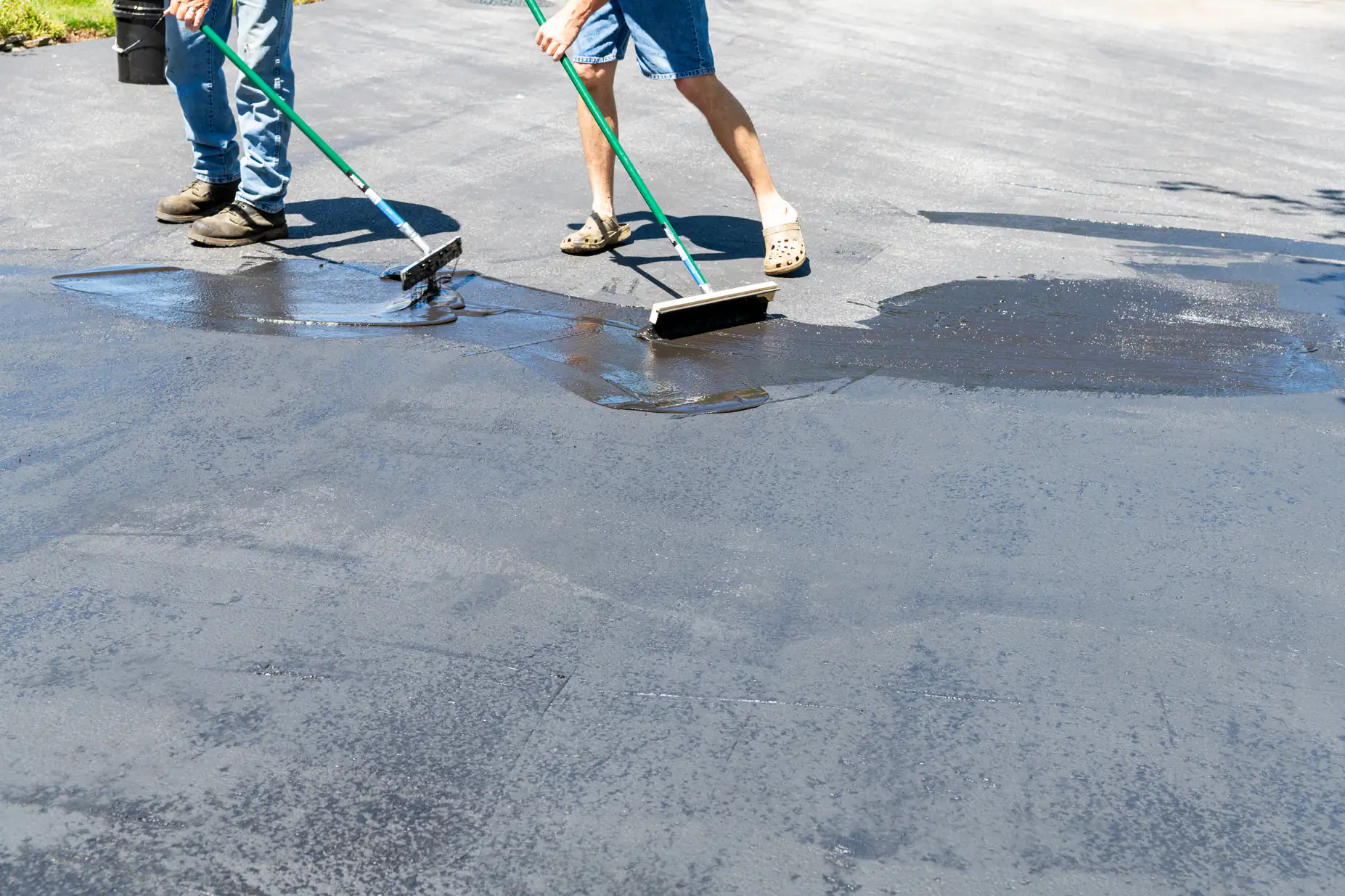
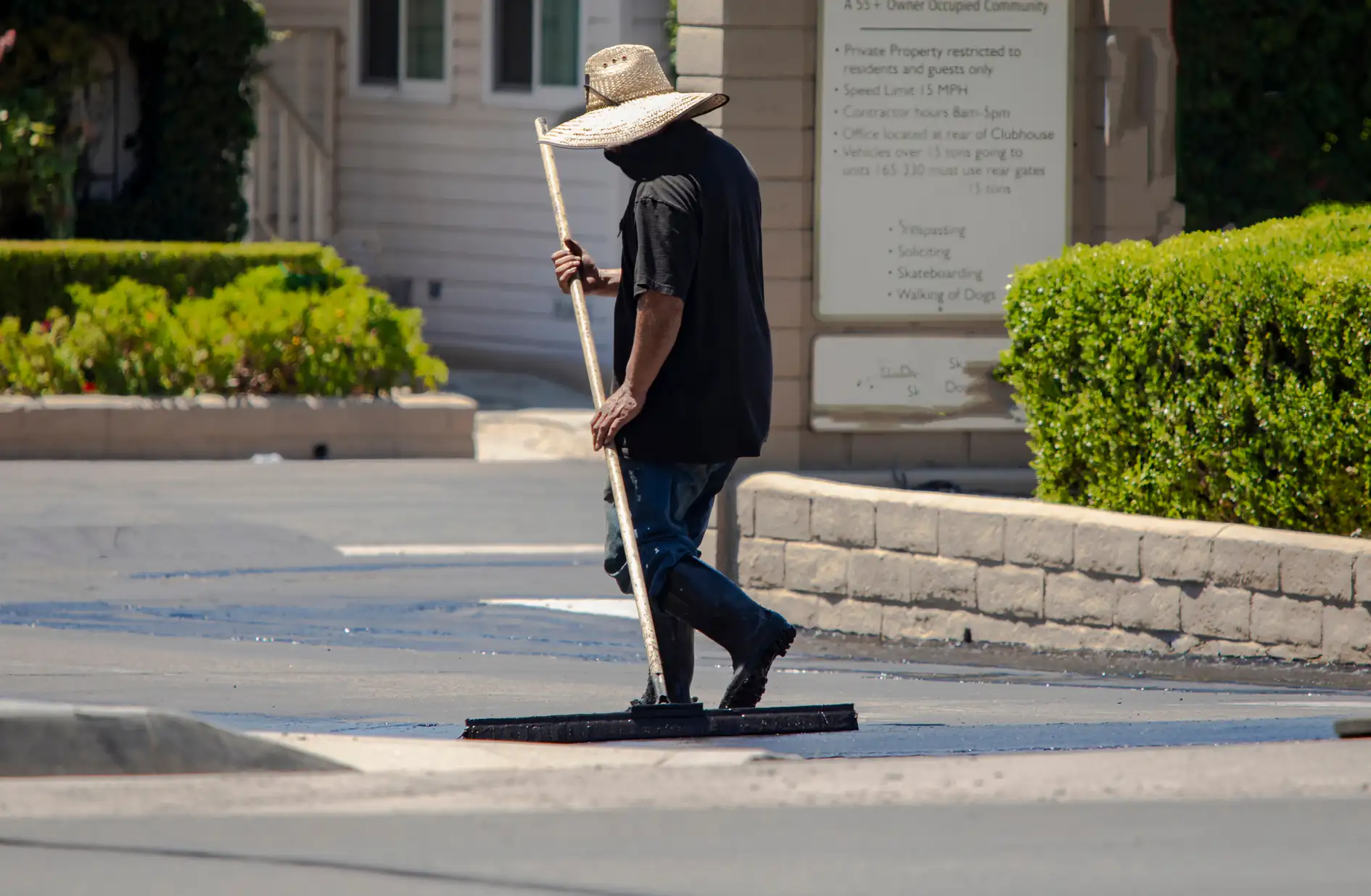
We edge and trim around walkways, garage floors, and any concrete or brick so the sealer goes exactly where it should. Then we apply two coats of commercial-grade sealer using the right application method for your driveway’s condition and texture.
Two coats last three to four years on residential driveways in New Jersey. Single-coat applications might save you money upfront, but they typically last only one to two years, which means you’re resealing more often and spending more over time.
After application, the sealer needs 24 to 48 hours to cure depending on temperature and humidity. We’ll walk you through exactly when you can park on it again.
Ready to get started?
Every sealcoating job from us includes full surface cleaning, hot rubberized crack filling for all visible cracks, oil spot priming where needed, and edge trimming to protect your concrete and landscaping. You’re also getting two coats of high-quality sealer, not one thin layer that wears off by next spring.
We only schedule jobs during optimal weather windows. That means temperatures above 50°F at night, low humidity, and no rain in the forecast for at least 24 hours after application. Peapack and Gladstone’s climate doesn’t give us a huge window—roughly mid-May through mid-September—but that’s when the sealer cures properly and lasts.
Here’s what we don’t do: we don’t sealcoat driveways with major base problems, large potholes, or severe unevenness. Sealcoating protects good asphalt. It doesn’t fix structural damage. If your driveway has significant issues, we’ll tell you that upfront and explain what actually needs to happen, even if it’s not the answer you wanted to hear.
You’ll also get a realistic timeline. Most residential driveways take four to six hours including prep and application. Larger or more damaged driveways take longer. We don’t rush to fit in extra jobs because that’s how you end up with streaky, uneven results.

You’re looking at $0.15 to $0.40 per square foot for most residential driveways in Somerset County. A typical two-car driveway runs between $150 and $500 depending on size and current condition.
New Jersey pricing runs about 15 to 20 percent above national averages. That’s because of higher labor costs and the fact that our climate puts more wear on asphalt, which means more prep work. If a contractor quotes you significantly below that range, ask what they’re skipping—because proper prep, hot crack filler, and two coats of quality sealer cost money.
The real cost comparison isn’t between sealcoating companies. It’s between maintaining your driveway for a few hundred dollars every few years versus replacing it for $3,000 to $8,000 when it deteriorates beyond repair.
Every three to four years if you’re using two coats of quality sealer. Every one to two years if you went with a single-coat application.
New asphalt should be sealed within the first year after installation. That early sealcoating dramatically reduces degradation from water, UV exposure, and traffic wear. After that, you’re maintaining the protection, not trying to rescue damaged asphalt.
If your driveway is already faded to gray, showing small cracks, or has rough texture, it’s overdue. Waiting too long means water gets into the base, freeze-thaw cycles create bigger cracks, and eventually you’re looking at patching or repaving instead of a simple sealcoating job.
Late May through mid-September. That’s the window when temperatures stay above 50°F at night and humidity levels allow the sealer to cure properly.
April and early May are too unpredictable. You might get a warm week, but overnight temps can still dip into the 40s, and that prevents proper curing. Late September and October are marginal at best—contractors might push to squeeze in jobs, but you’re risking streaking, slow curing, and early failure.
If a contractor offers you a great deal to sealcoat in April or October, that’s a red flag. They’re prioritizing their schedule over the quality of your job. Sealer applied outside the proper temperature range doesn’t bond right, doesn’t cure fully, and won’t last.
Sealcoating is specifically for asphalt driveways. Concrete driveways use a completely different type of sealer—usually a penetrating or film-forming concrete sealer that protects against moisture, stains, and freeze-thaw damage.
If you have a concrete driveway in Peapack and Gladstone, you still need protection, but the product and process are different. Concrete sealers don’t create that black finish you see on asphalt. They’re typically clear or slightly tinted and designed to let the concrete breathe while blocking water and salt.
Paver driveways are another category entirely. Pavers need joint sand stabilization and a sealer that enhances color without creating a slippery surface. If you’re not sure what material your driveway is, we can identify it during a free estimate and recommend the right protection.
If it rains within the first 24 hours, you’ve got a problem. The sealer hasn’t cured yet, and water will cause streaking, wash away sections, and potentially splash sealer onto your garage door, siding, or walkways.
That’s why we check the weather forecast carefully before starting and won’t schedule your job if rain is likely within 24 to 48 hours. We’re not trying to be difficult when we reschedule—we’re protecting your investment.
If a contractor shows up and starts working when rain is in the forecast, stop them. You’re the one who’ll be living with a streaky, uneven driveway that needs to be redone. And if they’re uninsured and sealer damages your property during an unexpected storm, you’re paying for cleanup and repairs out of pocket.
Sealcoating works for driveways with minor surface wear—small cracks, fading, rough texture, but no major structural problems. If you’ve got potholes, large cracked areas, significant unevenness, or low spots where water pools, you likely have a base issue that sealcoating won’t fix.
Here’s the test: if you can see the stone aggregate through worn-away asphalt, or if cracks are wider than a quarter-inch, sealing alone won’t solve it. You need crack repair, patching, or possibly full replacement depending on how far the damage goes.
We’ll walk your driveway and tell you honestly what it needs. If someone shows up and immediately starts talking about sealcoating without inspecting the surface, they’re not looking out for you. We’d rather tell you that your driveway isn’t ready for sealcoating than take your money for a job that won’t last.