
Hear from Our Customers
Every winter in Morris County, driveways take a beating. Water seeps into small cracks, freezes, expands, and splits your asphalt from the inside out. Road salt accelerates the damage. By spring, you’re looking at repairs that cost ten times what prevention would have.
Driveway sealcoating creates a protective barrier against all of it. Water can’t penetrate. UV rays can’t fade the surface. Salt and chemicals roll off instead of eating through your asphalt. The result is a driveway that holds up through multiple freeze-thaw cycles instead of crumbling after one bad winter.
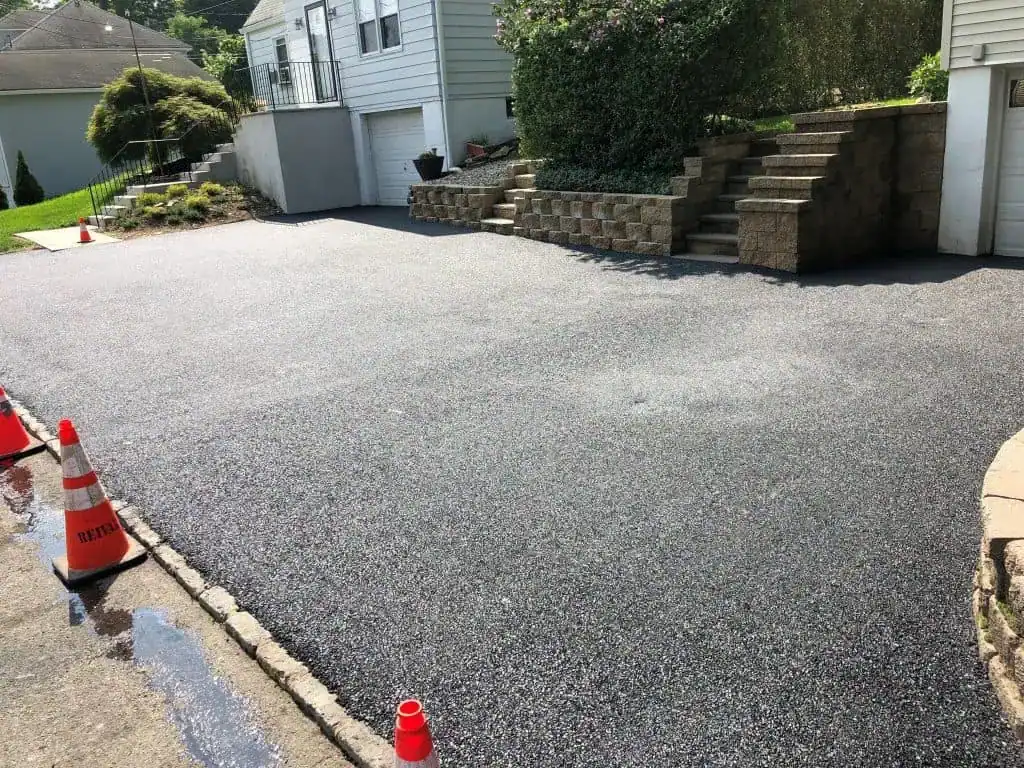
You also get the curb appeal back. Fresh sealcoating turns faded gray asphalt into a clean, matte black finish. It’s the difference between a driveway that looks worn down and one that looks maintained. For most Riverdale homeowners, that matters when you’re protecting a property worth $344,900 or more.
The math is simple. A sealcoating job runs $150 to $500 depending on your driveway size. A full repaving job starts around $5,000. You’re paying pennies on the dollar to avoid a major expense, and you’re extending your driveway’s lifespan by 10 to 15 years in the process.
We’ve been working in Morris, Sussex, and Somerset Counties since day one. We’re not a franchise or a crew passing through with leftover materials. We’re local, we know the climate here, and we know what happens to driveways that don’t get sealed before winter.
We use high-grade hot mix asphalt applied at the right temperature, not the cheap stuff that peels off after one season. Our process includes crack repair, proper surface prep, and a sealant that’s built to handle New Jersey winters. We don’t skip steps, and we don’t rush jobs to move on to the next one.
You’ll get a callback within 24 to 48 hours when you request a quote. No surprises, no upselling, no pressure. Just a straightforward estimate based on your driveway’s actual condition and size. Riverdale homeowners have enough to worry about without wondering if their contractor is going to show up or do the job right.
First, we inspect your driveway for cracks, potholes, and drainage issues. If there’s damage, we repair it before sealing. Sealcoating over broken asphalt doesn’t fix anything—it just hides the problem until it gets worse.
Next, we clean the surface. Oil stains, dirt, debris, and loose asphalt all have to go. If the surface isn’t clean, the sealant won’t bond properly, and you’ll end up with peeling or uneven coverage. We use commercial-grade equipment to make sure the prep work is done right.
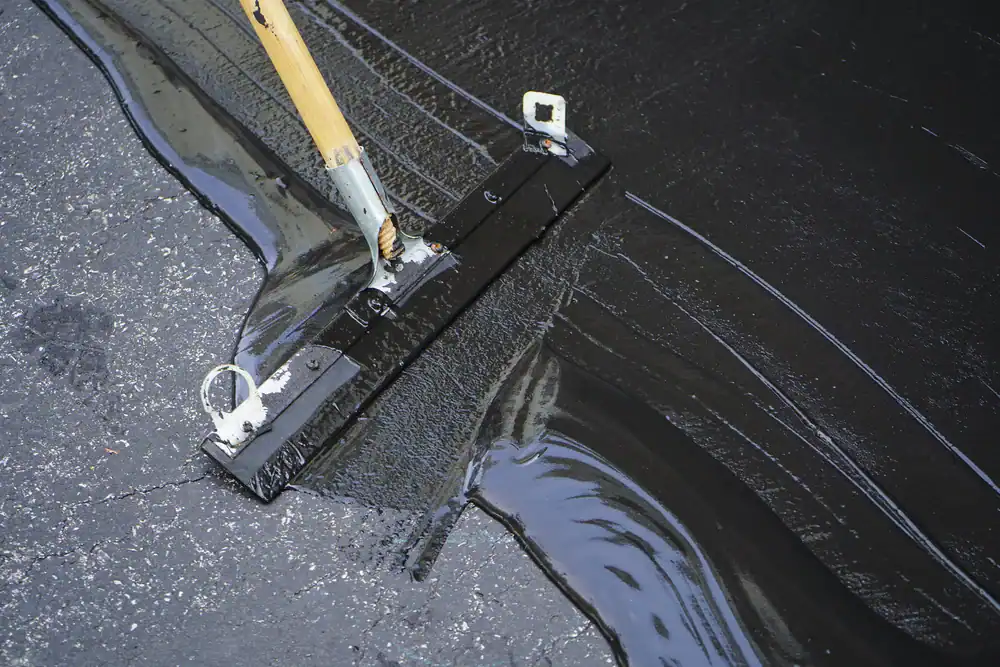
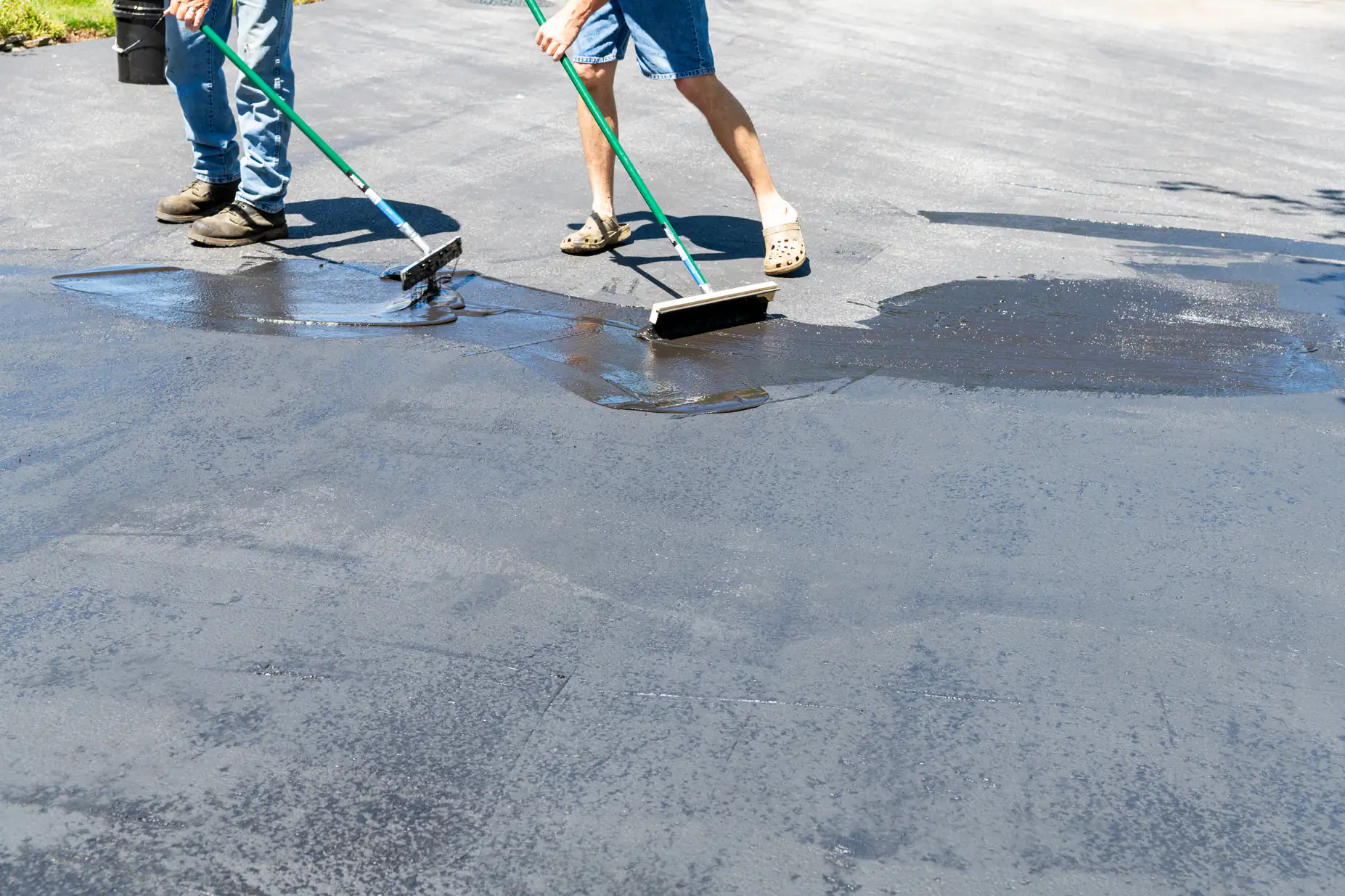
Then we apply the sealant. We use a squeegee or spray application depending on your driveway’s condition and size. The sealant goes on evenly, covering every inch of asphalt with a protective layer that blocks water, UV rays, and chemicals. We make sure the edges are clean and the coverage is consistent.
After that, it’s a waiting game. You’ll need to stay off the driveway for 24 to 48 hours depending on weather conditions. We’ll let you know exactly how long before you schedule the job. Once it’s cured, you’re good to go—and your driveway is protected for the next two to three years.
Ready to get started?
Every sealcoating job starts with crack filling. Small cracks turn into big ones fast, especially in Riverdale where temperature swings near Lake Hopatcong put extra stress on asphalt. We fill those cracks with a rubberized filler that flexes with the asphalt instead of cracking again in six months.
We also handle surface cleaning and prep. That includes removing oil stains, sweeping debris, and power washing if needed. If your driveway has vegetation growing through the edges, we’ll address that too. The goal is a clean, stable surface that the sealant can actually bond to.
The sealant itself is a commercial-grade coal tar or asphalt emulsion formula. It’s designed to withstand New Jersey winters, not just look good for a season. We apply it at the right thickness—not too thin where it won’t protect, and not too thick where it takes forever to dry or ends up tracking into your garage.
You’ll also get edge work along the borders of your driveway. Clean lines make a difference in how the finished job looks. We don’t cut corners on the details, because that’s where most contractors lose quality. The cost of asphalt sealing in Morris County ranges from $0.15 to $0.40 per square foot, and you’re getting a job that actually lasts at that price point.

Most driveways need sealcoating every two to three years. That timeline depends on how much traffic your driveway gets, how harsh the winters are, and whether you’ve kept up with maintenance in the past.
If your driveway sees heavy use—multiple vehicles, frequent turning, or commercial traffic—you might need to seal it closer to every two years. If it’s a residential driveway with light use and you’ve been consistent with sealing, you can stretch it to three years.
The best time to check is late summer or early fall. Look for fading, small cracks, or areas where water isn’t beading up anymore. If the surface looks gray instead of black, or if you can see aggregate showing through, it’s time. Waiting too long means you’ll be paying for repairs instead of prevention, and that costs a lot more.
Fall is the best window for sealcoating in New Jersey. You need temperatures above 50 degrees and at least 24 to 48 hours of dry weather for the sealant to cure properly. September and October usually give you those conditions without the spring rush.
Spring is the second-best option, but that’s when everyone else is calling for repairs after winter damage. You’ll wait longer for an appointment, and you’re dealing with damage instead of preventing it. Fall sealcoating protects your driveway before winter hits, which is the whole point.
Avoid summer if temperatures are above 90 degrees. The sealant can dry too fast, and you’ll end up with application issues. Winter is obviously out—sealcoating materials don’t work in cold weather, and you won’t get a proper cure. Plan ahead and book your appointment in early fall before the schedule fills up.
Most residential driveways in Riverdale run between $150 and $500 for sealcoating, depending on size and condition. If you’ve got a standard two-car driveway in good shape, expect to pay somewhere in the middle of that range.
The cost per square foot typically falls between $0.15 and $0.40 in Morris County. Larger driveways cost more in total but less per square foot. Driveways with significant cracking or damage will cost more because of the prep work involved—you’re paying for crack filling, repairs, and extra surface prep before the sealant even goes down.
Compare that to repaving, which starts around $5,000 for a typical driveway. Sealcoating every few years is a fraction of that cost, and it extends the life of your asphalt by 10 to 15 years. You’re not just saving money short-term—you’re avoiding a massive expense down the road by keeping up with basic maintenance now.
You can buy DIY sealcoating products at any home improvement store, but the results usually don’t compare to professional work. The biggest issue is surface prep. If you don’t clean and repair the driveway properly, the sealant won’t bond, and you’ll end up with peeling or uneven coverage within a year.
Application is the other problem. Most homeowners apply the sealant too thin trying to stretch the material, or too thick because they’re not sure how much to use. Either way, you don’t get the protection you’re paying for. Professional crews use commercial-grade equipment and know how to get even coverage at the right thickness.
There’s also the material quality. Retail sealants are formulated differently than professional-grade products. They don’t last as long, and they don’t hold up as well to New Jersey winters. If you’re going to spend the time and money doing it yourself, you want it to actually last. For most homeowners, hiring a contractor ends up being cheaper in the long run because the job lasts two to three years instead of one.
Coal tar sealers are more durable and offer better protection against gas, oil, and salt. They’re the standard for driveways that see heavy use or exposure to chemicals. The downside is they take longer to cure and have a stronger odor during application.
Asphalt emulsion sealers are more environmentally friendly and cure faster. They’re a good option for residential driveways with light to moderate use. They don’t hold up quite as well against chemicals, but for most Riverdale homeowners, they provide plenty of protection at a lower cost.
The choice depends on your driveway’s condition and how you use it. If you’re parking work vehicles, dealing with oil leaks, or running a home business with frequent traffic, coal tar makes sense. If it’s a standard residential driveway and you’re keeping up with regular maintenance, asphalt emulsion works fine. We’ll recommend the right product based on your specific situation, not just what’s easiest for us to apply.
No. Sealcoating protects the surface of your asphalt, but it doesn’t repair structural damage. If you’ve got cracks or potholes, those need to be filled and repaired before sealcoating happens. Otherwise, you’re just covering up problems that will get worse over time.
Small cracks get filled with a rubberized crack filler that flexes with the asphalt. Larger cracks or potholes need to be cut out and patched with new asphalt. Once the repairs are done and cured, then we seal the entire surface. That’s the only way to get a driveway that actually lasts.
Some contractors will try to seal over damage to save time or cut costs. That’s a red flag. If someone’s willing to skip the repair work, they’re probably cutting corners elsewhere too. A proper sealcoating job includes inspection, repair, cleaning, and sealing—in that order. Anything less is a waste of your money.