
Hear from Our Customers
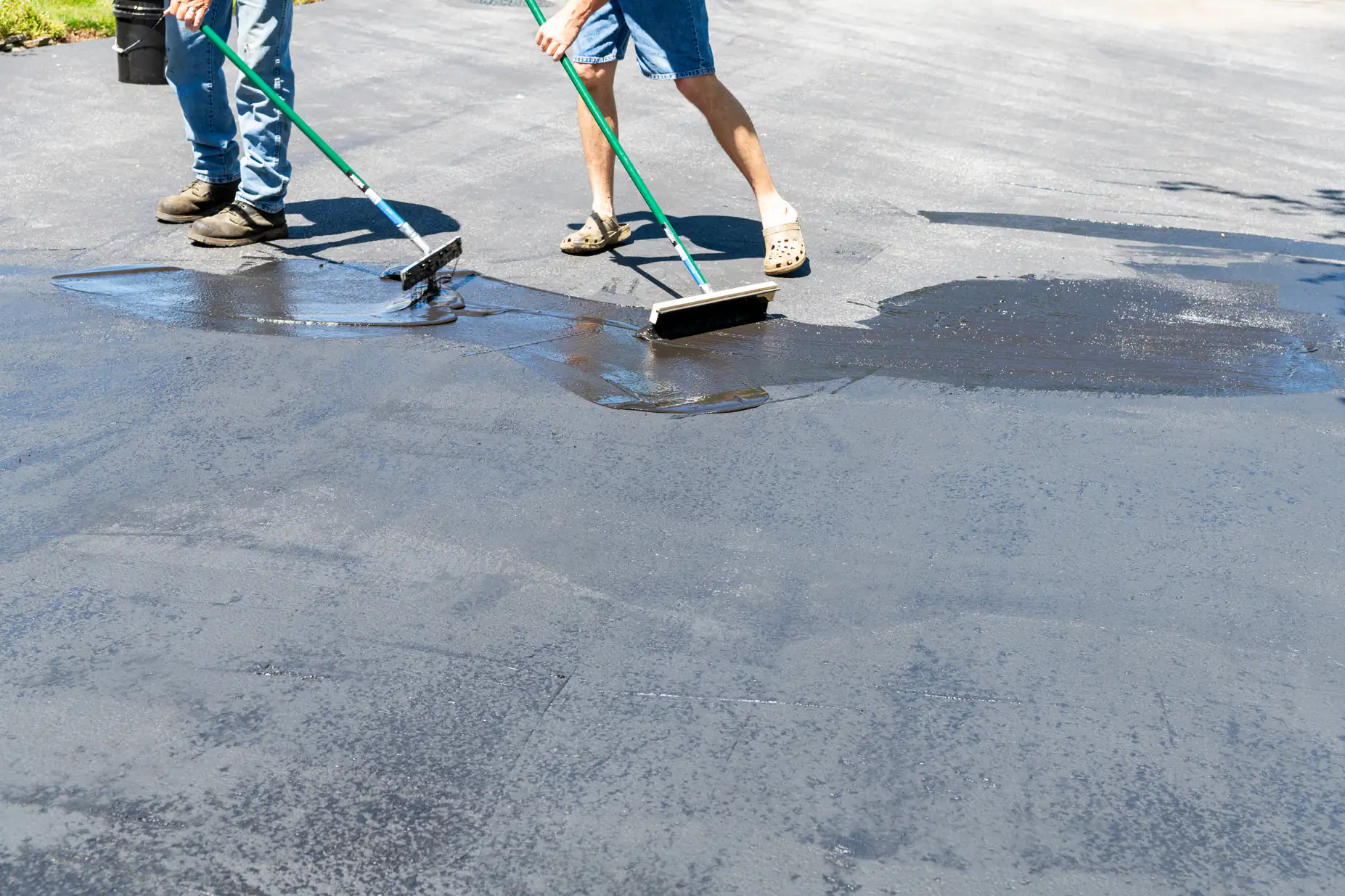
You’re looking at 10 to 15 extra years of driveway life when you seal it right. That’s the difference between replacing your asphalt in 2035 versus 2045.
Every winter, Franklin Center gets hit with 55 to 75 freeze-thaw cycles. Water seeps into those hairline cracks you see right now. It freezes, expands by 9%, and turns small problems into expensive ones. Sealcoating stops water from getting in there in the first place.
Your driveway also takes a beating from UV rays all summer long. The sun breaks down the binding agents in asphalt, which is why unsealed driveways fade to that dull gray. A proper seal keeps it black, flexible, and protected year-round.
The math is straightforward. Sealcoating your driveway costs $180 to $270 for a standard 600-square-foot surface in Somerset County. Repairing cracks and potholes after winter damage runs $2,000 to $5,000. Repaving the whole thing costs $6 to $8 per square foot—that’s $3,600 to $4,800 for the same driveway.
We’ve been working in Morris, Sussex, and Somerset County since before most sealcoating companies even existed in this area. We know what New Jersey winters do to asphalt because we’ve been repairing, sealing, and replacing driveways here for two decades.
Franklin Center sits right in the middle of Somerset County’s freeze-thaw zone. You’re dealing with the same weather patterns as Somerville, Bound Brook, and Bridgewater Center. We apply two coats on every residential driveway here because single-coat applications don’t hold up to your winters. They last one to two years. Two coats give you three to four years of solid protection.
We’re not the cheapest option you’ll find. You’ll see lower quotes from contractors who skip crack filling, use thinner sealer, or only apply one coat. That’s fine if you want to reseal every year. If you’d rather do this once every few years and actually protect your investment, we’re the call you make.
You request a quote online or call us directly. If you submit through the website, expect a callback within 24 to 48 hours. We’ll ask about your driveway size, current condition, and when you’re looking to get this done.
We come out to look at your driveway in person. We’re checking for cracks, drainage issues, and how much prep work is needed. You get a clear price right there—no surprises later.
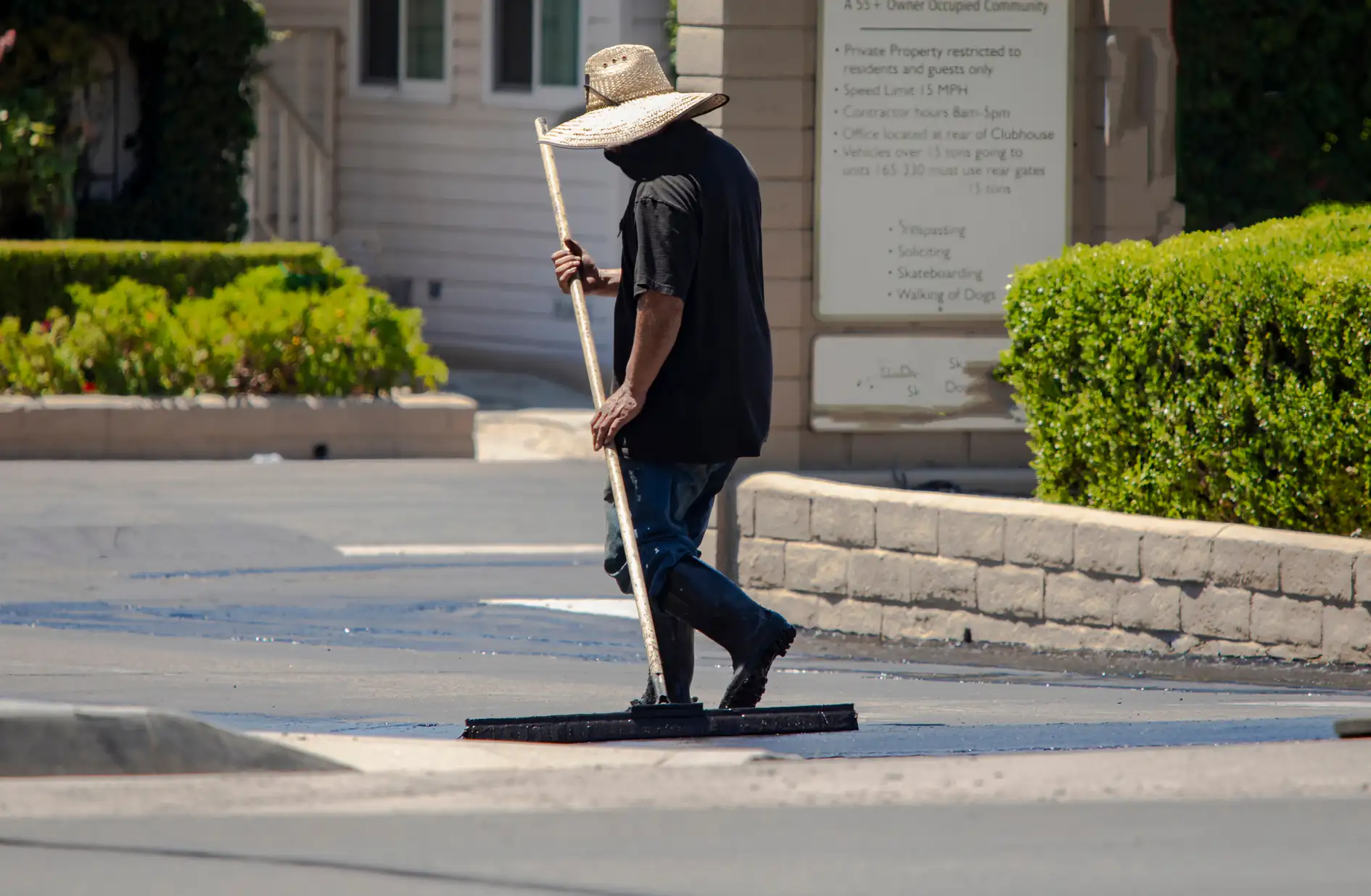
Once you’re ready to move forward, we schedule based on weather. Sealcoating needs temperatures above 50 degrees and no rain in the forecast for 24 hours. We start with power washing to remove dirt, oil, and debris. Then we fill any cracks up to 50 linear feet with hot rubberized crack filler.
After the surface dries completely, we apply the first coat of coal tar sealer with a sand additive for traction. We let that cure, then apply the second coat. Your driveway needs 24 to 48 hours before you can walk on it and 72 hours before you park on it. We’ll tell you exactly when it’s ready.
Ready to get started?
Our standard residential sealcoating package includes power washing, crack filling up to 50 linear feet, two coats of commercial-grade coal tar sealer, sand additive for slip resistance, and a two-year warranty. That’s what you need in Franklin Center to make this worthwhile.
New Jersey prices run 15 to 20% above national averages because labor costs more here and our climate is harder on asphalt. You’re paying for materials that can handle what Somerset County throws at them. We use coal tar sealer, not asphalt emulsion. Coal tar lasts longer in freeze-thaw climates and resists gas and oil stains better.
The two-coat application isn’t optional in this area. Single coats might work in Virginia or North Carolina where winters are milder. Here, you need that thicker protective layer. It’s the difference between resealing in two years versus four years.
Fall is your best window for this work. September through early November gives the sealer maximum cure time before winter hits. Spring works too, but you’re sealing after winter damage has already happened. You’re paying to fix problems instead of preventing them.

You’re looking at $180 to $270 for a standard 600-square-foot two-car driveway in Franklin Center. That’s based on 2025 pricing for a complete job with power washing, crack filling, and two coats of sealer.
Price depends on your driveway’s size and condition. If you’ve got more than 50 linear feet of cracks to fill, that’s extra. If your driveway hasn’t been sealed in years and needs heavy cleaning, that adds time and cost. If it’s in decent shape and just needs routine maintenance, you’re at the lower end of that range.
Some contractors quote $0.15 to $0.25 per square foot, which sounds cheaper until you realize they’re only applying one coat or skipping crack filling. Our pricing includes everything you actually need for a job that lasts. You can pay less and reseal every year, or pay once and not think about it again for three to four years.
Fall is the best time, specifically September through early November. You need temperatures consistently above 50 degrees, low humidity, and no rain for at least 24 hours after application. Fall gives you all three plus maximum cure time before winter.
Spring is your second option, usually late April through June. The problem with spring sealcoating is you’re doing it after winter damage has already happened. You’re fixing cracks and potholes that could have been prevented if you’d sealed in the fall. You’re still protecting your driveway going forward, but you’ve already paid for one round of winter damage.
Summer works if you have to, but the sealer cures too fast in extreme heat. It can dry before it properly bonds to the asphalt. We avoid scheduling sealcoating when temperatures are above 85 degrees. Winter is completely off the table—sealer won’t cure properly below 50 degrees, and you’ll just waste your money.
Two-coat applications last three to four years in Somerset County. Single-coat jobs last one to two years, which is why we don’t offer them. You’re dealing with 55 to 75 freeze-thaw cycles every winter here, and that’s brutal on thin sealer applications.
How long your sealcoating actually lasts depends on a few things. Traffic matters—a driveway with four cars coming and going daily wears faster than one with light use. Drainage matters too. If water pools on your driveway instead of running off, it breaks down the sealer faster. Sun exposure plays a role. South-facing driveways get more UV damage than shaded ones.
You’ll know it’s time to reseal when the surface starts looking faded or gray instead of black. If you’re seeing the aggregate (the small stones in the asphalt) clearly, the sealer’s worn through. Small cracks starting to appear is another sign. Don’t wait until you’ve got major cracking or potholes—at that point, you’re paying for repairs before you can even seal.
Coal tar sealer lasts longer in New Jersey’s climate and resists gas and oil stains better. Asphalt emulsion is cheaper and more environmentally friendly, but it doesn’t hold up as well to freeze-thaw cycles. We use coal tar for residential driveways in Franklin Center because it performs better in your conditions.
Coal tar creates a tougher, more flexible barrier. When temperatures swing from 15 degrees in January to 85 degrees in July, that flexibility matters. It expands and contracts with your asphalt instead of cracking. It also dries to a darker black finish that lasts longer before fading.
Asphalt emulsion is water-based and easier to work with, which is why some contractors prefer it. It’s also allowed in areas where coal tar has been restricted due to environmental concerns. New Jersey still permits coal tar sealer for residential use, and it’s the better choice for driveways that take a beating from weather and traffic. If you’re concerned about environmental impact, asphalt emulsion is a reasonable alternative—just know you’ll be resealing more often.
You can do it yourself if you’re comfortable with the prep work and have the right equipment. Most homeowners who try it end up with streaky application, missed spots, or sealer that doesn’t last because the surface wasn’t prepped correctly. The money you save often isn’t worth the result you get.
The hard part isn’t spreading sealer—it’s the preparation. You need to power wash the entire surface, let it dry completely, fill every crack properly with hot rubberized filler, and then apply two even coats without streaks or puddles. You also need to work fast enough that edges don’t dry before you blend them, but not so fast that you apply it too thin.
Most DIY sealcoating jobs use consumer-grade products from home improvement stores. Those products are thinner and don’t include the additives that commercial-grade sealers have. You’ll get six months to a year out of a DIY job versus three to four years from a professional application. If you’re planning to sell soon and just need your driveway to look better for listing photos, DIY might make sense. If you’re protecting a long-term investment, hire someone who does this correctly.
No. New asphalt needs six months to a year to cure before you seal it. If you seal too early, you trap oils in the asphalt that need to evaporate. That prevents proper curing and can actually soften your driveway surface.
Your asphalt contractor should tell you when it’s ready to seal. Most recommend waiting until the following spring or fall after installation. You’ll know it’s ready when the surface has fully hardened and turned from deep black to a slightly lighter gray-black color. If you can still smell that fresh asphalt smell strongly, it’s too soon.
Once that first year passes, get it sealed. That’s when your driveway is most vulnerable to weather damage. The surface has cured but hasn’t developed any cracks yet. Sealing at that point gives you maximum protection and sets you up for the longest possible lifespan. Wait too long—three or four years—and you’re already dealing with UV damage and the start of crack formation.