
Hear from Our Customers
Your driveway takes a beating. Every freeze-thaw cycle pushes water deeper into the asphalt. UV rays break down the binder that holds everything together. Salt and chemicals eat away at the surface all winter long.
Sealcoating creates a waterproof barrier that stops this damage before it starts. You’re looking at 3-4 years of protection with a proper two-coat application, not the 12-16 months most homeowners expect because they’ve only experienced rushed, single-coat jobs.
The math is simple. Repaving costs $6-8 per square foot. Quality sealcoating runs $0.15-0.40 per square foot. That’s over 2,000% more value for a service that prevents the damage that leads to expensive repairs. Your driveway stays smooth, black, and protected instead of cracked, faded, and leaking water into the foundation.
We work in communities where homes average over $1 million. That means we can’t cut corners, show up late, or use subpar materials. Our reputation in Morris County depends on doing it right the first time.
Every sealcoating job gets direct owner supervision. We mix our sealer in-house to create a thicker, darker finish that outlasts anything you’ll find in a Home Depot bucket. And we carry full insurance and BBB accreditation because that’s baseline in Essex Fells, Short Hills, and the surrounding areas we serve.
You’ll get transparent pricing with zero surprise charges and a 2-year warranty on materials and labor. We’re not the cheapest option, and that’s intentional. You’re paying for preparation work that matters and materials that last.
First, we clean the entire surface. Oil spots get treated with a degreaser. Weeds and debris are removed. Cracks larger than a quarter-inch get filled with hot rubberized crack filler, not the cheap stuff that peels out in six months.
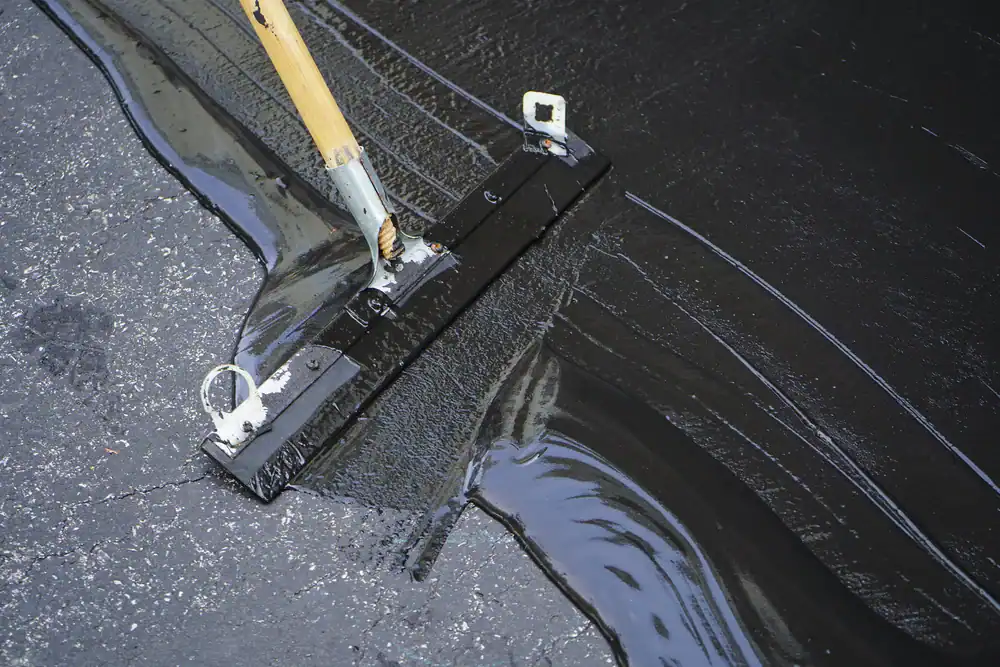
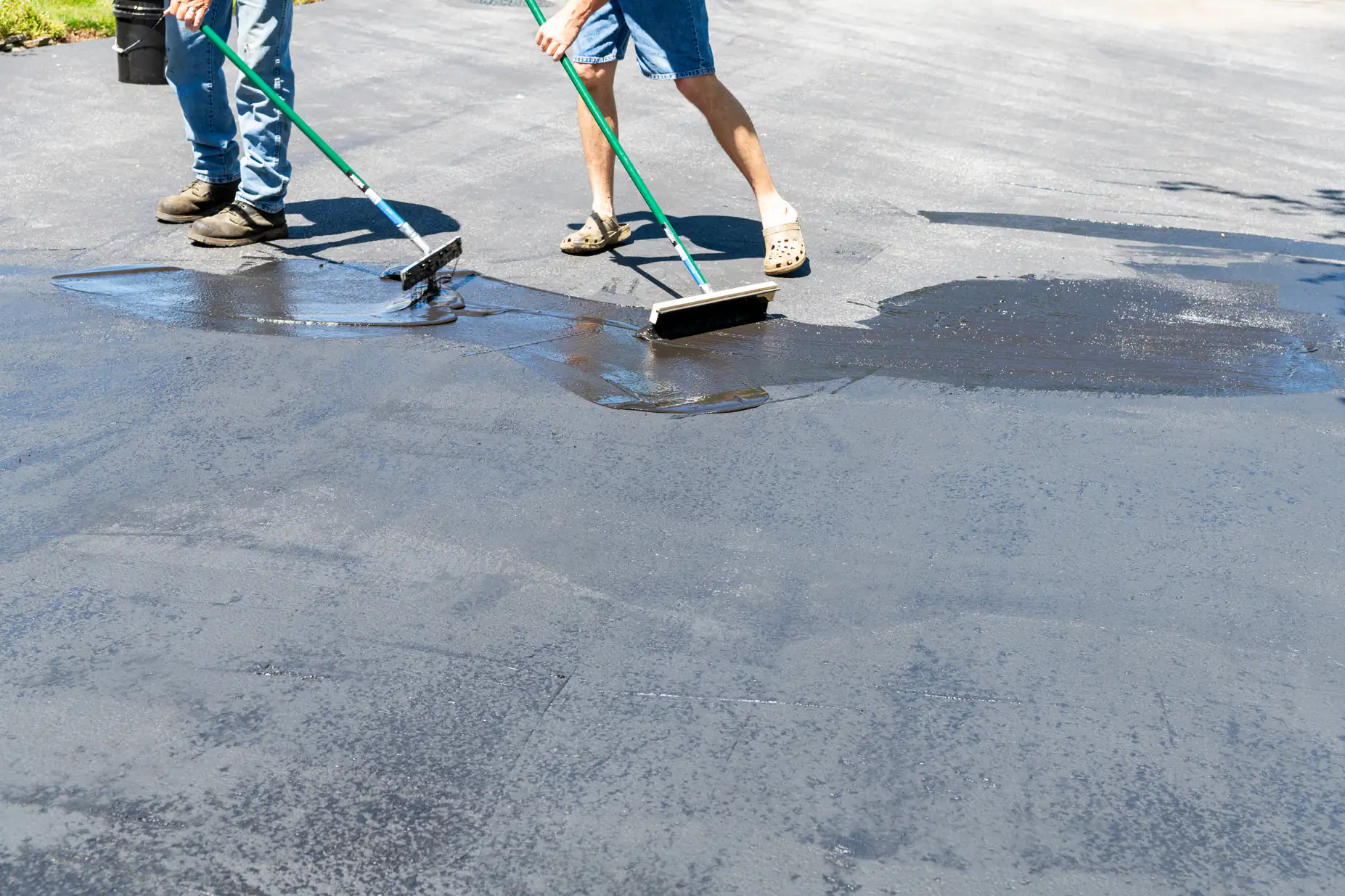
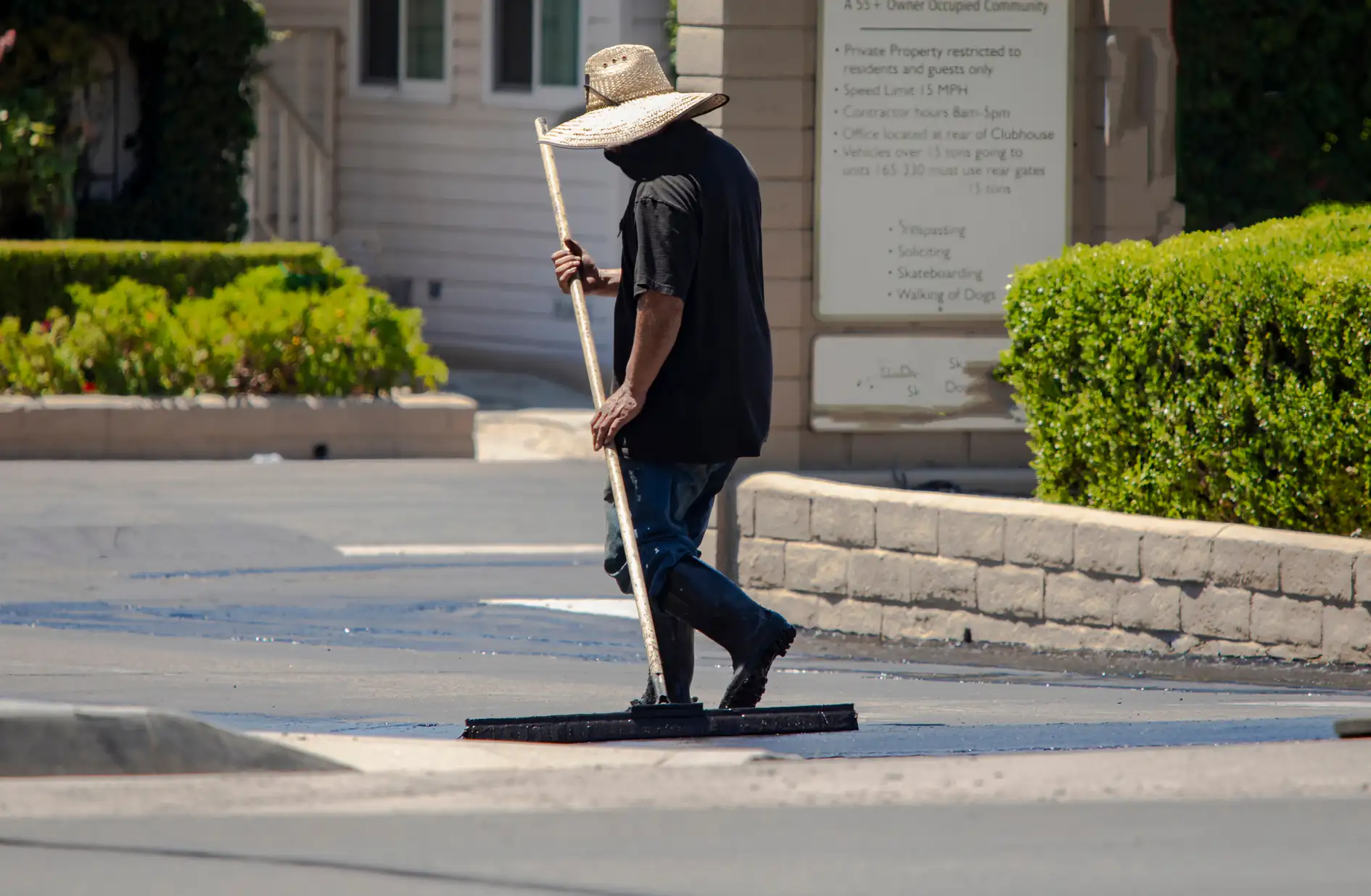
Then we apply the first coat of our custom-blended sealer using professional-grade squeegees and brushes. This coat penetrates the asphalt and creates the foundation for long-term protection. Most contractors stop here because it looks done. We don’t.
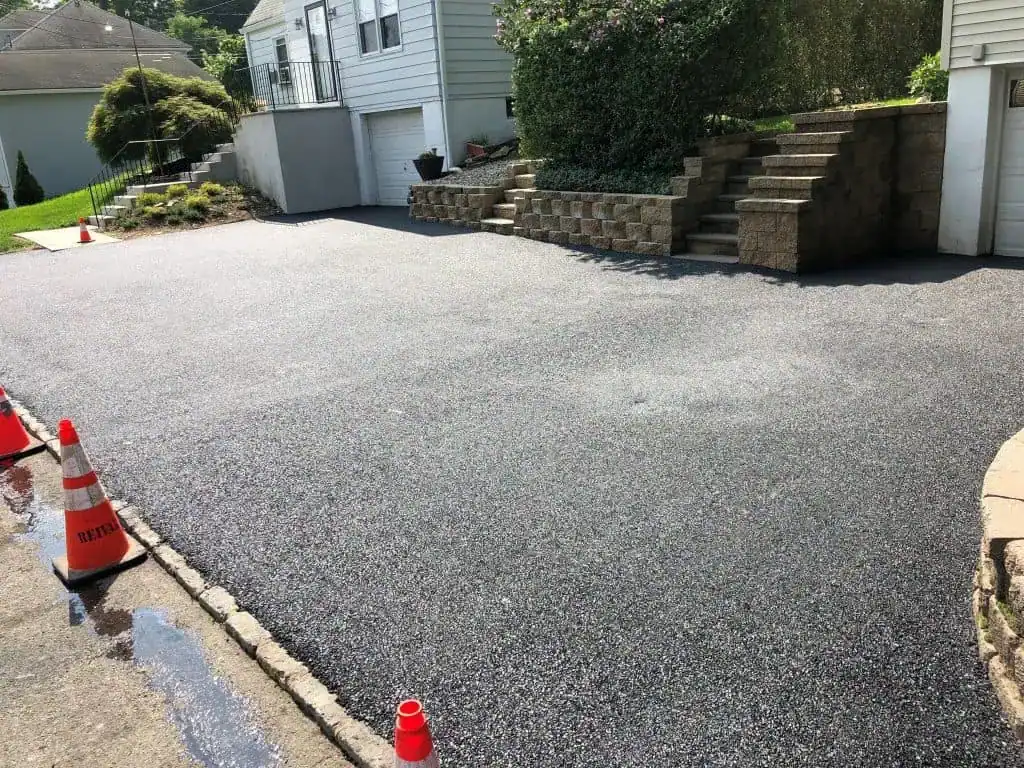
The second coat goes on 24 hours later. This is what gives you that deep black finish and the extra thickness that lasts 3-4 years in New Jersey’s climate instead of 1-2. Two coats mean better coverage, fewer thin spots, and a protective layer that can actually handle the freeze-thaw cycles we get every winter. You’ll need to stay off the driveway for 24-48 hours depending on temperature and humidity, but after that, it’s fully cured and ready for traffic.
Ready to get started?
Every driveway sealcoating service includes surface cleaning, crack filling up to standard width, edging along garage doors and walkways, and two full coats of our custom sealer blend. We’re not spraying and leaving. We’re using squeegees and brushes to work the material into the asphalt for proper adhesion.
Essex Fells driveways face specific challenges. Your neighborhood has mature trees that drop sap and debris. The elevation changes mean water runoff can pool in certain areas. Winter salt usage is heavy because of the hills. We account for all of this when we prep and seal your driveway.
You’ll also get clear instructions for curing time and maintenance. Most residential driveways in this area run 400-800 square feet, which means the actual sealing process takes about four hours once prep is done. We schedule around your availability and we show up when we say we will. The 24-48 hour callback guarantee on quote requests isn’t marketing speak – it’s how we operate.

Most residential driveways in Essex Fells run between $250 and $500 for professional two-coat sealcoating. The range depends on square footage, current condition, and how much crack repair is needed before sealing.
A typical driveway here is 500-700 square feet. At $0.15-0.40 per square foot, you’re looking at $75-280 for the sealing itself, plus crack filling and edge work. If your driveway has significant damage or hasn’t been sealed in 5+ years, expect to be on the higher end because more prep work is required.
Compare that to repaving, which runs $6-8 per square foot in North Jersey. A 600 square foot driveway costs $3,600-4,800 to replace. Sealcoating every 3-4 years for $300-400 means you’re spending $1,200-1,600 over a decade instead of replacing the entire surface. The cost difference isn’t even close.
A proper two-coat sealcoating job lasts 3-4 years in New Jersey’s climate. Single-coat applications or low-quality sealer might give you 12-18 months before it starts breaking down, which is why so many homeowners think sealcoating doesn’t work.
New Jersey winters are brutal on asphalt. The freeze-thaw cycle happens dozens of times each season. Water gets into small cracks, freezes, expands, and makes those cracks bigger. Salt and chemicals accelerate the breakdown. A thick, two-coat application creates enough of a barrier to handle this abuse for multiple seasons.
You’ll know it’s time to reseal when the surface starts looking gray instead of black, or when water stops beading up and starts soaking in. Most driveways in Essex Fells need resealing every three years if you want to maintain that protection and appearance. Wait longer and you’re not just resealing – you’re repairing damage that could have been prevented.
Coal tar sealer is banned or restricted in several New Jersey municipalities because of environmental concerns, and that trend is moving toward statewide restrictions. It’s more durable and resistant to gas and oil, but the environmental impact has made it less available.
Asphalt-based sealers are what most professional contractors use now. They’re made from asphalt emulsion, which bonds better with your existing driveway surface since it’s the same base material. Modern asphalt sealers include additives for flexibility, UV protection, and chemical resistance that make them nearly as durable as coal tar without the environmental issues.
The real difference in performance comes down to application quality, not sealer type. A properly applied two-coat asphalt sealer will outperform a rushed single-coat coal tar job every time. We mix our asphalt-based sealer in-house with specific additives for New Jersey’s climate, which gives you the protection you need without the regulatory concerns.
Late spring through early fall is ideal for driveway sealcoating in North Jersey. You need temperatures above 50°F during application and for 24 hours afterward to ensure proper curing. Humidity matters too – you want dry conditions without rain in the forecast for at least 24-48 hours.
May through September is the sweet spot. The asphalt is warm enough for the sealer to penetrate and bond properly, and you have longer daylight hours for curing. Early fall works well too, but you’re racing against dropping temperatures and increased rain.
Avoid sealing in early spring even if it’s warm. Your driveway needs to be completely dry, and winter moisture can take weeks to fully evaporate from the asphalt. Also avoid sealing brand new asphalt – wait at least 90 days for the oils to cure out of fresh pavement. If your driveway was just installed or repaved, mark your calendar for the following season.
You can buy sealer at any home improvement store and do it yourself. Whether you should depends on whether you want it to last 18 months or 3-4 years.
DIY sealcoating usually fails because of poor surface prep and thin application. Most homeowners don’t properly clean oil spots, don’t fill cracks correctly, and apply one thin coat because the bucket runs out faster than expected. The sealer looks good for a few months, then starts peeling or wearing through in the tire tracks.
Professional equipment makes a difference too. We use commercial-grade squeegees that apply a thicker, more uniform coat. Our sealer is mixed fresh and includes additives that aren’t in retail products. And we know how to handle edges, slopes, and problem areas that cause DIY jobs to fail early. If your driveway is small and you’re comfortable with it lasting 1-2 years, DIY might work. If you want actual protection that justifies the time and effort, hire someone who does this daily.
No. Sealcoating protects the surface and prevents new damage, but it doesn’t repair structural problems. If you have cracks wider than a quarter-inch or any potholes, those need to be filled before sealcoating or they’ll just get worse.
We fill cracks as part of the prep process using hot rubberized crack filler that flexes with temperature changes. Small surface cracks get sealed over and become less visible. But larger cracks, alligator cracking, or sunken areas mean there’s foundation damage that sealcoating can’t fix. In those cases, you might need patching or even partial repaving before sealing makes sense.
Think of sealcoating as preventive maintenance, not repair. It stops water infiltration, UV damage, and chemical breakdown that cause cracks and potholes to form. If you seal your driveway every 3-4 years starting when it’s in good condition, you’ll avoid most of the major repairs that come from neglect. But if the damage is already there, you have to fix it first or you’re just putting a band-aid on a broken bone.