
Hear from Our Customers
Your driveway takes a beating here. Water seeps into small cracks all summer and fall. Then November hits, temperatures drop below freezing, and that water expands by 9%. The crack widens. More water gets in. The cycle repeats 50 to 70 times before spring arrives.
Professional sealcoating stops this before it starts. It seals the surface so water can’t penetrate. It blocks UV rays that dry out and crack your asphalt. It protects against oil stains, gas drips, and road salt—all the things that break down your driveway from the outside in.
The result? A sealed driveway lasts 20 to 30 years with regular maintenance. An unsealed one? You’re looking at 10 to 15 years, maybe less if you’re dealing with heavy traffic or a steep grade. That’s not a small difference when you’re talking about a $5,000 to $8,000 replacement cost.
We’ve been handling asphalt work across Morris, Somerset, and Sussex counties since before most of the new developments in Green Knoll were even built. We’re BBB accredited with a 4.5-star rating and fully licensed with the NJ Division of Consumer Affairs.
We’re not the cheapest option you’ll find. We use commercial-grade sealers, not the stuff you pick up at a big-box store. We power wash before we seal. We fill cracks with hot rubberized filler, not cold patch. We apply two coats, not one. And we stand behind it with a 5-year warranty.
You’re not hiring a crew that shows up once and disappears. You’re working with a local company that’s been here for two decades and plans to be here for two more.
First, we inspect the surface. We’re looking for cracks, oil spots, drainage issues—anything that’ll affect how the sealer bonds. If there are cracks wider than a quarter-inch, we fill them with hot rubberized crack filler. If there are oil stains, we prime them so the sealer doesn’t peel off in six months.
Next, we power wash the entire surface. This removes dirt, debris, oxidation, and anything else that would prevent proper adhesion. Most homeowners skip this step when they DIY. Most fly-by-night contractors skip it too. We don’t.
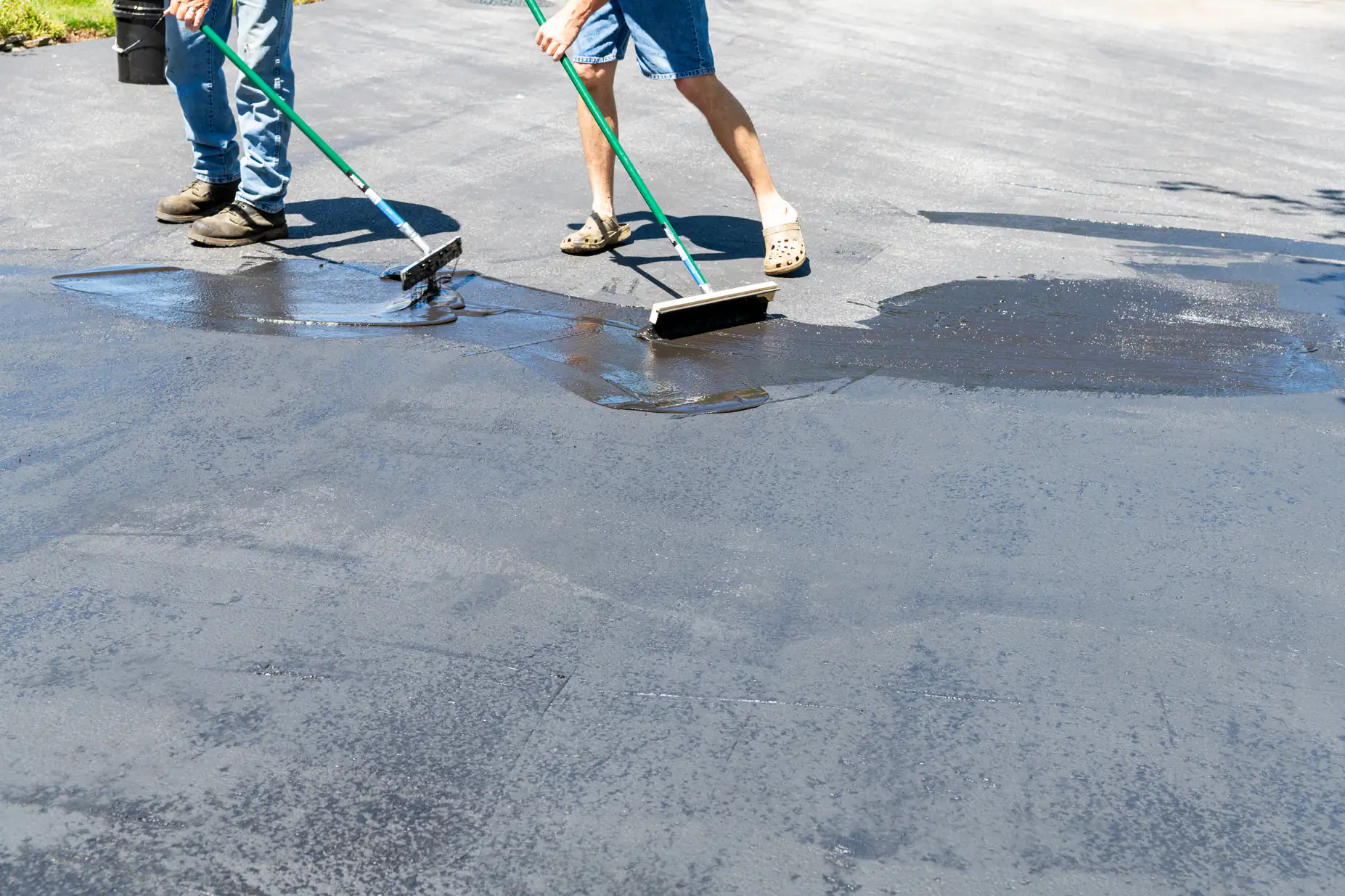
Then we apply two coats of commercial-grade sealer with a sand additive for traction and durability. The first coat seals the surface. The second coat adds thickness and longevity. We edge around your walkways, garage, and landscaping so everything looks clean and professional.
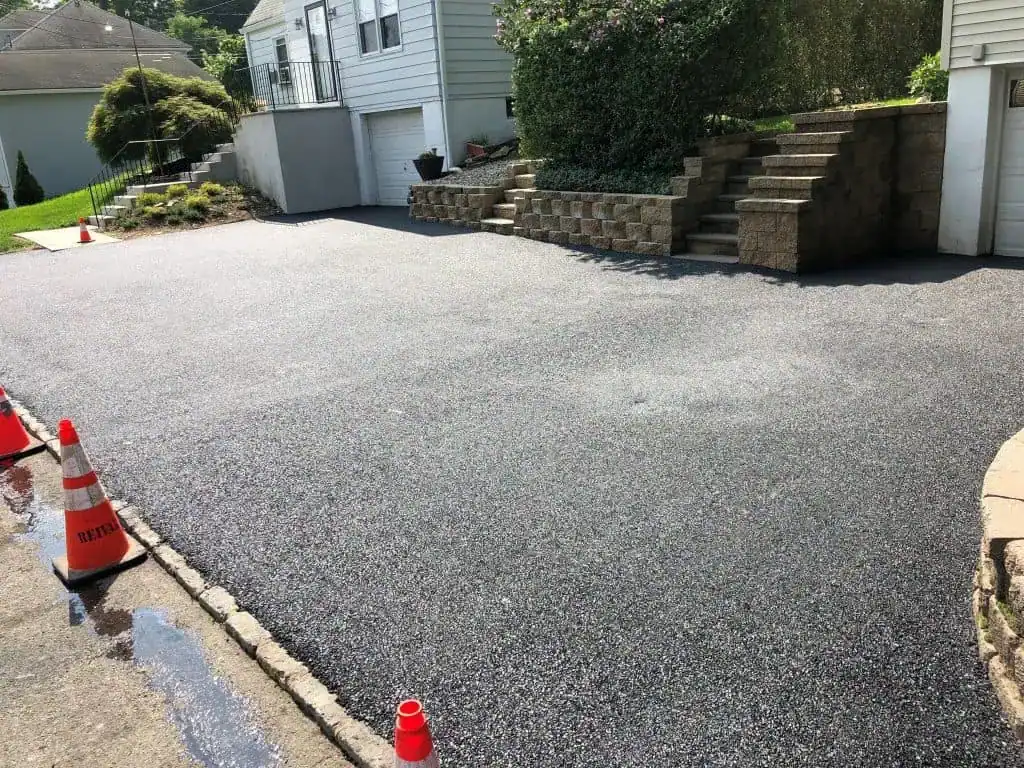
You’ll need to stay off it for 24 to 48 hours depending on weather. After that, it’s ready for normal use. We recommend resealing every 2 to 3 years to maintain protection, but you’ll see the difference immediately—darker color, smoother surface, better curb appeal.
Ready to get started?
Every sealcoating job includes crack filling, power washing, oil spot priming, edge trimming, and two coats of professional-grade sealer. We don’t cut corners. We don’t skip prep work. And we don’t use subcontractors who show up in an unmarked truck with no insurance.
Here in Green Knoll and the surrounding Somerset County area, your driveway faces some of the harshest conditions in the state. You get 45+ inches of rain per year. You get summer heat that pushes past 90°F. You get road salt all winter. And you get those relentless freeze-thaw cycles that crack asphalt faster than almost anywhere else in the country.
That’s why we use materials designed for this climate. That’s why we apply sealer at the proper thickness. And that’s why we time jobs for spring or fall when temperatures are between 50°F and 85°F—the ideal range for curing.
Most residential driveways in Green Knoll run between $300 and $600 for professional sealcoating, depending on size and condition. That breaks down to about 25 to 45 cents per square foot. Compare that to $3,000 to $8,000 for a full replacement, and the math is pretty straightforward.

Every 2 to 3 years is the standard recommendation for driveways in this area. But that’s not a hard rule—it depends on your specific situation.
If your driveway gets heavy use, sits in full sun all day, or has a steep grade that channels water, you might need to seal it closer to every 2 years. If it’s in the shade, sees light traffic, and drains well, you can probably stretch it to 3 years.
The easiest way to tell? Look at the surface. If the color has faded from black to gray, if you’re seeing small cracks starting to form, or if water isn’t beading up on the surface anymore, it’s time. Waiting too long means you’re not just sealing—you’re repairing. And repairs cost more.
Spring and fall are your best windows. You need temperatures between 50°F and 85°F for at least 24 hours after application, and you need dry weather.
Most homeowners call us in April or May, right after the frost lifts and they can see what damage winter left behind. That’s smart. You’re addressing problems before they get worse, and you’re protecting the surface before summer heat sets in.
Fall is the other ideal time—September and October, before temperatures drop. You’re sealing up the surface before winter arrives and those freeze-thaw cycles start doing damage. We don’t recommend sealing in summer when it’s above 90°F. The sealer dries too fast and doesn’t bond properly. And we definitely don’t seal in winter. Cold weather prevents curing, and you end up with a surface that peels or flakes within months.
Most residential driveways run between $300 and $600 for professional sealcoating. That’s based on an average driveway size of 600 to 1,200 square feet and includes all the prep work—crack filling, power washing, oil spot treatment, and two coats of sealer.
If your driveway is larger, in rough shape, or requires significant crack repair, you could be looking at $800 to $1,200. But even at the high end, you’re spending a fraction of what a full replacement would cost.
Here’s the other thing: price shouldn’t be your only consideration. A crew that charges $150 and skips the power washing, uses one coat of cheap sealer, and doesn’t fill cracks isn’t saving you money. You’ll be resealing in a year, or worse, dealing with bigger repairs because water got in and caused more damage. Pay for it to be done right the first time, and you’ll get 2 to 3 years of solid protection.
You can seal it yourself if you have the time, the equipment, and the willingness to do the prep work correctly. But most DIY jobs fail because homeowners skip steps or use the wrong materials.
You need a power washer to clean the surface properly. You need hot rubberized crack filler for any cracks wider than a hairline. You need oil spot primer if there are any stains. And you need commercial-grade sealer, not the bucket from the hardware store that’s mostly water.
Even if you have all that, you still need good weather, the right temperature range, and 24 to 48 hours where no one can use the driveway. Most people underestimate how much work it is, and they end up with a surface that looks streaky, peels within a year, or doesn’t protect the way it should. If your driveway is in decent shape and you’re handy, go for it. But if there are cracks, drainage issues, or oil stains, hire someone who does this every day and knows how to handle it.
It deteriorates faster. A lot faster. Unsealed asphalt is exposed to everything—water, UV rays, oil, gas, road salt, freeze-thaw cycles. All of that breaks down the binder that holds the asphalt together.
You’ll start seeing small cracks within a few years. Those cracks let water in. That water freezes, expands, and turns small cracks into big ones. Before long, you’re dealing with potholes, crumbling edges, and a surface that’s beyond repair.
An unsealed driveway might last 10 to 15 years if you’re lucky. A sealed one, maintained every 2 to 3 years, can last 20 to 30 years. That’s double the lifespan for a few hundred dollars every couple of years. The math isn’t complicated—sealcoating is cheap insurance against expensive problems.
Look for a contractor who’s been in business locally for at least 5 years, carries liability insurance, and can show you references or reviews from customers in your area. Ask what their process includes—if they’re not mentioning power washing, crack filling, and two coats, keep looking.
Red flags: contractors who quote over the phone without seeing your driveway, crews that show up in unmarked trucks, anyone who asks for full payment upfront, and companies that pressure you to decide on the spot.
You want someone who’s licensed with the state, accredited with the BBB, and willing to put their warranty in writing. You want a crew that shows up when they say they will, does the work the way they described, and stands behind it if something goes wrong. That’s not asking for much—it’s the baseline for a professional job.