
Hear from Our Customers
Your driveway takes a beating in New Jersey. Winter dumps salt and ice on it. Spring brings water into every crack. Summer’s UV rays fade and dry it out. Without protection, that $12,000 replacement bill is coming faster than you think.
Driveway sealcoating creates a barrier against all of it. Water can’t seep in and freeze. Salt can’t eat away at the surface. Oil spots wipe off instead of staining permanently. You’re looking at 10 to 15 extra years of life when you seal every two to three years.
The math is simple. A $400 sealcoating job now prevents a $5,000 repair project later. And it keeps your driveway looking like you actually care about your property, which matters when you’re living in one of Morris County’s most well-maintained communities.
Most driveways in Mountain Lakes should last 25 years with proper maintenance. Without sealcoating, you’re lucky to get 15. That’s the difference between protecting your investment and watching it crumble.
We’ve been handling asphalt work in Morris, Sussex, and Somerset Counties for over 20 years. We’re a third-generation contractor, which means we learned this trade from people who actually did the work, not from a franchise manual.
We know what Mountain Lakes driveways deal with. The freeze-thaw cycles here are brutal. Your property taxes are among the highest in the state at over $20,000 annually, so your expectations for quality work should match that investment. We get it.
When we show up, we’re using commercial-grade materials and equipment that actually handle New Jersey’s climate. We’re not cutting corners with cheap sealer or skipping steps like crack filling. You’ll get a callback within 24 to 48 hours when you request a quote, and the price we give you is the price you pay.
First, we clean your driveway completely. That means blowing off debris, pulling weeds from cracks, and removing any vegetation growing along edges. If there’s oil staining, we treat those spots with a primer so the sealer actually bonds.
Next, we fill cracks with hot rubber filler. This isn’t optional. If we seal over cracks without filling them first, water still gets in and you’ve wasted your money. Proper crack filling is what separates a three-year sealcoat from one that fails in 18 months.
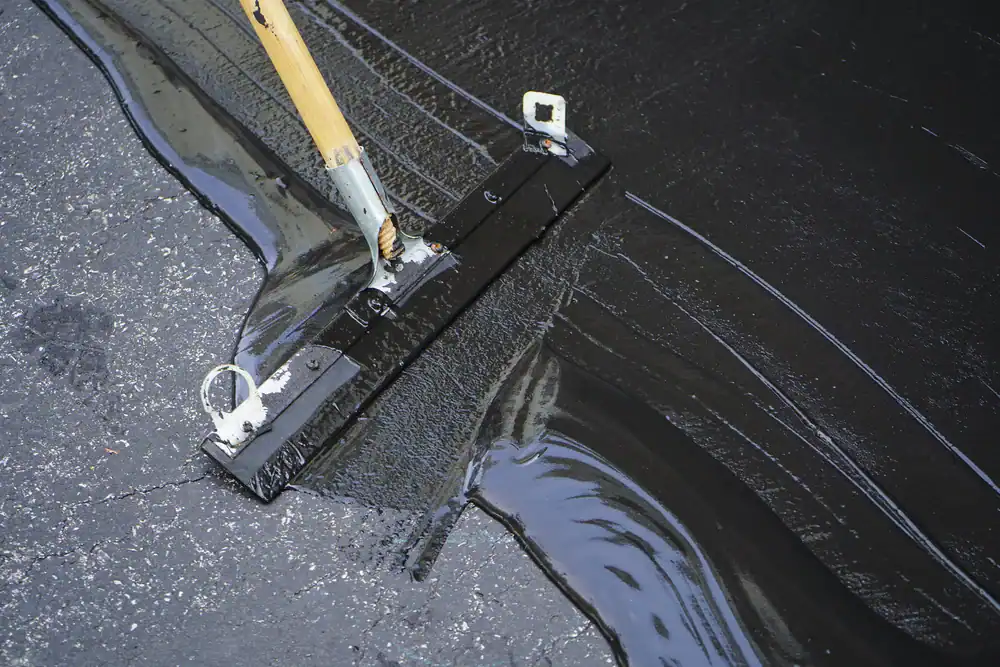
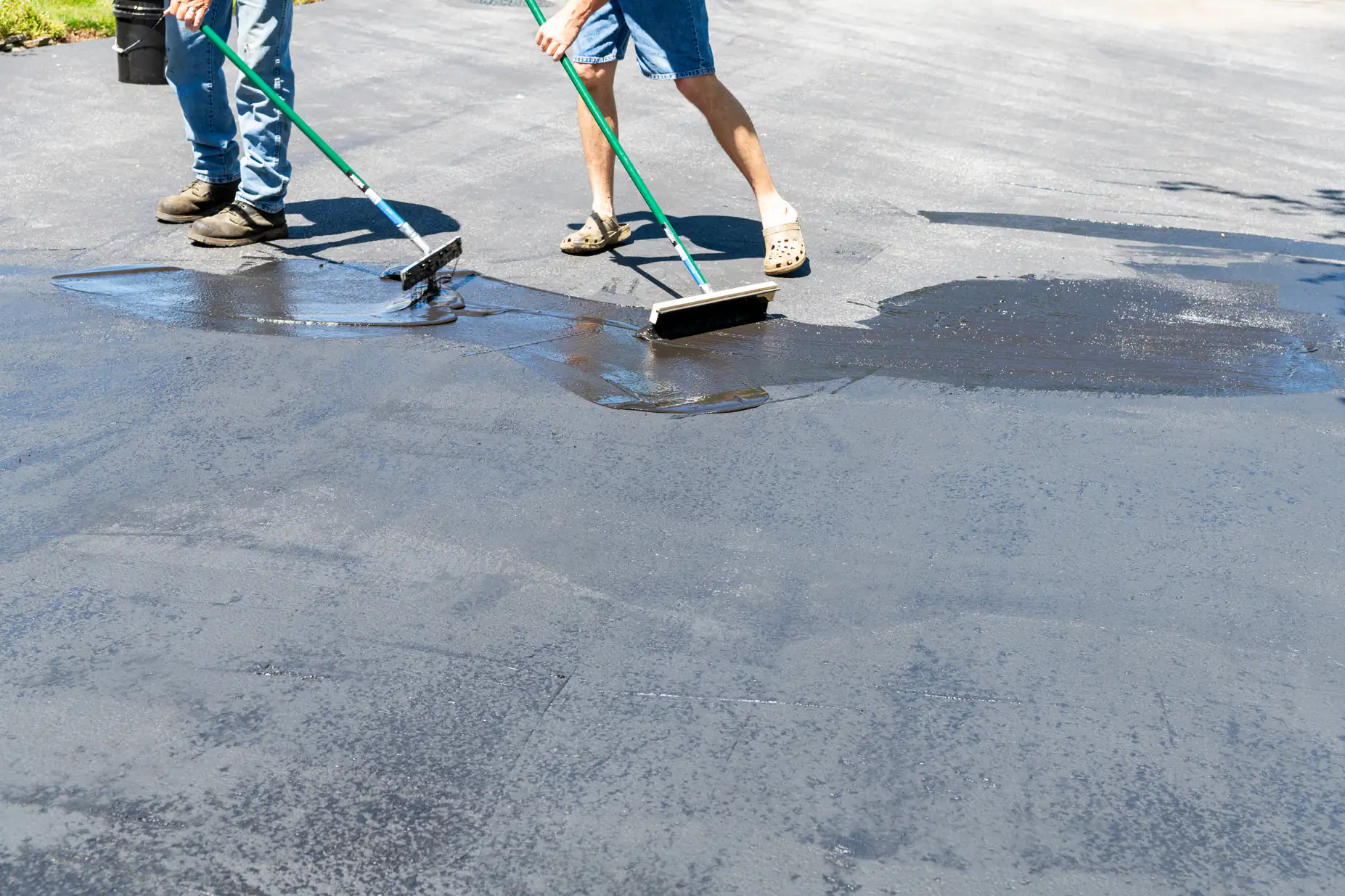
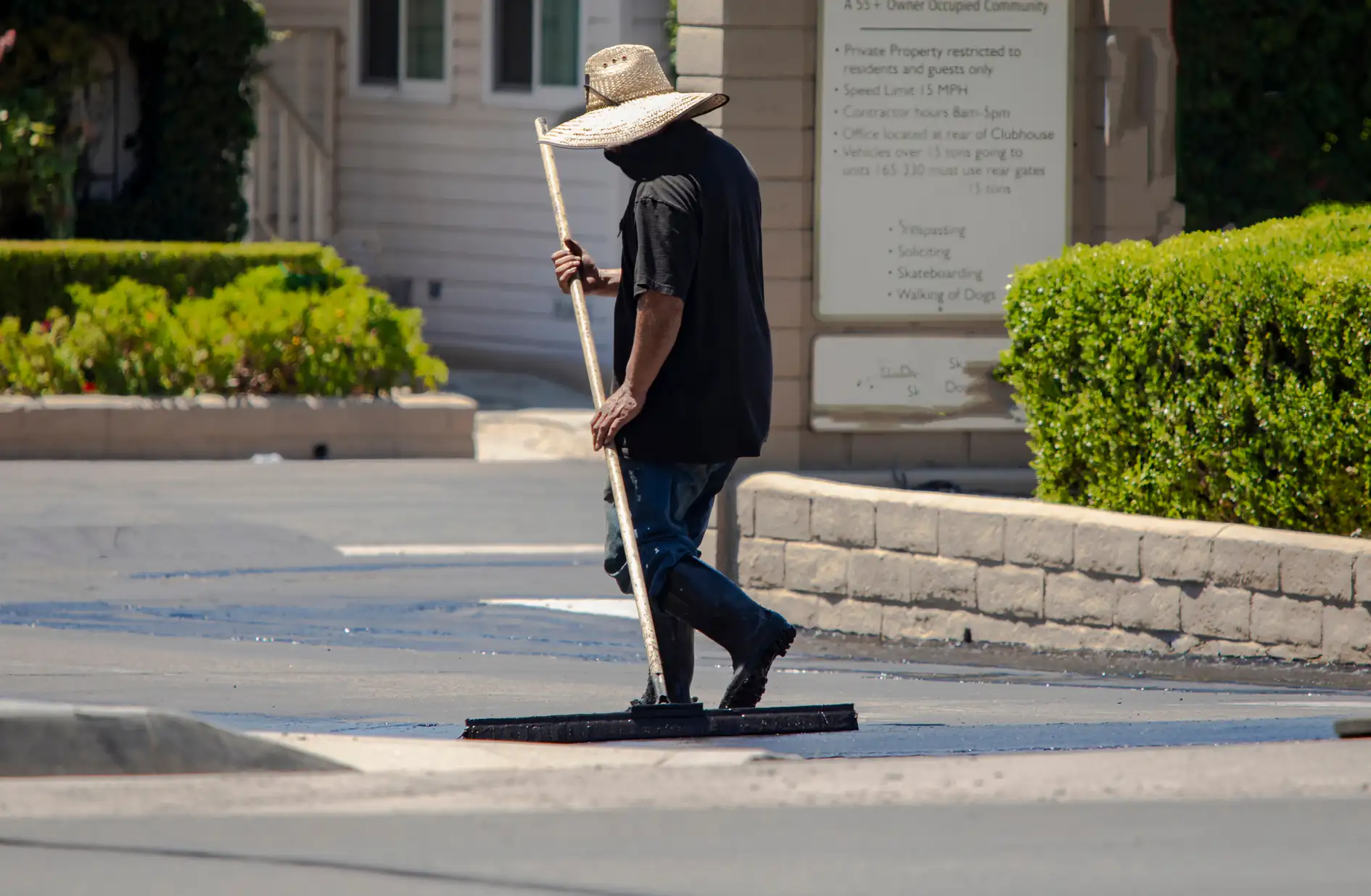
Then we apply two coats of commercial-grade coal tar sealer. Coal tar handles New Jersey’s climate better than asphalt emulsion. It resists gas and oil better, holds up to freeze-thaw cycles, and gives you that darker black finish. We’re not spraying one thin coat and calling it done.
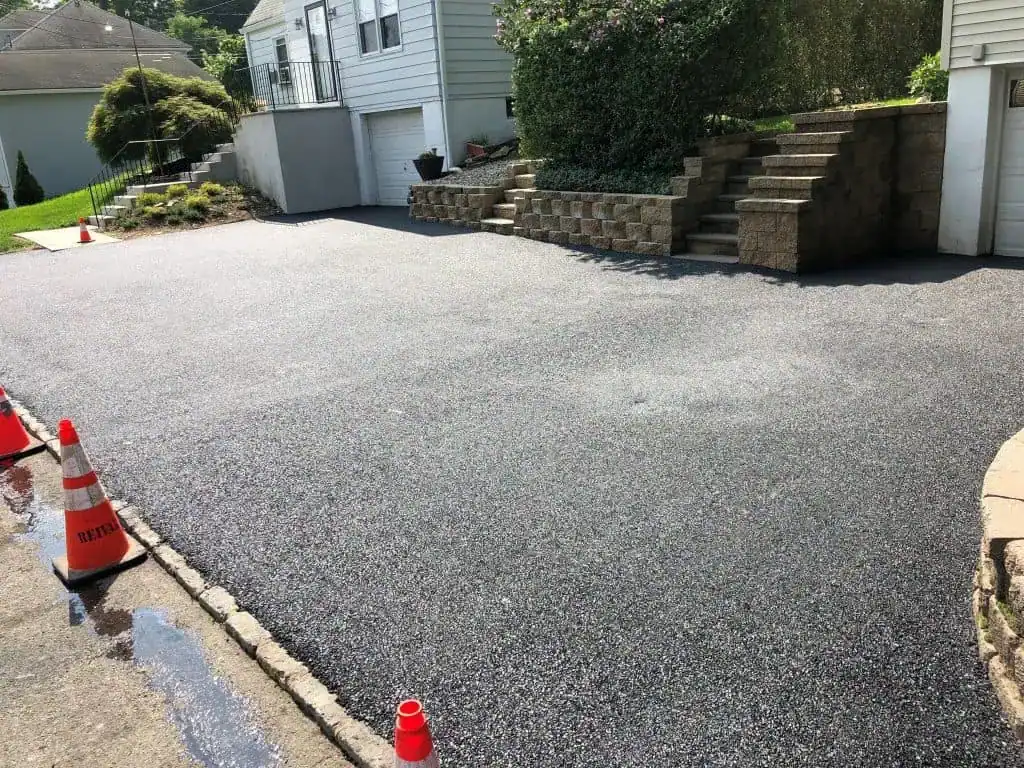
After application, your driveway needs 24 to 48 hours to cure before you can drive on it. Foot traffic is fine after 12 hours, but keep the cars off for two full days. We’ll mark everything clearly and clean up completely when we’re finished. You’ll know exactly when you can use it again.
Ready to get started?
Every driveway sealcoating job includes thorough surface cleaning, complete crack filling with hot rubber, oil spot treatment, two coats of commercial-grade coal tar sealer, and full cleanup. We’re not charging extra for steps that should be standard.
In Mountain Lakes, most driveways run between $300 and $500 for professional sealcoating, depending on size and condition. That’s in line with Morris County pricing, which runs 15% to 20% above the national average because our climate is harder on asphalt. You’re paying for materials that actually work here.
The cost of asphalt sealing breaks down to about $0.15 to $0.40 per square foot for residential driveways. A standard two-car driveway is roughly 600 square feet, so you’re looking at $200 to $500 total. Compare that to $3,000 to $7,000 for replacement, and the value is obvious.
We also offer a five-year warranty on our work. If something fails because of our application, we’ll fix it. That’s not common with driveway sealer companies, but it should be. You’re trusting us with a significant part of your property’s curb appeal and we stand behind what we do.

Every two to three years is the standard recommendation for residential driveways in New Jersey. That timing gives you maximum protection without over-sealing, which can cause its own problems.
If your driveway gets heavy use or sits in full sun all day, you might need to seal closer to every two years. Driveways in shade or with light traffic can stretch to three years. The key indicator is when the surface starts looking gray instead of black, or when water stops beading up and starts soaking in.
You can seal one year after a new driveway installation. Any sooner and the asphalt hasn’t cured enough. Any later and you’re letting damage start that didn’t need to happen. Most driveway sealer contractors will walk your property and tell you honestly whether you need it now or can wait another season.
Coal tar sealer is more durable and handles New Jersey’s climate better. It resists gas and oil stains, holds up to freeze-thaw cycles, and gives you a richer black color. It costs slightly more but lasts longer.
Asphalt emulsion is cheaper and more environmentally friendly, but it doesn’t protect as well against petroleum products and it fades faster. If you’re sealing a driveway that sees regular car traffic and potential oil drips, coal tar is the better choice.
Some municipalities have banned coal tar due to environmental concerns, but it’s still legal in most of Morris County. We use commercial-grade coal tar for driveways because it simply performs better in this climate. If you prefer asphalt emulsion for environmental reasons, we can do that too, but you should know the tradeoff.
You can DIY it if you’re comfortable with the work, but most homeowners get better results hiring professionals. The difference comes down to surface prep, material quality, and application technique.
Hardware store sealer is thinner than commercial-grade products. You’ll need three or four coats to match the protection of two professional coats. Most DIY jobs also skip proper crack filling or use cold pour filler instead of hot rubber, which doesn’t last.
Professional driveway sealcoating near me costs $200 to $500 for a standard driveway. DIY materials run $100 to $150, plus you’re spending a full weekend doing the work. If your time is worth anything, the cost difference disappears. And if the job fails early because of application errors, you’ve actually spent more by doing it twice.
Late spring through early fall is ideal, with September and October being the best months in New Jersey. You need temperatures above 50 degrees during application and for 24 hours after, with no rain in the forecast.
Fall is optimal because temperatures are moderate, humidity is lower, and you’re protecting your driveway right before winter hits. Spring works too, especially if you’re repairing winter damage, but you’re competing with everyone else who had the same idea.
Avoid sealing in summer heat above 90 degrees. The sealer dries too fast and doesn’t bond properly. And obviously don’t seal when rain is coming. The sealer needs time to cure, and water will ruin a fresh application. We book up in September, so call early if you want fall scheduling.
Sealcoating protects your driveway and fills minor surface cracks, but it won’t repair structural damage. If you have cracks wider than a quarter-inch, potholes, or sections that are crumbling, those need repair before sealing.
We fill cracks as part of the sealcoating process using hot rubber filler. That handles cracks up to about a half-inch wide. Anything larger needs patching with asphalt. If your driveway has significant damage, sealing over it just hides the problem temporarily.
The honest answer is that sealcoating prevents damage more than it fixes it. If you’re seeing serious cracks or base failure, you might need resurfacing or patching first. We’ll tell you that upfront during the estimate. Sealing a failing driveway is a waste of your money, and we’re not going to recommend it just to get the job.
With two coats of quality sealer, you’re looking at three to four years of protection on a residential driveway. The actual lifespan depends on traffic volume, sun exposure, and how harsh the winters are.
Driveways that see multiple cars daily or sit in full sun will wear faster. Driveways in shade with light use can stretch closer to four years. The sealer itself doesn’t disappear, it just wears down to where it’s no longer protecting effectively.
You’ll know it’s time to reseal when the surface looks gray instead of black, when water stops beading and starts absorbing, or when you start seeing small cracks forming. Don’t wait until it’s completely worn off. The whole point of sealing concrete driveway or asphalt surfaces is preventing damage, not reacting to it after it happens.