
Hear from Our Customers
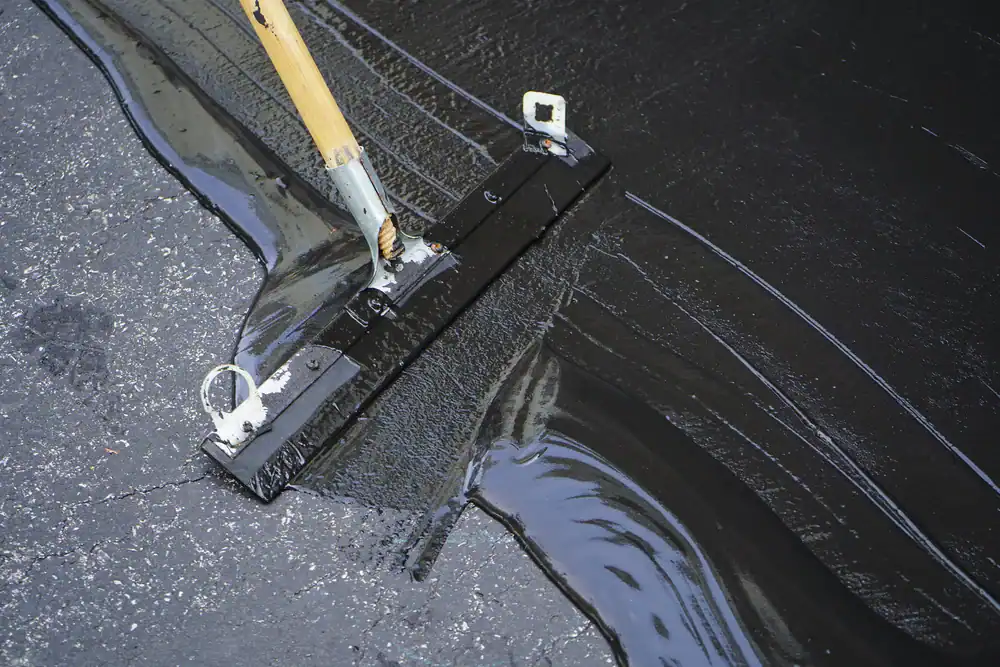
Newton sees 55 to 75 freeze-thaw cycles every winter. Water gets into small cracks during the day, freezes overnight, and expands by 9%. That’s not wear and tear—that’s structural damage happening in real time.
Professional sealcoating stops water before it penetrates. The result is fewer cracks, less erosion, and a driveway that doesn’t need resurfacing every few years. Most homeowners in Morris County pay $500 to $2,000 for resurfacing when prevention would have cost a fraction of that.
Your driveway also takes a beating from UV rays, motor oil, and road salt. Sealcoating creates a protective layer that keeps these elements from breaking down the asphalt binder. You’re not just protecting your driveway—you’re protecting the money you’ve already spent on it.
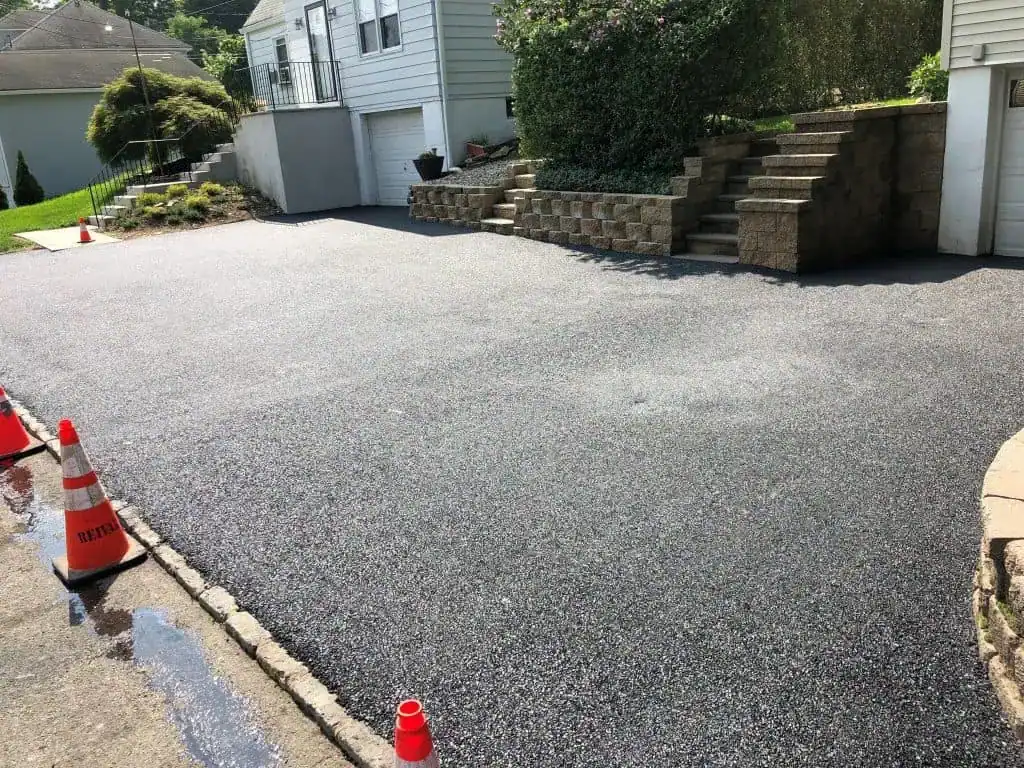
The other benefit is curb appeal. A freshly sealed driveway looks new again. That matters if you’re planning to sell, but it also matters if you’re staying. Your driveway is one of the first things people see when they pull up to your home.
We’ve been handling residential and commercial paving projects across Morris, Sussex, and Somerset Counties since 2005. We’re not a national franchise or a crew that shows up unannounced with leftover sealant from another job.
We know how Newton’s climate affects asphalt. We know what happens near Lake Hopatcong when temperature swings hit harder than they do inland. We know the difference between a driveway that was sealed correctly and one that’s going to need work again in 18 months.
Our team uses high-grade materials, applies them at the right temperature, and follows the prep steps that most contractors skip. We’re fully insured, and our work is guaranteed. When we give you a timeline, we stick to it.
We start with surface prep. That means cleaning off dirt, debris, and any vegetation growing in cracks. If your driveway isn’t clean, the sealant won’t bond properly. This step matters more than most people realize.
Next, we fill cracks with hot-pour crack filler. This creates a waterproof seal that prevents moisture from getting underneath the surface. Skipping this step is why some driveways fail after just one winter—water finds a way in, freezes, and the whole surface starts breaking apart.
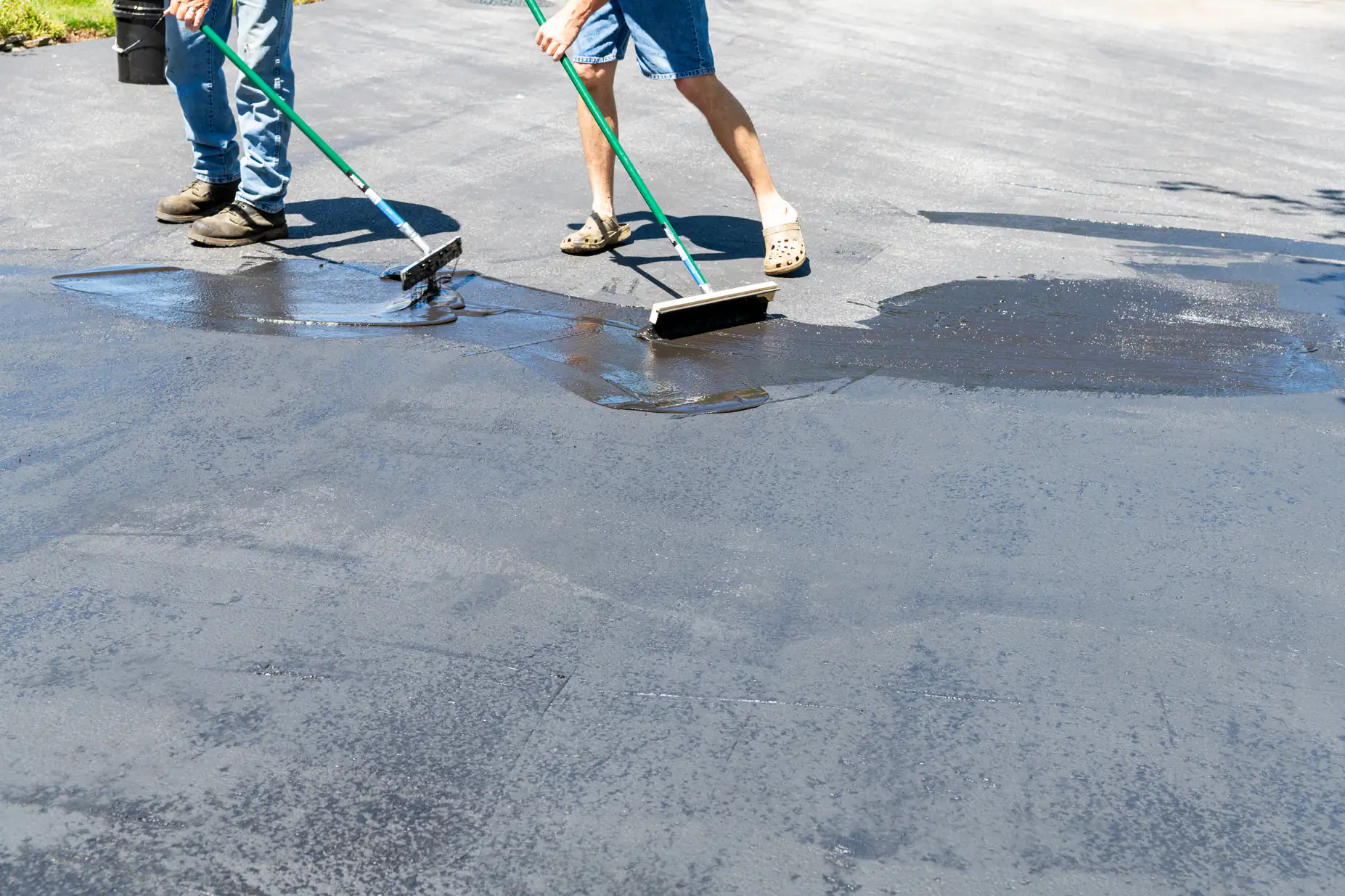
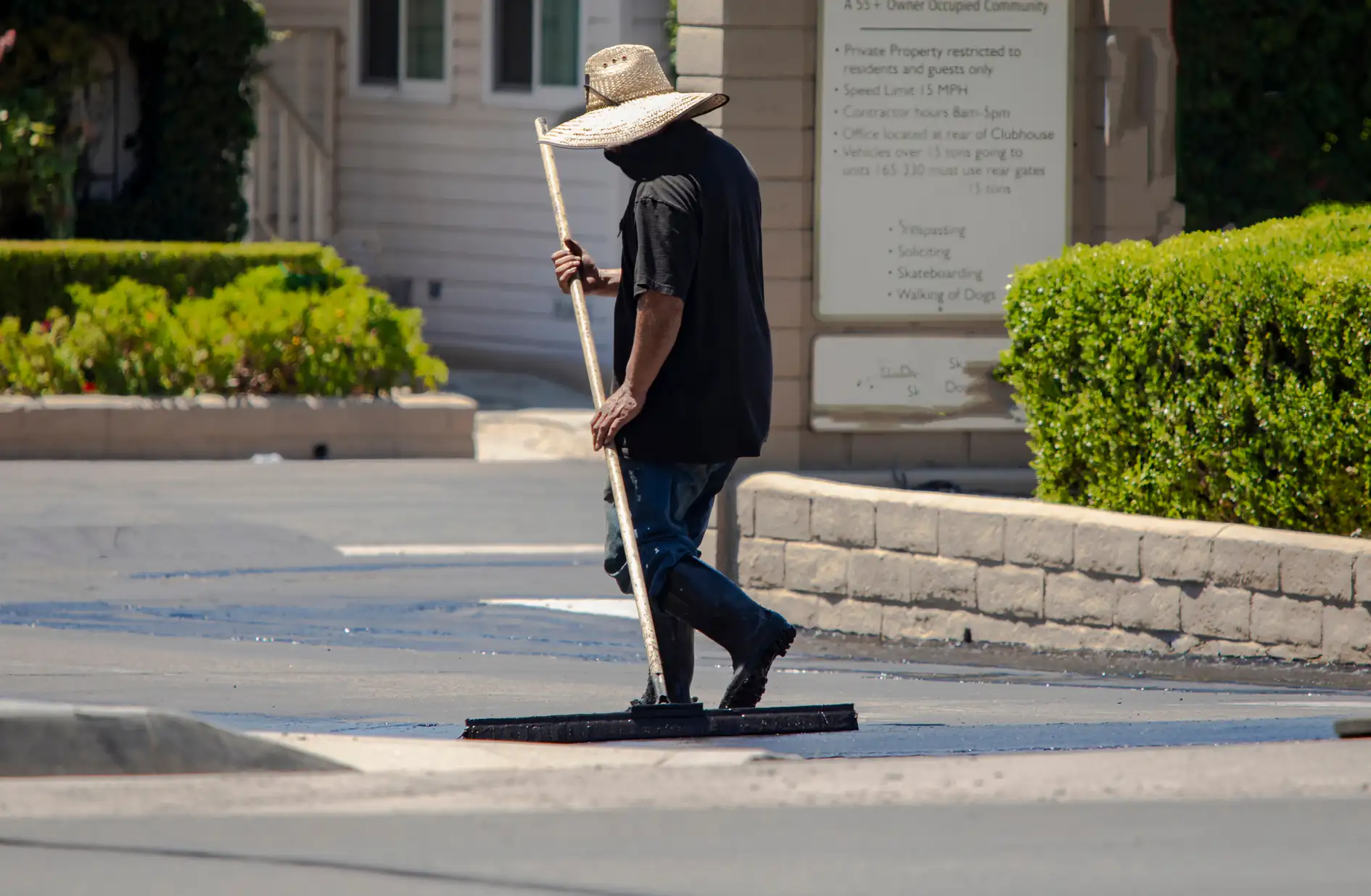
Then we apply the sealcoat. We use brush application instead of spray because it creates a thicker, more even layer. It takes longer, but it lasts longer too. Most professional contractors in New Jersey prefer this method for residential driveways because it holds up better against freeze-thaw cycles.
After application, your driveway needs 24 to 48 hours to cure depending on temperature and humidity. We’ll let you know exactly when it’s safe to drive on. Rushing this part ruins the finish and shortens the lifespan of the sealcoat.
Ready to get started?
Every sealcoating job includes surface cleaning, crack filling with hot-pour material, and brush-applied sealant. We don’t cut corners on prep work, and we don’t water down materials to save money.
Timing matters in Newton. The best window for sealcoating is late spring through early fall when temperatures stay above 50°F during the day and night. Sealant needs warmth to cure properly. If you’re scheduling for this year, earlier is better—contractors book up fast once spring hits.
Most driveways should be resealed every two to three years depending on traffic and exposure. If your driveway is faded to gray or you’re seeing small cracks, it’s time. Waiting too long means you’ll be paying for repairs instead of maintenance.
We serve Newton and the surrounding Morris County area, including Dover, Morristown, Lake Hopatcong, and Rockaway. If you’re near Sussex or Somerset County, we cover those areas too. We’ll give you clear pricing upfront with no surprise charges, and we’ll show up when we say we will.

Most residential driveways in Newton cost between $300 and $800 to sealcoat, depending on size and condition. That’s for a standard two-car driveway with basic crack filling included.
If your driveway has significant cracking or damage, you’ll need more prep work, which increases the cost. But even with extra crack filling, you’re still paying far less than resurfacing, which runs $500 to $2,000 for most driveways in Morris County.
Prices in New Jersey tend to run 15% to 25% higher than the national average because of labor costs and the amount of freeze-thaw damage we deal with here. You’re not overpaying—you’re paying for materials and methods that actually hold up in this climate.
Late spring through early fall is the best window. You need temperatures above 50°F for at least 24 hours after application so the sealant can cure properly.
If you wait until late fall, you’re gambling with the weather. One cold snap before the sealant fully cures and you’ve wasted your money. Most contractors in Morris County are booked solid by mid-spring, so scheduling early gives you better options.
Sealcoating before winter is ideal because it gives your driveway a protective barrier before freeze-thaw cycles start. If you’re reading this in March or April, now is the time to get on the schedule. If you wait until summer, you’re still fine—just don’t push it into October.
Professional sealcoating typically lasts two to three years in Newton. That timeline depends on how much traffic your driveway gets, how much sun exposure it has, and whether it was applied correctly in the first place.
Driveways that face south get more UV damage and fade faster. Driveways with heavy vehicle traffic wear down quicker. If you park in the same spot every day, that area will show wear sooner than the rest of the surface.
You’ll know it’s time to reseal when the surface starts looking gray instead of black, or when you notice small cracks forming. Waiting too long means water gets in, freeze-thaw damage starts, and you’re looking at repair costs instead of maintenance costs.
You can buy sealant at a hardware store and do it yourself, but most DIY jobs don’t last as long as professional applications. The difference comes down to surface prep, material quality, and application method.
Most homeowners skip the crack filling step or use cold-pour filler that doesn’t create a waterproof seal. They also tend to apply sealant too thin because they’re trying to stretch the material. The result is a driveway that looks okay for six months and then starts failing.
We use commercial-grade sealant, hot-pour crack filler, and brush application that creates a thicker, more durable layer. If your driveway is in good shape and you’re comfortable doing the work, DIY might be fine. If you’ve got cracks or damage, hire someone who knows how to prep the surface correctly.
Unsealed asphalt breaks down faster. UV rays dry out the binder that holds the aggregate together. Water seeps into small cracks, freezes, and expands. Road salt accelerates the deterioration. Within a few years, you’re looking at significant cracking and surface erosion.
Most asphalt driveways last 10 to 20 years, but that range depends entirely on maintenance. A driveway that’s never sealed might need resurfacing in 8 years. A driveway that’s sealed every 2 to 3 years can last 15 to 20 years before it needs major work.
The cost difference is significant. Sealcoating runs a few hundred dollars. Resurfacing runs $500 to $2,000. Full replacement can cost $3,000 to $10,000 depending on size. Skipping maintenance doesn’t save money—it just moves the expense down the road and makes it bigger.
Sealcoating is specifically for asphalt driveways. Concrete driveways need a different type of sealer that’s designed for cement-based surfaces.
Concrete sealers protect against moisture penetration, staining, and freeze-thaw damage, but the application process and materials are completely different. If you have a concrete driveway and you’re seeing cracks or surface damage, you need a concrete sealer, not asphalt sealcoating.
If you’re not sure what type of driveway you have, asphalt is black and has a slightly rough texture. Concrete is gray and has a smoother, harder surface. Some driveways have both materials—an asphalt base with concrete borders, for example. In that case, each material needs its own type of sealer.