
Hear from Our Customers
You’re looking at your driveway right now and seeing cracks that weren’t there last year. Maybe the color’s faded to that dull grey that screams neglect. You know it needs attention, but you’re wondering if sealcoating is actually worth it or just another expense.
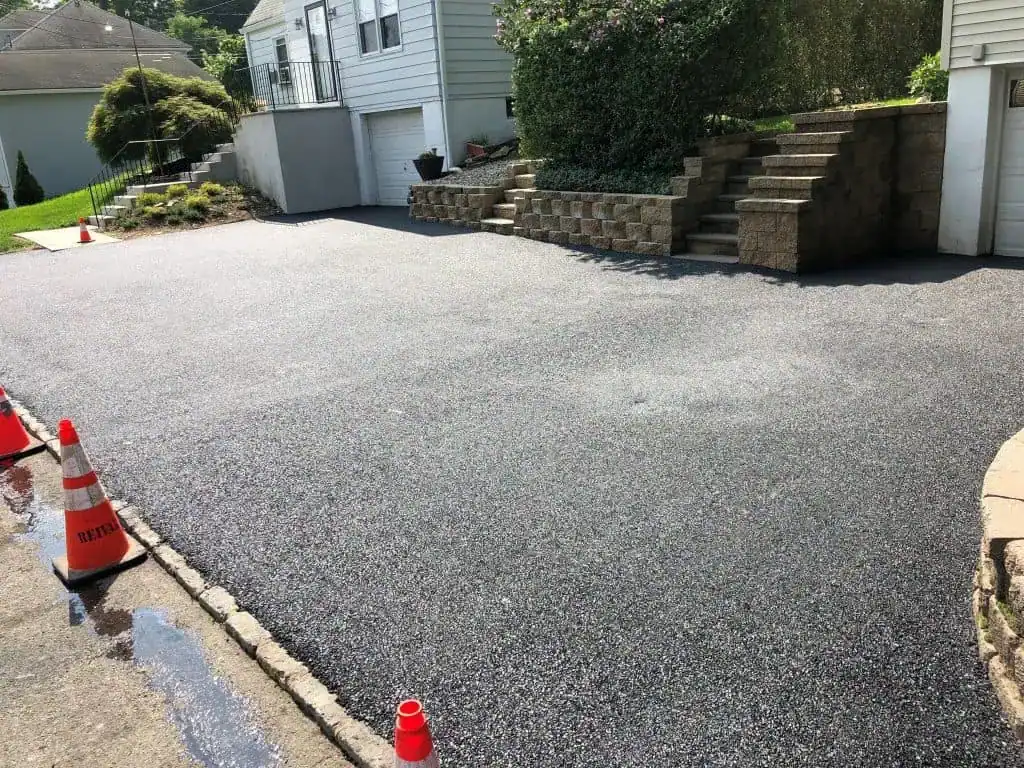
Here’s what changes after a proper sealcoating job. Your driveway goes from faded and vulnerable to protected with a fresh black finish that makes your whole property look maintained. More importantly, you’re blocking water from seeping into those small cracks before winter hits.
When temperatures drop in Vernon Valley, water trapped in your asphalt expands by 9% as it freezes. That’s what turns hairline cracks into repair projects that cost $1,500 or more. Sealcoating stops that cycle before it starts. You’re extending your driveway’s lifespan by years and avoiding the spring sticker shock that comes when you realize winter did serious damage.
The surface becomes easier to maintain too. Sweeping, blowing leaves, hosing it down—all simpler when you’ve got a smooth, sealed surface instead of a rough, pitted one that collects debris in every crack.
We’ve been handling asphalt and concrete work across Morris, Sussex, and Somerset Counties for years. We’re not a national franchise that shows up, does the work, and disappears. We’re grounded right here in Morris County, which means we understand exactly what Vernon Valley driveways go through.
You’re dealing with 40 to 50 freeze-thaw cycles every winter. You’ve got road salt tracked onto your driveway all season. Summer heat hits 90°F and higher, baking your asphalt. We see it all the time, and we know how to protect against it.
When we quote your job, you get clear upfront pricing with no surprise charges. When we schedule your project, we show up on time and finish when we say we will. You’ll get a callback within 24 to 48 hours after requesting a quote online. That’s how we operate, because your time matters and you deserve to know what you’re paying for before any work starts.
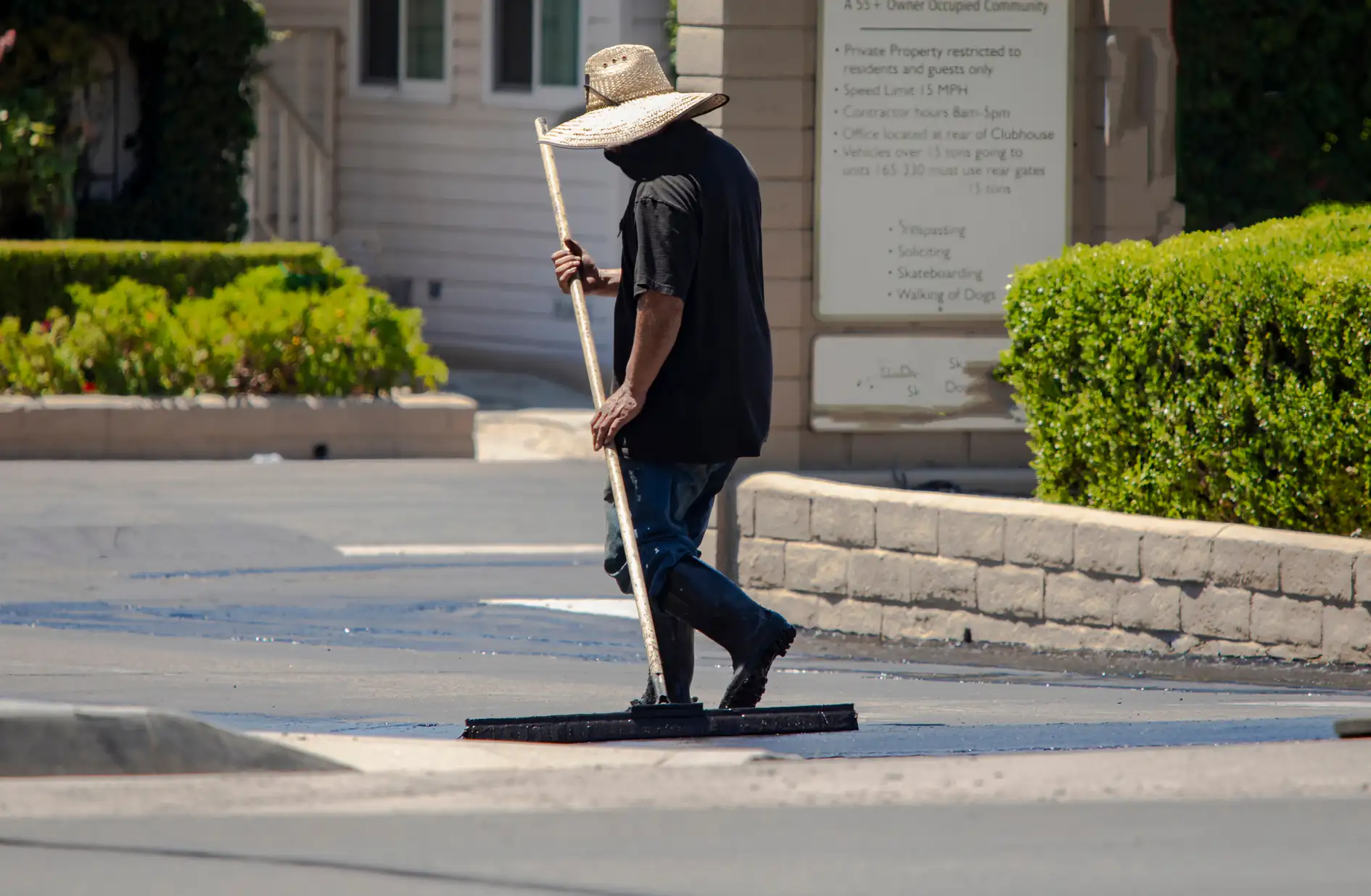
First, we power wash your entire driveway to remove dirt, oil, debris, and anything else that would prevent the sealer from bonding properly. A clean surface is critical. If the sealer goes over dirt or oil, it won’t last.
Next, we fill any cracks. Small cracks get filled with hot rubberized crack filler that flexes with temperature changes. This step is what separates a professional job from a quick spray-and-go. If you skip crack filling, water still gets in and you’re back to square one.
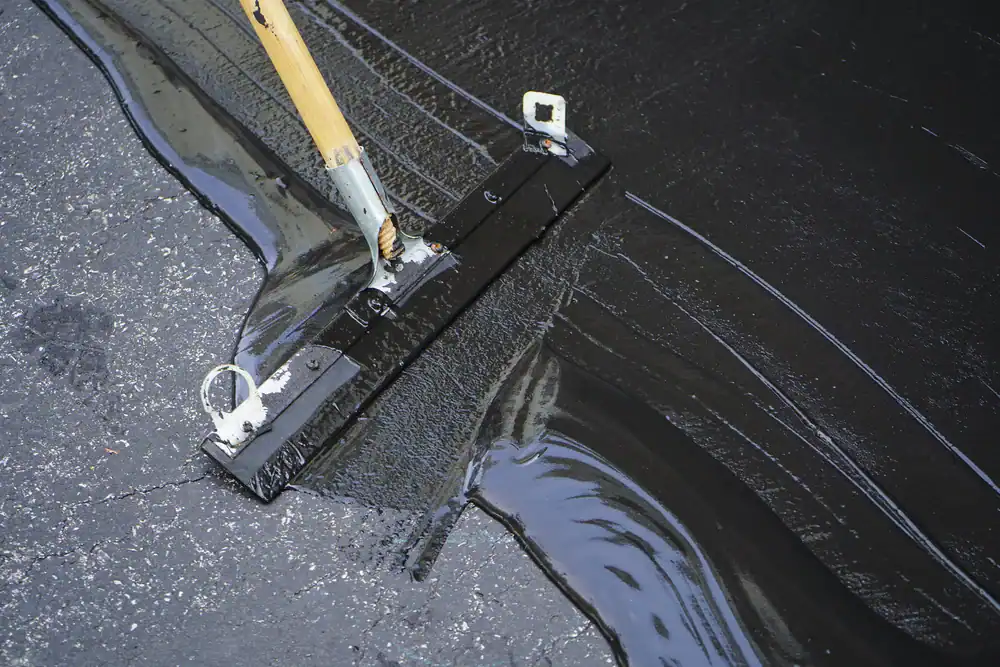
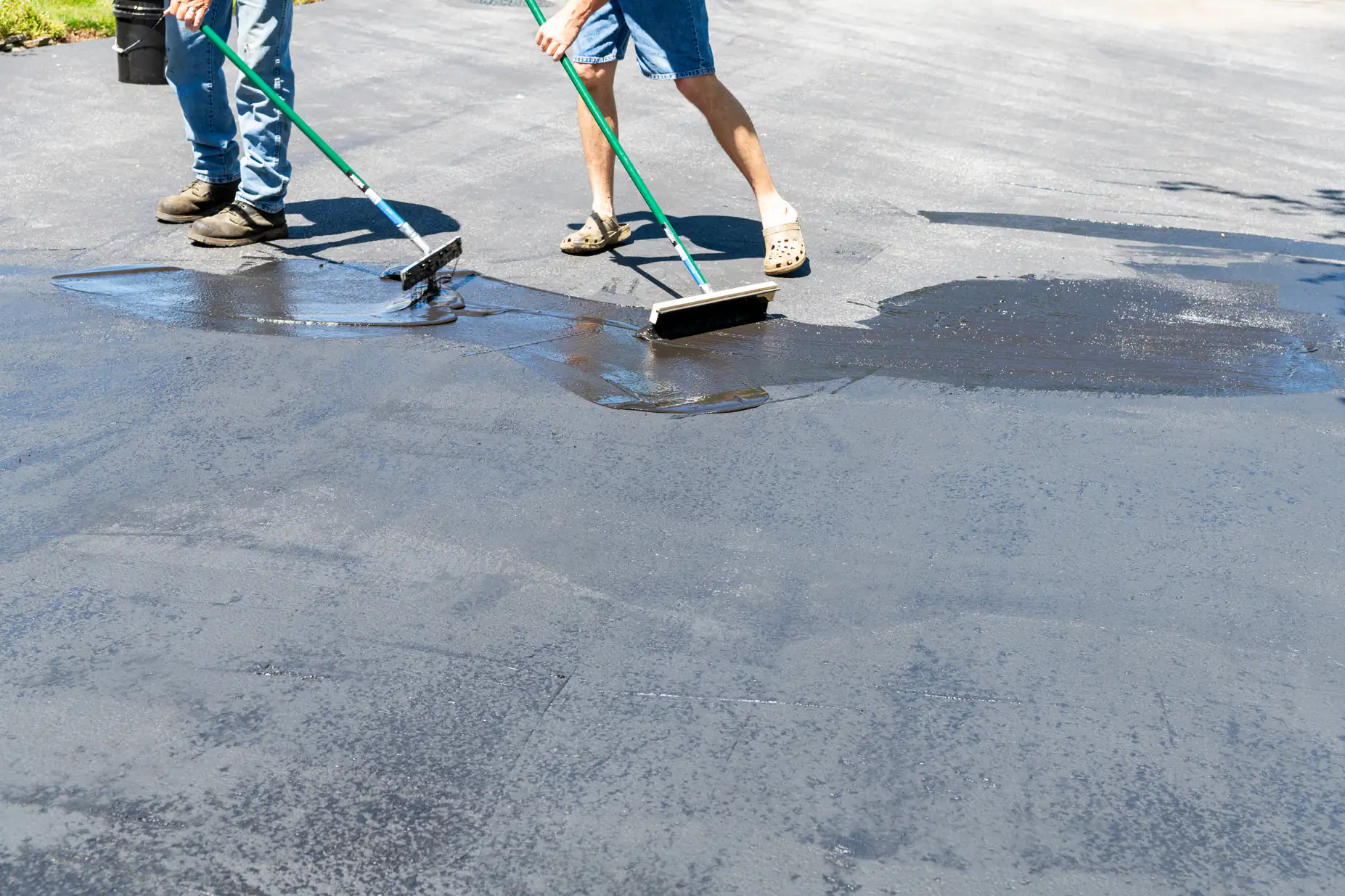
Then we apply two coats of commercial-grade sealer. We mix our sealer in-house for a thicker, darker, longer-lasting finish. The first coat seals the surface. The second coat adds durability and that deep black color that makes your driveway look brand new.
We add a sand additive to the final coat for traction. Nobody wants a slippery driveway, especially in winter. The sand gives you grip without compromising the finish.
After application, your driveway needs 24 to 48 hours to cure depending on weather conditions. We’ll tell you exactly when you can park on it again. You’re not guessing. You’re not risking tire marks in uncured sealer. You know exactly what to expect.
Ready to get started?
When you hire us for driveway sealcoating, you’re getting a full-service job that addresses every part of the process. Power washing comes standard. Crack filling is included. Two coats of sealer, not one. Sand additive for traction. And a 2-year warranty that covers peeling or flaking.
We use high-grade materials designed for New Jersey’s climate. That matters more than you might think. Cheap sealer breaks down faster under UV exposure and temperature swings. You end up resealing every year instead of every three to four years. We’re using products that last because we want you to get the full value of this investment.
Vernon Valley sees some of the harshest conditions in the region. You’re at higher elevation, which means more freeze-thaw cycles than towns closer to the coast. You’re also dealing with lake effect moisture if you’re near any of the area’s water features. Our sealer is formulated to handle that.
The cost for a standard 600-square-foot driveway typically runs between $180 and $270, depending on the condition of your asphalt and how much crack repair is needed. That’s significantly less than the $1,500 to $5,000 you’d spend on repairs if you let winter damage go unchecked. You’re making a small investment now to avoid a massive expense later.

Most residential driveways in Vernon Valley cost between $180 and $270 for a complete sealcoating job. That includes power washing, crack filling, two coats of sealer, sand additive, and a 2-year warranty. The exact price depends on your driveway’s size and condition.
If you’ve got a standard two-car driveway around 600 square feet, you’re looking at the lower end of that range. Larger driveways or ones with significant cracking that needs repair will cost more. The industry rate in New Jersey runs $0.15 to $0.40 per square foot, and our pricing falls right in that range.
You’ll notice that’s 15% to 20% higher than national averages. That’s not because contractors here are overcharging. It’s because New Jersey’s climate demands better materials and more thorough prep work. You need sealer that can handle 40 to 50 freeze-thaw cycles every winter, plus road salt, UV exposure, and heavy rainfall. Cheaper products don’t last, and you end up paying more in the long run because you’re resealing more often.
Fall is the best time for driveway sealing in Vernon Valley. You want temperatures consistently above 50°F during the day and at night for proper curing. September and October give you ideal conditions before winter hits.
Here’s why timing matters. If you wait until spring, you’re dealing with two problems. First, you’re competing with everyone else who just discovered winter damage and needs repairs. Good contractors get booked 4 to 6 weeks out by May. Second, you’ve already let your driveway go through another brutal winter unprotected. Any small cracks you have right now will be bigger problems by March.
Sealcoating in fall means your driveway goes into winter with maximum protection. Water can’t seep into cracks because you’ve sealed them. The surface is protected from road salt and freeze-thaw damage. You’re preventing problems instead of reacting to them. That’s the difference between a $270 maintenance job and a $1,500 repair project.
A professional two-coat sealcoating job lasts 3 to 4 years in New Jersey when done correctly. If someone only applies one coat, you’re looking at 1 to 2 years before it starts breaking down. That’s why we always recommend two coats for driveways in this region.
New Jersey’s climate is tough on asphalt. You’re dealing with temperature swings from below zero in winter to over 90°F in summer. You’ve got constant UV exposure that breaks down the binders in asphalt. You’ve got 45+ inches of rainfall annually. All of that accelerates wear on your driveway’s surface.
Two coats give you the thickness and durability you need to handle those conditions. The first coat penetrates and seals. The second coat adds a protective layer that takes the beating from weather, traffic, and time. You’re also getting our 2-year warranty, which means if the sealer peels or flakes within that timeframe, we come back and fix it. You’re covered.
We seal both concrete and asphalt driveways, but the process and materials are different for each. Asphalt gets a coal tar or asphalt-based sealer. Concrete gets a penetrating sealer or acrylic coating designed specifically for concrete surfaces.
Concrete driveways need protection too, just for different reasons. You’re not worried about the same kind of surface deterioration you get with asphalt, but you are dealing with moisture penetration, freeze-thaw damage, and staining from oil, salt, and other chemicals. A good concrete sealer blocks moisture and makes the surface much easier to clean.
If you’ve got pavers, those need sealing too. We handle paver sealing near Vernon Valley regularly. The sealer protects the pavers themselves, prevents weed growth between joints, and keeps sand from washing out. It also enhances the color and gives you that wet look that makes pavers pop. The process is similar to concrete sealing but requires products formulated specifically for paver materials.
Sealcoating is not cosmetic. It’s preventive maintenance that directly impacts how long your driveway lasts and how much you spend on repairs over time. The fresh black finish is a nice bonus, but the real value is in the protection.
Here’s what happens if you don’t seal your driveway. UV rays from the sun break down the binders that hold asphalt together. The surface becomes brittle and starts to crack. Water seeps into those cracks, and when it freezes in winter, it expands by 9%. That makes the cracks bigger. More water gets in. More freeze-thaw cycles happen. The cracks turn into potholes. Eventually, water reaches the base layer under your driveway, and now you’re looking at structural damage that requires tearing out and repaving sections.
A driveway that gets sealed regularly lasts well past 30 years. One that doesn’t might make it to 25 years if you’re lucky, but you’ll spend thousands on repairs along the way. Sealcoating every 3 to 4 years costs a few hundred dollars. Repaving costs thousands. The math isn’t complicated.
You want a contractor who’s licensed, insured, and has a solid track record in your area. Check for a valid business license and make sure they carry liability insurance. If something goes wrong—sealer splashes on your garage door, a worker gets hurt—you need to know you’re not liable.
Ask how long they’ve been in business and whether they specialize in residential sealcoating or just do it as a side service. Experience matters. A contractor who’s been sealing driveways in North New Jersey for years knows how to handle the region’s climate and conditions. They know which products work and which ones fail after one winter.
Get clear pricing upfront. You should know exactly what’s included—power washing, crack filling, number of coats, warranty terms—before any work starts. If a contractor gives you a vague estimate or says they need to start before they can tell you the final cost, walk away. You also want someone who shows up when they say they will and finishes on schedule. Check reviews or ask for references. A few minutes of research now saves you from hiring someone who disappears halfway through the job or does subpar work that fails in six months.