
Hear from Our Customers
Here’s what happens when you don’t seal your driveway in Bradley Gardens. Water gets into small cracks. It freezes, expands by 9%, and turns hairline damage into serious problems. One winter becomes two, and suddenly you’re looking at a $12,000 repaving bill instead of a $400 sealcoating job.
Sealcoating creates a waterproof barrier that keeps moisture out and protects against everything Morris County weather throws at it. Freeze-thaw cycles, road salt, UV rays, oil drips—all of it gets blocked before it can damage your asphalt base.
You’re not just making your driveway look better. You’re adding years to its lifespan and protecting one of your home’s biggest exterior investments. Most driveways last 15-20 years without maintenance. With regular sealcoating every 3-4 years, you’re looking at 25-30 years or more.
We’ve been sealing driveways across Morris County for over 20 years. That means we’ve seen what happens when contractors cut corners, when homeowners wait too long, and when the wrong materials get used in the wrong conditions.
Bradley Gardens sits in one of the toughest climate zones for asphalt. You get 40-50 freeze-thaw cycles every winter, summer heat that hits 90°F regularly, and over 45 inches of rain per year. Your driveway takes a beating. We know exactly how to protect it.
Every job gets the owner involved from start to finish. We’re fully licensed and insured, and we don’t subcontract our work to random crews. When you call us, you’re getting people who’ve done this thousands of times in neighborhoods just like yours.
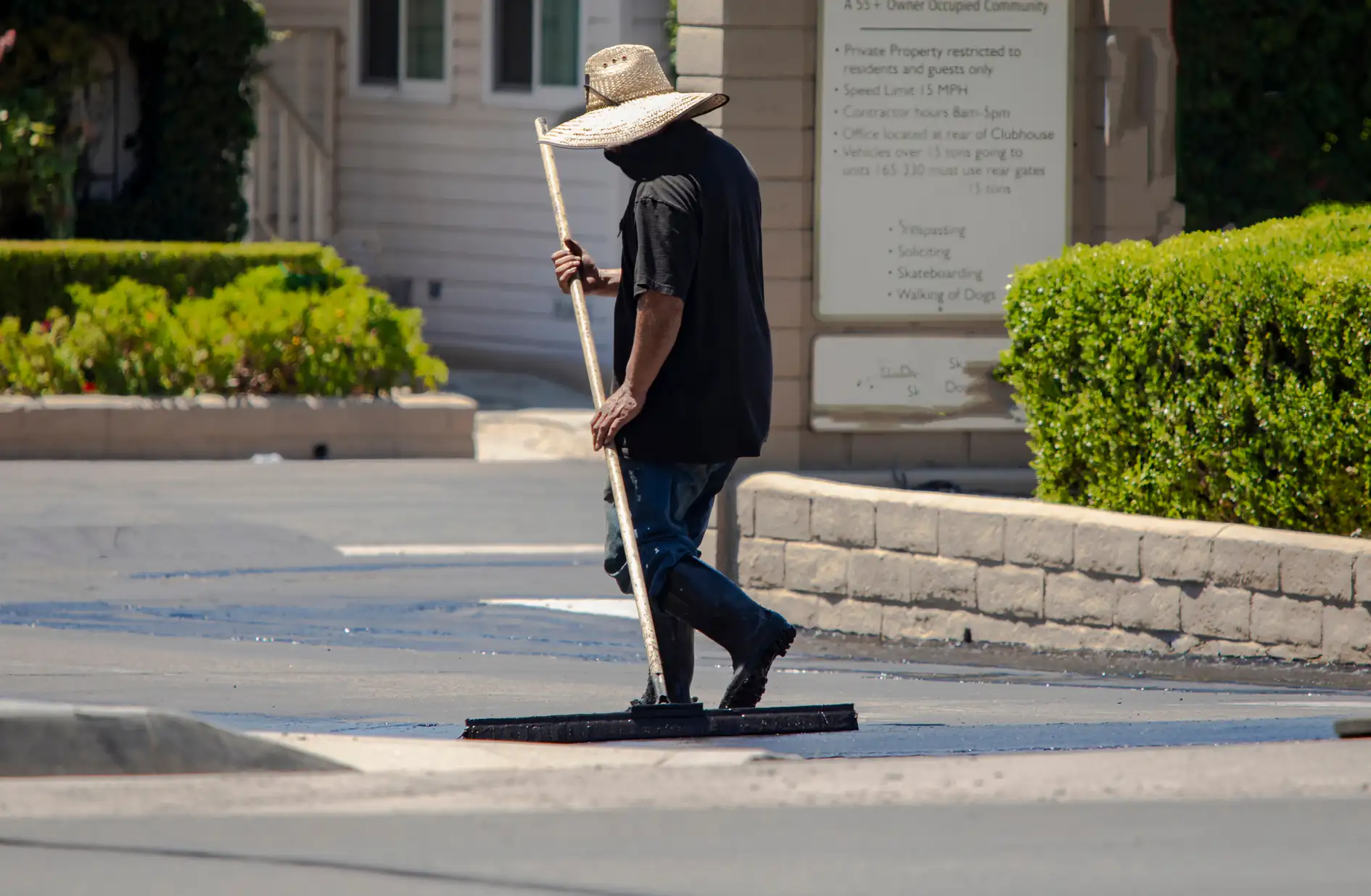
First, we clean the surface completely. Any dirt, debris, oil, or vegetation gets removed because sealer won’t bond to a contaminated surface. We’re talking power washing and hand scrubbing, not just a quick sweep.
Next, we fill and repair cracks. Small cracks get filled with rubberized crack filler that flexes with temperature changes. Larger damage gets evaluated—if your base is compromised, sealcoating won’t fix it, and we’ll tell you that upfront.
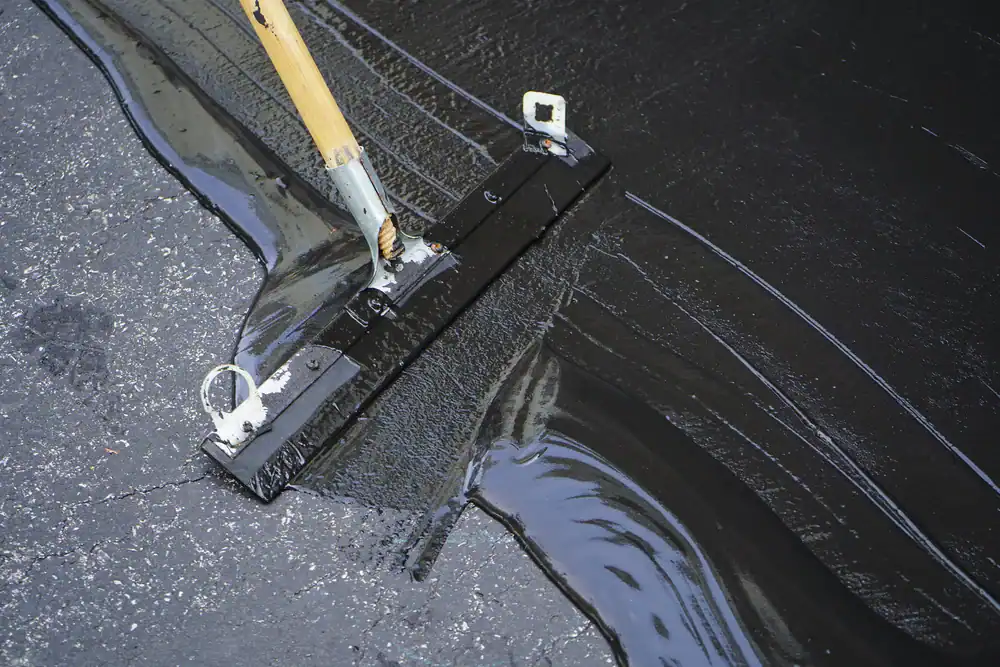
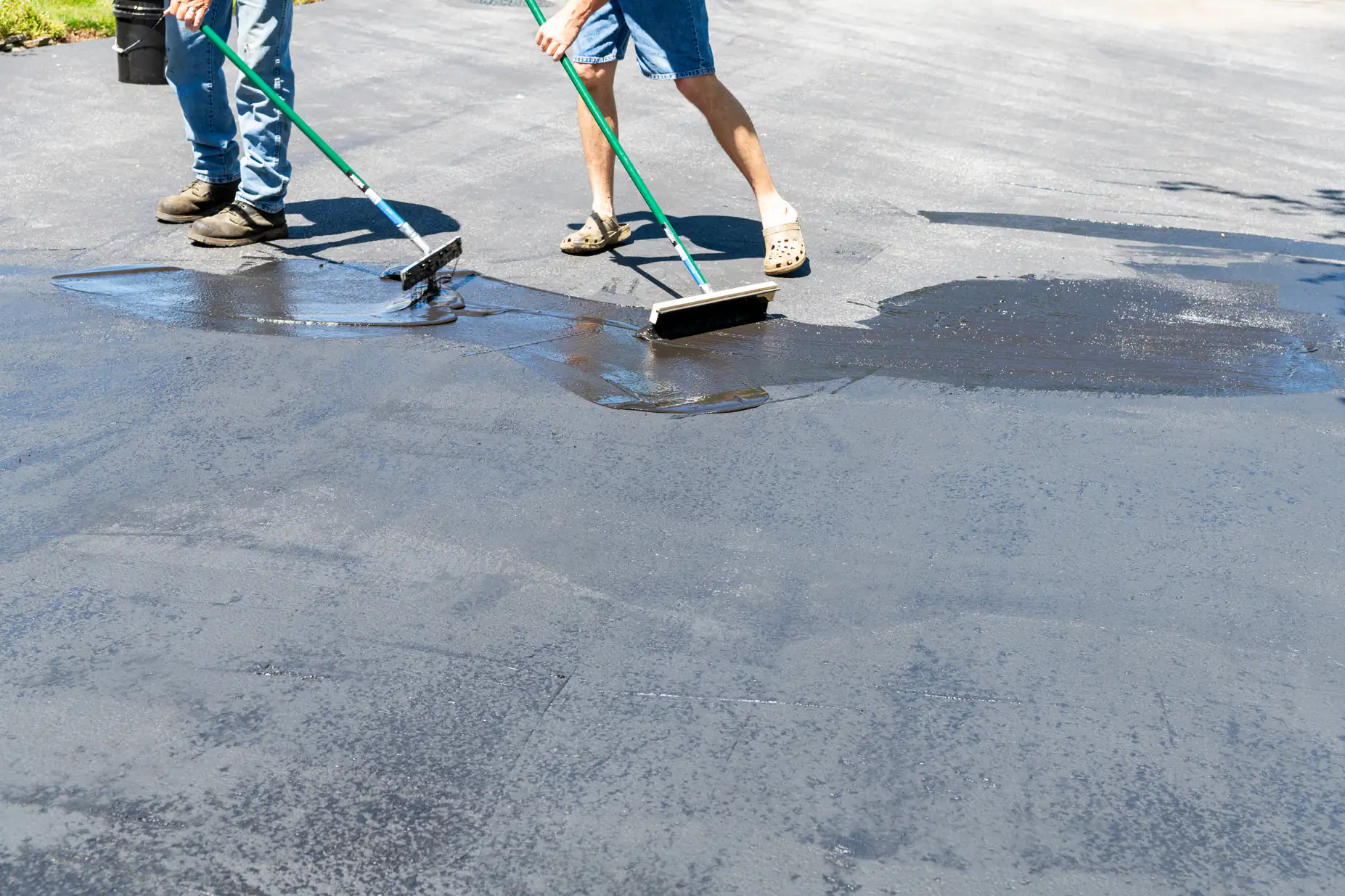
Then comes the actual sealcoating. We apply two coats, not one. The first coat penetrates and bonds to the asphalt. The second coat creates the protective layer that blocks water and UV damage. Each coat needs time to dry properly, which is why weather matters so much for this work.
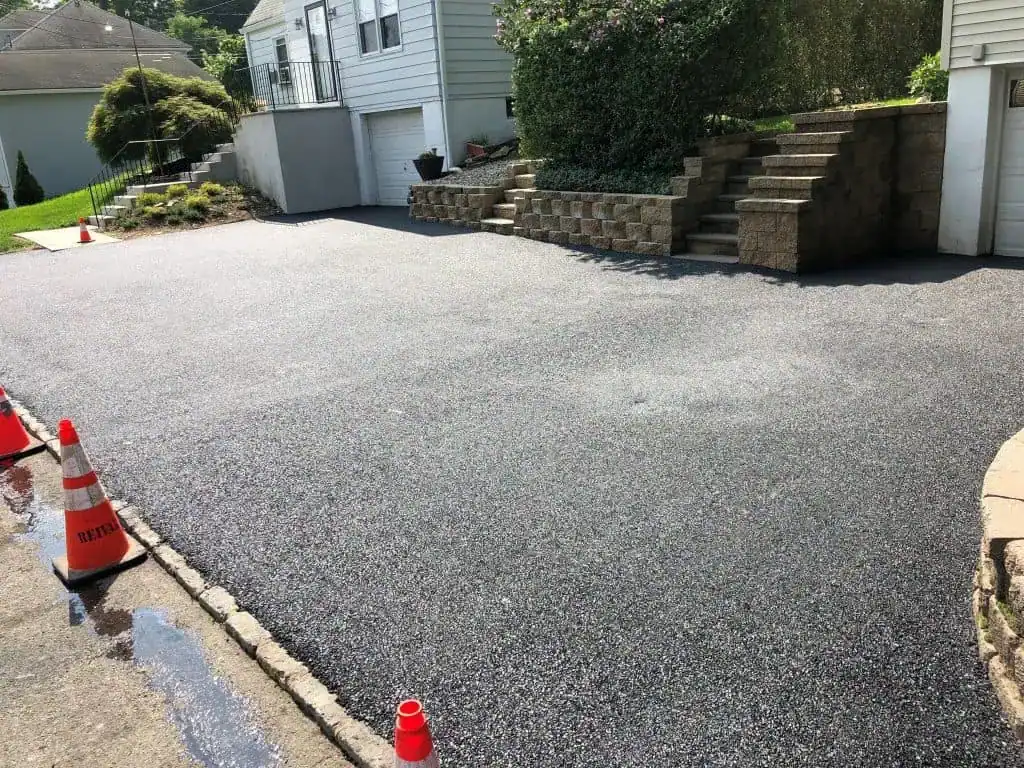
The whole process takes 1-2 days depending on driveway size and conditions. You’ll need to stay off it for 24-48 hours after the final coat. After that, you’ve got a fresh, protected surface that’ll hold up for 3-4 years before it needs attention again.
Ready to get started?
You’re getting a two-coat application using commercial-grade sealer mixed in-house. Not the watered-down stuff from big box stores. Our mix creates a thicker, darker, longer-lasting finish that actually protects your asphalt instead of just making it look black for a few months.
We include complete crack filling up to a quarter-inch wide. Anything larger gets flagged because it usually means there’s a deeper issue that needs addressing before we seal. We’re not going to cover up problems and pretend they don’t exist.
The work comes with a 2-year warranty. If the sealer fails prematurely because of application issues, we’ll make it right. That doesn’t cover new damage you cause or normal wear in high-traffic areas, but it does mean we stand behind the quality of our work.
Bradley Gardens homes typically have driveways between 400-800 square feet. At current rates, you’re looking at $0.15-$0.40 per square foot depending on condition and access. That’s $150-$500 for most residential driveways—a fraction of what you’d pay for repairs down the road, let alone full replacement at $6-$8 per square foot.

Every 3-4 years if you want maximum protection. Some contractors will tell you every year, but that’s overkill and can actually cause problems. Too much sealer builds up, cracks, and peels.
The 3-4 year window assumes you’re getting a proper two-coat application with quality materials. If someone’s doing single coats with cheap sealer, yeah, you’ll need it more often—but you’re also not getting real protection.
Climate plays a role too. Bradley Gardens gets hammered by freeze-thaw cycles and road salt in winter, plus intense UV exposure in summer. That’s harder on asphalt than milder climates. If your driveway faces south and gets full sun all day, you might lean toward every 3 years. Shaded driveways can often push to 4 years.
Late spring through early fall, with September and October being ideal in Morris County. You need temperatures above 50°F during application and for 24-48 hours after. You also need dry conditions—no rain in the forecast for at least 24 hours.
Fall is actually better than spring for a few reasons. The asphalt has had all summer to fully cure and settle. Any winter damage is visible, so we can address it before sealing. And you’re creating a protective barrier right before winter hits, which is when your driveway needs it most.
Spring works too, but everyone wants their driveway done in spring. You’re competing for scheduling, and if we get a cold snap or unexpected rain, projects get delayed. Fall tends to have more stable weather and better availability.
We can seal both, but the products and processes are completely different. Concrete sealing uses a penetrating sealer or topical coating that protects against moisture, staining, and surface damage. It won’t give you that fresh black look—concrete stays concrete-colored.
For concrete driveways in Bradley Gardens, sealing helps prevent water infiltration, salt damage, and surface spalling (when the top layer flakes off). It’s especially important if you have decorative stamped or colored concrete, because the sealer protects your investment and keeps the color from fading.
Asphalt sealcoating is what most people think of when they hear “driveway sealing”—that’s the coal-tar or asphalt-based sealer that turns your driveway black and creates a waterproof barrier. If you’ve got pavers, that’s a third category entirely, with specialized paver sealers that lock sand in place and protect against weeds and staining.
For most residential driveways in Bradley Gardens, you’re looking at $150-$500 total. That’s based on typical driveway sizes of 400-800 square feet and current rates of $0.15-$0.40 per square foot.
Price depends on condition, access, and prep work needed. If your driveway has significant cracking or damage, you’ll pay more for crack filling and repairs before we seal. If we can’t get equipment close and have to do more hand work, that affects cost too.
Here’s the important part: don’t choose based on price alone. The cheapest bid usually means single-coat application, watered-down sealer, or shortcuts on prep work. You’ll be resealing in 1-2 years instead of 3-4, and you won’t get the protection you’re paying for. We give you upfront pricing with no surprises, and we explain exactly what you’re getting for your money.
No. Sealcoating protects healthy asphalt—it doesn’t repair structural damage. If you’ve got serious cracks, potholes, or base failure, sealing over it just hides the problem temporarily. The damage will continue getting worse underneath.
That said, we do fill minor cracks as part of the sealcoating process. Hairline cracks and small fissures get filled with rubberized crack filler before we apply sealer. That prevents water from getting in and causing bigger problems.
If your driveway has major issues—alligator cracking, large potholes, sunken areas, or edge failure—you need repairs first. Sometimes that means patching. Sometimes it means partial or full replacement. We’ll be straight with you about what makes sense. There’s no point in spending money on sealcoating if your driveway needs real repair work first.
You need two coats if you want protection that lasts 3-4 years. One coat might look fine initially, but it wears off faster and doesn’t provide the same level of moisture protection. It’s the difference between a 1-2 year lifespan and a 3-4 year lifespan.
The first coat penetrates into the asphalt surface and creates the bond. The second coat builds thickness and creates the actual protective barrier. Think of it like paint—one coat covers, two coats protect.
Some contractors offer single-coat applications at lower prices. That’s fine if you understand what you’re getting and you’re planning to reseal more frequently. But for most Bradley Gardens homeowners, two coats make more financial sense. You’re protecting a driveway on a property with a median value near $800,000. Spending an extra $100-150 for proper protection is worth it.