
Hear from Our Customers
Here’s what happens when you sealcoat on schedule. Your asphalt stays flexible instead of brittle. Water can’t seep into cracks and freeze, which means you’re not dealing with potholes every spring.
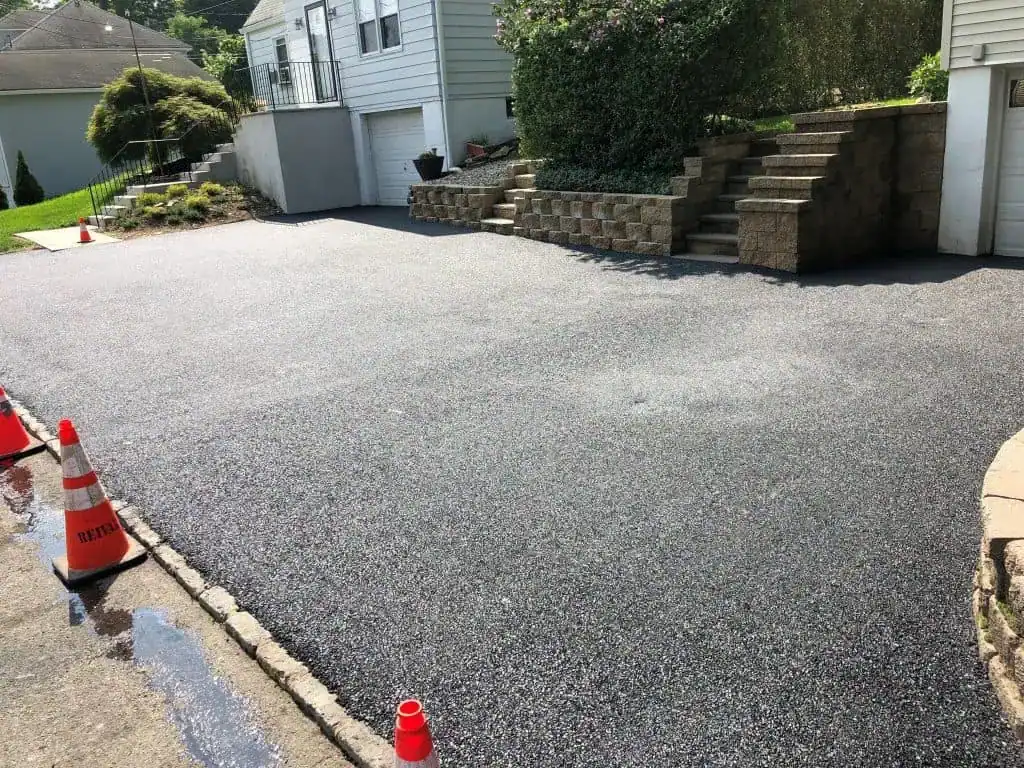
The surface stays dark and clean-looking, not faded and grey. That matters when you’re maintaining a property in Bernardsville where curb appeal isn’t optional.
Sealcoating also makes your driveway easier to clean. Snow removal doesn’t scrape up the surface as easily. Oil spots wipe off instead of staining permanently. And when you’re looking at 2-3 years of protection for a few hundred dollars versus $6-$8 per square foot to repave, the math isn’t complicated.
Most driveways in Morris County last 25 years without maintenance. With proper sealcoating every few years, you’re pushing that past 30. That’s real money saved and fewer headaches down the road.
We’re a third-generation, family-owned contractor based in Morris County. We’ve been working in Bernardsville, Somerset, and Sussex County long enough to know what the weather does to asphalt here.
New Jersey winters are brutal on driveways. The freeze-thaw cycles crack unsealed asphalt faster than almost anywhere else in the country. We’ve seen what happens when homeowners skip sealcoating or hire someone who applies it too thin or at the wrong temperature.
We use high-grade sealant applied by hand at the right thickness. We don’t rush the job, and we don’t show up when it’s too cold or wet to do it right. You get a 24-48 hour callback guarantee when you request a quote, and we give you clear pricing upfront with no surprises.
First, we inspect your driveway for cracks and damage. If there are cracks wider than a quarter-inch, we fill them with hot rubberized crack filler before sealing. This step matters because sealcoat alone won’t fix structural issues.
Next, we clean the surface. Any dirt, oil, or debris has to come off or the sealant won’t bond properly. We’re not just spraying it on and calling it done.
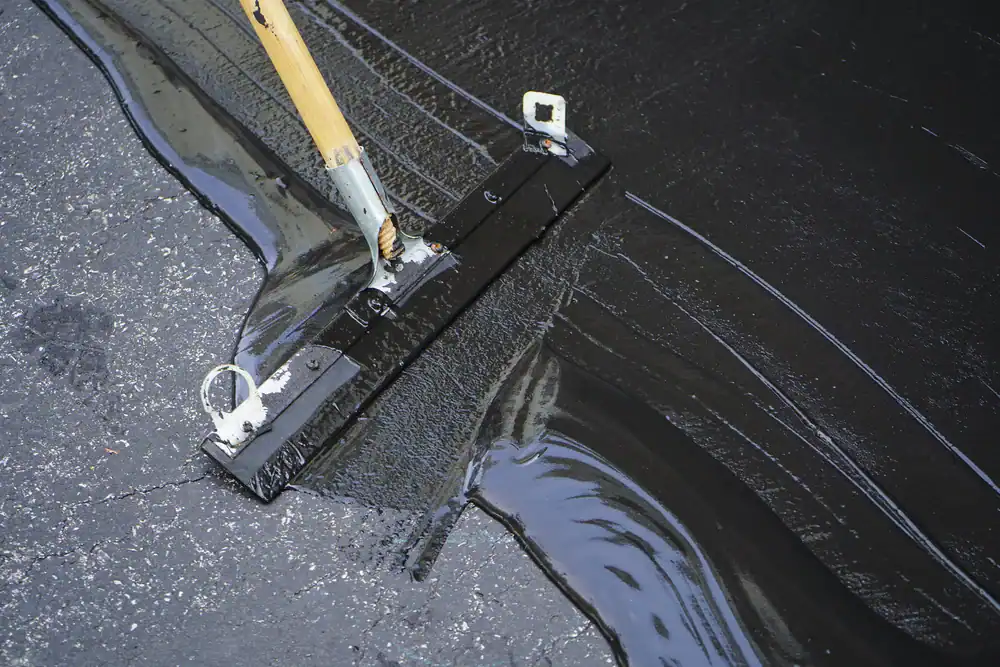
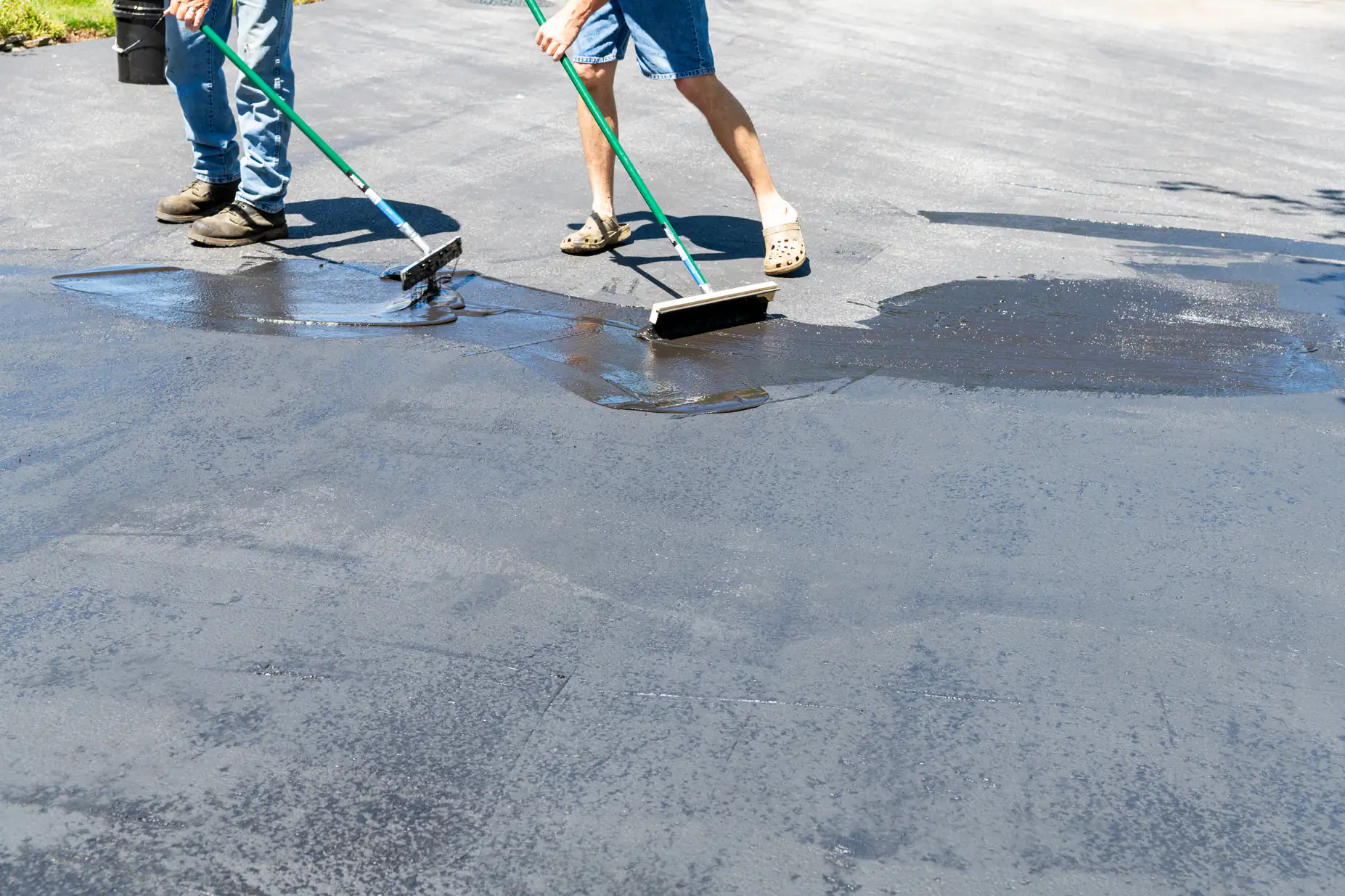
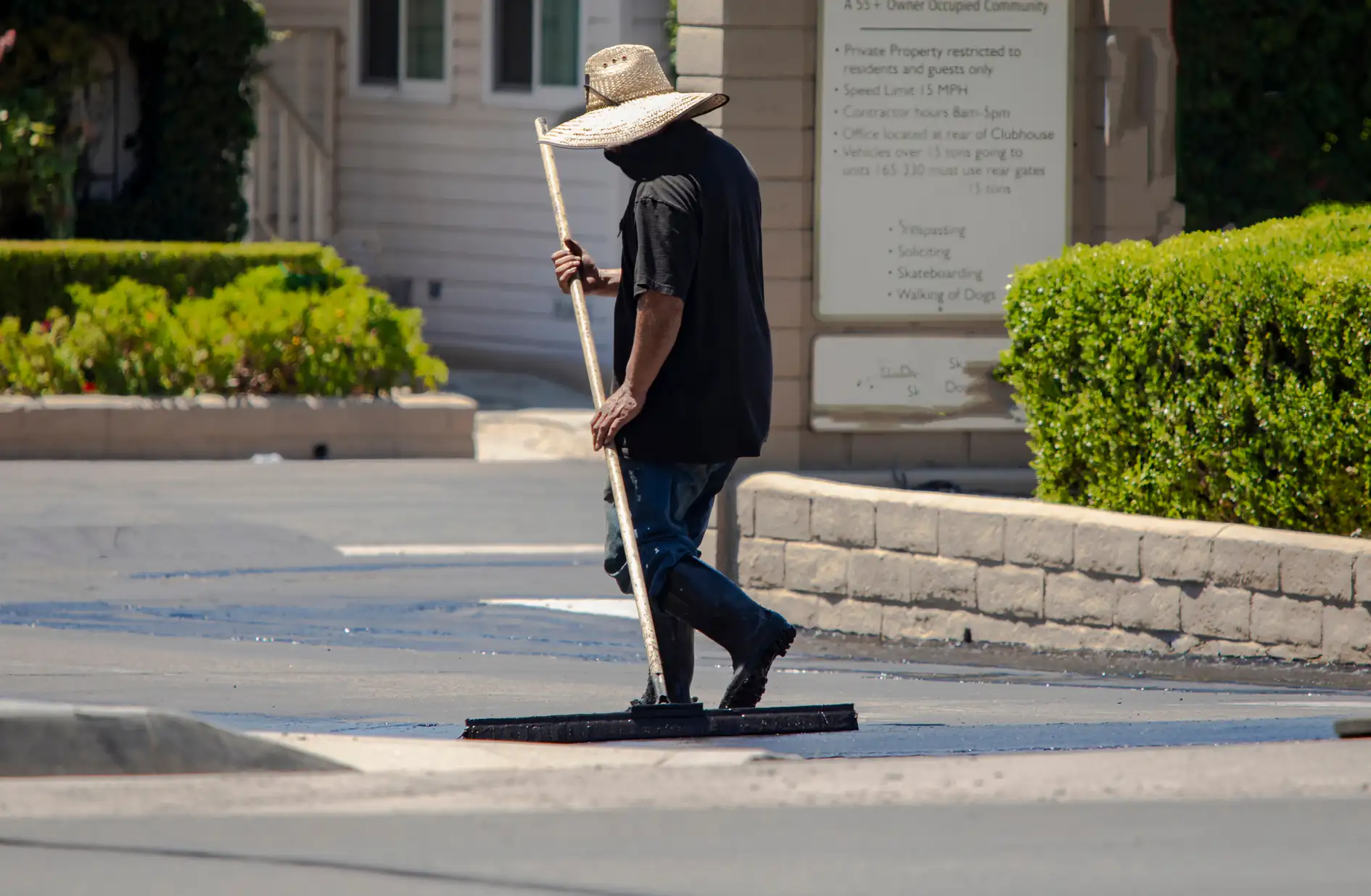
Then we apply the sealcoat by hand using squeegees. This gives us even coverage and the right thickness. Too thin and it won’t protect. Too thick and it takes forever to dry or can peel later. We mix our sealant with additives that help it hold up to New Jersey weather, including sand for traction.
After application, your driveway needs 24-48 hours to cure depending on temperature and humidity. We’ll tell you exactly when you can drive on it again. Most driveways are ready in a day or two, and the protection lasts 2-3 years before you’ll need to reseal.
Ready to get started?
When we seal your driveway in Bernardsville, you’re getting crack filling, surface cleaning, and hand-applied sealcoat with proper additives. We’re not cutting corners with spray application or watered-down material.
Bernardsville sits in one of the wealthiest areas in New Jersey, and properties here are maintained to a higher standard. Your neighbors notice when a driveway looks neglected. A fresh sealcoat brings back that deep black finish that makes the whole property look sharper.
Morris County weather swings from below zero in January to 90+ degrees in July. That expansion and contraction is hard on asphalt. Our sealcoating process protects against UV damage in summer and moisture penetration in winter. It also shields your driveway from salt, oil, and gas spills that break down asphalt over time.
Most homeowners in this area are sitting on significant home equity but aren’t planning to move. You’re investing in your property for the long haul, and sealcoating is one of the most cost-effective ways to protect that investment. It’s not glamorous, but it works.

Cost depends on the size of your driveway and its current condition. Most residential driveways in Bernardsville run between $300 and $800 for professional sealcoating, including crack filling and proper surface prep.
That’s roughly $0.15 to $0.25 per square foot. Compare that to repaving, which costs $6-$8 per square foot, and you’re looking at a 2,000%+ difference in cost. Sealcoating isn’t a replacement for repaving when your driveway is structurally failing, but it’s the smartest way to extend the life of asphalt that’s still in decent shape.
If someone quotes you significantly less, ask what’s included. Some contractors skip crack filling, use watered-down sealant, or spray instead of hand-applying. You’ll pay less upfront and need to reseal again in a year instead of three.
Wait at least 3-6 months after new asphalt is installed before applying sealcoat. Fresh asphalt needs time to cure and release oils. If you seal too early, you’re trapping those oils and the sealant won’t bond correctly.
Most paving contractors will tell you to wait until the following spring or summer. That gives the asphalt a full season to settle and harden. You’ll know it’s ready when the surface has faded from jet black to a duller grey.
After that first application, you should reseal every 2-3 years depending on traffic and weather exposure. Driveways that get heavy use or sit in full sun all day may need sealing more often. If you’re seeing significant fading or small cracks starting to form, it’s time.
Asphalt and concrete need completely different products and approaches. Asphalt sealcoating uses a coal tar or asphalt emulsion that bonds to the surface and fills small pores. It’s designed to keep asphalt flexible and protected from water and UV damage.
Concrete sealing uses a penetrating or topical sealer that protects against stains, moisture, and freeze-thaw damage, but it doesn’t change the appearance as dramatically. Concrete sealers are usually clear or slightly tinted.
If you have a concrete driveway in Bernardsville, you’re dealing with different issues than asphalt. Concrete cracks from settling and temperature changes, but it doesn’t fade and deteriorate from UV exposure the same way. The sealing process, materials, and cost are all different. Make sure whoever you hire knows which surface they’re working with and uses the right product.
Properly applied sealcoat lasts 2-3 years in New Jersey before you need to reapply. That timeline can be shorter if your driveway gets heavy use, sits in full sun, or if the winter is particularly harsh.
New Jersey’s freeze-thaw cycles are tough on any pavement. Water gets into small cracks, freezes, expands, and makes those cracks bigger. Sealcoating prevents water from penetrating the surface in the first place, which is why it’s so effective here.
You’ll know it’s time to reseal when the surface starts looking faded or grey instead of black. If you’re seeing small cracks forming or the texture feels rough instead of smooth, don’t wait. Resealing at the right time prevents those small issues from becoming expensive repairs.
You can buy sealant at any home improvement store and do it yourself, but the results usually don’t compare to professional application. The biggest issue is surface prep. If you don’t clean and fill cracks properly, the sealant won’t bond or last.
DIY sealants are also thinner and don’t include the same additives that professional-grade products have. You’ll get maybe a year of protection instead of two or three. And if you apply it unevenly or too thick in spots, you’ll see streaking and longer dry times.
The other factor is equipment. We use commercial-grade squeegees and have the experience to apply an even coat quickly. If you’re doing it yourself, expect it to take most of a day for an average driveway, and you’ll still be learning as you go. For a few hundred dollars, most homeowners in Bernardsville find it’s worth hiring someone who does this every day and can get it done right in a few hours.
If it rains within the first 24 hours after sealcoating, the results can be ruined. The sealant needs time to cure and bond to the asphalt. Rain can wash away uncured sealant, leave streaks, or prevent it from drying evenly.
That’s why timing matters. We check the forecast before scheduling and won’t start a job if rain is expected within the curing window. In New Jersey, that means being flexible with scheduling, especially in spring and fall when weather is unpredictable.
If rain does hit before the sealant cures, the damage depends on how long it’s been drying and how hard it rains. Light mist after 12+ hours usually won’t cause major problems. Heavy rain after 2-3 hours can wash the whole job away. We’ll come back and redo any areas that didn’t cure properly at no additional cost. That’s another reason to hire someone local who stands behind their work instead of a crew passing through town.