
Hear from Our Customers
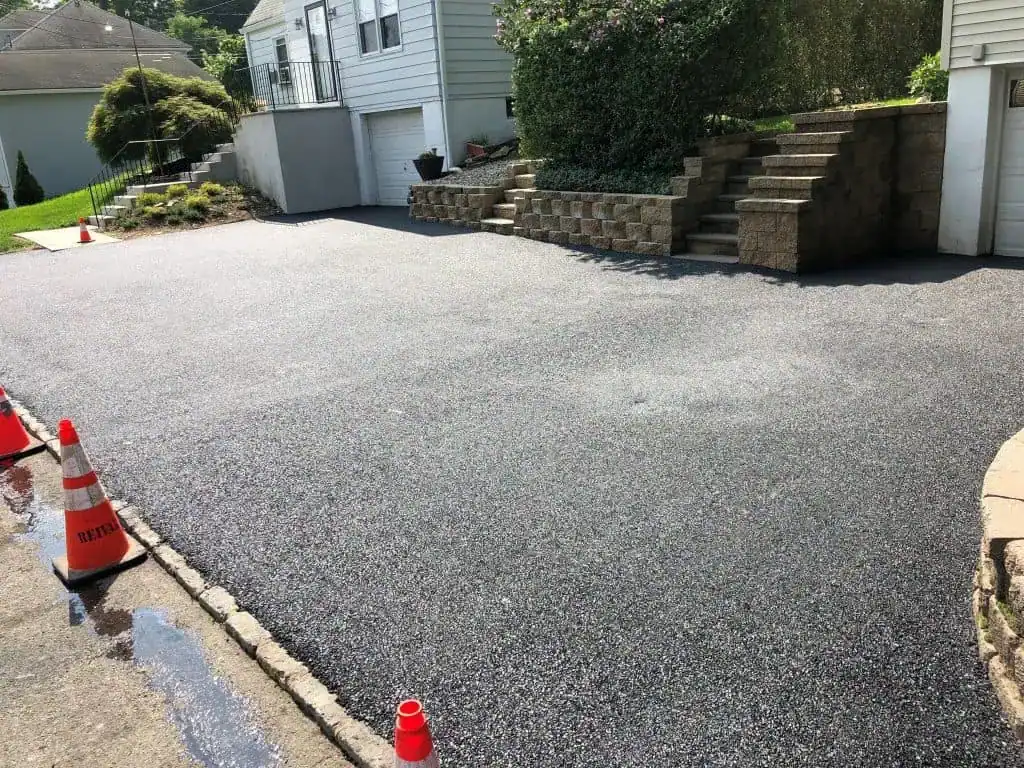
You’re not spending $1,500 on spring repairs because water got into cracks you didn’t even see last fall. The dark, smooth surface sheds water instead of absorbing it, and when temperatures drop, there’s nothing inside the asphalt expanding and creating new damage.
Your driveway looks clean again. That rich black finish doesn’t just cover up wear—it tells visitors and potential buyers that this property is maintained. In Morris County’s real estate market, curb appeal isn’t cosmetic. It’s dollars.
The math is straightforward. A properly applied sealcoat runs $150 to $500 for most residential driveways in Cedar Knolls. That same investment can extend your driveway’s lifespan by three to five years. You’re essentially preventing a $5,000 repaving job with a $300 maintenance appointment.
We work throughout Morris, Somerset, and Sussex Counties. We’re based in Morris County, which means we understand exactly what Cedar Knolls driveways face every year—the freeze-thaw cycles that start in late November, the road salt that gets tracked up from Route 10, and the summer heat that oxidizes unsealed asphalt.
We don’t spray and leave. Hand application creates a thicker, more uniform layer that actually bonds to your asphalt. It takes longer, but it’s the difference between a sealcoat that lasts two years and one that starts peeling after the first winter.
You’ll get a callback within 24 to 48 hours after requesting a quote. Pricing is clear upfront—no surprise charges when the job’s done. And if we say we’ll be there Tuesday morning, we’re there Tuesday morning.
First, we clean the surface. Not a quick sweep—we’re talking wire brush scrubbing to remove embedded dirt, oil spots, and any loose material that would prevent the sealer from bonding. If there’s vegetation growing in cracks, it gets pulled. If there’s old sealer flaking off, it gets removed.
Next, we handle repairs. Cracks get filled with rubberized crack filler that stays flexible through temperature changes. Small potholes get patched. We’re not sealing over problems—we’re fixing them first so the sealcoat can do its job.
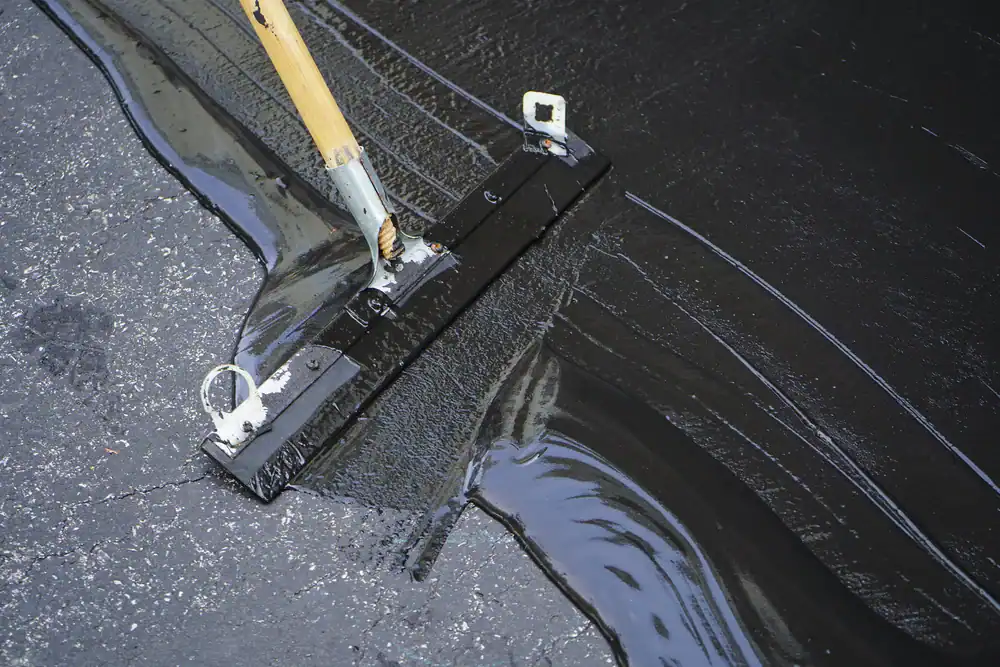
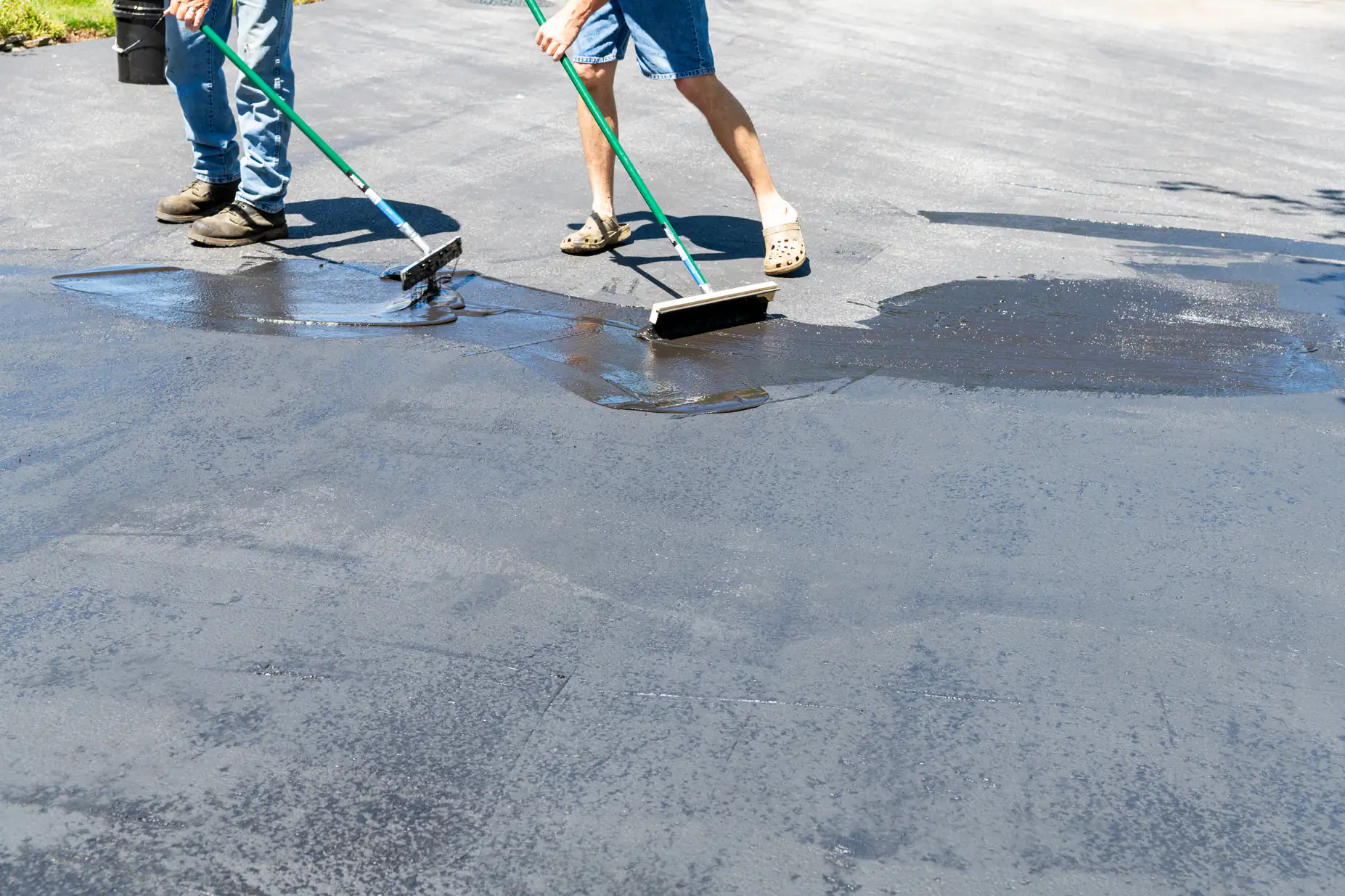
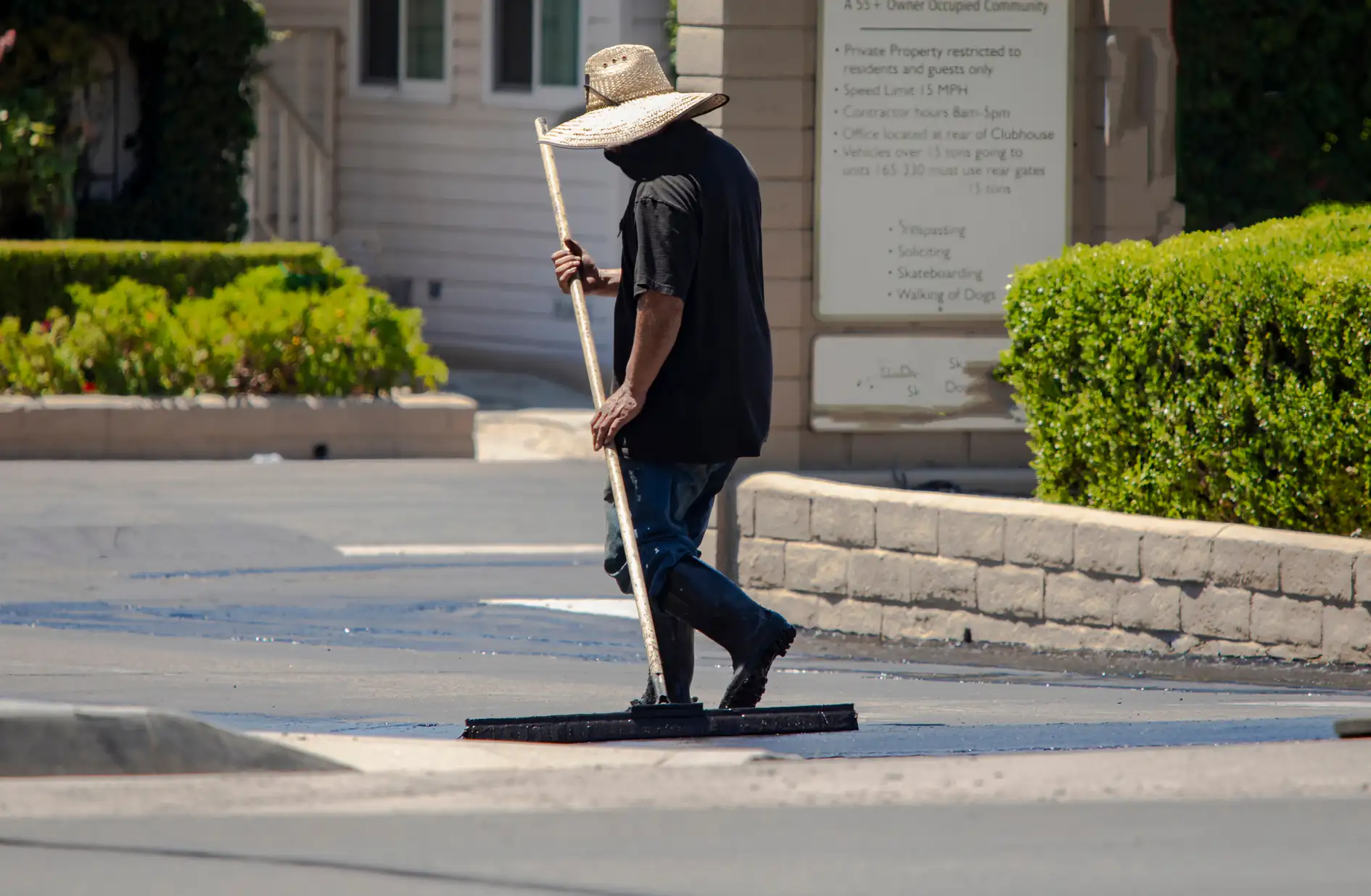
Then comes application. We use coal tar sealer applied by hand with squeegees. Two coats. The first coat penetrates and bonds. The second coat builds thickness and creates that protective layer. Each coat needs to dry before the next goes on, which is why weather matters and why we don’t rush.
You’ll need to stay off the driveway for 24 to 48 hours depending on temperature and humidity. After that, it’s cured enough for light traffic. Full cure takes about 30 days, but you’re not waiting a month to use your driveway—just giving it a couple days to harden.
Ready to get started?
Surface preparation is included—the cleaning, scrubbing, and debris removal that most homeowners don’t realize makes or breaks the job. If the surface isn’t prepped right, the sealer won’t bond. Period.
Crack filling up to a certain width is part of the process. We’re talking about those hairline to quarter-inch cracks that let water in. Anything larger might need actual patching, which we’ll flag during the estimate. You’re not discovering surprise damage after we’ve already started.
Two coats of coal tar sealer applied by hand. Not sprayed. Coal tar handles New Jersey winters better than asphalt emulsion—it’s more flexible in extreme temperatures and more resistant to gas and oil. The hand application means better coverage in all the small valleys and textures of your asphalt.
Edge work around garage doors, walkways, and landscaping gets done carefully. You’re not cleaning overspray off your sidewalk or garage door for the next week. And in Cedar Knolls, where properties often have decorative pavers or stone borders, that attention matters.

Most residential driveways in Cedar Knolls run between $150 and $500 for professional sealcoating. You’re looking at roughly $0.15 to $0.40 per square foot depending on the condition of your asphalt and how much prep work is needed.
A standard two-car driveway is usually around 600 square feet. If it’s in decent shape with minimal cracking, you’re probably in the $200 to $300 range. If there’s significant cracking that needs filling or areas that need patching before sealing, the cost goes up.
The size of your driveway matters, but so does access. If we’re working around tight corners, steep grades, or landscaping that requires extra care, that factors in. Companies charging significantly less are either skipping prep work, using thinner sealer, or applying just one coat. You’ll see the difference by next spring.
Every two to three years for most driveways in Morris County. You’re not sealing annually—that actually causes problems. Too-frequent sealing builds up layers that can crack and peel because they’re not bonding to asphalt anymore, they’re bonding to old sealer.
The two-to-three-year window assumes normal use and typical Morris County weather. If your driveway gets plowed and salted heavily every winter, you might lean toward every two years. If it’s a lighter-use driveway in a protected area, three years works.
You’ll know it’s time when the surface starts looking gray instead of black, when water stops beading up and starts soaking in, or when you’re seeing more small cracks appear. Those are signs the previous sealcoat is wearing out and your asphalt is exposed again.
Fall is ideal—specifically late August through October before temperatures consistently drop below 50 degrees at night. You need at least 48 hours of dry weather and temperatures above 50 for proper curing. Fall gives you that window plus maximum time for the sealer to cure and bond before facing winter.
Spring is your second option, but you’re racing the clock. Seal too early and a late frost can damage uncured sealer. Wait too long and you’re into summer heat, which makes application harder and can cause premature drying. You also lose the benefit of a full season of curing before the next winter hits.
Summer works if fall and spring don’t line up, but avoid the hottest days. Sealer applied in 90-degree heat can dry too fast and not penetrate properly. Early morning applications help, but fall remains the best timing for Cedar Knolls driveways that need maximum protection before winter.
Yes, but only if it’s applied correctly and the asphalt is in decent shape to begin with. Sealcoating creates a waterproof barrier that prevents water from seeping into the porous asphalt surface. When water can’t get in, it can’t freeze, expand, and crack your driveway from the inside out.
Road salt is the other major winter threat. Salt penetrates unsealed asphalt and breaks down the petroleum binders holding everything together. A proper sealcoat blocks that penetration. Your asphalt stays intact instead of slowly deteriorating every time salt gets tracked up from the street.
What sealcoating doesn’t do is fix structural problems or prevent damage from plows hitting existing cracks and potholes. If your driveway already has significant damage, sealing it won’t make those problems disappear. You need repairs first, then sealcoating to protect the repaired surface going forward.
Hand application with squeegees creates a thicker, more uniform coat that fills small surface voids and creates better protection. You’re getting roughly twice the thickness compared to spray application. That extra thickness translates directly to longer-lasting protection and better resistance to wear.
Spray application is faster and cheaper, which is why some companies prefer it. It works fine for large commercial lots where speed matters more than maximum durability. For residential driveways in Cedar Knolls where you’re investing in protection that needs to last through harsh winters, hand application makes more sense.
The other advantage of hand application is control. We’re working the sealer into the surface, not just coating the top. Around edges, near garage doors, along landscaping—hand application means precision. You’re not dealing with overspray on surfaces that shouldn’t be sealed.
You can buy sealer at any home improvement store and do it yourself. Whether you should depends on how much you value your time and whether you’re okay with the results potentially not lasting as long as a professional job.
The biggest issue with DIY sealcoating is surface prep. Most homeowners underestimate how much cleaning and crack filling matters. If you’re not removing all the dirt, oil, and loose material, the sealer won’t bond properly. If you’re not filling cracks correctly, water still gets in. The sealer itself is only part of the equation.
Professional application also means proper equipment, the right sealer grade for New Jersey winters, and experience knowing how thick to apply it and how weather conditions affect curing. A DIY job might cost $100 in materials and save you $200 in labor, but if it only lasts one year instead of three, you’re not actually saving money. You’re just spreading the same cost over more frequent applications.