Summary:
You’ve probably noticed the cracks. Maybe they appeared after last winter, small hairlines that you told yourself weren’t a big deal. Now you’re staring at a driveway that needs replacing, and everyone seems to have a different opinion on whether you should go with asphalt or concrete.
The truth is, both materials can work in Sussex County—but they work differently. One handles our freeze-thaw cycles better. The other costs less to repair but needs more frequent attention. And the “cheaper” option upfront might actually cost you more over twenty years. Here’s what you actually need to know before you commit to either material.
Asphalt vs Concrete Driveway: The Real Cost Difference
Let’s start with the number everyone asks about first. Asphalt typically costs between $5 and $7 per square foot installed. Concrete runs $8 to $15 per square foot, sometimes higher if you want decorative finishes. For a standard two-car driveway around 600 square feet, you’re looking at roughly $3,000 to $4,200 for asphalt versus $4,800 to $9,000 for concrete.
That’s a significant difference upfront. But here’s what most contractors won’t tell you until you ask: the real cost isn’t just installation. It’s what you’ll spend over the next twenty to thirty years keeping that driveway functional.
Asphalt Cost Per Square Foot and Long-Term Maintenance
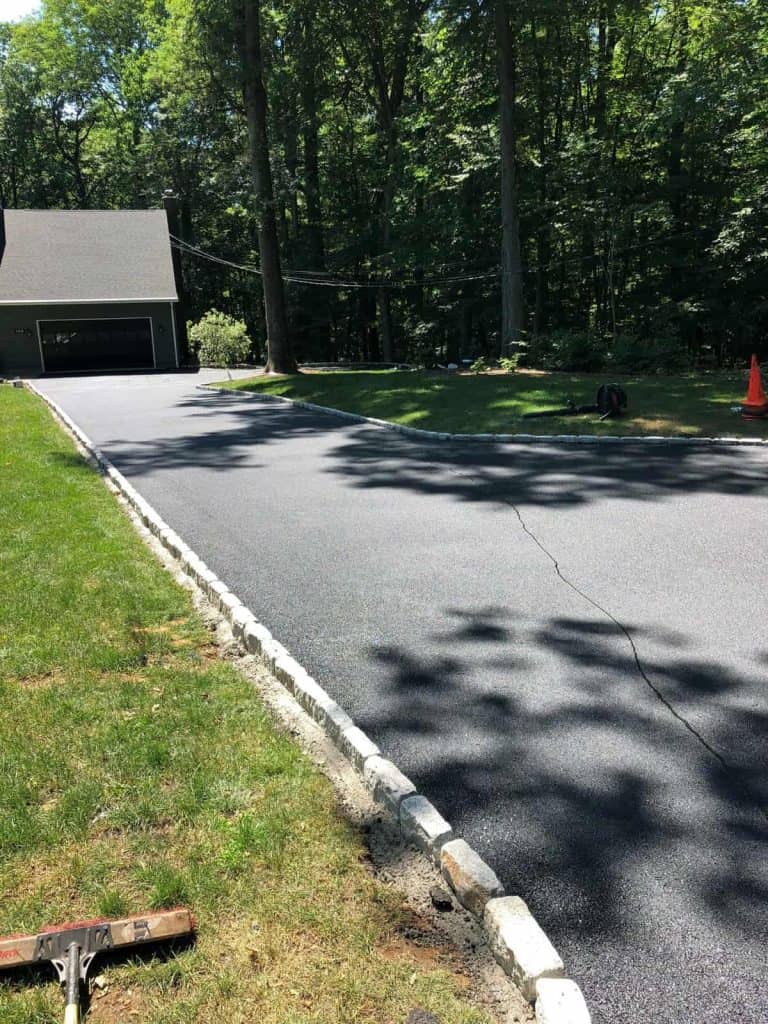
Asphalt’s lower installation cost looks appealing until you factor in maintenance. Your driveway will need sealcoating every two to three years to protect against water infiltration, UV damage, and oxidation. Each sealcoating runs between $400 and $800 for a typical residential driveway, depending on size and condition.
Skip the sealcoating and you’ll see the consequences fast. The surface turns gray and brittle. Small cracks become larger ones. Water seeps into those cracks, freezes during Sussex County winters, and expands with enough force to split the asphalt from the inside out. What could have been prevented with a $500 sealcoat becomes a $2,000 repair job or worse.
Over thirty years, you’re looking at ten to fifteen sealcoating applications. Add those up along with occasional crack filling and maybe one resurfacing around year fifteen, and your total investment climbs to somewhere between $8,000 and $10,000. That’s assuming you stay on top of maintenance and catch problems early.
The flip side? Asphalt repairs are straightforward and relatively inexpensive when you address them promptly. Cracks can be filled for $1 to $3 per linear foot. Small sections can be patched without replacing the entire surface. And if you do need to resurface after fifteen or twenty years, you can often do it right over the existing base, which saves on excavation costs.
Here’s what matters for your decision: asphalt demands regular attention, but it forgives you when problems develop. The material is flexible enough to handle some movement and forgiving enough to repair without major reconstruction. For homeowners who don’t mind scheduling maintenance every few years, asphalt delivers solid value despite the ongoing costs.
Cost of Concrete Driveway: Higher Upfront, Lower Maintenance
Concrete hits your wallet harder at installation. That $4,800 to $9,000 price tag makes some homeowners wince, especially when they see asphalt quotes coming in thirty to fifty percent lower. But concrete’s value proposition is different—you’re paying more now to deal with less later.
Concrete doesn’t need sealcoating every few years. You might choose to seal it every five to seven years to protect against stains and enhance appearance, but it’s not structurally necessary the way it is with asphalt. The material doesn’t oxidize and turn brittle like asphalt does. It doesn’t need constant protection from UV rays and moisture.
Your maintenance routine becomes simpler: occasional cleaning, maybe some degreasing if you park vehicles that leak oil, and watching for any cracks that develop. When you add up the lifetime costs over thirty years, concrete typically runs between $6,500 and $8,000 total—less than asphalt once you account for all that sealcoating and maintenance.
The catch is what happens when concrete does develop problems. Cracks are harder to repair and more expensive to fix than asphalt cracks. A concrete repair might run $200 to $500 depending on severity, and the patches often remain visible. You can’t just resurface concrete the way you can with asphalt. When a concrete driveway reaches the end of its life, you’re looking at complete removal and replacement.
So concrete makes sense if you’re planning to stay in your home long-term and you’d rather pay more upfront to minimize ongoing maintenance. It’s the better financial decision if you calculate total cost of ownership over twenty-five or thirty years. But it requires a larger initial investment and offers less flexibility if problems develop down the road.
Want live answers?
Connect with a Platinum Paving expert for fast, friendly support.
How Asphalt and Concrete Handle Sussex County Winters
Here’s where the cement vs asphalt driveway decision gets more interesting than just cost. Sussex County winters create specific conditions that affect these materials differently. We’re not talking about generic “cold weather performance”—we’re talking about what happens when temperatures swing from 35 degrees during the day to 15 degrees at night, multiple times per week, for four or five months straight.
Water is the enemy of both materials, but it attacks them in different ways. When water seeps into cracks and freezes, it expands by about nine percent and generates up to 30,000 pounds per square inch of pressure. That’s enough force to split rock, let alone pavement. The question is which material handles that pressure better.
Why Asphalt Performs Better in Freeze-Thaw Cycles
Asphalt’s petroleum-based composition gives it flexibility that concrete can’t match. When temperatures drop and the ground beneath your driveway shifts, asphalt can flex and move without cracking. It expands and contracts with temperature changes instead of fighting against them.
That flexibility becomes crucial during freeze-thaw cycles. Water that seeps into small cracks will still freeze and expand, but asphalt can accommodate some of that movement without catastrophic failure. The material bends rather than breaks. This is why you’ll see asphalt driveways in Sussex County with some surface cracking but still fundamentally sound after fifteen or twenty years.
Asphalt’s dark color provides another advantage during winter. The surface absorbs heat from the sun, even on cold days. Snow and ice melt faster on asphalt than on concrete, which means less time for meltwater to refreeze and cause problems. You’ll spend less time shoveling and dealing with slippery conditions.
The downside shows up during summer. When temperatures climb into the nineties during July and August heatwaves, asphalt can soften. Park a heavy vehicle in the same spot repeatedly during a heatwave and you might see indentations develop. The material becomes somewhat pliable in extreme heat, which isn’t ideal if you regularly park trucks, RVs, or other heavy equipment.
But for Sussex County’s climate, where winter damage is the bigger concern, asphalt’s flexibility gives it a real performance advantage. The material was essentially designed for cold-weather climates with significant temperature swings. That’s why you see it used for roads and highways throughout northern states—it handles freeze-thaw cycles better than rigid alternatives.

Concrete's Durability vs. Winter Vulnerability
Concrete is stronger than asphalt in most ways. It can support heavier loads without deforming. It resists wear from traffic better. It doesn’t soften in summer heat. A properly installed concrete driveway can last forty or even fifty years with minimal maintenance. But that strength comes with rigidity, and rigidity becomes a problem when the ground moves.
When water infiltrates concrete and freezes, the material can’t flex to accommodate the expansion. Instead, it cracks. Once cracks form, they tend to spread. Water gets deeper into the structure, reaches the base layer, and causes more extensive damage with each subsequent freeze-thaw cycle. What starts as a hairline crack in November can become a significant structural problem by March.
Concrete is also more vulnerable to road salt damage than asphalt. Salt doesn’t just melt ice—it penetrates porous concrete and breaks down the surface. You’ll see pitting, staining, and surface deterioration over time, especially near the street where salt concentration is highest. The damage is cosmetic at first but eventually affects structural integrity.
Areas with clay-heavy soil face additional challenges with concrete. Water can seep beneath the driveway and become trapped between the surface and the clay layer. During freeze-thaw cycles, this trapped water causes significant deterioration that often doesn’t become apparent until it requires expensive excavation and base replacement. Concrete’s rigid structure doesn’t handle ground movement as well as asphalt’s flexible composition.
That said, concrete performs exceptionally well in the right conditions. If your property has excellent drainage, stable soil, and you’re willing to take precautions during winter (using calcium magnesium acetate instead of rock salt, clearing snow promptly), concrete can absolutely work in Sussex County. The material’s superior durability and lower maintenance requirements make it attractive for homeowners who want a set-it-and-forget-it solution.
The key is understanding that concrete requires more careful installation and better site conditions to perform well in northern climates. You can’t just pour it anywhere and expect forty years of trouble-free service. The base preparation, drainage design, and installation quality matter more with concrete than with asphalt.
Making the Right Choice for Your Sussex County Property
So is asphalt cheaper than concrete? Yes, upfront. But over thirty years, concrete often costs less when you factor in maintenance. Does that make concrete the obvious choice? Not necessarily. The right material depends on your specific situation—your budget, how long you plan to stay in your home, your property’s drainage and soil conditions, and how much ongoing maintenance you’re willing to handle.
Asphalt makes sense if you want lower initial costs, need a surface that’s ready to use in a day or two, and don’t mind scheduling sealcoating every few years. Concrete works better if you’re making a long-term investment, want minimal maintenance, and have the budget for proper installation with attention to drainage and base preparation.
Either material can work in Sussex County if installed correctly. What matters most is working with contractors who understand local conditions and won’t cut corners on base preparation and drainage. If you’re ready to move forward with your driveway project, we can help you evaluate your specific property and recommend the option that makes the most sense for your situation.