Summary:
Why Temperature and Weather Matter for Asphalt Paving
Asphalt isn’t just black goo that hardens when it cools. It’s a precise mixture of aggregate stone, sand, and petroleum-based binder that needs specific conditions to bond correctly and achieve the density required for long-term performance.
Hot-mix asphalt arrives at the job site between 275 and 300 degrees. From that moment, you’re racing the clock. The material needs to stay above 220 degrees for initial rolling and can’t drop below 185 degrees before final compaction, or it becomes too stiff to work properly. Cold air, cold ground, wind, and moisture all pull heat from the asphalt faster than crews can finish the job.
That’s why ambient temperature matters, but ground temperature matters even more. Even if it’s 55 degrees in the afternoon, the ground might still be cold from the previous night. Cold ground pulls heat out of fresh asphalt like a sponge, preventing proper compaction and leaving you with a surface that won’t hold up to traffic or weather.
What Happens When Asphalt Gets Paved in Cold Weather
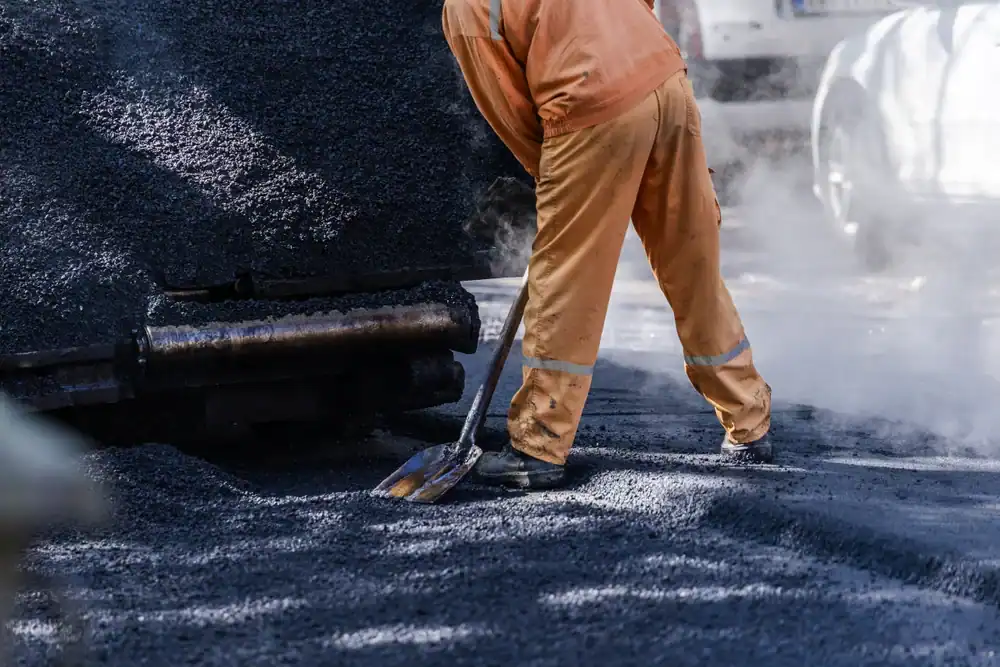
When asphalt cools too quickly, it can’t be compacted to the density it needs. Proper compaction eliminates air voids—those tiny pockets where air and moisture can penetrate the pavement. If air voids exceed seven percent, water gets in. Once water infiltrates asphalt, it freezes during winter, expands, and breaks the pavement apart from the inside.
You’ll see this show up as surface raveling first. The top layer starts to look rough and rocky instead of smooth. Then small cracks appear. Within a year or two, those cracks widen into potholes, and suddenly you’re looking at expensive repairs or complete replacement.
Cold weather also affects the bond between asphalt layers. If you’re resurfacing existing pavement, the new layer needs to stick to the old one. When temperatures drop too low, that bond doesn’t form correctly. You end up with delamination—the layers separate, water gets between them, and the whole surface fails prematurely.
This is why most paving contractors won’t touch a job when temperatures fall below 50 degrees, and many prefer to wait until it’s consistently warmer. It’s not about being picky. It’s about physics. Asphalt mixed at 280 degrees needs time to cool gradually in moderate conditions, not shock-cool on frozen ground.
The same principle applies to wind and rain. High winds accelerate cooling, giving crews less time to compact properly. Rain is even worse—it cools the asphalt rapidly and introduces moisture that prevents the binder from adhering to the aggregate. Even light drizzle can compromise installation quality enough that you’ll see problems within the first year.
How Moisture Affects Asphalt Installation and Curing
Water and asphalt don’t mix, and not just because oil repels water. When moisture is present during installation, it interferes with every stage of the process. If the base is wet, the asphalt can’t bond to it properly. If it rains during paving, water gets trapped between layers or causes the oil in the binder to separate and rise to the surface, leaving you with a weakened, stained mess.
Moisture also creates steam when hot asphalt hits a wet surface. That steam has to escape somewhere, and as it does, it creates pathways through the pavement. These pathways become cracks. The cracks let in more water. That water freezes in winter, expands, and turns small cracks into large ones. It’s a cycle that starts with one wet day and ends with a failed driveway.
This is why we check weather forecasts obsessively during paving season. If rain is predicted within 24 hours of the scheduled start, we’ll reschedule. If it rained heavily the day before, we’ll wait for the base to dry completely before beginning work. Paving on a damp base might save a day on the schedule, but it costs years off the pavement’s life.
Even humidity plays a role, though it’s less obvious. High humidity slows the evaporation of surface moisture and affects how quickly asphalt cools. In New Jersey’s humid summers, this can actually work in your favor by extending the working time slightly. But during spring, when humidity combines with cool temperatures and frequent rain, it creates challenging conditions that require experienced crews to navigate successfully.
The ground itself holds moisture too. Spring thaw in Sussex County and northern Morris County means the soil is saturated even if the surface looks dry. That subsurface moisture works its way up, weakening the base and creating settlement issues. This is why late spring—after the ground has had time to dry out—is better than early spring for paving projects.
Want live answers?
Connect with a Platinum Paving expert for fast, friendly support.
Best Seasons for Asphalt Paving in New Jersey
New Jersey’s paving season typically runs from late April through mid-October, but not all months within that window are equal. Each season brings specific advantages and challenges that affect installation quality, contractor availability, and long-term performance.
The ideal conditions for asphalt paving are temperatures between 50 and 85 degrees, dry weather, and stable forecasts. You also want ground that’s had time to warm up and dry out from winter moisture. In northern New Jersey, that narrows your window compared to southern parts of the state.
Spring Paving: Late April Through May
Spring feels like the natural time to start outdoor projects, and late spring can work well for asphalt paving if conditions cooperate. By late April or early May in Morris and Somerset Counties, temperatures are usually warm enough during the day, and the ground has started to thaw and dry out.
The main advantage of spring paving is that you get your project done early in the season, giving the asphalt plenty of time to cure before winter. We’re also transitioning out of our slow season, so availability tends to be better than it will be in a few weeks when everyone’s calendar fills up.
But spring comes with risks. Weather is unpredictable. A warm week can be followed by a cold snap that drops nighttime temperatures back into the 40s. Rain is frequent, and when it does rain, it can delay your project by days while you wait for the base to dry. Early spring also means the ground might still be saturated from snowmelt, even if the surface appears dry.
If you’re considering spring paving, late May is generally safer than April. By then, ground temperatures have stabilized, the risk of unexpected cold has decreased, and rain patterns become slightly more predictable. Just make sure we check both air and ground temperature before starting, and be prepared for potential weather delays.
One often-overlooked benefit of spring paving is that we have more time to prep your site properly. We’re not rushing between back-to-back jobs yet, so excavation, grading, and base work get the attention they deserve. That foundation work determines how long your pavement lasts, so having a crew that isn’t hurried makes a real difference.
Summer and Fall Paving: Peak Season vs. Ideal Conditions
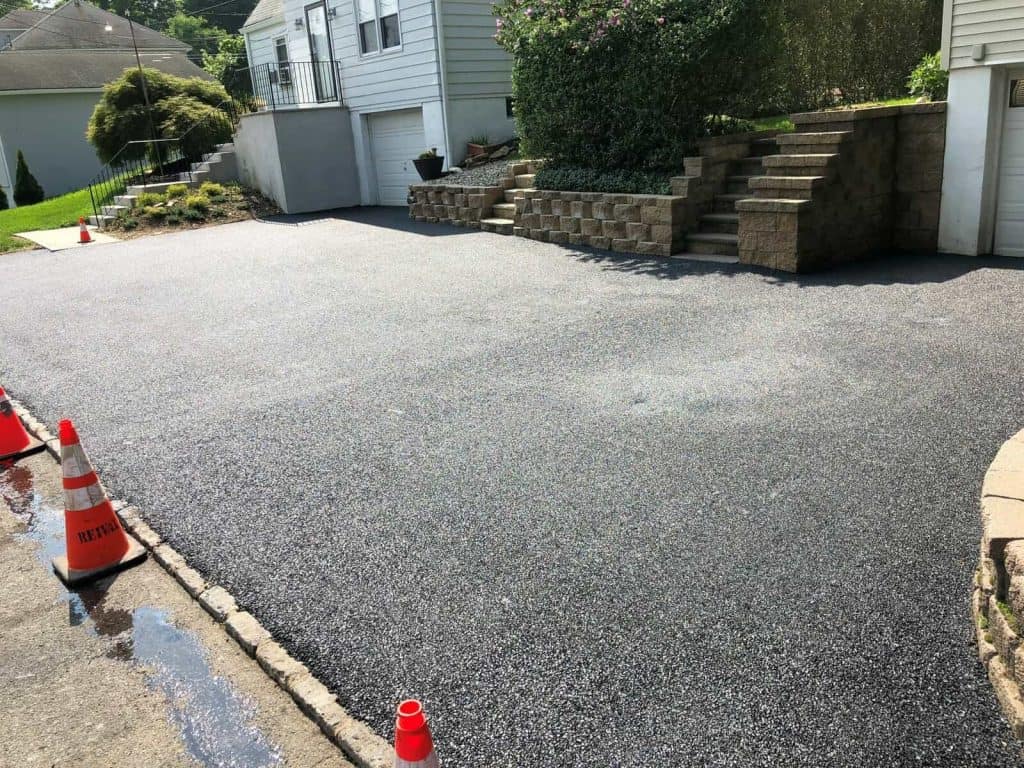
Summer—June through August—is peak paving season for good reason. Temperatures are consistently warm, rain is less frequent, and longer daylight hours give crews more working time. The heat helps asphalt stay workable longer, and curing happens quickly in warm, dry conditions. If you need a project done fast and you have flexibility in your schedule, summer works.
The downsides are mostly logistical. Every other property owner has the same idea, so we’re booked solid. You might wait weeks for an available slot, and prices tend to be higher during peak demand. Extremely hot days—above 90 degrees—can actually make asphalt too soft to work with properly, though we know how to adjust our approach.
Fall, particularly September and early October, offers what many of us consider the sweet spot for asphalt paving in New Jersey. Temperatures are moderate—usually between 60 and 75 degrees—which is ideal for compaction and curing. Humidity drops compared to summer, and weather patterns are more stable than spring. There’s less rain, and when it does rain, it’s usually predictable enough to plan around.
Our availability improves in fall because the summer rush has passed, but there’s still plenty of good weather left. Some contractors even offer slightly lower prices in September and October to keep crews busy before the season ends. You get better scheduling flexibility, more attention to your project, and conditions that produce excellent results.
The only catch with fall paving is timing. You need to finish before nighttime temperatures start dropping consistently below 50 degrees, which usually happens by late October in Sussex County and mid-November in Somerset County. Once those cold nights arrive, paving season is over. But if you schedule your project for early to mid-fall, you’re working in some of the best conditions New Jersey offers all year.
Planning Your Asphalt Paving Project for Best Results
Timing your asphalt paving project correctly comes down to understanding how temperature and moisture affect installation quality, knowing the advantages and challenges each season brings, and planning far enough ahead to secure good contractors during optimal weather windows.
For most projects in Sussex, Morris, and Somerset Counties, late spring through early fall gives you the conditions you need for pavement that lasts. If you can choose your timing, September and early October often provide the best combination of weather, contractor availability, and installation conditions. Summer works well too, just expect to book early and potentially pay peak-season rates.
Whether you’re installing a new driveway, resurfacing a worn parking lot, or making repairs, working with contractors who understand New Jersey’s climate and won’t cut corners on timing makes all the difference. If you’re ready to move forward with a paving project, we can help you determine the right timing for your specific needs and ensure the work gets done correctly the first time.