Summary:
Why Your Parking Lot Matters More Than You Think
Walk outside and look at your property the way a first-time visitor would. What does your parking lot say about your business?
If you’re seeing faded lines, cracks spreading across the surface, or puddles that never quite drain, you’re not alone. Most commercial property owners in Somerset County deal with the same issues. But here’s what many don’t realize: that deteriorating pavement is costing you money every single day.
Studies show that 70% of first-time purchasing decisions are influenced by curb appeal. Your parking lot is literally the foundation of that first impression. When customers pull into a lot with fresh, dark asphalt, crisp striping, and clear traffic flow, they make assumptions about your entire operation. When they see the opposite, they make different assumptions—and sometimes they just keep driving.
How Pavement Appearance Affects Customer Behavior in Commercial Properties
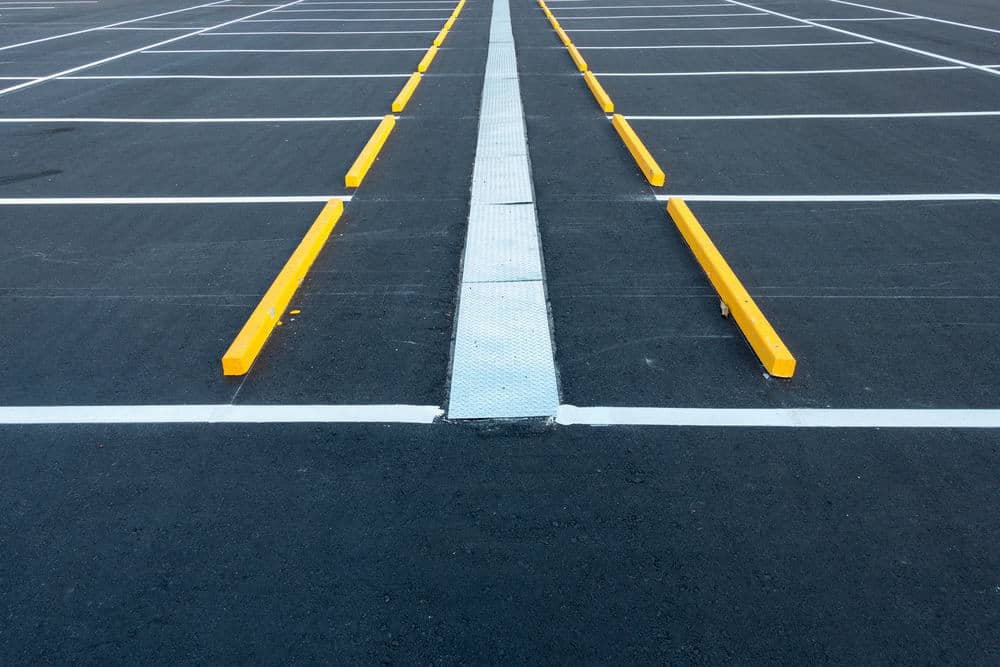
There’s actual psychology behind why parking lots matter so much. It’s called the halo effect—when people see one positive characteristic, they assume other things are positive too. A well-maintained parking lot creates a halo around your entire business.
The reverse is also true. Research on customer behavior reveals some eye-opening numbers: 53% of shoppers actively avoid stores if parking seems inconvenient or poorly maintained. Another 25% skip businesses where parking looks difficult or uninviting. These aren’t small percentages. For a retail center in Bridgewater or an office park in Basking Ridge, that’s real foot traffic you’re losing.
But it goes deeper than just aesthetics. Your parking lot communicates whether you pay attention to details, whether you invest in your property, and whether you care about the people who visit. Fresh striping tells customers you’re organized. Smooth pavement says you’re professional. Proper drainage shows you think ahead.
On the flip side, cracked asphalt raises questions. Faded lines suggest neglect. Potholes scream liability. And in Somerset County’s competitive commercial real estate market, those silent messages can be the difference between a signed lease and a lost opportunity.
Property managers understand this intuitively, but the data backs it up. Commercial properties with well-maintained parking areas see higher tenant retention, fewer customer complaints, and stronger property valuations. One shopping center study found that after addressing parking lot issues, vacancy rates dropped 15% and property values increased 10% within a year.
Your pavement isn’t just concrete and asphalt. It’s a business asset that either works for you or against you every single day.
What Happens When You Delay Commercial Paving Repairs
Let’s talk about what happens when you wait. That small crack you noticed last spring? It’s not staying small. Water seeps in, freezes during winter, expands, and turns that hairline crack into a pothole by March. Now you’re looking at emergency repairs during your busiest season.
This pattern plays out across Somerset County every year. Property managers think they’re saving money by delaying maintenance, but they’re actually guaranteeing higher costs down the road. Small pavement issues that cost a few hundred dollars to fix today become thousand-dollar problems tomorrow.
The math is straightforward: reactive maintenance almost always costs more than proactive upgrades. A crack that could be sealed for $200 becomes a pothole requiring $2,000 in repairs. A parking lot that could be resurfaced for $15,000 deteriorates to the point where you need a complete reconstruction at $50,000.
But the financial hit goes beyond repair costs. There’s the liability exposure from trip-and-fall accidents. The lost business from customers who choose competitors with better parking. The reduced property value when it’s time to sell or refinance. The tenant complaints that eat up your property management time.
Somerset County’s weather makes this worse. The freeze-thaw cycles we experience accelerate pavement breakdown. Water that seeps into cracks during fall rains freezes in winter, expands, and destroys your pavement structure from the inside out. By spring, you’re dealing with damage that could have been prevented with timely maintenance.
Property owners who commit to regular commercial paving maintenance see their pavement last 25-30 years. Those who neglect it get 10-12 years before major reconstruction is needed. That’s not just a difference in timeline—it’s a massive difference in total cost of ownership.
Want live answers?
Connect with a Platinum Paving expert for fast, friendly support.
Commercial Paving Upgrades That Deliver Real ROI
Not all paving upgrades are created equal. Some deliver immediate visual impact and long-term value. Others are necessary for compliance or safety. Understanding which improvements make sense for your Somerset County property helps you allocate budget where it matters most.
For most commercial properties, the highest-return upgrades fall into a few categories: surface improvements that restore appearance and function, striping and markings that enhance safety and organization, drainage solutions that prevent water damage, and curb work that defines spaces and controls traffic flow.
The key is matching the upgrade to your property’s actual needs and your business goals. A retail center has different priorities than an office park. A property you’re preparing to sell needs different attention than one you’re holding long-term.
Resurfacing vs Sealcoating: What Your Somerset County Lot Needs
This is where property managers often get confused. Sealcoating and resurfacing sound similar, but they’re completely different services with different purposes and price points.
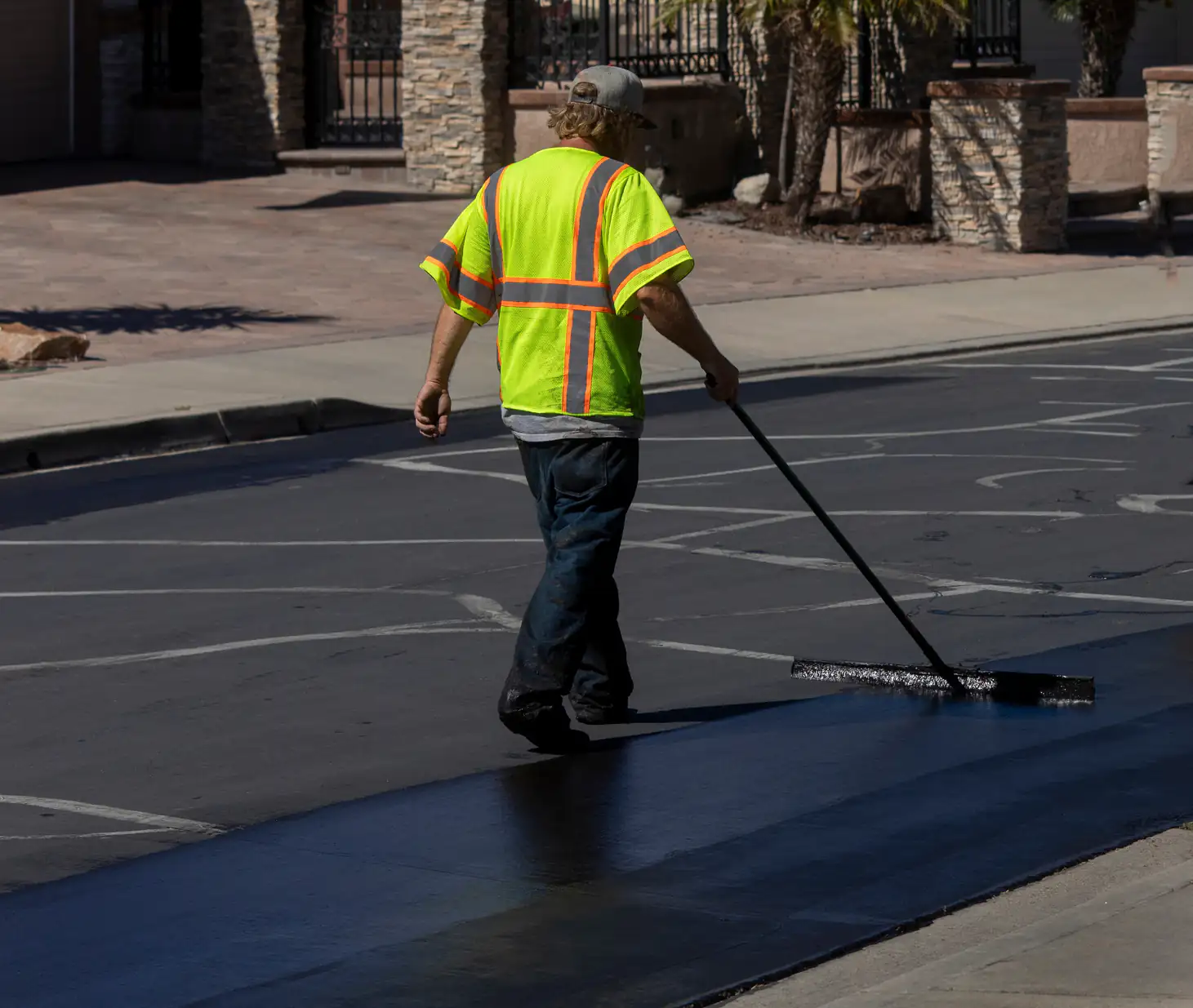
Sealcoating is preventive maintenance. It’s a protective layer applied to existing asphalt that’s still in good structural condition. Think of it as sunscreen for your parking lot—it protects against UV damage, water penetration, and chemical deterioration from oil and gas. Sealcoating typically costs $0.15-0.25 per square foot and should be done every 2-3 years. The ROI is exceptional because it can double your pavement’s lifespan for a relatively small investment.
Resurfacing (also called overlay) is corrective. It involves milling off the top layer of deteriorated asphalt and replacing it with fresh material. This addresses surface-level damage like widespread cracking, fading, and minor rutting, but it requires that the base layer underneath is still sound. Resurfacing costs more—typically $2-4 per square foot—but it gives you essentially a new parking lot surfacewithout the expense of complete reconstruction.
How do you know which one your property needs? Look at the pavement. If you have a relatively new lot with minor wear, sealcoating is your answer. If you’re seeing widespread cracking, significant fading, or surface deterioration but no major base failures, resurfacing makes sense. If you have potholes, base failures, or drainage problems, you might need full reconstruction.
Here’s what many property managers miss: timing matters enormously. Sealcoating done at the right time prevents the need for resurfacing. Resurfacing done before major base failure prevents the need for reconstruction. Each level of intervention costs exponentially more than the last.
A well-maintained commercial parking lot in Somerset County, NJ follows a predictable cycle: sealcoating every 2-3 years for the first decade, possibly a resurfacing around year 15, more sealcoating, and then reconstruction after 25-30 years. A neglected lot might need reconstruction after just 12-15 years. The total cost difference over that timeframe can be $50,000 or more for a typical commercial lot.
Parking Lot Striping, Curbs, and Drainage Improvements
Fresh pavement gets attention, but some of the most valuable commercial paving upgrades happen at the edges and underneath. These are the improvements that solve real problems and prevent expensive damage.
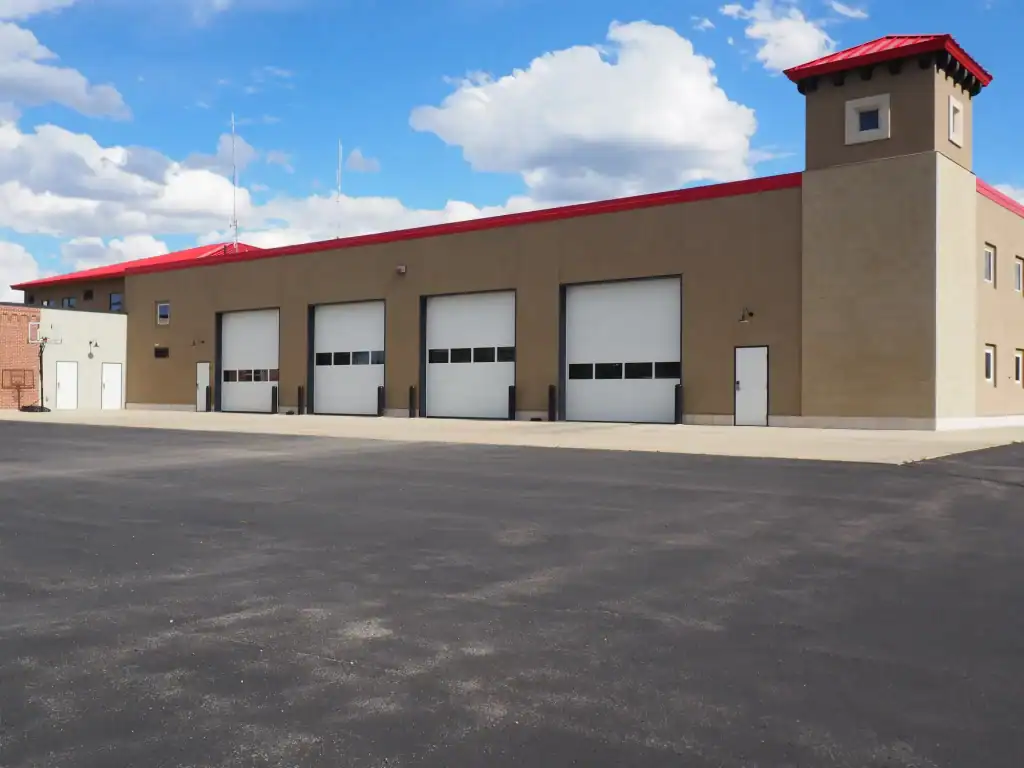
Parking lot striping is more than just paint. Crisp, visible lines organize traffic flow, maximize parking capacity, prevent confusion, and reduce accident risk. They also send a powerful message about your property’s professionalism.
Faded striping makes even new asphalt look neglected. Fresh striping makes older pavement look maintained and cared for. The impact on customer behavior is measurable. Clear markings reduce parking disputes, prevent vehicles from blocking access, and make your lot feel safer and more organized.
For retail properties in Somerset County, this translates directly to customer experience. For office parks, it means fewer tenant complaints. The cost is minimal—typically $0.50-2.00 per linear foot—but the visual and functional impact is substantial.
Curbs serve multiple critical functions that property owners often underestimate. They define parking areas and traffic lanes, control water runoff and prevent erosion, protect landscaping and building foundations, and create physical barriers that prevent vehicles from damaging property.
Without proper curbing, you’ll see water pooling in unwanted areas, vehicles cutting across landscaped zones, and erosion that undermines your pavement base.
Drainage improvements might be the most overlooked upgrade in commercial paving, but they’re often the most important for long-term pavement survival. Water is asphalt’s worst enemy. When water penetrates your pavement and reaches the base layer, it causes settling, cracking, and eventually complete failure.
Proper drainage systems—including catch basins, proper grading, and sometimes French drains—direct water away before it can cause damage. In Somerset County, where we get significant rainfall and winter snow melt, drainage isn’t optional.
Properties without adequate drainage see accelerated pavement deterioration, standing water that creates safety hazards, ice formation in winter that increases liability, and water intrusion into buildings or foundations. The ROI on drainage improvements is harder to quantify than fresh asphalt, but it’s real. Proper drainage can extend your pavement life by 10-15 years. It prevents the kind of base failure that requires complete reconstruction instead of simple resurfacing.
Smart Commercial Paving Decisions for Somerset County Properties
Your parking lot is more than pavement. It’s the first handshake with every customer, the foundation of your property value, and a business asset that either appreciates or depreciates based on how you manage it.
The commercial properties that win in Somerset County’s competitive market are the ones where owners and managers think strategically about paving. They understand that a modest investment in sealcoating today prevents a massive expense in reconstruction tomorrow. They know that fresh striping and proper drainage aren’t cosmetic details—they’re functional improvements that protect their investment and enhance their business.
Whether you’re managing a retail center in Bridgewater, an office park in Basking Ridge, or a multi-unit commercial property anywhere in Somerset County, NJ, your paving decisions matter. Make them with the full picture in mind: not just what it costs today, but what it saves tomorrow. Not just how it looks, but how it performs.
If you’re ready to explore what the right commercial paving upgrades could do for your property, we bring over 20 years of experience to the region, with a focus on quality materials, proper preparation, and results built to last.