Summary:
You’re looking at driveway options and the price ranges are all over the place. One contractor quotes $8 per square foot, another says $18, and you’re left wondering what you’re actually paying for and whether stamped concrete justifies the premium over standard options.
Here’s the reality: stamped concrete driveway cost in Sussex County, NJ typically runs $12-18 per square foot installed. That’s more than basic concrete but significantly less than the brick, cobblestone, or natural stone it mimics. Whether it’s worth it depends on what you value, how long you’re staying, and what you’re comparing it against.
This guide breaks down the real costs, compares your options, and gives you the information you need to decide if stamped concrete makes sense for your property.
Stamped Concrete Driveway Cost Breakdown
Stamped concrete for a standard two-car driveway in Sussex County runs between $7,680 and $11,520 for 640 square feet. That’s your baseline for a single-pattern, one-color installation with proper base preparation.
The price jumps when you add complexity. Multiple patterns, hand-applied color accents, decorative borders, or intricate designs push costs toward $18-20 per square foot. A driveway with ashlar slate patterns in three colors will cost more than a simple cobblestone stamp in gray.
Size matters more than most homeowners realize. Larger driveways bring the per-square-foot cost down because material delivery and crew setup costs get spread across more area. A 400-square-foot single-car driveway might run $15 per square foot while a 900-square-foot double driveway drops to $12 per square foot for the same finish.
What Actually Drives Stamped Concrete Cost
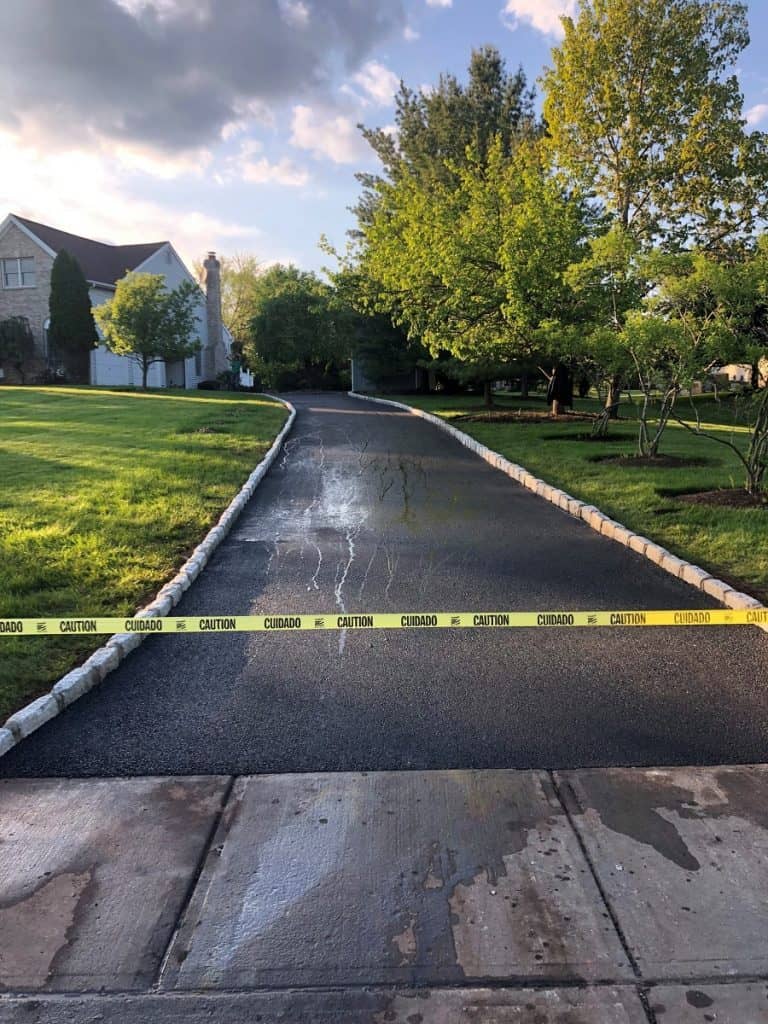
Labor makes up the biggest chunk of your stamped concrete driveway cost. Skilled crews need to pour, stamp, wash, color, and seal the surface before the concrete sets. Timing is everything. Too early and the stamps sink too deep. Too late and the pattern won’t take. That expertise costs $9-16 per square foot depending on design complexity.
Base preparation comes next. Your driveway needs 4-6 inches of compacted gravel underneath to handle Sussex County’s freeze-thaw cycles. Contractors who skip this step offer lower prices but you’ll pay for it later when cracks appear. Proper excavation, grading for drainage, and base compaction add $2-4 per square foot but prevent the expensive failures that plague cheap installations.
Materials vary in cost based on quality. Portland cement mixes designed for freeze-thaw resistance cost more than basic concrete. Rebar reinforcement adds $1-3 per square foot but significantly extends lifespan. Color hardeners, release agents, and professional-grade sealers all impact the final number. You’re not just buying concrete. You’re buying a system designed to last 25-30 years in New Jersey’s climate.
Site conditions change everything. If you’re replacing an old driveway, removal and disposal add $1-6 per square foot depending on thickness and material. Poor drainage requiring French drains or additional grading increases costs. Limited access that prevents concrete trucks from getting close means pump trucks and higher labor costs. Slopes, curves, and non-standard shapes all require more time and skill.
Stamped Concrete vs Standard Concrete Cost Comparison
Standard gray concrete with a broom finish runs $5-12 per square foot in Sussex County. That’s $3,200-7,680 for a 640-square-foot driveway compared to $7,680-11,520 for stamped. You’re paying roughly $4,000-5,000 more for the decorative finish.
What does that premium buy you? Visual appeal that mimics materials costing two to three times more. A stamped concrete driveway that looks like natural stone costs half what actual stone costs. Curb appeal that contributes to resale value. And a surface that stands out instead of blending into every other gray driveway on the block.
The long-term cost equation favors stamped concrete over some alternatives. Regular concrete lasts just as long but offers zero design flexibility. If you want anything beyond basic gray, you’re adding color or staining anyway, which narrows the price gap. Stamped concrete gives you the aesthetic upgrade in one installation instead of treating plain concrete as a temporary solution you’ll want to replace later.
Maintenance costs are nearly identical. Both require resealing every 2-3 years at $1-3 per square foot. Both can crack if improperly installed. The difference is that stamped concrete repairs are trickier because you need to match color and texture, while plain concrete repairs are straightforward but obvious. Neither has a clear maintenance advantage.
The decision comes down to what you value. If function matters more than form and you’re comfortable with basic gray, standard concrete makes sense. If your home’s exterior matters to you, if you’re planning to sell within 5-10 years, or if you simply want your driveway to look intentional rather than utilitarian, stamped concrete justifies the $4,000-5,000 premium.
Want live answers?
Connect with a Platinum Paving expert for fast, friendly support.
Brick Driveway Cost vs Stamped Concrete
Brick driveways run $10-20 per square foot for materials alone, then you’re paying installation labor on top. Total installed cost typically lands between $25-35 per square foot in Sussex County. That’s $16,000-22,400 for a standard two-car driveway compared to $7,680-11,520 for stamped concrete that mimics the brick look.
The price difference is substantial but so are the characteristics. Real brick offers authentic texture, individual units that can be replaced if damaged, and a classic appearance that some homeowners prefer. Stamped concrete gives you the brick pattern and similar color but as a continuous surface rather than individual units.
Installation complexity drives brick costs higher. Each brick gets laid by hand on a prepared base, requiring significantly more labor than pouring and stamping concrete. The process takes longer, skilled masons command premium rates, and the precision work justifies the higher price. Stamped concrete crews complete installations in days while brick can take weeks.
Long-Term Brick vs Stamped Concrete Costs
Maintenance tips the equation in different directions depending on your situation. Brick driveways can develop weed growth between pavers, require occasional releveling as individual bricks settle, and may need sand replacement in joints. These ongoing tasks add up over time but individual brick replacement is straightforward when damage occurs.
Stamped concrete eliminates weed growth entirely since it’s a solid surface. No individual units means nothing to reset or relevel. Resealing every 2-3 years is your main maintenance task. The tradeoff is that repairs are more complex. When stamped concrete cracks, matching the color and texture requires skill and the repair may remain visible.
Durability in Sussex County’s climate matters. Properly installed brick on a solid base handles freeze-thaw cycles well and can last 25-50 years. Stamped concrete with the right mix design and reinforcement lasts 25-30 years. Both perform adequately when installed correctly. The difference is that brick failures show up as individual units popping or settling while concrete failures appear as cracks.
The cost difference over a 25-year lifespan narrows but brick still runs higher. If you’re paying $16,000 for stamped concrete versus $25,000 for brick, that $9,000 difference buys a lot of resealing. Even factoring in maintenance, stamped concrete costs less over the life of your driveway. The question becomes whether authentic brick justifies paying more for similar performance.

When Brick Makes Sense Over Stamped Concrete
Brick driveways make sense in specific situations. Historic homes in Sussex County where authentic materials matter for architectural integrity benefit from real brick. If your home dates to the 1800s and you’re maintaining period-correct features, stamped concrete looks out of place no matter how good the pattern is.
Long-term property owners who value authenticity over cost savings may prefer brick. If you’re planning to stay 20-30 years and the initial investment doesn’t strain your budget, brick offers the real thing instead of an imitation. Some homeowners simply prefer knowing they have actual brick rather than concrete stamped to look like brick.
Repair flexibility favors brick in certain scenarios. If you have heavy equipment, delivery trucks, or unusual wear patterns that might damage specific areas, replacing individual bricks is easier than patching stamped concrete. You can keep spare bricks on hand for quick repairs without calling a contractor.
But for most Sussex County homeowners, stamped concrete delivers 80-90% of brick’s visual appeal at 40-50% of the cost. Unless authenticity matters for specific reasons or your budget easily accommodates the premium, stamped concrete makes more financial sense while still achieving the aesthetic goal.
Cobblestone Driveway Cost Comparison
Cobblestone driveways represent the premium end of driveway materials. Real cobblestone costs $18-50 per square foot for materials, with installed costs typically running $20-50 per square foot depending on stone size and installation complexity. A standard 640-square-foot driveway runs $12,800-32,000, roughly double to triple the cost of stamped concrete.
The appeal is undeniable. Authentic cobblestone offers centuries-old aesthetic, unmatched durability, and a distinctive character that stamped concrete can’t fully replicate. Properly maintained cobblestone can last 75-100 years, far exceeding stamped concrete’s 25-30 year lifespan.
Installation requires specialized skill. Each cobblestone gets set individually on a carefully prepared base, creating the irregular but intentional pattern that defines cobblestone driveways. The labor-intensive process takes significantly longer than stamped concrete and requires masons experienced with traditional techniques.