Summary:
If you’ve owned an asphalt driveway, you already know the drill. Seal it every few years or watch it crumble. That routine becomes second nature.
Then you install concrete and suddenly nobody’s talking about sealing. Your installer might mention it as optional. Your neighbor with the 15-year-old concrete driveway never sealed once. So you start wondering if it’s even necessary.
Here’s what most people miss: concrete and asphalt play by completely different rules. What works for one can wreck the other. And in Sussex County, where freeze-thaw cycles hit 40+ times each winter, those differences matter more than you think.
Let’s clear up the confusion around concrete driveway sealing, what it actually protects against, and when it makes sense for your property.
Why Concrete Doesn't Require Sealing (But Probably Should Anyway)
Asphalt needs sealing to survive. The petroleum binders that hold it together break down under UV exposure and oxidize without protection. Skip sealing and you’re looking at brittleness, cracking, and eventual failure. It’s not optional.
Concrete works differently. The chemical reaction that hardens concrete creates a durable material that doesn’t rely on sealers for structural integrity. A well-installed concrete driveway can function for decades without ever seeing a drop of sealer.
But “can function” and “will look good” are two different things. Unsealed concrete in New Jersey faces constant attack from moisture, road salt, oil stains, and temperature swings. Each winter, water seeps into those microscopic pores, freezes, expands, and creates internal pressure that leads to surface damage and cracking. Sealing fills those pores and stops the cycle before it starts.
How Freeze-Thaw Cycles Destroy Unsealed Concrete in NJ
Water expands roughly 9% when it freezes. That might not sound like much until you realize it’s happening inside your concrete every time temperatures drop below 32°F and rise again the next day. That’s real force.
Sussex County sees this cycle repeat 40 or more times each winter. Water from rain, snow melt, or even morning dew seeps into concrete’s natural pores. When temperatures drop at night, that water freezes and pushes outward with enough force to crack rock. When it thaws, the water seeps deeper into the newly created spaces. Then it freezes again. And again.
Early on, you won’t see anything. The damage happens internally, quietly weakening the concrete from within. After a few seasons, you’ll notice hairline cracks. Give it a few more years and those cracks widen, the surface starts flaking (called spalling), and sections may even heave or settle unevenly.
Sealing concrete doesn’t make it waterproof, but it dramatically reduces how much moisture gets in. Penetrating sealers chemically react with the concrete to create a hydrophobic barrier just below the surface. Water beads up instead of soaking in. Film-forming sealers sit on top and shed water like a raincoat. Either way, you’re blocking the freeze-thaw cycle before it can do real damage.
The difference shows up most clearly after 10-15 years. Sealed driveways in northern New Jersey typically show minimal cracking and maintain their appearance. Unsealed driveways often need resurfacing or replacement by that point, especially if they weren’t installed with air-entrained concrete designed for freeze-thaw resistance.
Road salt makes everything worse. Sodium chloride doesn’t just melt ice—it chemically attacks concrete, breaking down the cement paste that binds everything together. Over time, this leads to surface pitting and accelerated deterioration. Sealing creates a barrier that prevents salt from penetrating and causing that chemical damage. In areas like Newton or Sparta where road crews hit driveways hard with salt all winter, that protection matters.
Concrete vs Asphalt: Different Materials, Different Sealing Rules
Asphalt sealcoating and concrete sealing serve similar goals but use completely different products and timelines. If you’re used to asphalt maintenance, here’s what changes with concrete.
Asphalt requires its first seal coat six months to a year after installation, then again every three to five years. The sealer is a coal tar or asphalt emulsion that restores the binder and creates a protective layer. Skip it and the asphalt oxidizes, turns gray and brittle, then cracks apart. You’ve probably seen it happen on neglected driveways.
Concrete doesn’t follow that schedule. You can seal fresh concrete immediately with a cure-and-seal product that helps it harden properly while providing initial protection. Or you can wait months or even years. The concrete won’t deteriorate from lack of sealing the way asphalt does.
That flexibility confuses people. They assume concrete doesn’t need sealing at all. But the real question isn’t “does it need it to survive,” it’s “do you want to prevent stains, cracking, and surface damage that will show up eventually?”
The products are different too. Asphalt sealers are thick, black coatings that completely change the surface appearance. Concrete sealers range from invisible penetrating formulas to glossy acrylics, depending on what you’re trying to achieve. Penetrating sealers leave the concrete looking natural—you’d never know they were applied except for water beading on the surface. Acrylic sealers add a sheen and can enhance color on decorative concrete.
Cost-wise, concrete sealing typically runs higher per square foot than asphalt sealcoating. Professional concrete sealing averages $1.25 to $1.50 per square foot, while asphalt sealcoating often comes in around $0.50 to $0.70 per square foot. But concrete also lasts longer between applications—usually three to five years for quality penetrating sealers compared to asphalt’s three-year cycle.
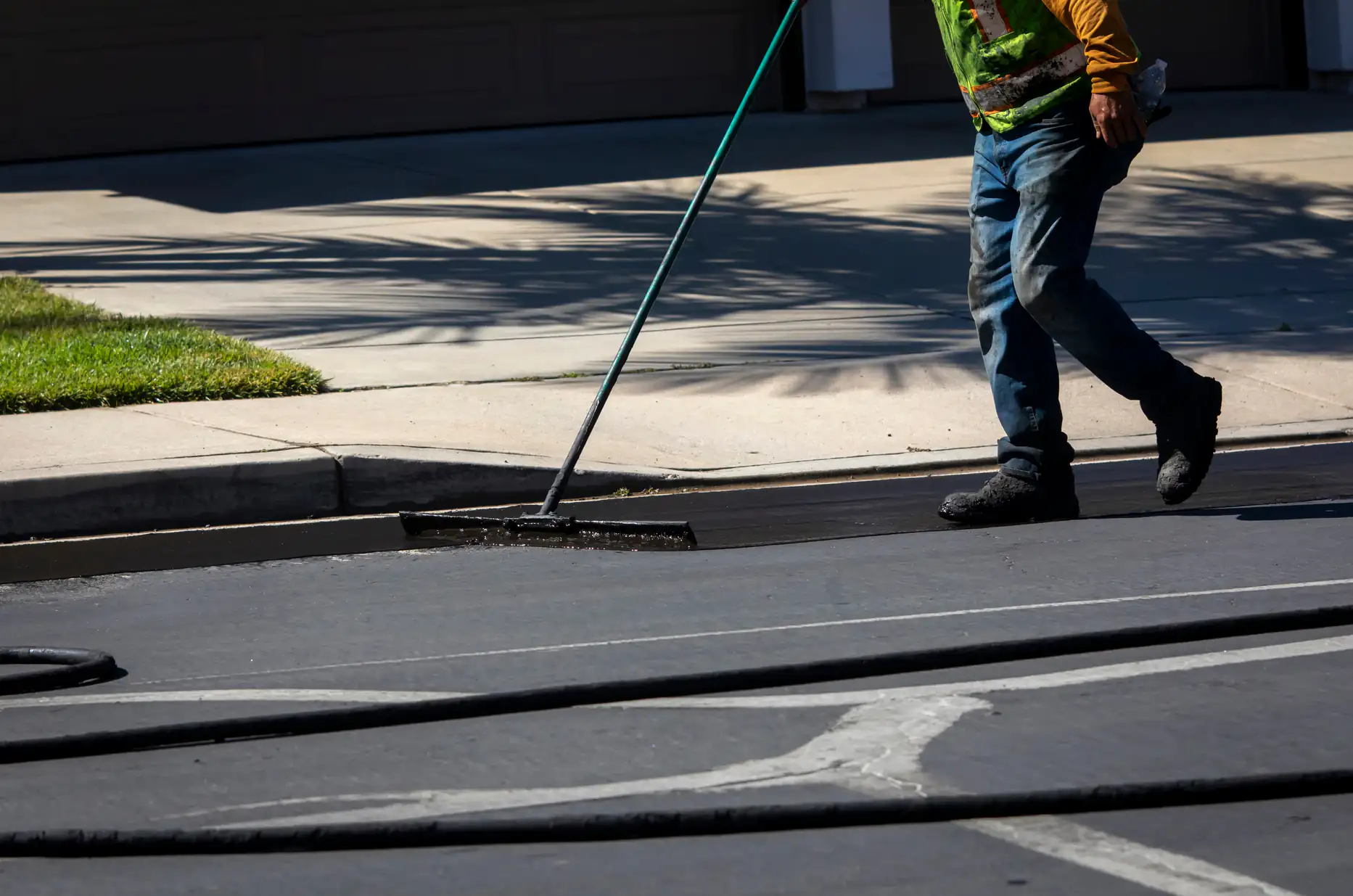
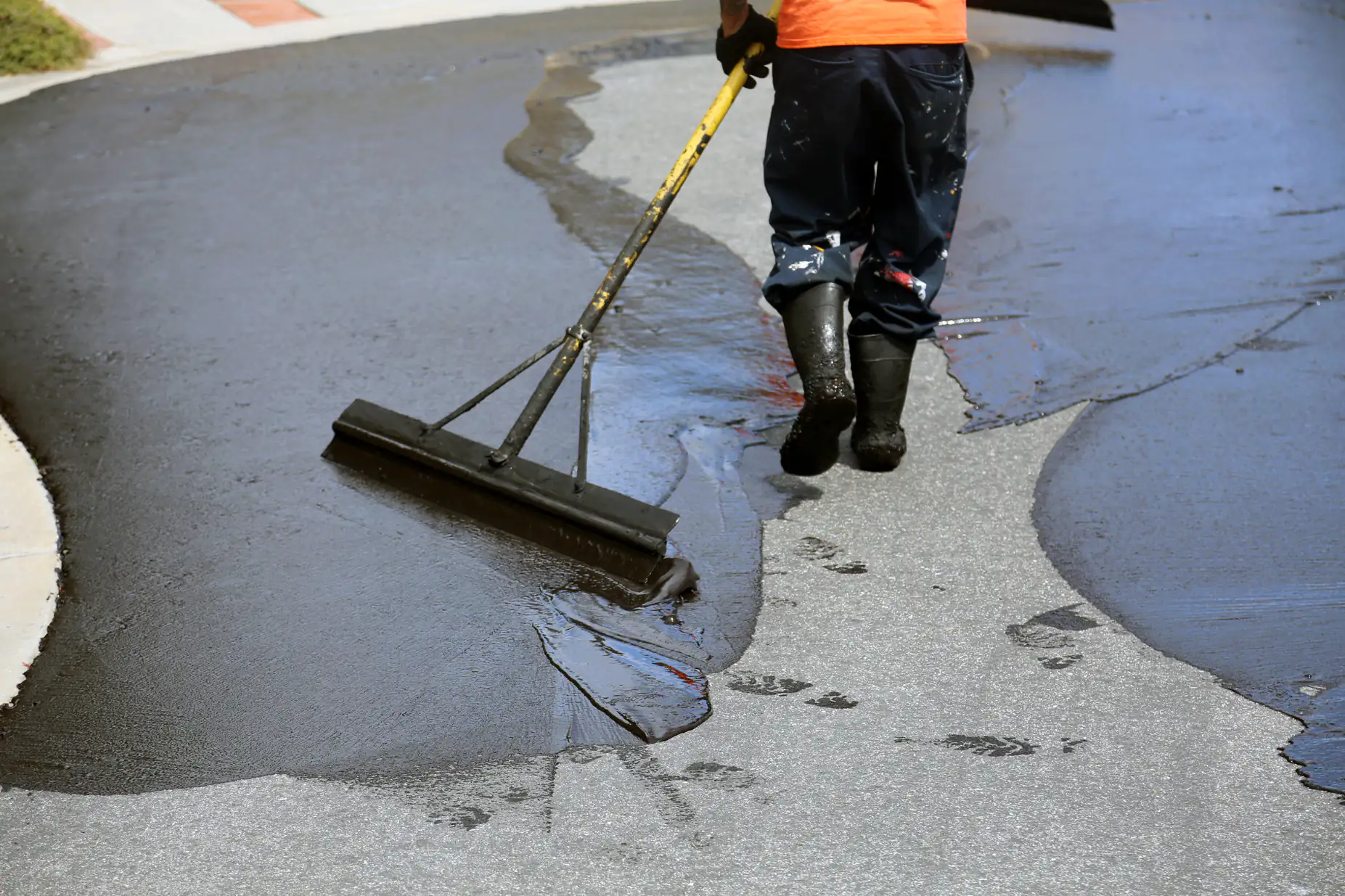
The application process differs significantly. Asphalt sealer goes on thick with a squeegee or spray rig and you’re off the driveway for a day or two. Concrete sealer soaks in or forms a thin film, and you can usually walk on it within hours, though full curing takes longer.
Understanding these differences matters because what works for asphalt won’t work for concrete. Using asphalt sealer on concrete accomplishes nothing—the chemistry is all wrong. Using the wrong concrete sealer for your climate or surface type can create problems like trapped moisture, slippery surfaces, or premature failure. That’s why knowing how to seal concrete driveway surfaces properly makes such a difference in results.
Want live answers?
Connect with a Platinum Paving expert for fast, friendly support.
Professional Concrete Driveway Crack Repair: When Sealing Isn't Enough
Sealing prevents future damage. It doesn’t fix existing cracks. If your concrete already shows signs of cracking, you need to address those issues before any sealer goes down. Think of it like painting over rot—it might look better temporarily, but the problem keeps getting worse underneath.
Hairline cracks under a quarter-inch wide can usually be filled with flexible polyurethane caulk. The key word is flexible. Rigid patching compounds crack again as the concrete naturally expands and contracts with temperature changes. Polyurethane moves with the concrete, staying sealed through freeze-thaw cycles.
Wider cracks, spalling, or sections that have settled need professional evaluation. Sometimes a repair works. Sometimes the base has failed and you’re looking at replacement. Sealing over structural problems just hides them temporarily while they get worse underneath.
What Professional Concrete Driveway Sealing Companies Actually Do
Professional concrete sealing starts with surface preparation, which matters more than most people realize. The concrete needs to be completely clean and dry. Any dirt, oil, previous sealer residue, or moisture will prevent proper adhesion or penetration. This step separates results that last from sealers that peel or fail within a year.
We typically pressure wash the entire surface, sometimes using specialized concrete cleaners to remove oil stains and efflorescence (those white mineral deposits that show up on concrete). Then we let it dry thoroughly, which can take 24 to 48 hours depending on weather and humidity. Rushing this step ruins everything that comes after.
Next comes product selection. A good contractor matches the sealer type to your specific situation. Penetrating silane or siloxane sealers work best for driveways in cold climates because they don’t change the surface appearance, they allow moisture vapor to escape, and they provide excellent protection against water and salt intrusion. These sealers chemically react with the concrete to create a barrier within the pores.
Acrylic sealers make sense for decorative concrete where you want to enhance color or add a sheen. They form a protective film on the surface. The downside is they can make surfaces slippery when wet and may need reapplication more frequently than penetrating sealers. Some contractors add grit to reduce slipperiness, but that changes the appearance.
Application methods vary. Penetrating sealers usually go on with a pump sprayer or roller. The goal is even coverage that soaks into the surface without pooling. Film-forming sealers like acrylics need careful application to avoid streaks, bubbles, or uneven gloss. Temperature and humidity during application affect how the sealer cures.
Professional crews know how to handle weather conditions, application rates, and curing times. We can spot potential problems like efflorescence that needs treating first or areas where the concrete is too dense to accept a penetrating sealer. We also use commercial-grade products that typically outperform consumer versions available at home improvement stores.
The cost for professional concrete sealing usually includes all materials, labor, and surface prep. For a standard 500-square-foot driveway, expect to pay $625 to $750. Larger driveways or those requiring extensive cleaning or crack repair will run higher. Compare that to $3,000 to $7,000 for driveway replacement and the math makes sense.
Most importantly, professionals understand local conditions. In Sussex County, that means knowing which sealers hold up to freeze-thaw cycles, how to time applications around weather, and what maintenance schedules make sense for northern New Jersey’s climate. Experience with Morris County’s clay soils or drainage challenges near Lake Hopatcong informs better decisions than generic product recommendations.
Choosing Between Concrete Driveway Sealing Contractors: What Actually Matters
Not all concrete sealing contractors deliver the same results. The difference usually comes down to product quality, surface preparation, and understanding what your specific driveway needs. Price matters, but it shouldn’t be the only factor.
Start by asking what sealer they plan to use and why. A contractor who can explain the difference between penetrating and film-forming sealers, discuss how different products handle freeze-thaw cycles, and recommend specific options based on your driveway’s age and condition knows what they’re doing. Someone who offers one generic “concrete sealer” without any discussion probably doesn’t.
Surface preparation separates professional results from amateur work. Ask how they clean the concrete before sealing. Pressure washing should be standard. Degreasing oil stains and addressing efflorescence should happen when needed. If they’re planning to spray sealer over a dirty driveway without prep, walk away. That job will fail.
Local experience matters in northern New Jersey. Contractors who’ve worked through multiple winters in Morris, Sussex, and Somerset Counties understand what happens to sealed and unsealed concrete in this climate. They know which products actually hold up and which ones fail after one winter. They’ve seen what works and what’s just marketing.
Get specifics on resealing intervals. Quality penetrating sealers should last three to five years in this region. If someone’s telling you that you’ll need annual resealing, they’re either using inferior products or setting you up for unnecessary repeat business. Ask what warranty or guarantee comes with the work.
Ask about surface preparation for existing sealers. If your concrete was previously sealed and the old sealer is failing, it needs to be stripped before new sealer goes down. Applying new sealer over old failing sealer leads to bonding problems and premature failure. Proper contractors know this. Lazy ones skip it.
Finally, look for contractors who handle both concrete and asphalt. That material-agnostic expertise usually indicates broader knowledge. Someone who only does one material might push that material even when it’s not the best choice. Contractors who work with both tend to give more honest assessments about what your driveway actually needs.
We work across Morris, Sussex, and Somerset County with experience in both asphalt and concrete services. That comprehensive knowledge means recommendations based on what actually works for your property, not just what’s easiest to sell. When you’re dealing with North Jersey winters, that local expertise makes the difference between protection that lasts and money wasted on products that don’t hold up.
Making the Right Call on Concrete Driveway Sealing
Concrete doesn’t force your hand the way asphalt does. You can skip sealing and your driveway will still function. But function and longevity are different things, especially in Sussex County’s climate.
Sealing makes sense for most concrete driveways here. The freeze-thaw protection alone justifies the cost when you compare a few hundred dollars every few years against thousands for premature replacement. Add in stain resistance, easier maintenance, and better appearance, and the case gets stronger. It’s preventative maintenance that actually prevents something.
The key is doing it right. That means proper surface prep, the right sealer for your specific situation, and realistic expectations about resealing intervals. Whether you tackle it yourself or hire professionals depends on your comfort level and the condition of your concrete.
If your driveway is already showing cracks, spalling, or settling, get those issues evaluated before sealing. Sealer prevents future damage but doesn’t fix structural problems. For concrete in good condition, sealing is straightforward preventative maintenance that pays off over time. We handle concrete sealing, crack repair, and full installations across northern New Jersey with the local expertise that comes from years working in this climate.