Summary:
Why Parking Lot Planning Matters More Than You Think
Most parking lot failures don’t start with bad asphalt. They start with inadequate planning.
When you skip proper site assessment, ignore drainage design, or rush through layout decisions, you’re building problems into the foundation. Water finds its way underneath. Traffic patterns create congestion. ADA issues surface during inspections. What looked like a cost-saving shortcut becomes an expensive lesson in why paving project planning matters.
Morris County’s climate makes planning even more critical. Freezing winters and warm summers create expansion and contraction cycles that exploit every weakness in your pavement. Standing water that seems minor in July becomes a cracked, heaving mess by March. We don’t just pour asphalt. We design systems that account for local soil conditions, drainage challenges, and weather patterns that define this area.
Understanding Site Assessment and Base Preparation

Before any asphalt gets poured, someone needs to understand what’s underneath. Site assessment identifies soil conditions, existing drainage patterns, elevation changes, and potential problem areas that affect how your parking lot performs.
The sub-base is where most parking lot failures actually begin. This layer provides the stable foundation that supports everything above it. In Morris County, where clay-heavy soils retain moisture longer than sandy soils, proper base preparation becomes even more important. Moisture trapped in inadequate base material leads to settling, cracking, and premature failure when freeze-thaw cycles start working.
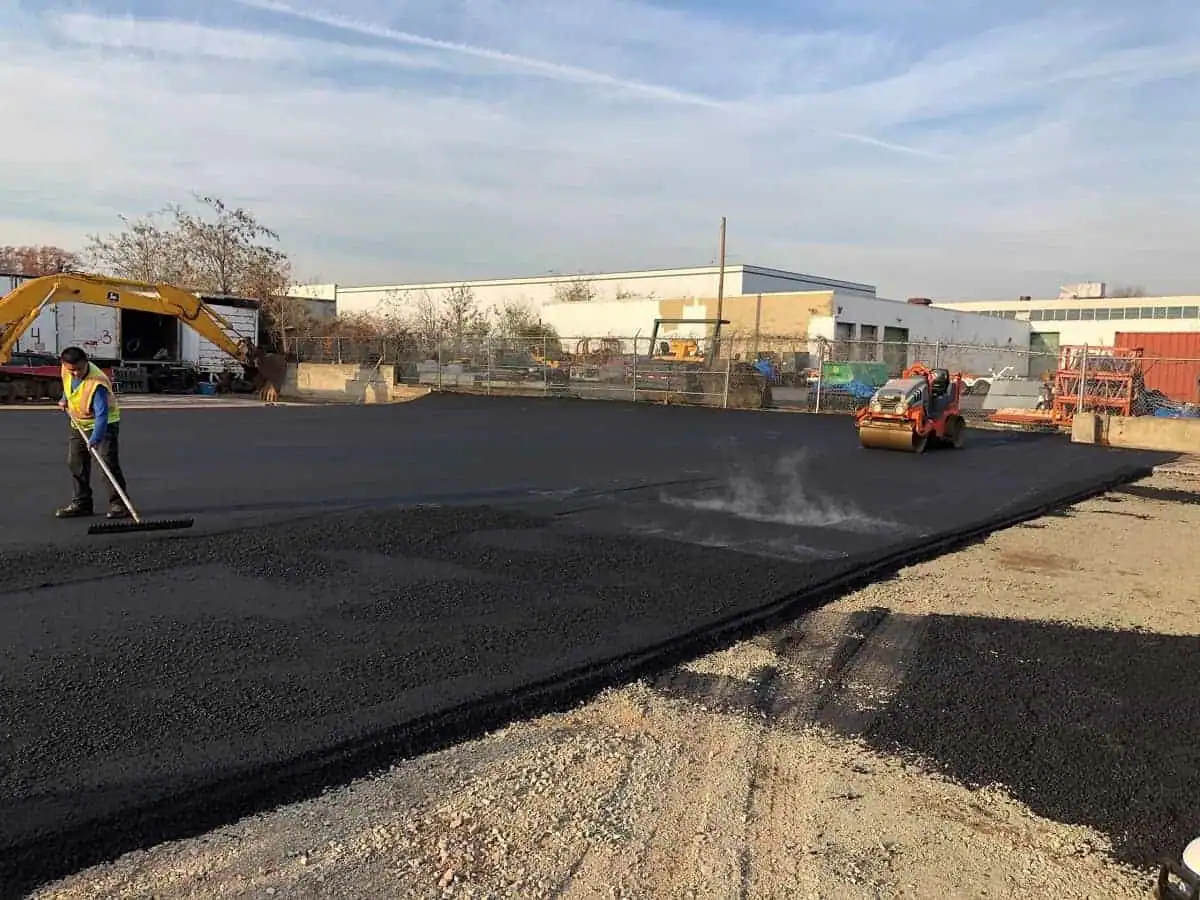
Proper base preparation involves excavation to the correct depth, installation of the right aggregate material, and compaction that creates a stable platform. Many contractors use a proof rolling process, driving a loaded dump truck across the entire prepared surface to identify soft spots before paving begins. If the base flexes more than an inch under that weight, it’s not ready to support asphalt. Finding that out before paving saves you from discovering it after, when the fix costs ten times more.
The thickness and composition of your base depends on expected traffic loads. A retail center with constant car traffic needs different specifications than an industrial facility with daily semi-truck deliveries. Office parking with lighter, less frequent traffic can work with thinner bases. Getting this wrong means either over-building and wasting money, or under-building and facing early failure. A contractor who asks about your traffic patterns is thinking about long-term performance, not just getting through installation.
Soil conditions vary even within Morris County. What works in Morristown might need adjustment in Parsippany. We work exclusively in this area and understand these variations, adjusting our approach accordingly. We know which areas tend to have drainage challenges, where soil tends to settle, and what specifications work for different parts of the county. That local knowledge prevents problems that out-of-area contractors don’t even know to look for.
Drainage Design: The Hidden Foundation of Parking Lot Longevity
Water is asphalt’s biggest enemy. Not just because standing water looks bad or creates puddles customers have to navigate. Because water that penetrates beneath the surface destroys the foundation, leading to cracks, potholes, and structural failure that requires complete reconstruction instead of simple resurfacing.
Proper drainage design starts during site grading, before any paving material arrives. The entire lot needs to be sloped to direct water toward designated collection points. Most commercial parking lots use a slope between one and two percent, enough to move water efficiently without creating a noticeable incline. Flat areas become water traps. Inconsistent slopes create confusion about where water should flow, leading to pooling in low spots that weren’t obvious during planning.
Catch basins serve as collection points for surface water, directing it into underground drainage pipes connected to municipal storm systems. These structures need to be positioned at natural low points and spaced appropriately for the lot size and expected rainfall. Too few catch basins means water can’t reach them before pooling. Poor placement means water flows past them toward areas where it causes problems. The grates covering these basins need to handle expected traffic loads while allowing water to enter freely. A catch basin blocked by debris becomes useless, which is why regular maintenance matters as much as proper initial installation.
Morris County sees significant rainfall, and winter brings freeze-thaw cycles that turn minor drainage issues into major structural problems. Water that pools on the surface seeps into small cracks. When temperatures drop, that water freezes and expands, widening cracks into larger fissures. Repeated cycles turn hairline cracks into interconnected damage that compromises entire sections of pavement. By spring, you’re looking at foundation reconstruction instead of simple crack sealing. Proper drainage prevents water from pooling in the first place, eliminating the source of freeze-thaw damage before it starts.
Some parking lots require additional drainage infrastructure beyond standard catch basins. Trench drains work well for areas that collect large volumes of water quickly, like entrances or low-lying sections. French drains help with subsurface water that would otherwise saturate the base material. The specific solution depends on site topography, soil permeability, and local rainfall patterns. A contractor who conducts proper site assessment identifies these needs during planning, not after problems emerge.
Drainage isn’t something you can fix easily after paving is complete. Retrofitting drainage into an existing lot requires cutting through asphalt, excavating, installing infrastructure, and patching. It’s expensive, disruptive, and never works as well as drainage designed into the project from the start. This is why drainage design matters during planning, not after you notice standing water six months post-installation.
Want live answers?
Connect with a Platinum Paving expert for fast, friendly support.
Commercial Parking Lot Design and Traffic Flow Planning
Layout decisions affect how your parking lot functions every day. Poor design creates congestion, confusion, and accidents. Smart commercial lot paving design makes navigation intuitive, maximizes usable space, and creates a better experience for everyone using your property.
Traffic flow starts with entry and exit points. Where vehicles enter and exit, how those points connect to surrounding streets, and whether traffic flows one-way or two-way through the lot all impact daily operation. Separate entry and exit lanes prevent bottlenecks during peak hours. Entry points positioned too close to street intersections create backup issues. Exit lanes that require left turns onto busy roads slow departure and cause internal traffic jams. These aren’t minor inconveniences. They affect how customers perceive your business and whether employees arrive frustrated before their day even starts.
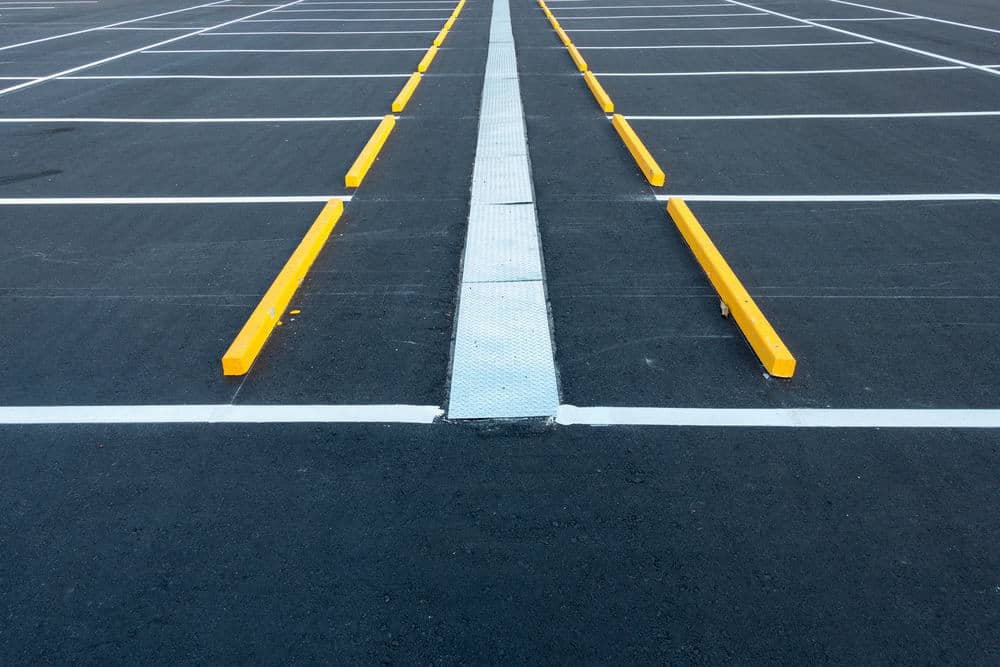
Parking space configuration involves choosing between perpendicular and angled parking. Ninety-degree spaces work best with two-way traffic and provide the most straightforward parking experience, but they require wider drive aisles. Angled parking at 45 or 60 degrees makes entry and exit easier and works well with one-way traffic flow, but it uses more linear space per vehicle. The right choice depends on your lot dimensions, expected traffic patterns, and how long vehicles typically stay parked. High-turnover lots like retail centers benefit from angled parking that speeds entry and exit. Lower-turnover lots like office buildings can use perpendicular parking that maximizes space efficiency.
ADA Compliance Requirements for Commercial Parking Lots
ADA compliance isn’t optional, and the penalties for non-compliance aren’t minor. Fines start at $75,000. Lawsuits happen. But beyond avoiding penalties, accessible parking opens your business to customers with disabilities, a demographic representing significant purchasing power that many businesses overlook.
The number of accessible spaces required depends on your total parking count. Lots with 1 to 25 spaces need one accessible space. As total spaces increase, the required number of accessible spaces increases proportionally. At least one of every six accessible spaces must be van accessible, with additional width to accommodate wheelchair lifts and ramps.
Accessible spaces must be located on the shortest accessible route to your building entrance. You can’t put them in the back corner of the lot and call it compliant. They need to be as close as possible to accessible entrances, and if your building has multiple accessible entrances, accessible parking should be dispersed to serve each entrance appropriately.
Each accessible space requires an access aisle adjacent to it, providing room for people using wheelchairs or other mobility devices to enter and exit vehicles. Standard accessible spaces need 60-inch wide access aisles. Van accessible spaces require either wider parking spaces or wider access aisles to accommodate larger vehicles and equipment. Two accessible spaces can share one access aisle if designed properly, which helps maximize space efficiency while maintaining compliance.
Slope requirements matter significantly for ADA compliance. Accessible parking spaces and access aisles must have a maximum slope of 1:48 in all directions. Steeper slopes make wheelchair maneuvering difficult or impossible. Over time, settling or wear can alter slope angles, which is why routine inspections matter. A space that was compliant at installation can become non-compliant if the pavement settles unevenly or if poor drainage creates standing water that changes effective slope.
Signage requirements specify that accessible spaces must have signs with the International Symbol of Accessibility mounted at least 60 inches above ground, measured to the bottom of the sign. Van accessible spaces need additional signage designating them as van accessible. These signs need to remain visible even when vehicles are parked in the spaces, which is why height requirements exist. Faded, damaged, or missing signage creates compliance issues even if the physical space meets all other requirements.
Long-Term Maintenance Planning and Cost Considerations
An asphalt parking lot installation doesn’t end when the last stripe gets painted. Long-term performance depends on maintenance decisions you make from day one, and understanding those costs helps you budget realistically for the total cost of ownership, not just initial installation.
Commercial asphalt paving typically costs between $2.75 and $5.50 per square foot for initial installation, though that range varies based on site complexity, drainage requirements, base preparation needs, and additional features like extensive striping or ADA upgrades. A 10,000 square foot lot might run anywhere from $27,500 to $55,000, but those numbers only tell part of the story. Sites with poor drainage, unstable soil, or complex layouts cost more because they require more extensive preparation and infrastructure.
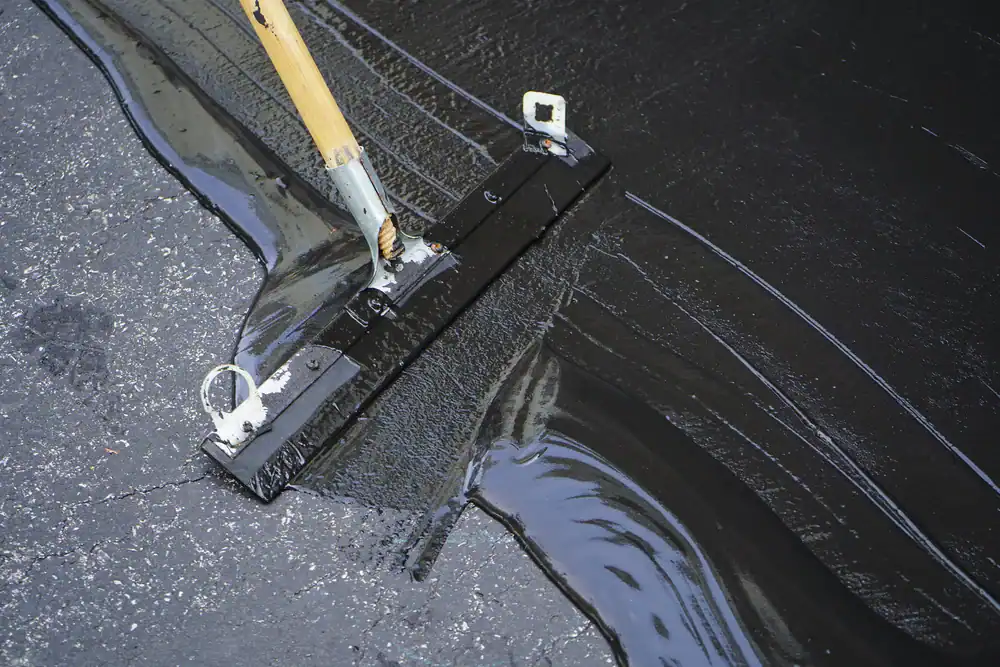
With proper maintenance, asphalt parking lots last 15 to 20 years before needing complete replacement. Sealcoating every three to five years protects the surface from oxidation, UV damage, and water penetration. Crack sealing prevents small cracks from becoming large problems. Timely repairs to potholes and damaged areas stop deterioration from spreading. Regular maintenance extends pavement life by three to five years, delaying the need for expensive repaving projects and maximizing your return on the initial investment.
Maintenance costs money, but deferred maintenance costs more. Unsealed cracks develop into potholes within a few years. Potholes require patching, which costs more than crack sealing would have cost. Extensive pothole damage eventually requires resurfacing or reconstruction, which costs exponentially more than routine maintenance. The math consistently favors preventive maintenance over reactive repairs.
Striping requires periodic renewal as traffic and weather fade markings. Fresh, clear striping improves safety, reduces confusion, and maintains a professional appearance. Faded markings create liability issues and make your property look neglected. Most lots need restriping every two to three years, depending on traffic volume and weather exposure. This is a relatively minor cost that delivers significant visual and functional impact.
Drainage maintenance often gets overlooked until problems emerge. Catch basins need periodic cleaning to remove debris that blocks water flow. Drainage pipes can become clogged with sediment over time. Standing water that appears after heavy rain often indicates drainage maintenance needs, not necessarily drainage design failure. Addressing these issues promptly prevents minor drainage problems from becoming major pavement damage.
Planning for maintenance from the beginning changes how you evaluate contractor proposals and project costs. A slightly higher initial investment in better materials, proper drainage, and quality installation pays for itself through reduced maintenance needs and extended lifespan. A cheaper installation that requires constant repairs and early replacement costs more over the lot’s lifetime than quality work that performs reliably for decades. Understanding this helps you evaluate proposals based on total cost of ownership, not just the lowest bid.
Making Smart Decisions for Your Morris County Parking Lot Project
Planning a parking lot paving project in Morris County, NJ involves more decisions than most property owners expect. Drainage design, traffic flow, ADA compliance, and long-term maintenance all affect how your lot performs and how long your investment lasts.
We understand Morris County’s specific challenges, from freeze-thaw cycles to clay-heavy soils, and we design systems that account for local conditions instead of applying generic solutions that work elsewhere but fail here. Proper paving project planning prevents the costly problems that turn new pavement into premature repairs.
If you’re ready to move forward with a commercial lot paving project in Morris County, Platinum Paving brings the local expertise and comprehensive approach that protects your investment and delivers reliable long-term performance.