Summary:
You watch your neighbor’s driveway stay dark and smooth year after year while yours fades to gray and develops cracks. Or worse—you paid someone to seal it last year and the coating is already peeling off in sheets. Something isn’t adding up.
Here’s what makes asphalt driveway sealing frustrating: done right, it protects your investment and extends pavement life by a decade or more. Done wrong, it wastes your money and can actually accelerate damage. Most homeowners seal at the wrong time, use products that fail in New Jersey’s climate, or skip the preparation that makes sealer bond to asphalt instead of sitting on top like paint.
You’ll learn what actually protects driveways in Sussex County, why timing determines whether sealing works or fails, and how to tell if your driveway needs sealing or something else entirely. Let’s start with what sealing actually does.
What Asphalt Driveway Sealing Actually Does
Sealing creates a protective barrier between your asphalt and everything trying to destroy it. Water, UV rays, oil, gasoline, and road salt all break down the petroleum binders that hold asphalt together. Without protection, those binders oxidize and evaporate, leaving brittle aggregate that cracks and crumbles.
Think of sealcoating like sunscreen for your driveway. It doesn’t replace the oils that have already baked out of the asphalt, but it dramatically slows future damage. The sealer fills surface pores, blocks water infiltration, and shields against UV degradation that turns black asphalt gray.
What sealing doesn’t do is fix structural problems. If your driveway has potholes, major cracks, or base failure, sealer just covers the symptoms temporarily. Water still gets underneath, freeze-thaw cycles still cause damage, and you’ve wasted money on a cosmetic fix that fails within months.
When New Asphalt Is Ready for Sealing
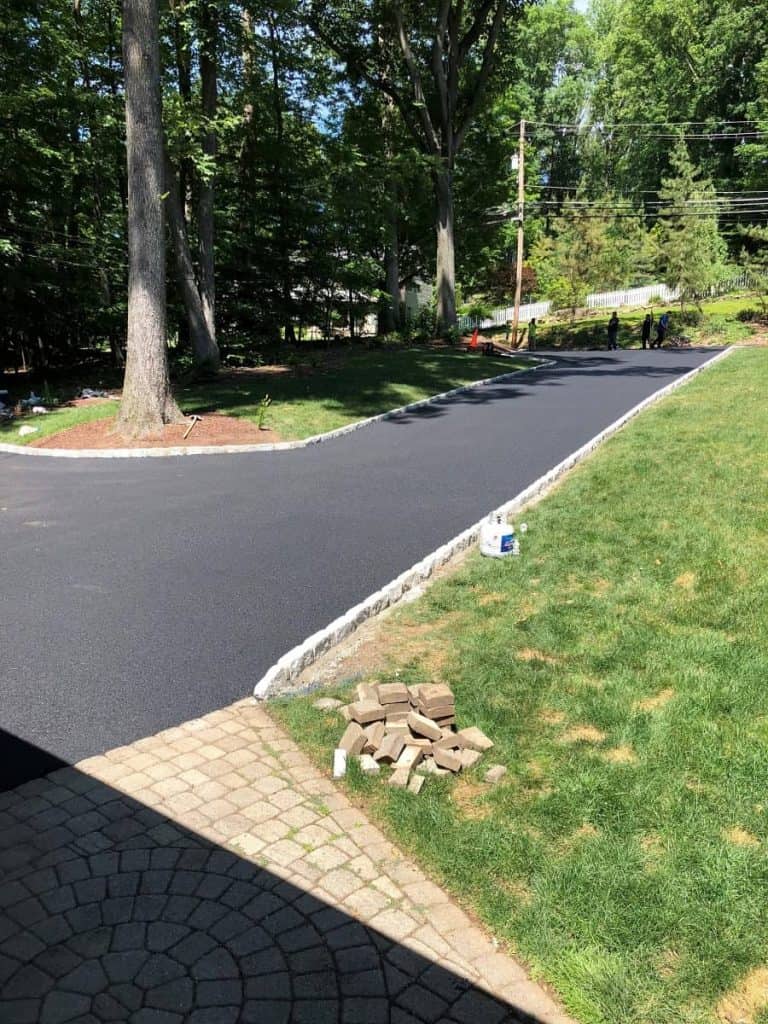
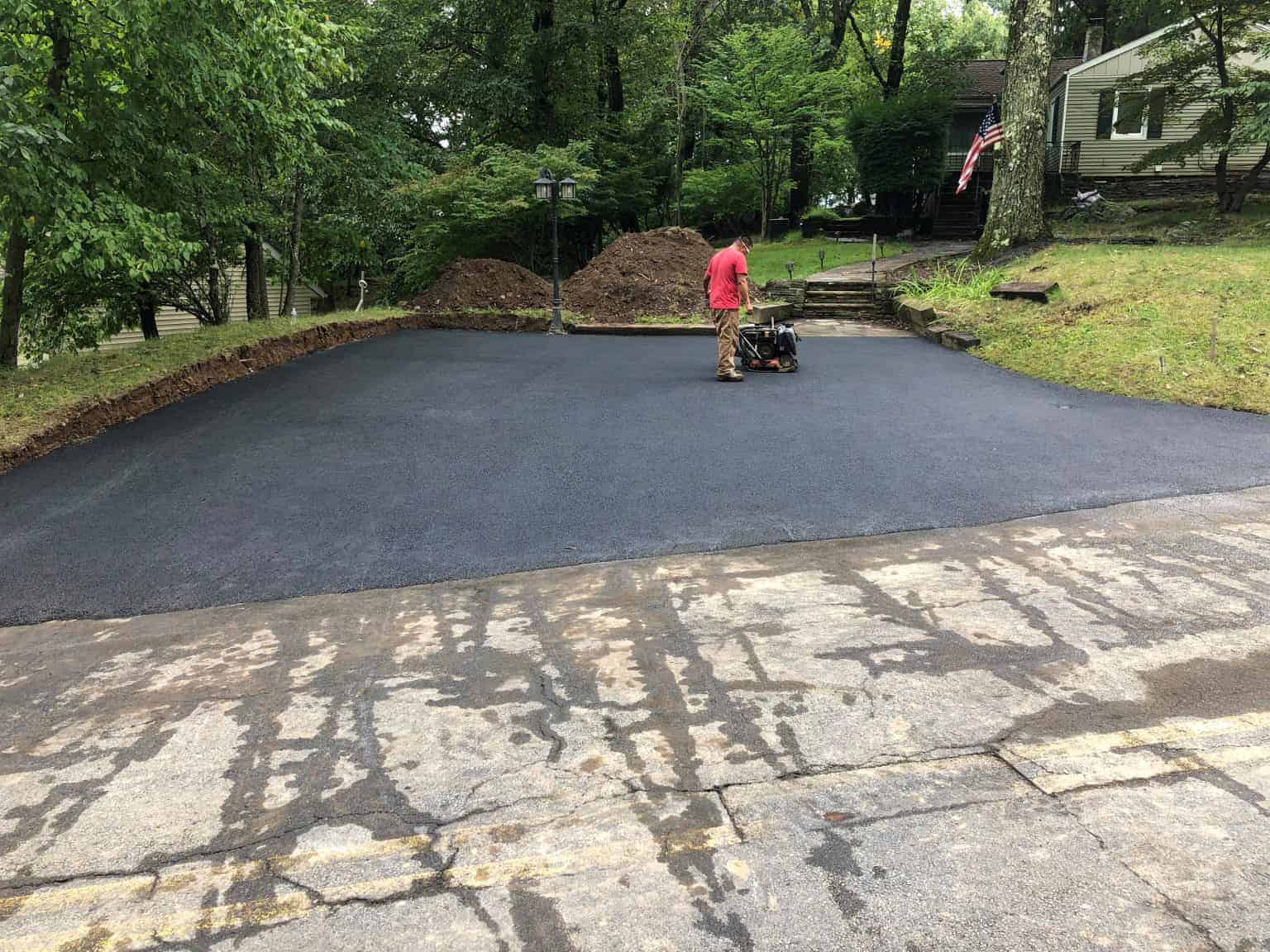
New asphalt needs time to cure before you seal it. Fresh pavement contains volatile oils that must evaporate through the surface. Seal too soon and you trap those oils, preventing proper hardening. The result is a soft, tacky surface that never fully cures, shows tire marks permanently, and causes premature sealer failure.
Wait at least six to twelve months after installation before the first seal coat. The exact timing depends on climate, asphalt thickness, and the mix your contractor used. In Sussex County, where temperature swings between summer heat and winter freezes are extreme, err on the side of waiting longer rather than sealing early.
You’ll know your asphalt is ready when the surface has lightened from deep black to a more muted color and feels firm underfoot. If the surface still feels slightly soft on hot days or you can make an impression with your thumbnail, wait longer. Sealing prematurely is one of the most common and expensive mistakes homeowners make—especially in areas like Newton, Sparta, and Hopatcong where contractors push early sealing to generate quick business.
During that first year, your driveway doesn’t need sealing—it needs protection from abuse. Avoid parking heavy vehicles in the same spot repeatedly. Clean up oil and gasoline spills immediately. Keep the surface clean of debris that can scratch or damage the curing asphalt.
Once that curing period passes, sealing becomes important. The oils in your asphalt are starting to oxidize. UV exposure accelerates the process. Water begins finding its way into microscopic cracks. This is when a proper seal coat provides real protection and extends your driveway’s functional life significantly.
Why DIY Sealing Usually Fails
Big box store sealers seem like an easy way to save money. Pour it on, spread it around, wait for it to dry. Except most DIY sealing jobs fail within a year, and homeowners can’t figure out why.
The products available to consumers are fundamentally different from commercial-grade sealers. Store-bought options often contain 40-50% water with lower-quality resins and minimal additives. They provide thin protection that breaks down quickly under traffic and weather exposure. Professional sealers contain higher solids content, UV stabilizers, and additives that extend durability dramatically—critical for surviving Sussex County winters.
Application technique matters more than most people realize. Too thick and the sealer cracks and peels. Too thin and it provides inadequate protection. DIY applicators often overapply in some areas while missing spots in others, creating an uneven finish that fails in patches. Getting consistent coverage requires experience and proper tools most homeowners don’t have.
Surface preparation is where most DIY jobs fail before they even start. Sealer won’t stick to dirt, oil, or loose debris. It needs a clean, dry surface to bond properly. Homeowners often skip the tedious cleaning process or don’t realize their driveway needs oil spot treatment and crack filling before sealing. They spread sealer over problems instead of fixing them first.
Weather timing trips up DIY projects constantly. Sealer needs temperatures between 50-90°F and no rain for at least 24 hours after application. In New Jersey, that weather window is narrower than you’d think. Apply sealer when it’s too cold and it won’t cure properly. Too hot and it flash-dries before bonding to the surface. Rain before it cures washes it away or creates a blotchy, failed finish.
Cure time is another common mistake. Most sealers need 24-48 hours to dry fully before you can drive on them. Homeowners get impatient, drive on partially cured sealer, and create permanent tire marks and damage. Professional contractors know how to read weather conditions and plan timing so the sealer cures completely before the driveway returns to service.
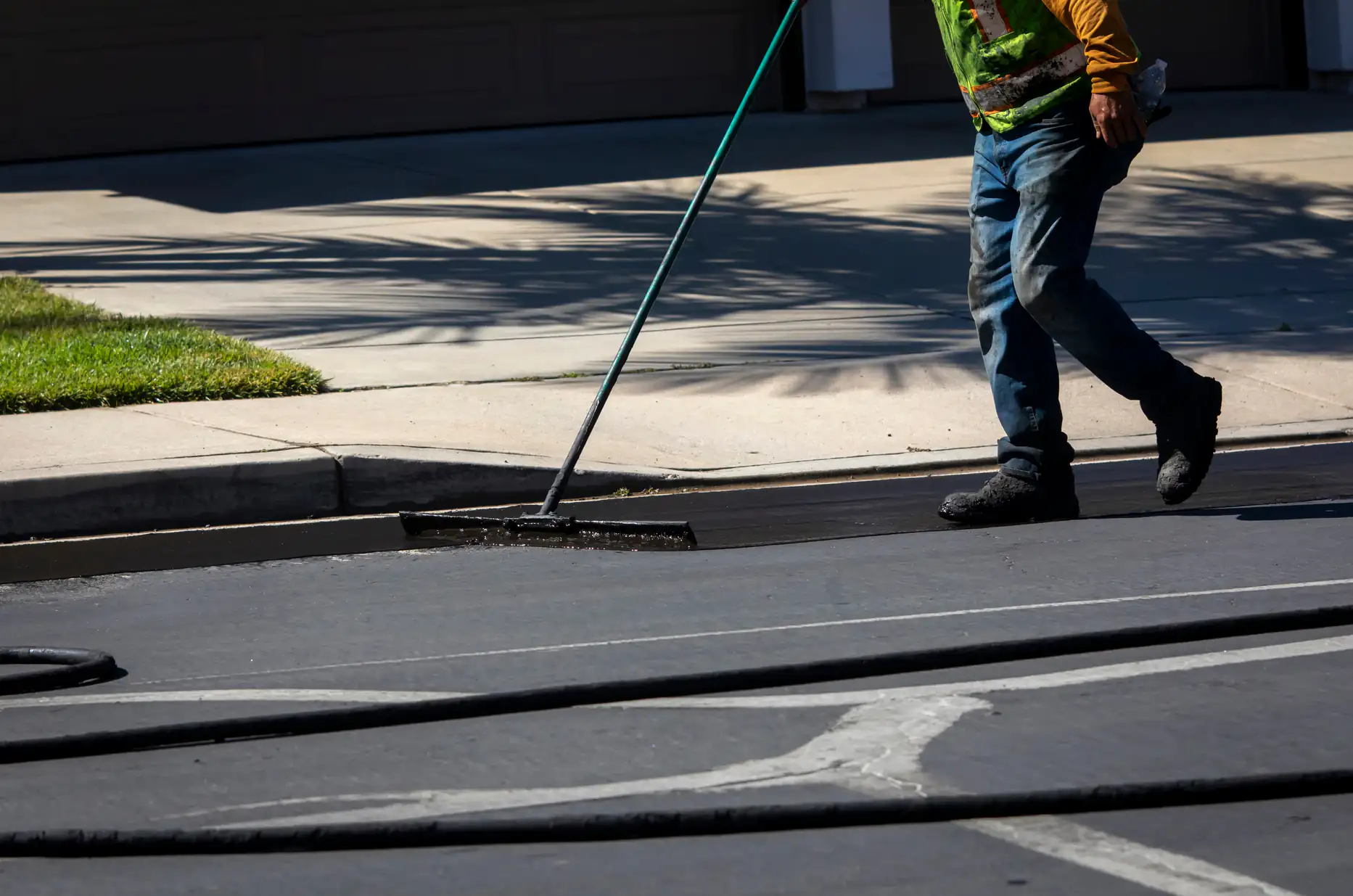
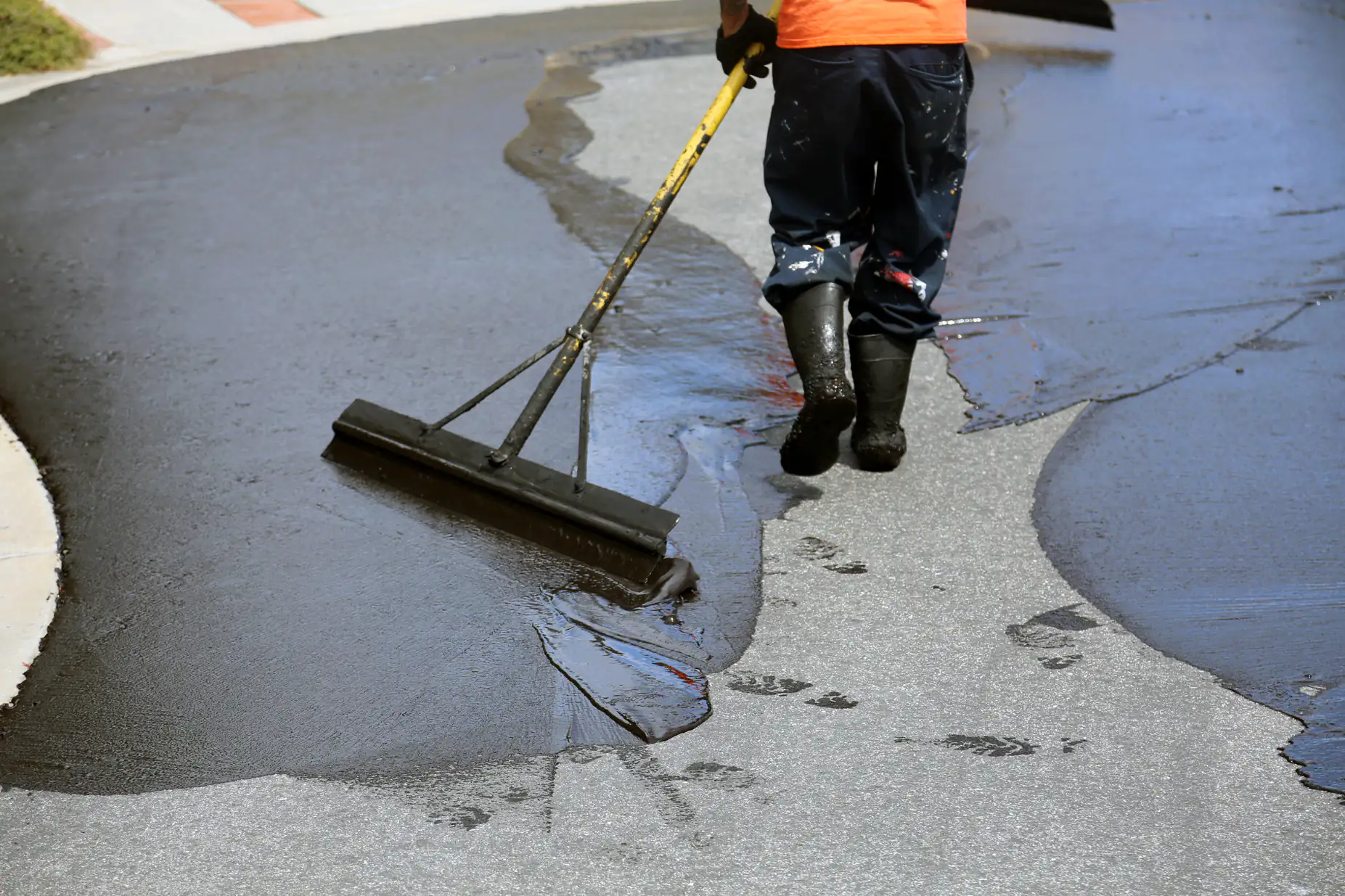
The tools matter too. Using a regular broom when the manufacturer specifies a squeegee causes application problems. Cheap brushes waste material, create streaks, and require considerably more effort without achieving proper coverage. Professional equipment applies sealer evenly at the right thickness, something consumer tools can’t match.
Want live answers?
Connect with a Platinum Paving expert for fast, friendly support.
Professional Driveway Sealing Process
Professional sealing starts with surface evaluation, not sealer application. A contractor who shows up and immediately starts spreading product is cutting corners. The first step is assessing whether your driveway actually needs sealing or if it requires repair work first.
Surface preparation takes longer than the actual sealing. We power wash the entire surface to remove dirt, debris, and contaminants. Oil spots get treated with primers designed to penetrate and seal petroleum residue. Cracks larger than a quarter-inch get filled with hot rubberized crack filler before any sealer touches the surface.
The driveway must be completely dry before sealing begins. Depending on weather and surface porosity, that can take 24-48 hours after washing. Applying sealer to a damp surface causes adhesion failure and premature breakdown. We check moisture levels and wait for proper conditions rather than rushing the job.
Materials and Application for Asphalt Sealing
Commercial-grade sealers contain additives that consumer products lack. Sand provides texture and slip resistance. Latex additives improve flexibility and adhesion. UV stabilizers protect against sun damage. These components make professional sealers last three to four years compared to one to two years for basic store products.
Proper mixing is critical. Sealers settle in containers, with solids sinking to the bottom and water rising to the top. Stirring with a stick doesn’t blend them adequately. We use mechanical mixers to achieve consistent material throughout, ensuring even protection across the entire surface.
Application method depends on the product and surface condition. Some sealers work best with squeegee application, others with spray equipment. The manufacturer’s specifications dictate which tool to use. Using the wrong applicator causes premature failure even with quality products.
Two thin coats outperform one thick coat every time. The first coat penetrates and seals the surface. After proper drying time, typically 8-24 hours depending on weather, the second coat provides the protective layer that handles traffic and weather exposure. This two-coat system is standard for professional work in areas with harsh winters like Sussex County.
Thickness matters. Too much sealer cracks and peels as it ages. Too little provides inadequate protection. Professional applicators know the right coverage rate—typically around 0.15-0.25 gallons per square yard depending on surface condition and product specifications. Consistent thickness across the entire surface ensures uniform protection and appearance.
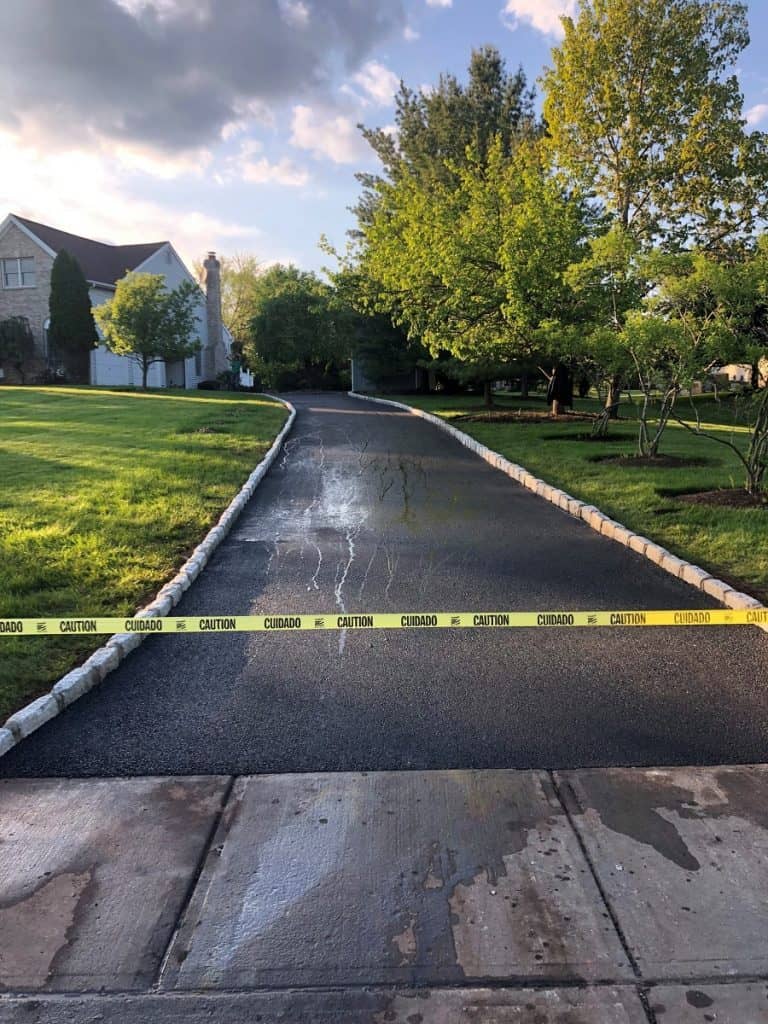
Edge work requires attention most DIYers skip. The driveway edges, transitions to concrete, and areas around garage doors need careful application to prevent sealer from spreading onto surfaces where it doesn’t belong. We tape off and protect adjacent surfaces, then apply sealer precisely where it’s needed.
Cost of Asphalt Sealing in Sussex County
Professional asphalt sealing in New Jersey typically costs $0.15-$0.40 per square foot. A standard two-car driveway of 400-600 square feet runs $200-500 for complete service including surface preparation, crack filling, and two-coat application. That price reflects New Jersey’s higher labor costs and the quality materials needed for local climate conditions.
Several factors affect the final cost. Driveway size obviously matters—larger surfaces cost more but often have a lower per-square-foot rate. Current condition plays a major role. If your driveway needs extensive crack repair, oil spot treatment, or significant cleaning, expect to pay more for the additional prep work. Accessibility affects pricing too. Driveways that are difficult to reach or have limited space for equipment setup may carry premium charges.
The quality of sealer impacts both price and longevity. Budget products cost less upfront but need reapplication more frequently. Premium sealers with higher solids content and better additives cost more initially but last longer and provide better protection. Over a decade of ownership, the premium product often costs less due to less frequent reapplication.
Timing affects availability and pricing. Spring and fall are peak seasons for sealing work in New Jersey. Contractors stay busy and may charge premium rates or have longer wait times. Summer can offer better availability, though extreme heat creates application challenges. Planning ahead and booking during slower periods can sometimes reduce costs.
DIY sealing costs $100-150 in materials for a typical driveway, but that apparent savings comes with significant risks. If the application fails due to improper technique, wrong products, or poor timing, you’ll pay to have the failed sealer removed and the job done correctly. That can cost more than hiring a professional initially. Factor in the time investment, physical labor, and potential for costly mistakes when comparing DIY to professional service.
Maintenance frequency affects long-term costs. Properly applied professional sealing lasts 3-4 years in Sussex County conditions. Over a 20-year period, that’s 5-6 applications. Budget sealing that needs redoing every 1-2 years requires 10-20 applications. The professional approach costs less over time while providing better protection.
Protecting Your Driveway Investment in Sussex County
Asphalt driveway sealing protects your investment when done correctly—and costs you money when done wrong. The difference comes down to timing, preparation, and using materials designed for New Jersey’s climate. Seal too soon and you trap oils that prevent curing. Skip surface prep and the sealer won’t stick. Use cheap products and you’ll be resealing within a year while watching your driveway deteriorate underneath.
Sussex County’s freeze-thaw cycles, road salt exposure, and temperature extremes demand professional-grade materials and proper application techniques. A well-maintained driveway can last 20+ years. A neglected one fails in half that time, costing thousands to replace instead of hundreds to maintain.
If your driveway needs sealing or you’re unsure whether sealing is the right solution, we can evaluate your surface and provide honest recommendations based on over 20 years serving Morris, Sussex, and Somerset Counties. Sometimes sealing isn’t the answer—you might need crack repair, resurfacing, or drainage improvements first. Getting the right solution from the start protects your investment and saves money long-term.