Summary:
What Actually Determines Driveway Paving Cost in Morris County
When you start getting estimates for driveway paving in Morris County, NJ, you’ll notice the numbers don’t line up. One contractor quotes $8,000. Another says $12,000. A third comes in at $6,500. Same driveway, same material, completely different prices.
The confusion isn’t random. Driveway paving costs depend on variables that aren’t always visible or explained upfront. Size matters, sure, but so does what’s happening underneath your current driveway, how water moves across your property, and whether your soil can actually support new asphalt without extra prep work. Some contractors include these essentials in their quote. Others don’t mention them until you’ve already signed.
Understanding these cost drivers before you talk to contractors puts you in control. You’ll know what questions to ask, what line items should appear in a legitimate estimate, and when someone’s either overcharging or planning to cut corners that’ll cost you more down the road.
How driveway size and layout affect your budget

Square footage is the most obvious cost factor, and it’s usually where homeowners start when budgeting for driveway paving. A standard two-car driveway in Morris County runs about 400 to 600 square feet. At typical rates of $7 to $15 per square foot installed, you’re looking at $2,800 to $9,000 just for materials and labor on a straightforward rectangular layout.
But size isn’t just length times width. The shape of your driveway changes the equation. Straight driveways cost less per square foot because crews can work efficiently with minimal waste. Curved driveways, circular turnarounds, or layouts with multiple angles require more precision, more cutting, and more time. That complexity adds 10% to 20% to your total cost compared to a simple straight run.
Access matters too. If your driveway sits on a steep slope, has tight turns, or requires equipment to navigate around mature trees or landscaping, expect additional charges. We need to account for the extra labor, slower work pace, and potential need for smaller equipment that can maneuver in tight spaces.
Then there’s thickness. Most residential driveways use 2 to 3 inches of compacted asphalt over a proper base. If you have heavier vehicles—RVs, work trucks, or frequent delivery traffic—you might need 3 to 4 inches. That extra inch doesn’t sound like much, but it increases material costs by 30% to 50% depending on your driveway’s size.
When you’re calculating your driveway paving budget, start with square footage but factor in layout complexity and any site-specific challenges. A 500-square-foot driveway with curves and a slope will cost more than a 500-square-foot straight driveway on level ground, even though they’re technically the same size.
Base preparation and why it's your biggest budget variable
Here’s what most homeowners don’t realize until it’s too late: the asphalt you see is only half the project. What’s underneath—the base—determines whether your driveway lasts 20 years or starts cracking in three.
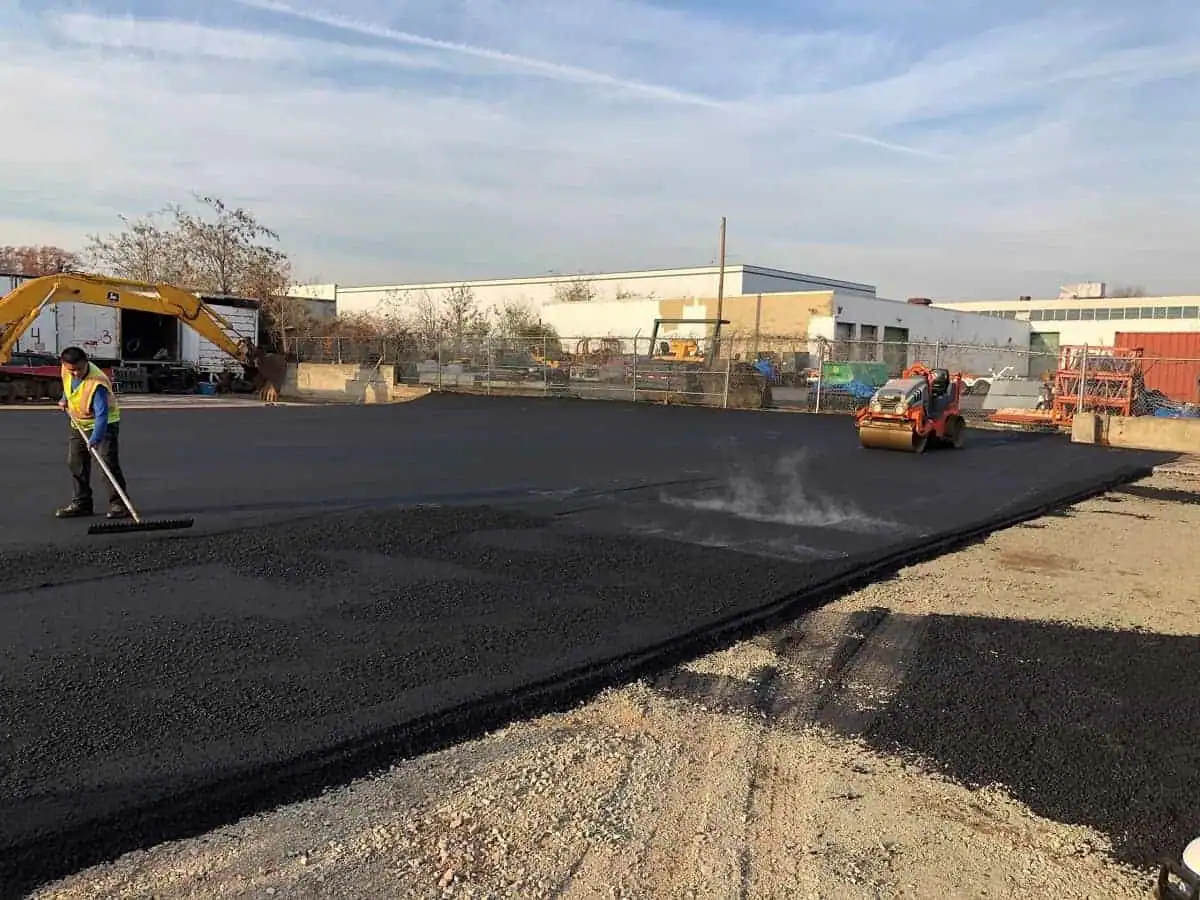
Base preparation involves removing your old driveway, grading the soil, and installing a compacted layer of crushed stone or gravel that supports the asphalt. This base layer should be 6 to 8 inches thick for residential driveways. If your soil is unstable—common in parts of Morris County with clay-heavy ground—you might need 8 to 10 inches, plus additional stabilization work.
Proper base prep isn’t cheap, but it’s not optional either. Contractors who skip this step or use inadequate materials can shave $2,000 to $4,000 off their estimate. Sounds great until your driveway starts settling, cracking, or developing low spots within a year or two. Fixing failed base work means tearing everything out and starting over—at full cost.
The base prep process includes several steps that affect your budget. First, the old driveway has to come out. Removal and disposal typically add $1 to $3 per square foot depending on what’s being removed and where it goes. Asphalt can usually be recycled, which costs less than hauling concrete to a landfill.
Next comes grading. Your driveway needs a slight slope—usually ¼ to ½ inch per foot—so water drains away from your house and garage. If your property doesn’t naturally slope the right direction, we need to adjust the grade, which means moving soil and potentially reworking the surrounding landscape. Grading work can add $500 to $2,000 depending on how much adjustment your site needs.
Then there’s compaction. The base material gets spread in layers and compacted with heavy equipment after each layer. Proper compaction prevents settling and creates a stable foundation that won’t shift under vehicle weight or freeze-thaw cycles. Contractors who rush this step or skip proper compaction are setting you up for problems.
Morris County’s freeze-thaw cycles make base preparation even more critical. Water that seeps into an improperly prepared base will freeze in winter, expand, and crack your asphalt from below. A weak base fails faster here than it would in milder climates. That’s why we emphasize base work—we’ve seen what happens when it’s done wrong.
When you’re reviewing driveway paving estimates, ask specifically about base preparation. How thick will the base be? What material are they using? How will they handle compaction? If a contractor can’t answer these questions or their estimate doesn’t break out base prep as a separate line item, that’s a red flag.
Want live answers?
Connect with a Platinum Paving expert for fast, friendly support.
Drainage and Grading Costs Most Homeowners Miss
Water is your driveway’s worst enemy, but most homeowners don’t think about drainage until they’re already dealing with problems. Pooling water, ice patches that won’t melt, or erosion along the edges all point to drainage issues that should have been addressed during installation.
Proper drainage planning happens before any asphalt gets laid. We need to assess where water currently flows, where it should flow, and what systems need to be installed to make that happen. This isn’t just about sloping the driveway—though that’s part of it. It’s about managing runoff from your roof, preventing water from undermining the base, and protecting your foundation from moisture damage.
Drainage work adds to your driveway paving budget, but it’s one of those costs that saves you money long-term. A driveway without proper drainage won’t last, period. You’ll spend more fixing water damage, foundation issues, and premature pavement failure than you would have spent getting drainage right the first time.
Understanding drainage solutions and their costs
Drainage solutions for driveways range from simple grading adjustments to installing full drainage systems. What your property needs depends on your soil type, how much water you’re dealing with, and where it’s coming from.
The most basic drainage solution is proper slope. Your driveway should pitch away from your house at a minimum of ¼ inch per foot. For a 20-foot driveway, that means the end near the street should be at least 5 inches lower than the end near your garage. Most contractors include basic grading in their base price, but if your property requires significant grade changes, expect additional costs.
Channel drains—also called trench drains—work well for driveways on slopes where water runs across the surface. These long, narrow drains sit at the low point of your driveway and catch water before it pools or flows toward your foundation. Channel drain installation typically costs $50 to $85 per linear foot including materials and labor. A 10-foot channel drain at the base of your driveway adds $500 to $850 to your project.
French drains handle subsurface water—the kind that seeps through the ground and undermines your base. These systems use perforated pipe buried in gravel to collect and redirect groundwater away from your driveway. French drains cost $30 to $50 per linear foot. If your property has drainage issues beyond what surface grading can fix, a French drain system might add $1,500 to $3,000 to your total budget.
Catch basins collect water at specific low points and direct it into underground pipes that carry it away from your property. These work well for driveways with significant water accumulation in one area. A catch basin system typically costs $400 to $1,200 depending on complexity and how far water needs to be piped.
Morris County’s clay-heavy soil in some areas makes drainage planning even more important. Clay doesn’t drain well, which means water sits longer and has more opportunity to damage your driveway’s base. Properties with clay soil often need more extensive drainage solutions than properties with sandy or loamy soil.
When you’re budgeting for driveway paving, ask contractors about your property’s specific drainage needs. Walk your current driveway with them after a heavy rain. Show them where water pools, where it flows, and any areas where the ground stays wet. A good contractor will assess these issues and include appropriate drainage solutions in their estimate.

What removal and site prep actually cost
Before new asphalt goes down, the old surface has to come out. Removal costs vary based on what’s being removed, how thick it is, and where the debris goes.
Asphalt removal typically costs $1 to $2 per square foot. For a 500-square-foot driveway, that’s $500 to $1,000 just for demo and haul-away. Asphalt can be recycled, which keeps disposal costs lower than other materials. Some contractors even use recycled asphalt millings as base material, which can reduce your overall project cost.
Concrete removal costs more—usually $2 to $3 per square foot—because it’s heavier, harder to break up, and more expensive to dispose of. A concrete driveway removal on a 500-square-foot area runs $1,000 to $1,500. If your old concrete is reinforced with rebar, removal costs go up another 20% to 30% because of the extra labor involved.
Site prep includes more than just removal. We need to clear vegetation, move any landscaping that’s in the way, and sometimes deal with tree roots that have grown under the old driveway. Root removal can add $200 to $800 depending on the extent of the problem.
If your property has utility lines running under or near the driveway, those need to be located and marked before any excavation starts. Most areas require contractors to call 811 for utility marking, which is free, but if lines need to be protected or temporarily relocated, that adds cost. Utility protection work typically runs $300 to $1,000 depending on complexity.
Access and disposal logistics affect removal costs too. If dump trucks can’t easily access your property, we might need to use smaller equipment and make more trips, which increases labor time and cost. If the nearest disposal facility is far from your property, hauling fees go up.
Some homeowners try to save money by removing their old driveway themselves. Unless you have access to heavy equipment and a way to dispose of several tons of broken asphalt or concrete, this usually isn’t practical. Professional removal is faster, safer, and ensures the site is properly prepared for the new base.
When you’re reviewing estimates, make sure removal and disposal are clearly itemized. If a quote seems unusually low, check whether removal is included or if it’s an additional charge that’ll come up later. Contractors who lowball the initial estimate sometimes leave out removal costs to make their number look better.
Planning Your Driveway Paving Budget in Morris County
Budgeting for driveway paving in Morris County comes down to understanding what you’re actually paying for and why those costs matter. Size and material are the starting point, but base preparation, drainage, grading, and site-specific challenges determine whether you’re getting a driveway that lasts or one that’ll need expensive repairs in a few years.
The contractors who quote the lowest aren’t necessarily giving you the best deal. They might be skipping base prep, using thinner asphalt, or leaving out drainage work that your property actually needs. The contractors who quote higher might be including all the work that ensures your driveway performs well for 15 to 20 years.
When you’re comparing estimates, look beyond the bottom line. Ask about base thickness, compaction methods, drainage solutions, and what’s included in removal and site prep. A detailed, itemized estimate from a contractor who takes time to assess your property’s specific needs is worth more than a quick quote that doesn’t account for the realities of your site.
If you’re ready to move forward with driveway paving in Morris County and want an estimate that reflects the actual scope of work your property needs, we can walk you through the process. You’ll get a clear breakdown of costs, honest answers about what your site requires, and work that’s done right the first time.