Summary:
Why Winter Asphalt Maintenance Matters in North New Jersey
North New Jersey gets hit harder by winter weather than most property owners realize. Our region experiences 40% more freeze-thaw cycles than Central/South Jersey, creating unique challenges for asphalt surfaces.
When water freezes it expands about ten percent and can exert up to 30,000 psi of pressure against your pavement. That’s enough force to turn hairline cracks into major structural problems overnight. You might leave your business on a Friday with temperature at 19°, noticing only cracks in asphalt, but by Monday potholes can appear overnight.
The financial impact hits fast. Freeze-thaw cycles can reduce asphalt lifespan by 20-30% without proper maintenance, turning what should be a 20-year investment into expensive repairs within a decade.
How Freeze-Thaw Cycles Damage Your Asphalt
Understanding the science behind winter damage helps you see why prevention matters so much. A freeze-thaw cycle occurs whenever temperature goes from above freezing to below freezing and back again – Northern New Jersey undergoes multiple of these each year.
Here’s what happens during each cycle. At above freezing temperature, rainwater and runoff from melting snow find their way into the smallest cracks. When temperature goes below 32 degrees this water begins to freeze and expand, exerting enough pressure to crack the surrounding asphalt and grow.
The damage compounds quickly. Water entering asphalt through cracks expands during the freeze phase, bursting apart the asphalt and widening and lengthening cracks. This reduces structural performance and eventually leads to potholes forming.
But surface damage is just the beginning. Water beneath the asphalt can freeze with the sub-grade. The result is frost heave which happens when water freezes and expands in larger chunks, forcing the asphalt above upward. When temperatures warm up, these chunks of ice melt, weakening the base layer and creating voids. Traffic then compresses these areas and potholes quickly appear.
The timing makes it worse. Effects of freeze-thaw are usually highest after a large snowstorm and following days of melting snow. As snow begins to melt, water seeps into any open cracks in pavement.
The Real Cost of Ignoring Winter Preparation
Skipping winter preparation doesn’t save money – it guarantees you’ll spend more later. The numbers tell the story clearly.
Studies show that crack sealing as part of preventative maintenance extends asphalt parking lot life by 10-15 years. Compare that to the alternative: Commercial asphalt paving in Northern NJ typically costs between $2.25 to $3.25 per square foot for milling and paving. For a typical 10,000 square foot parking lot, you’re looking at $22,500 to $32,500 for replacement.
The business impact extends beyond repair costs. A faded, cracked parking lot with multiple potholes may deter potential customers, leading to lost revenue. Cracks, potholes, and faded lines don’t just look unprofessional—they create liability issues and drive customers away.
Safety becomes a real concern too. For property managers and businesses, damaged pavement can reduce visual appeal and potentially lead to accidents for which you could be liable. Winter damage often appears suddenly, giving you little time to address hazards before someone gets hurt.
The maintenance window matters. The optimal paving season in Northern NJ runs from late April through early October, when temperatures consistently remain above 50°F. Prevention is always cheaper than emergency repairs.
Want live answers?
Connect with a Platinum Paving expert for fast, friendly support.
Essential Winter Maintenance Steps That Protect Your Investment
Smart winter preparation focuses on preventing water infiltration and managing the damage that’s already started. These aren’t complicated procedures, but timing and technique make all the difference.
The foundation of winter protection is crack sealing. Crack sealing prevents water from infiltrating down to the sub grade and prevents potholes. It’s an inexpensive repair that can be performed year round, working by keeping water out of the area between your asphalt and the subsurface.
Sealcoating provides the protective barrier your pavement needs. Sealcoating helps improve appearance and durability of pavement to extend its lifespan. It provides a waterproof barrier over asphalt surfaces to protect against potential damage caused by water, oxidation, weather conditions, and other factors.
Crack Sealing: Your First Line of Defense
Crack sealing stops small problems from becoming expensive disasters. Think of your asphalt like your teeth. When you start to get a small cavity you want to get it filled as soon as possible. Otherwise you’re facing an expensive root canal or much worse. Asphalt works the same way – cracks lead to larger and more costly repairs.
The process works by creating a waterproof seal. By sealing cracks early on, you effectively extend the lifespan of pavement by preventing additional water erosion that seeps into the asphalt. Crack filling is the first line of defense in protecting asphalt to reduce water infiltration.
Professional crack sealing uses proven methods. We thoroughly clean cracks with wire brooms and power blowers prior to application. Dust and loose debris get removed to provide superior adhesion of crack sealing material. Then we place hot rubberized material into existing cracks.
Not all cracks qualify for sealing. For a crack to be repaired, it must measure at least 3/8 of an inch wide and deep to hold repair material securely. Our estimators assess whether your cracks are suitable for this type of repair. Hot pour materials are designed for cracks up to 3/4″ typically found in asphalt. Larger cracks up to 1″ can still be sealed but products typically aren’t designed to stand up to these larger cracks.
Timing matters for maximum effectiveness. Annual spring inspections are recommended to catch and fill cracks that develop during winter. Regular maintenance helps prevent small cracks from becoming larger issues. Ideally, crack sealing should be part of annual maintenance efforts.
Sealcoating for Maximum Winter Protection
Sealcoating creates a protective barrier that shields your asphalt from winter’s worst effects. Sealcoating resists cracking from the freeze-thaw cycle, which causes expansion and contraction of underlying cracks that begin in the asphalt sub-base and work their way to the top of pavement. The sealer acts as an extra barrier of protection.
The benefits extend beyond crack prevention. Sealcoating protects and provides a shield to delay damage caused by the sun’s ultraviolet light which oxidizes asphalt, turning it grey. Sealcoating re-beautifies asphalt pavement from grey to a matte black finish.
Winter functionality improves with proper sealcoating. It’s easier to remove snow because the surface is smooth. Sweeping is also more effective when pavement is sealed. By keeping asphalt dark in color, it absorbs and retains heat. This heat helps melt snow and ice on pavement surface.
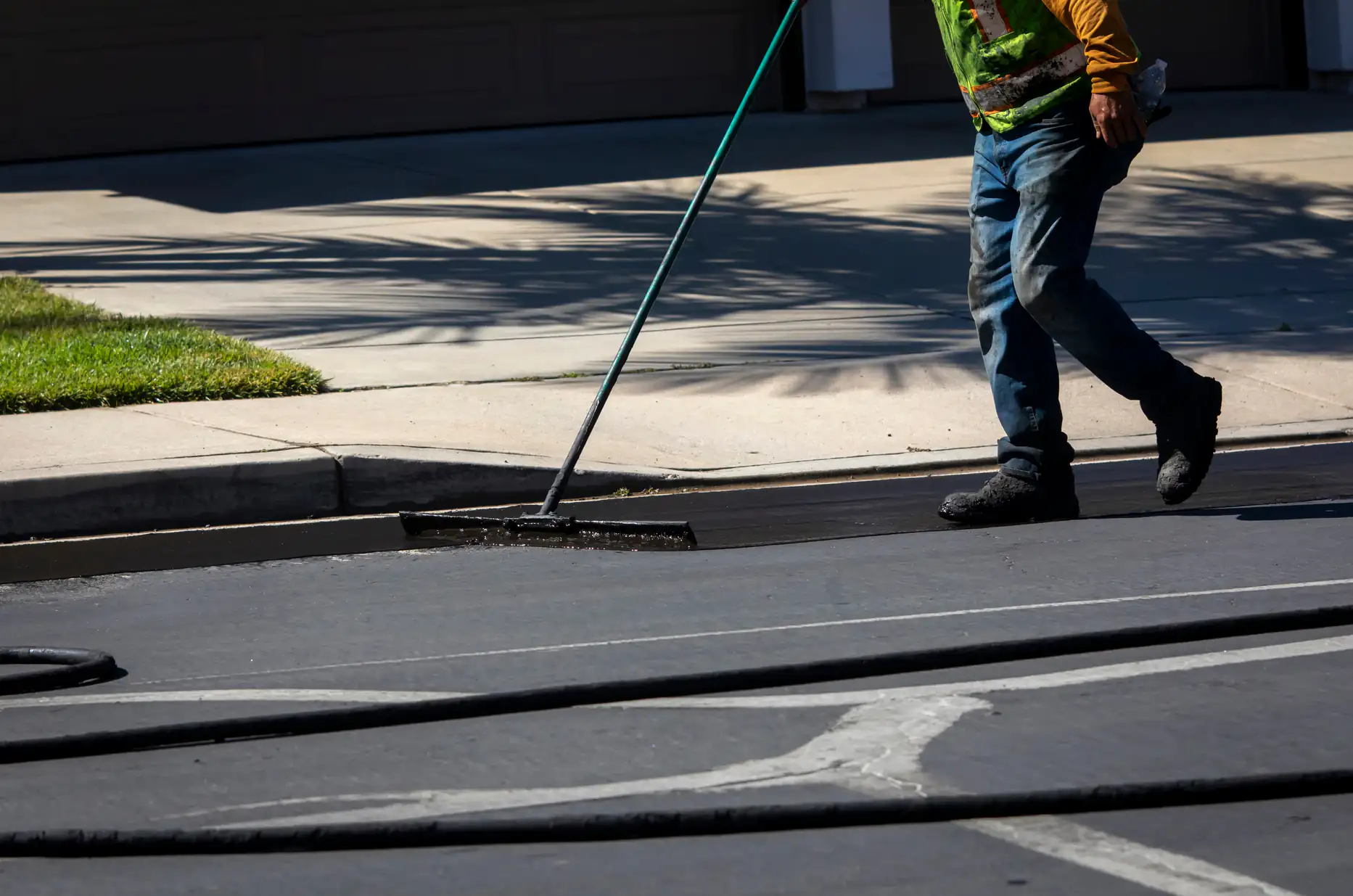
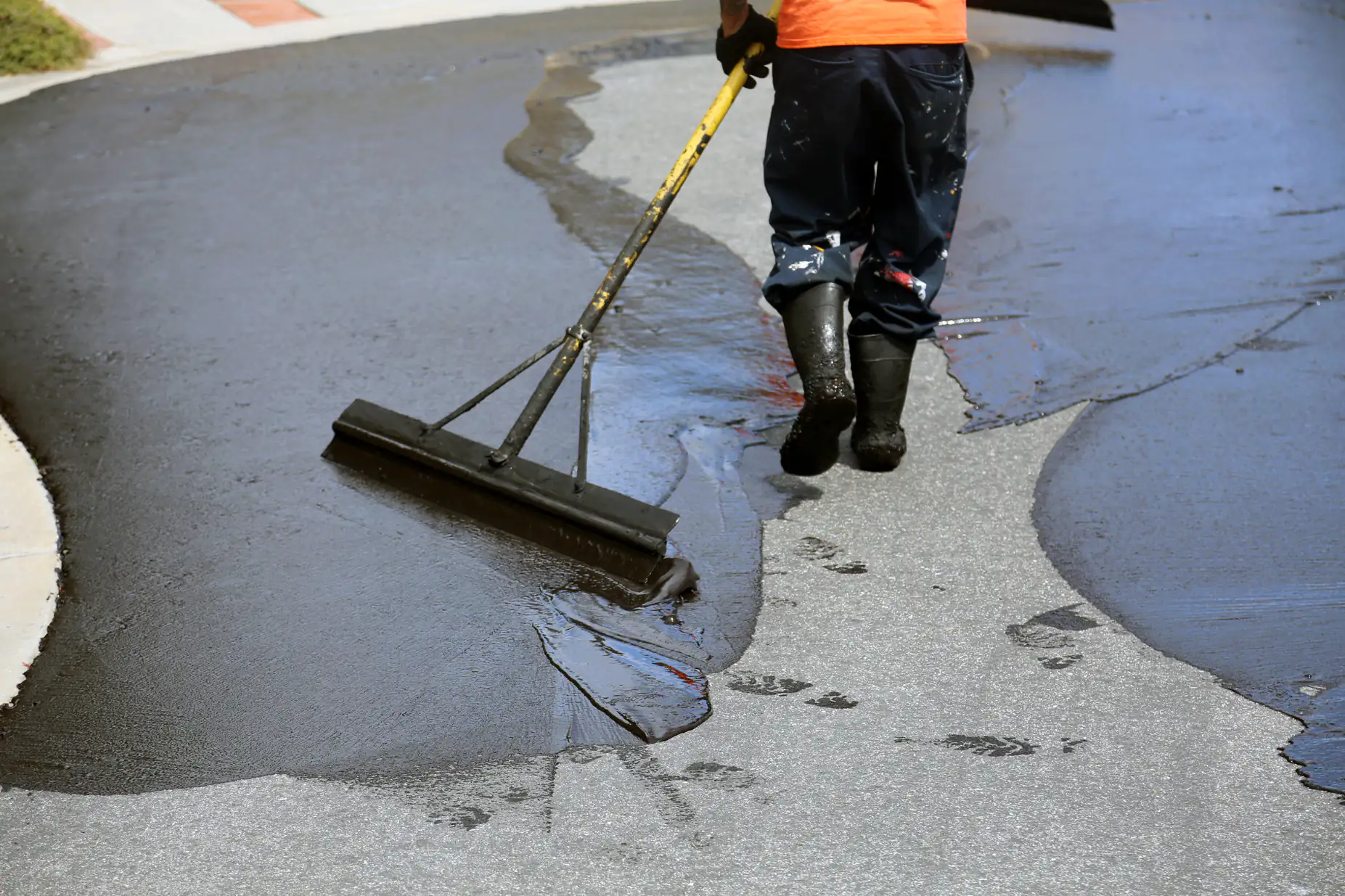
Professional application ensures lasting results. The process involves cleaning the surface to remove debris and repairing damaged areas like cracks and potholes. This ensures sealcoating applies properly. Areas that don’t require sealcoating get sealed off. Then we apply the sealcoat material and add a sealant layer on top to hold it together and provide a smooth surface. The thickness depends on unique project conditions.
Maintenance scheduling maximizes protection. Driveways should be crack filled and resealed every 2-3 years. Parking lots should be resealed every 3-5 years. Regular sealcoating every 2-3 years and prompt repairs can help achieve maximum longevity.
The application window is important. Asphalt sealcoating is best performed from April 15 till October 15th in New Jersey. Minimal recommended temperature at application and during curing period is 55 degrees Fahrenheit.
Protecting Your Business Investment This Winter
Winter asphalt maintenance isn’t optional in North New Jersey – it’s essential business protection. Our region experiences 40% more freeze-thaw cycles than Central/South Jersey, requires different asphalt mix designs for temperature extremes, and needs enhanced drainage systems.
The five essential steps – crack sealing, sealcoating, drainage maintenance, proper snow management, and regular inspections – work together to prevent the expensive spring surprises that catch unprepared property owners off guard. Studies prove that when crack sealing is completed as part of preventative maintenance, it extends asphalt parking lot life by 10-15 years.
Your parking lot represents a significant investment in your business success. Professional appearance builds trust before customers even walk through your door. Don’t let winter weather destroy what you’ve worked to build. Contact Platinum Paving to discuss your winter preparation strategy and protect your asphalt investment for years to come.