Summary:
Why Fall Rain Damages Asphalt Driveways in Essex County
Essex County’s recent flooding proves just how vulnerable your driveway really is. When storms dump several inches of rain in a few hours, water doesn’t just run off—it finds every weakness in your asphalt.
Standing water is your biggest enemy. It seeps into small cracks, weakens the base underneath, and sets you up for major problems when temperatures drop. What starts as a minor puddle becomes a pothole by spring.
The damage happens faster than you think. Poor drainage means water sits on your surface longer, penetrating deeper into the asphalt structure and compromising the foundation that keeps your driveway intact.
How Water Pooling Leads to Foundation Damage
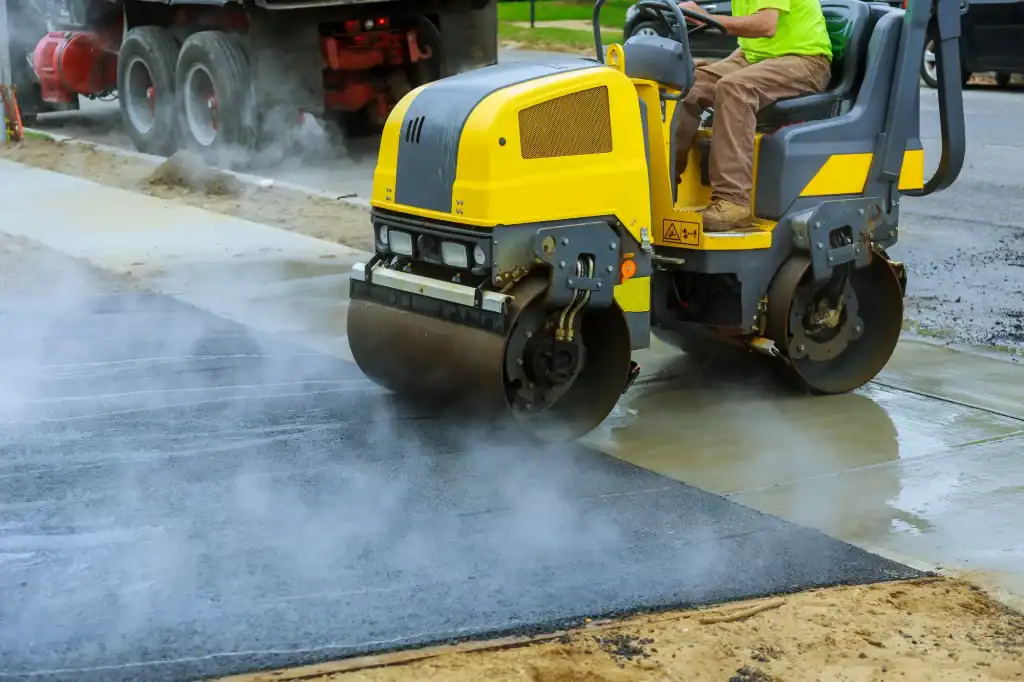
Water pooling isn’t just an inconvenience—it’s a direct threat to your driveway’s structural integrity. When water collects in low spots, it creates constant pressure against your asphalt surface, gradually breaking down the binder that holds everything together.
The real damage happens beneath the surface. Water that penetrates through cracks reaches the base layer, where it causes erosion and settlement. This weakening process accelerates during freeze-thaw cycles, when trapped water expands and contracts repeatedly.
Essex County’s clay-heavy soil makes this problem worse. The ground doesn’t drain well naturally, so water tends to accumulate around your driveway’s edges. This creates hydrostatic pressure that can actually lift sections of asphalt or cause them to sink into softened soil.
You’ll see the warning signs before major failure occurs. Look for areas where water consistently pools after rain, especially near the edges or in the center of your driveway. Small depressions that hold water for more than a few hours indicate drainage problems that need immediate attention.
The cost of ignoring these signs adds up quickly. What might be a few hundred dollars in drainage improvements today becomes thousands in reconstruction costs once the foundation fails. Insurance typically doesn’t cover gradual damage from poor maintenance, so you’re on your own for repairs.
The Freeze-Thaw Cycle That Destroys Driveways
New Jersey winters turn small drainage problems into major disasters through the freeze-thaw cycle. Water that seems harmless in October becomes a destructive force by January, expanding and contracting inside your asphalt with every temperature swing.
Here’s how the damage progresses: Water enters small cracks during fall rains, then freezes when temperatures drop below 32°F. Ice takes up about 9% more space than liquid water, creating tremendous pressure that widens existing cracks and creates new ones.
The cycle repeats dozens of times each winter. Every freeze creates more damage, and every thaw allows deeper water penetration. By spring, what started as hairline cracks have become potholes that require expensive patching or complete replacement.
Union County’s variable winter temperatures make this especially problematic. Unlike areas with consistent cold, we experience frequent freeze-thaw cycles that accelerate the deterioration process. Your driveway faces this destructive cycle from November through March.
Salt and de-icing chemicals make the problem worse. While they help with safety, these chemicals can penetrate asphalt and cause additional breakdown of the binding agents. They also lower the freezing point, which can actually increase the number of freeze-thaw cycles your driveway experiences.
The solution requires addressing drainage before winter arrives. Once the freeze-thaw cycle begins, you’re in damage control mode rather than prevention mode. That’s why fall preparation is so critical for long-term driveway health.
Want live answers?
Connect with a Platinum Paving expert for fast, friendly support.
Essential Drainage Solutions for NJ Driveways
Proper drainage isn’t optional in Essex and Union County—it’s essential for driveway survival. The key is moving water away from your asphalt surface as quickly as possible, preventing the pooling that leads to damage.
Grading creates the foundation for good drainage. Your driveway should slope away from your house and toward appropriate drainage areas. Even a slight grade of 1-2% makes a significant difference in water management.
Professional drainage systems handle what grading alone cannot. French drains, channel drains, and catch basins provide active water management for properties where natural drainage isn’t sufficient.
French Drains and Channel Systems for Problem Areas
French drains solve persistent water problems that simple grading cannot handle. These systems use perforated pipes surrounded by gravel to collect and redirect water away from your driveway, working even when the surface appears dry.
Installation involves digging a trench along problem areas, typically at the driveway’s edge or in low spots where water naturally collects. The trench gets filled with graded gravel and a perforated pipe that carries water to a safe discharge point away from your property.
The system works by providing an easy path for water to follow underground rather than pooling on your asphalt surface. Gravity pulls water into the gravel bed and through the pipe system, eliminating the standing water that causes damage.
Channel drains work differently but serve the same purpose. These long, narrow drains install directly into your driveway surface, capturing water at the source and directing it through underground pipes to drainage areas.
You’ll typically see channel drains at the bottom of sloped driveways or across areas where water naturally flows. They’re especially effective for driveways that receive runoff from roofs, lawns, or neighboring properties.
Both systems require proper installation to function correctly. The pipes must maintain proper slope toward the discharge point, and the discharge area must be able to handle the water volume during heavy storms. Poor installation can actually make drainage problems worse.
Catch Basins and Surface Water Management
Catch basins provide heavy-duty water management for driveways that handle significant runoff. These systems install at low points where water naturally collects, capturing large volumes quickly and directing them through underground pipes to storm drains or safe discharge areas.
The installation process requires excavating a substantial area and installing a concrete or plastic basin with a grated top. Underground pipes connect the basin to your drainage system, handling much larger water volumes than French drains or channel systems can manage.
Catch basins excel in situations where water comes from multiple directions. If your driveway receives runoff from your roof, yard, and neighboring properties, a catch basin can handle the combined flow that would overwhelm simpler drainage solutions.
Maintenance keeps these systems working properly. Leaves, debris, and sediment can clog the grate or fill the basin, reducing its effectiveness during heavy storms. Regular cleaning, especially before fall storms arrive, ensures maximum performance when you need it most.
The investment pays off during severe weather events. Essex County’s recent flooding demonstrated how quickly drainage systems can become overwhelmed. Properties with properly sized catch basins fared much better than those relying on surface drainage alone.
Location matters as much as size. Catch basins work best when positioned to intercept water before it reaches your driveway surface. This might mean installing them in your yard or along the driveway’s edge rather than in the center of the paved area.
Protecting Your Investment Before Winter Arrives
Your driveway faces months of challenging weather ahead, but you’re not helpless against the damage. The steps you take this fall determine whether you’ll be dealing with minor maintenance or major reconstruction come spring.
Start with an honest assessment of your current drainage situation. Look for areas where water pools, check for existing cracks, and identify spots where runoff consistently causes problems. These observations guide your preparation strategy.
Professional evaluation makes the difference between temporary fixes and permanent solutions. We can assess your specific situation and recommend drainage improvements that address your property’s unique challenges, ensuring your investment stays protected through New Jersey’s harsh winter conditions.