Summary:
You’ve probably heard both sides. Concrete is stronger. No, blacktop lasts longer. Concrete cracks in the cold. Asphalt softens in the heat. When you’re staring down a driveway replacement project in Sussex County, the conflicting advice doesn’t help much.
Here’s what actually matters: strength isn’t one-dimensional. Concrete wins on compressive strength—the ability to withstand crushing force. But blacktop wins on flexibility, and in North Jersey’s freeze-thaw cycles, that flexibility is what keeps your driveway intact year after year. This guide walks through the real performance differences, what each material handles well, and how to choose based on Sussex County’s specific climate challenges.
Understanding Blacktop Material and Installation Process
Blacktop and asphalt are terms most people use interchangeably, and for good reason—they’re made from the same core ingredients. Both combine crushed stone, sand, and bitumen (a petroleum-based binder) to create that dark, smooth surface you see on most driveways and roads.
The difference, when it exists, is subtle. Some manufacturers use slightly different ratios of stone to bitumen or heat the mixture to different temperatures during installation. Blacktop sometimes refers to mixes with higher stone content, heated to around 300°F versus standard asphalt’s 250°F. But functionally, when we talk about installing a blacktop driveway in Sussex County, we’re talking about hot mix asphalt (HMA) applied at the right temperature and compacted properly to create a dense, resilient surface.
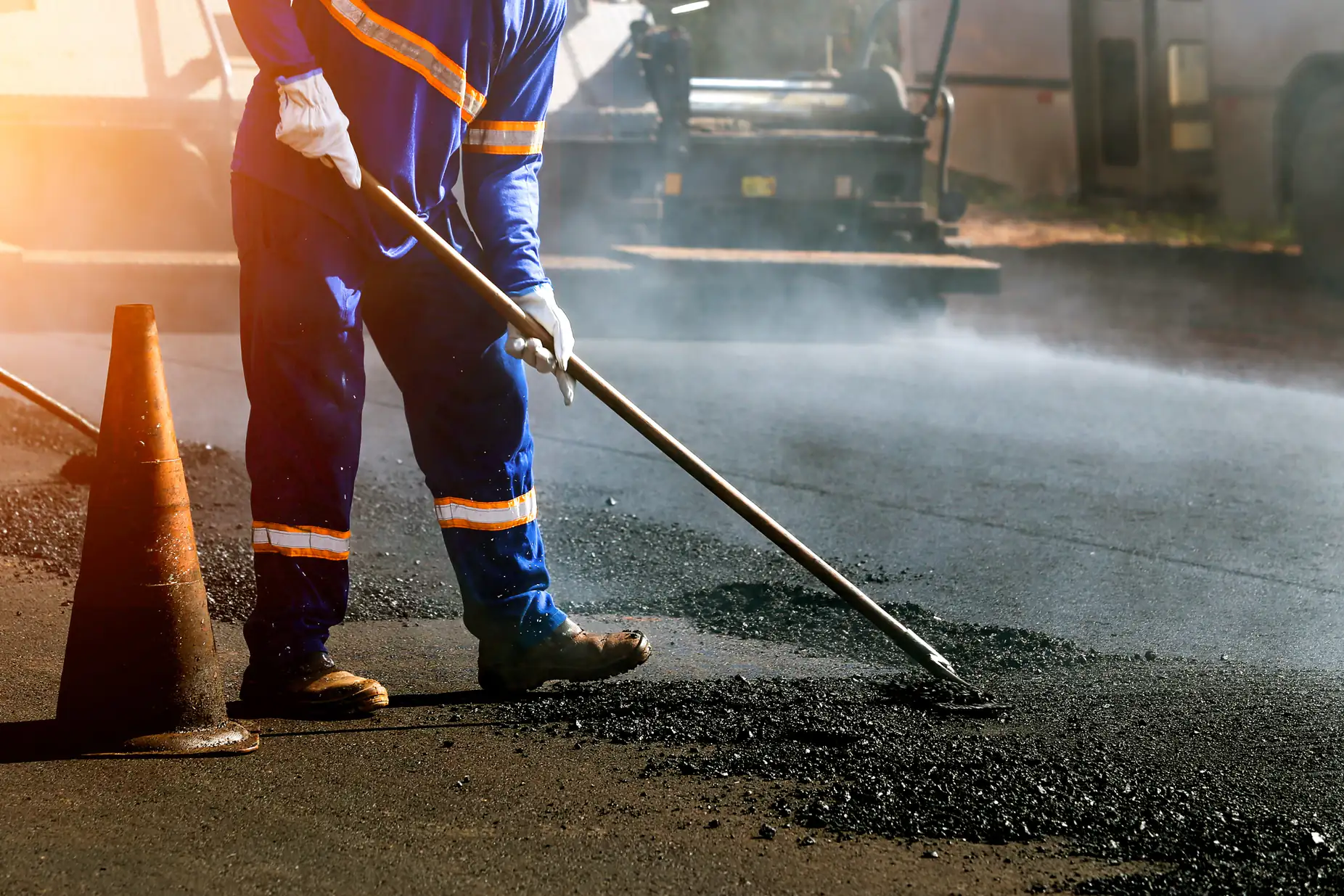
The installation process matters just as much as the material itself. A proper blacktop driveway starts with site preparation—clearing debris, grading for drainage, and compacting the subgrade. Then comes a crushed stone base, usually 4-8 inches deep depending on soil conditions and expected traffic. Finally, the hot asphalt mix gets spread evenly and compacted with a roller while still hot. Within 24 to 48 hours, you can drive on it. Compare that to concrete’s 7-day curing requirement, and you see why blacktop appeals to homeowners who need their driveway back in service quickly.
Is Asphalt Stronger Than Concrete in Compression
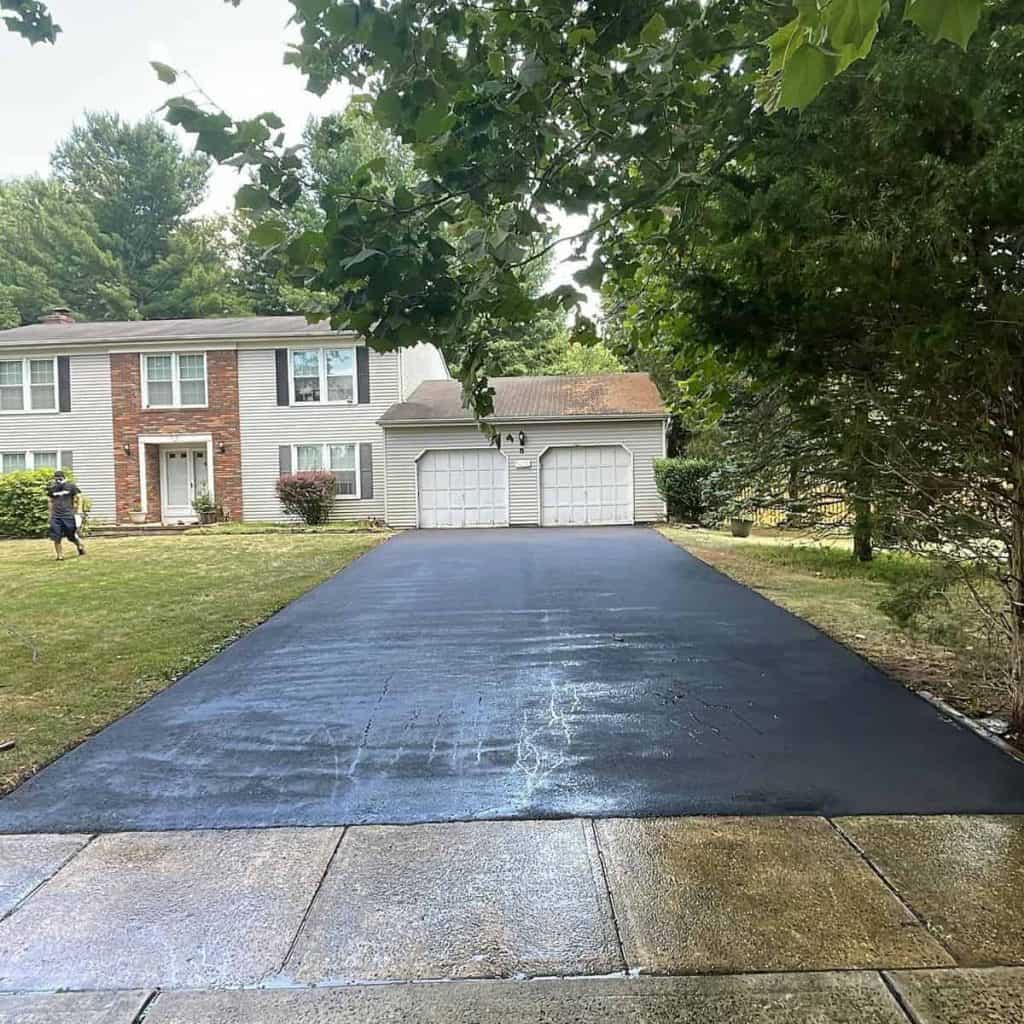
If you measure strength purely by compressive force—how much weight a material can support before crushing—concrete wins. Concrete can withstand about 6,000 pounds per square inch (PSI) of pressure, roughly double asphalt’s 3,000 PSI. This is why concrete gets used for building foundations, bridges, and structures that need to support massive loads without deforming.
But here’s the thing: your driveway isn’t a bridge foundation. The loads it handles—cars, SUVs, maybe a delivery truck—don’t come close to testing either material’s compressive limits when properly installed. A 6-inch concrete slab and a properly designed asphalt driveway with adequate base preparation will both handle typical residential traffic without issues.
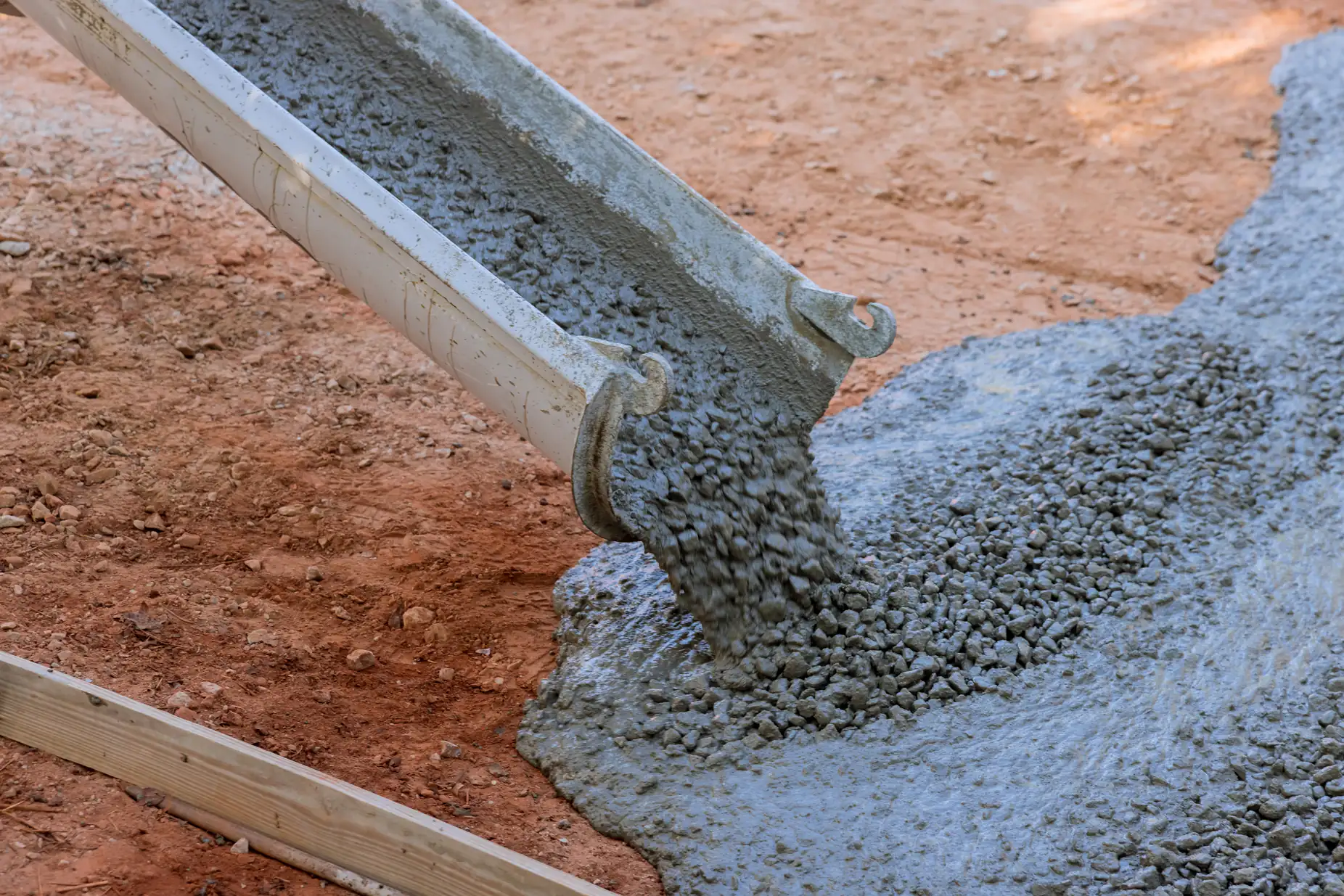
Where the difference shows up is in how each material responds to stress. Concrete is rigid. It resists deformation, which sounds good until you consider what happens when the ground beneath it shifts, settles, or heaves during freeze-thaw cycles. That rigidity becomes a liability. Concrete can’t flex, so it cracks. Once a crack forms, water gets in, freezes, expands, and makes the crack worse. The cycle accelerates.
Asphalt, by contrast, is flexible. It can bend slightly under load and return to its original shape. When the ground shifts or temperatures fluctuate, asphalt accommodates that movement instead of fracturing. This flexibility doesn’t mean asphalt is weaker—it means it’s engineered differently. Think of it like comparing a steel beam to a suspension bridge cable. The beam has higher compressive strength, but the cable’s flexibility lets it handle forces the beam can’t absorb.
In Sussex County, where freeze-thaw cycles are among the most severe in New Jersey, that flexibility matters more than raw compressive numbers. Clay soils—common throughout Morris, Sussex, and Somerset Counties—hold water and expand when frozen. Asphalt’s ability to flex with that movement without cracking gives it a functional advantage over concrete’s superior compressive strength.
The other factor is repair. When asphalt does develop cracks or damage, repairs are straightforward and blend in. You patch the damaged area, compact it, and the repair becomes part of the surface. Concrete repairs, even when done professionally, usually remain visible. The new concrete rarely matches the old in color or texture, leaving you with a patchwork appearance that screams “this cracked and we fixed it.”
So is asphalt stronger than concrete? In compression, no. In real-world performance for North Jersey driveways, often yes.
Is Concrete Stronger Than Asphalt in Freeze-Thaw Conditions
This is where theory and practice diverge. On paper, concrete’s higher compressive strength suggests it should outlast asphalt. In practice, North Jersey’s climate tells a different story.
Freeze-thaw cycles occur when temperatures fluctuate above and below 32°F—something that happens constantly in Sussex County from late fall through early spring. Water seeps into tiny cracks or pores in the pavement. When temperatures drop, that water freezes and expands by about 9%. That expansion creates pressure inside the material. When it thaws, the ice melts and leaves a slightly larger void. The next freeze expands it further. Over dozens or hundreds of cycles per winter, this process destroys pavement from the inside out.
Concrete’s rigid structure makes it particularly vulnerable. The material can’t flex to accommodate the expansion pressure, so it cracks. Once surface cracks appear, more water infiltrates deeper into the slab. The damage accelerates. This is why you see concrete driveways in Morris County with spiderweb cracking, corner breaks, and surface scaling after just a few harsh winters.
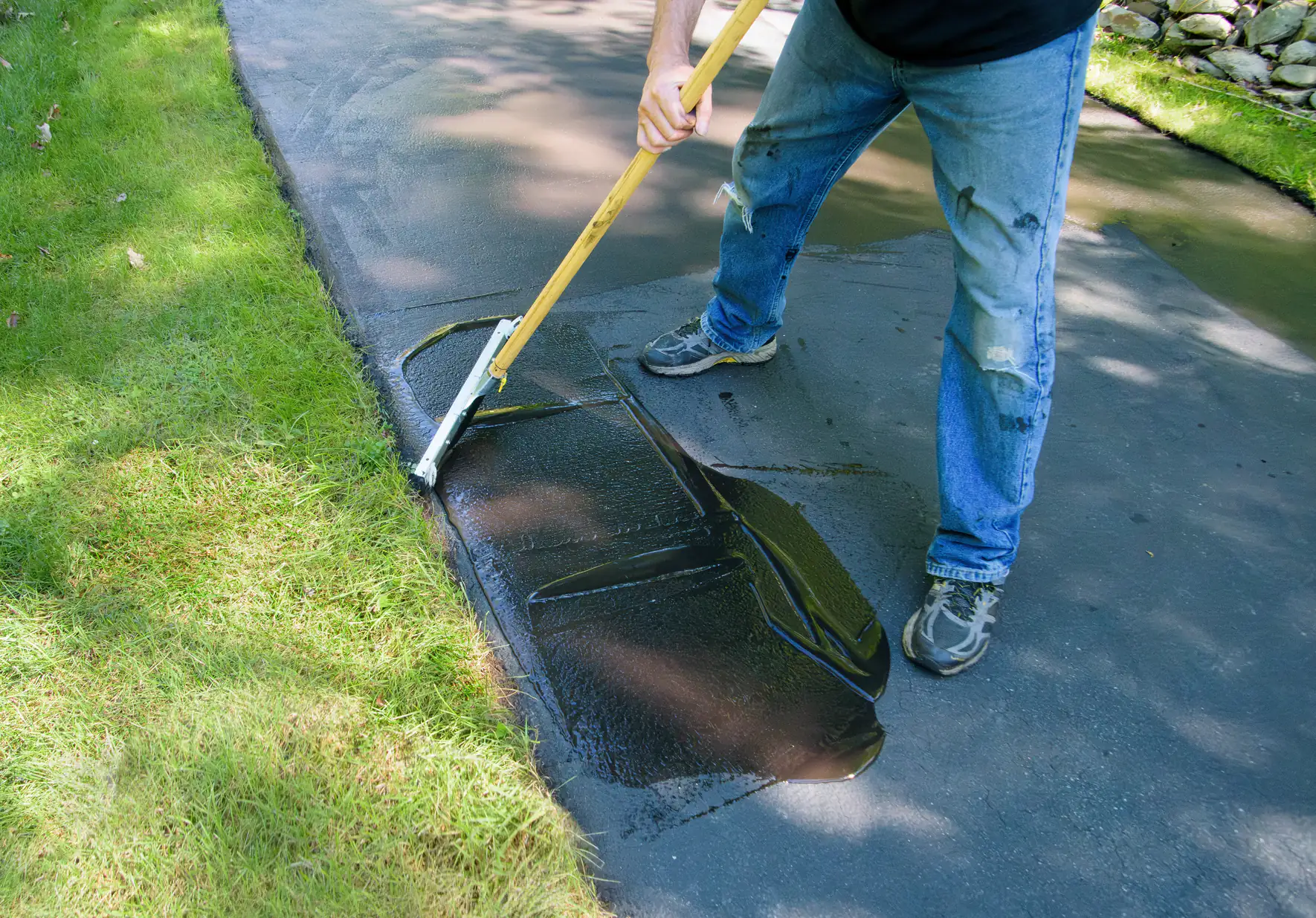
Asphalt handles freeze-thaw cycles differently. Its flexibility allows it to absorb some of the expansion pressure without fracturing. The bitumen binder also makes asphalt less porous than concrete when properly installed and sealed. Less water penetration means less freeze-thaw damage. When you sealcoat an asphalt driveway every 3-5 years, you’re creating a waterproof barrier that prevents moisture from getting into the pavement structure in the first place.
There’s also the heat absorption factor. Asphalt’s dark surface absorbs significantly more solar radiation than concrete’s lighter color. On a sunny winter day, asphalt can be 10-15 degrees warmer than concrete. That means snow and ice melt faster on asphalt, reducing the number of freeze-thaw cycles the pavement experiences. You use less salt, which is another advantage—salt accelerates concrete deterioration by increasing water absorption and causing surface scaling.
The clay soils common in Sussex County add another layer of complexity. Clay expands when wet and contracts when dry. During freeze-thaw periods, saturated clay can heave upward, pushing against the pavement from below. Asphalt’s flexibility lets it ride that movement. Concrete’s rigidity means it either resists the heave (creating stress that leads to cracking) or breaks along control joints.
Does this mean concrete can’t work in cold climates? No. Air-entrained concrete—which includes microscopic air bubbles that give water room to expand—performs much better in freeze-thaw conditions. Proper thickness, rebar reinforcement, and control joints help too. But even with these improvements, concrete still faces challenges that asphalt handles more naturally in North Jersey’s climate.
The bottom line: concrete may be stronger in a lab test, but asphalt is often more durable in Sussex County driveways because it’s engineered to handle the specific stresses this climate creates.
Want live answers?
Connect with a Platinum Paving expert for fast, friendly support.
Is a Concrete Driveway Better Than Asphalt
“Better” depends entirely on what you’re optimizing for. If you want maximum lifespan and don’t mind higher upfront costs, concrete has appeal. If you prioritize climate performance, faster installation, and easier maintenance, asphalt makes more sense.
Concrete driveways can last 30-50 years when properly installed and maintained. Asphalt driveways typically last 20-30 years with regular sealcoating. That longevity difference sounds compelling until you factor in the total cost of ownership. Concrete costs 45-50% more to install—roughly $4-$10 per square foot versus $2-$6 for asphalt. Over a 30-year period, when you account for asphalt’s sealcoating costs every 3-5 years versus concrete’s occasional cleaning and rare sealing, the total investment often evens out.
Aesthetics matter to some homeowners. Concrete offers more customization—you can stamp patterns, add color, or create decorative finishes. Asphalt is black or dark gray, period. If matching your home’s design scheme matters, concrete provides options asphalt can’t match. But asphalt’s dark surface also hides stains, oil drips, and wear better than concrete’s lighter finish. Concrete shows every mark, requiring more aggressive cleaning to maintain appearance.
Climate-Specific Performance in Sussex County
Sussex County sits in the northern tier of New Jersey, where winter hits hard and lasts long. Lake-effect conditions from nearby bodies of water can intensify snowfall and create rapid temperature swings. These aren’t just minor inconveniences—they’re design loads your driveway needs to handle.
The freeze-thaw cycle count in Sussex County often exceeds 50-75 per winter. That’s 50-75 times water freezes, expands, thaws, and contracts within your pavement. Each cycle stresses the material. Multiply that by 10-15 winters, and you’re talking about 500-1,000+ freeze-thaw events over a driveway’s lifespan. Materials that can’t flex with that movement fail prematurely.
Clay soils compound the problem. Much of Morris, Sussex, and Somerset Counties sit on clay-heavy subgrade. Clay holds water like a sponge and doesn’t drain well. When that saturated clay freezes, it expands, creating frost heave that pushes pavement upward. When it thaws, the clay contracts and the pavement settles back down—but not always evenly. This movement creates stress points.
Asphalt accommodates this movement. Its flexible nature lets it ride the heave without cracking. Concrete resists the movement, which creates internal stress. Over time, that stress finds the weakest point—often a control joint or an area with inadequate base preparation—and the concrete cracks.
Drainage becomes critical in this environment. North Jersey gets substantial rainfall, and clay soils don’t absorb water quickly. Without proper grading and drainage design, water sits on or under your pavement. In winter, that standing water becomes ice, creating all the problems discussed earlier. We understand local conditions—from Franklin to Stanhope to Hopatcong—and know how to grade for drainage, where to direct runoff, and how to design base layers that manage moisture effectively.
Temperature extremes matter too. Summer surface temperatures on asphalt can reach 140°F in direct sun. Some people worry this will make asphalt soft or sticky. In practice, properly formulated hot mix asphalt designed for northern climates handles these temperatures fine. The binder is engineered to remain stable across a wide temperature range. Concrete, meanwhile, can actually crack from thermal expansion in extreme heat if control joints aren’t properly spaced.
The local expertise factor can’t be overstated. We’re familiar with Sussex County and know which neighborhoods have drainage issues, which areas have problematic clay soils, and how to adjust installation methods accordingly. Out-of-area contractors often miss these nuances, leading to premature failure even when using quality materials.
Difference Between Pavement and Concrete Terminology
The terminology confusion is understandable. People use “pavement,” “asphalt,” “blacktop,” and “concrete” in overlapping ways that muddy the conversation.
Pavement is the broad term for any hard surface covering ground—it includes both asphalt and concrete. When someone asks about “pavement versus concrete,” they’re usually asking about asphalt versus concrete, since both are types of pavement.
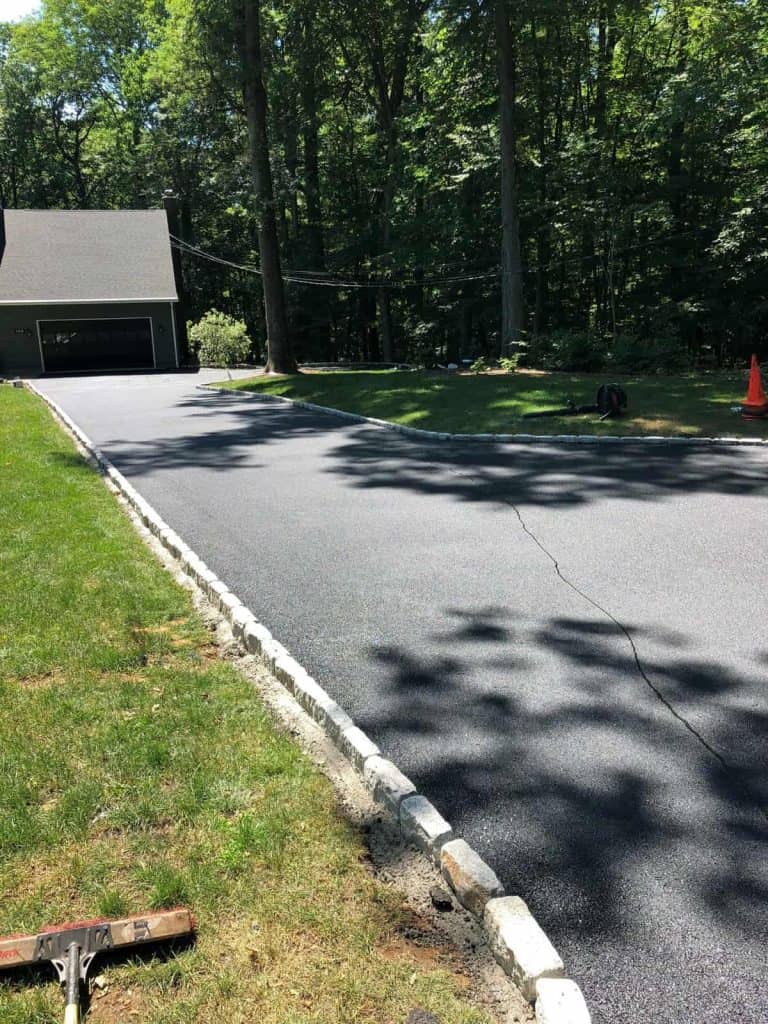
Asphalt pavement (also called flexible pavement) consists of a thin wearing surface built over base and subbase courses, usually stone or gravel, resting on compacted subgrade. The asphalt layer itself is relatively thin—typically 2-4 inches for residential driveways—but the total pavement structure including base can be 8-12 inches deep.
Concrete pavement (also called rigid pavement) is constructed with Portland cement concrete. It may or may not have a base course between the concrete slab and subgrade, depending on soil conditions and design requirements. The concrete slab provides both the wearing surface and much of the structural strength.
The “flexible versus rigid” distinction explains a lot about performance. Flexible pavements distribute loads differently than rigid ones. When a car drives over asphalt, the load spreads out through the asphalt layer into the base and subgrade beneath. The pavement flexes slightly under the wheel, then rebounds. Rigid concrete pavement resists flexing. It acts more like a beam spanning across the subgrade, distributing loads over a wider area but also concentrating stress at edges and joints.
Blacktop, as mentioned earlier, is essentially asphalt. Some people use “blacktop” to refer specifically to driveways and parking lots, reserving “asphalt” for roads and highways. Others use the terms interchangeably. Technically, blacktop might have a slightly higher stone content or be heated to a different temperature during mixing, but the functional difference is minimal.
Understanding these terms matters when comparing options. If a contractor says “we install pavement,” ask whether they mean asphalt or concrete. If someone claims “concrete pavement is always stronger,” recognize they’re comparing rigid versus flexible systems—not just material strength but entire structural approaches.
The material science is straightforward: asphalt uses petroleum-based bitumen as a binder, concrete uses cement. Both include aggregates (crushed stone, sand, gravel) for structure. The binder is what gives each material its characteristic properties—bitumen makes asphalt flexible and somewhat self-healing, cement makes concrete rigid and strong in compression.
For Sussex County homeowners, the practical takeaway is this: when you’re comparing “pavement options,” you’re really choosing between flexible asphalt pavement and rigid concrete pavement. Each has strengths. Asphalt’s flexibility serves North Jersey’s climate better in most residential applications. Concrete’s rigidity and compressive strength make it suitable for heavy commercial loads or applications where maximum lifespan justifies higher cost.
Choosing the Right Driveway Material for North Jersey
Strength isn’t simple. Concrete has higher compressive strength, but asphalt’s flexibility often translates to better real-world durability in Sussex County’s freeze-thaw climate. The “stronger” material is the one that lasts longer under the specific conditions your driveway faces.
For most North Jersey homeowners, that means asphalt. The combination of climate performance, cost-effectiveness, easier repairs, and faster installation makes it the practical choice. Concrete has its place—if you need maximum longevity, want decorative options, or have specific load requirements, it can work. But it requires careful installation, proper drainage design, and realistic expectations about freeze-thaw performance.
The most important factor isn’t which material you choose—it’s working with contractors who understand Sussex County’s unique challenges. Clay soils, freeze-thaw cycles, drainage patterns, and local climate conditions all affect how pavement performs. We bring that local expertise to every project across Morris, Sussex, and Somerset Counties, whether you choose asphalt or concrete.