Summary:
You’ve gotten three quotes. One contractor swears asphalt is the only choice for New Jersey winters. Another insists concrete will save you money in the long run. The third just shrugs and says both work fine.
Here’s what actually matters: the material you choose for your Sussex County driveway will either cost you thousands in repairs over the next decade, or it’ll quietly do its job for 30+ years without drama. The difference comes down to understanding how each material performs in North Jersey’s climate, what maintenance really costs, and what you’re actually paying for over the life of your driveway. Let’s break down the numbers that matter.
Is Concrete Driveway Cheaper Than Asphalt?
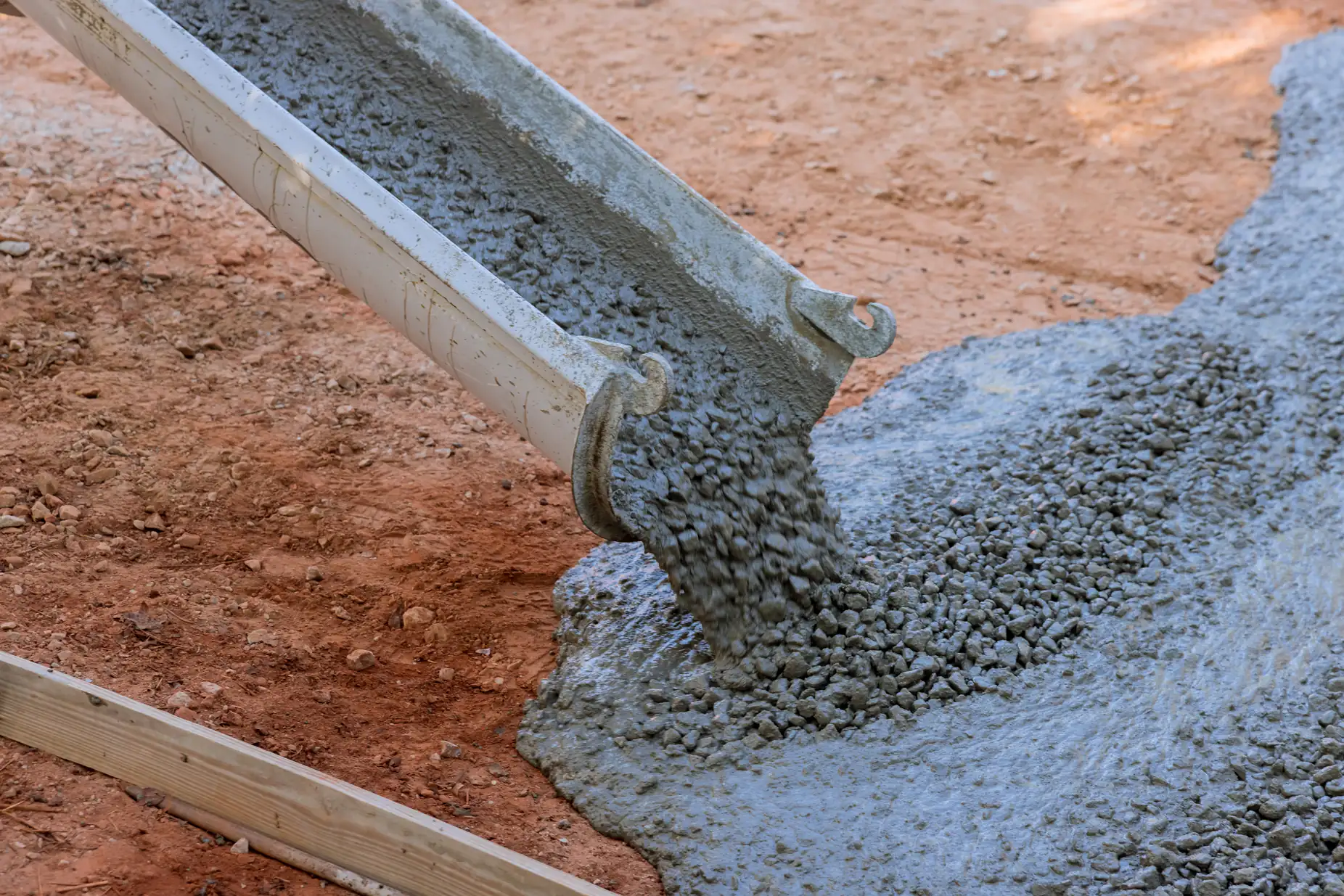
Not upfront, it’s not. Concrete costs roughly double what asphalt does for installation in Sussex County. You’re looking at $8-18 per square foot for concrete versus $3-7 per square foot for asphalt.
For a standard two-car driveway (about 600 square feet), that’s $1,800-$4,200 for asphalt compared to $4,800-$10,800 for concrete. The gap widens if you want decorative stamped concrete or custom finishes.
But here’s where it gets interesting. That upfront cost difference starts shrinking when you factor in what happens after installation. Concrete sits there for decades with minimal attention. Asphalt needs regular sealcoating every 2-3 years, and skipping that maintenance cuts its lifespan in half.
Concrete Durability in North New Jersey Climate
Concrete’s reputation for durability is well-earned, but it comes with a caveat specific to Sussex County: freeze-thaw cycles are concrete’s weakness.
When water seeps into tiny cracks and freezes during North Jersey winters, it expands about 10% and exerts up to 30,000 PSI of pressure. That’s enough force to crack concrete from the inside out. This happens repeatedly throughout our winters, and it’s why you see so many spiderwebbed concrete driveways after a few tough seasons.
A properly installed concrete driveway in Sussex County can last 30-50 years, but that “properly installed” part is critical. It needs air-entrained concrete designed for freeze-thaw resistance, proper thickness (at least 4-6 inches), rebar reinforcement, and correct curing time. We know these requirements aren’t optional when working in local conditions.
The trade-off is that once concrete is installed correctly, it requires very little maintenance. You’ll want to seal it every 5-7 years to prevent water intrusion and staining, but that’s about it. No regular sealcoating. No frequent touch-ups. It either works or it doesn’t.
Concrete also handles heavy loads better than asphalt. If you regularly park trucks, RVs, or heavy equipment, concrete’s compressive strength (around 6,000 PSI versus asphalt’s 3,000 PSI) makes it the better choice. It won’t develop ruts or soft spots during summer heat waves the way asphalt can.
The durability equation changes based on installation quality. A concrete driveway installed by someone who doesn’t account for Sussex County’s clay soil conditions, drainage patterns, and freeze-thaw cycles will fail within 10-15 years. A properly installed one can outlast your mortgage.
What Concrete Maintenance Actually Costs Over Time
Concrete’s maintenance costs are minimal compared to asphalt, but they’re not zero. And when repairs are needed, they cost more.
Sealing concrete every 5-7 years runs about $200-500 for a standard driveway. It’s not required, but it extends lifespan and prevents stains from oil, salt, and other chemicals. Skip it and you’ll see surface deterioration faster, especially in areas where you park vehicles.
Cleaning matters too. Oil stains, road salt, and chemical spills will penetrate concrete’s porous surface if you don’t address them. A degreaser treatment costs $50-150 annually if you hire it out, or you can handle it yourself with a pressure washer and concrete cleaner.
When cracks do appear, repairs get expensive. Small crack filling costs $3-25 per square foot depending on severity. Larger structural repairs can run $300-3,000. The challenge with concrete is that repairs are visible—patched concrete never matches the original surface perfectly.
Resurfacing concrete costs $850-2,900 if the surface deteriorates but the base is still solid. That’s cheaper than replacement but still a significant expense. The good news is that if your concrete was installed properly, you might never need this.
Over a 30-year period, you’re looking at roughly $1,500-2,500 in total maintenance costs for concrete if everything goes well. That’s sealing every 5-7 years, occasional cleaning, and minor crack repairs. Compare that to asphalt’s $4,500-7,500 in sealcoating alone over the same period, and concrete’s lower maintenance burden becomes clear.
The wildcard is major repairs. If your concrete develops significant cracking due to poor installation or extreme weather, you could face $2,000-5,000 in repair costs. That changes the equation entirely. This is why installation quality matters more for concrete than for almost any other driveway material.
Want live answers?
Connect with a Platinum Paving expert for fast, friendly support.
Is Asphalt Driveway Cheaper Than Concrete?
Asphalt wins on upfront cost, no question. At $3-7 per square foot installed, it’s roughly half the cost of concrete for the same driveway.
That lower price point makes asphalt the go-to choice for homeowners working with tight budgets or those who need to replace a failing driveway quickly. You can install asphalt and drive on it within 24-48 hours, versus concrete’s 7-day cure time.
But asphalt’s cost advantage shrinks when you look at the full ownership picture. Regular maintenance isn’t optional—it’s the price you pay for that lower installation cost. Factor in sealcoating every 2-3 years, crack filling, and potential resurfacing around year 15, and asphalt’s total cost creeps up toward concrete’s range.
Asphalt Performance in Sussex County Winters
Here’s where asphalt earns its reputation in North Jersey: it handles freeze-thaw cycles better than concrete.
Asphalt’s flexibility is its superpower in cold climates. When temperatures drop and the ground shifts, asphalt expands and contracts without cracking. That same freeze-thaw cycle that destroys concrete just doesn’t affect asphalt the same way.
Sussex County experiences some of the highest freeze-thaw cycles in New Jersey—about 40% more than Central and South Jersey. Water seeps into cracks, freezes, expands, and then thaws repeatedly throughout winter. Asphalt’s petroleum-based composition gives it enough flexibility to handle this constant movement without structural failure.
The dark color helps too. Asphalt absorbs heat, which means snow and ice melt faster on an asphalt driveway than on concrete. You’ll spend less time shoveling and salting, and your driveway will clear naturally on sunny winter days.
But asphalt has a weakness: summer heat. When temperatures spike during New Jersey heatwaves, asphalt can soften. Park a heavy vehicle on hot asphalt and you’ll get indentations or ruts. It’s not a deal-breaker, but it’s something to consider if you regularly park trucks or RVs.
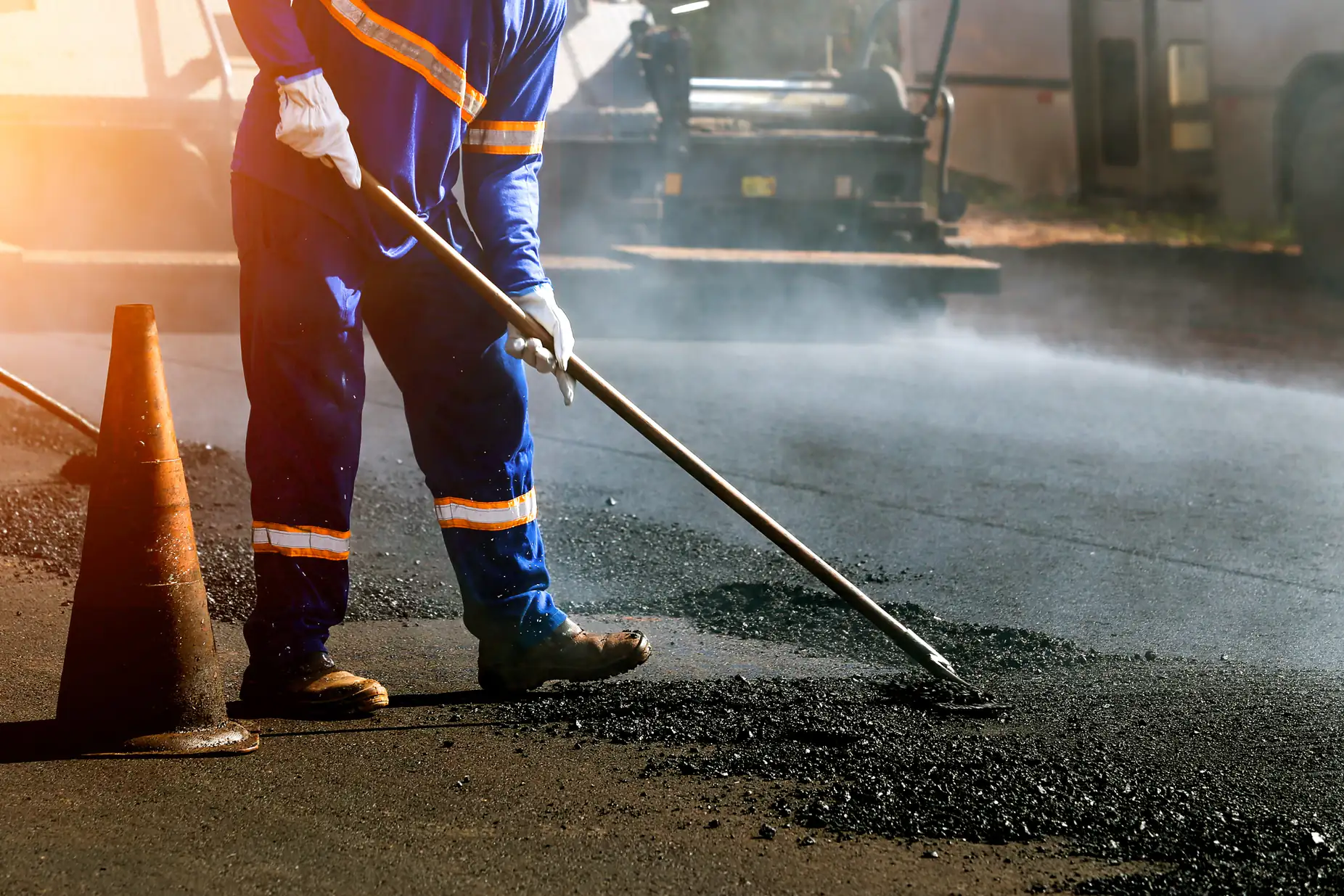
Properly installed asphalt for North Jersey conditions means using hot mix asphalt (HMA) applied at the correct temperature, with proper base preparation and adequate thickness (typically 2-3 inches over a compacted stone base). We know that rushing the process or skimping on base preparation delivers driveways that fail within 8-10 years instead of lasting 20+.
Asphalt’s lifespan in Sussex County typically runs 15-20 years with proper maintenance, or up to 30 years if you’re diligent about sealcoating and repairs. Without maintenance, you’re looking at 8-12 years before you need replacement. The material itself is forgiving, but only if you take care of it.
Real Asphalt Maintenance Costs You'll Pay
Asphalt’s lower installation cost comes with a trade-off: regular maintenance is mandatory, not optional.
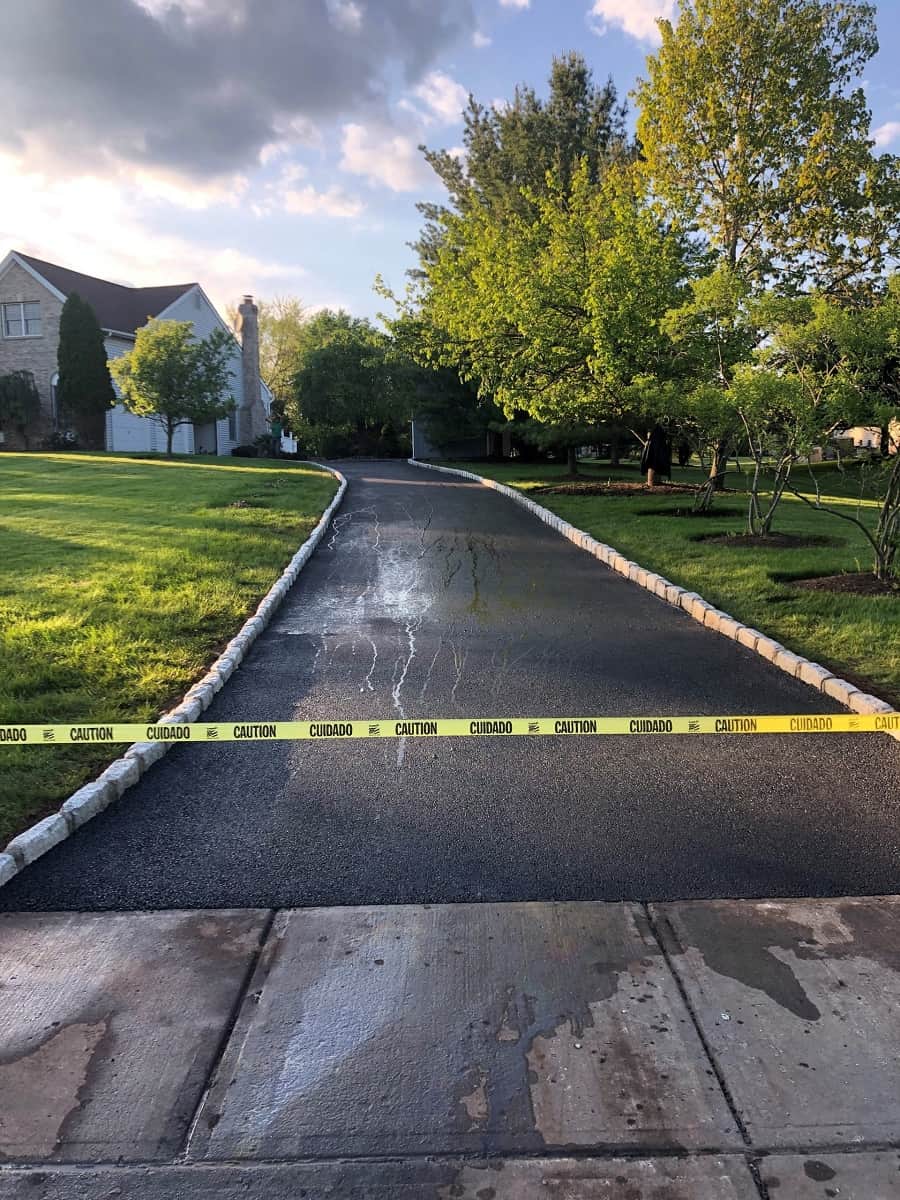
Sealcoating is the big recurring expense. You’ll need to reseal your asphalt driveway every 2-3 years to protect it from oxidation, UV damage, and water intrusion. That runs $300-800 per treatment for a standard driveway. Skip it and you’ll watch your asphalt turn gray, develop cracks, and deteriorate rapidly.
Over 30 years, that’s 10-15 sealcoating treatments at $300-800 each. Do the math: $3,000-$12,000 just for sealcoating. That’s before any repairs.
Crack filling costs $1-3 per linear foot for small cracks. Larger cracks and potholes run $2-5 per square foot to repair. The good news is that asphalt repairs are relatively easy and blend in better than concrete repairs. You can patch a section of asphalt and it’ll be nearly invisible once it weathers.
Resurfacing (adding a new layer over the existing asphalt) costs $1-3 per square foot, or about $600-1,800 for a standard driveway. Most asphalt driveways need resurfacing around year 15-20. It’s cheaper than full replacement and extends the life another 10-15 years.
Add it all up over 30 years: $3,000-$12,000 for sealcoating, $500-$2,000 for crack repairs, and $600-$1,800 for resurfacing. You’re looking at $4,100-$15,800 in maintenance costs on top of the initial installation.
That’s the hidden cost of asphalt’s lower upfront price. If you’re willing to handle the maintenance or budget for it, asphalt can still be the more economical choice. But if you skip the maintenance, you’ll end up replacing your driveway years earlier than expected, which wipes out any cost advantage.
The key is being honest about whether you’ll actually do the maintenance. If you’re the type who stays on top of home maintenance, asphalt works great. If you tend to put things off, concrete’s lower maintenance burden might save you money and headaches in the long run.
Which Driveway Material Makes Sense for Your Sussex County Home
The cement vs asphalt decision comes down to three things: your budget, your maintenance habits, and how long you plan to stay in your home.
Asphalt costs less upfront and handles North Jersey winters beautifully, but it demands regular maintenance. Concrete costs more initially and requires careful installation to handle freeze-thaw cycles, but it’ll outlast asphalt with minimal upkeep. Neither choice is wrong—they’re just different trade-offs.
If you’re working with a tight budget now and willing to sealcoat every few years, asphalt makes sense. If you’d rather pay more upfront and not think about your driveway for the next 30 years, concrete is worth the investment. And if you’re unsure which direction fits your property and priorities, talking through your specific situation with someone who understands Sussex County conditions makes the difference between a driveway that lasts and one that becomes a recurring expense.
We work with both materials throughout Morris, Sussex, and Somerset County, so there’s no bias toward one or the other—just honest guidance based on what actually works in North New Jersey’s climate.