Summary:
Your driveway takes a beating in Sussex County, NJ. Between winter’s freeze-thaw cycles and summer heat, choosing the wrong contractor or cutting corners on installation means you’re looking at cracks, settling, and expensive repairs years earlier than expected. Most homeowners focus on getting the lowest bid. That’s usually where things start going wrong. This guide walks you through the seven mistakes that cost Sussex County homeowners the most money—and how to avoid them before you sign anything or hand over a deposit.
Choosing a Contractor Based Only on Price
The lowest quote isn’t a deal if your driveway fails in three years instead of fifteen. Contractors who underbid everyone else are cutting corners somewhere, and you won’t see where until it’s too late.
A suspiciously low price usually means cheap materials, rushed work, or skipped steps during base preparation. The base is what holds everything together. If that’s done wrong, the asphalt on top doesn’t stand a chance against New Jersey winters.
Some contractors skip insurance to offer lower prices. That puts you at risk. If someone gets hurt on your property during the job, your homeowner’s insurance covers it—and your premiums can double or triple for years afterward.
What to Look for in Driveway Installation Contractors
Start with licensing and insurance. Ask to see proof. A legitimate contractor won’t hesitate to show you their certificate of insurance and license number. If they dodge the question or say they’ll send it later, that’s a red flag you can’t ignore.
Experience matters, especially in Sussex County, NJ. Contractors who’ve worked in towns like Newton, Sparta, and Hopatcong for years understand how local soil behaves, how to handle drainage on sloped properties, and which base materials hold up to freeze-thaw cycles. Someone who learned paving in a different climate might not know what works here.
Check references and recent work. A good contractor will show you completed projects in your area. Drive by a few addresses if you can. Look at how the edges hold up, whether water pools anywhere, and how the surface has aged. Talk to past customers if possible. Ask about communication, timeline, cleanup, and whether any issues came up after installation.
Get everything in writing. The quote should detail exactly what’s included: excavation depth, base material type and thickness, asphalt grade and thickness, drainage solutions, and timeline. Vague quotes leave room for shortcuts or surprise charges later. A detailed contract protects both of you.
Ask about warranties. Reputable contractors stand behind their work. Find out what’s covered, for how long, and what voids the warranty. Understanding this upfront prevents arguments if something goes wrong down the road.
Red Flags That Signal a Bad Paving Installation Contractor
Door-to-door contractors offering leftover asphalt from another job are running a scam. Even if they actually have asphalt, it’s cold by the time they reach you, won’t compact properly, and they’re not preparing your base correctly anyway. Shut the door.
Cash-only deals should raise immediate concerns. Legitimate businesses accept multiple payment methods and provide receipts. Contractors pushing for cash payments might be dodging taxes, don’t carry insurance, or plan to disappear if problems arise.
Pressure tactics are another warning sign. Good contractors don’t need to pressure you into signing immediately. They’re busy enough with referrals and repeat business. If someone’s pushing you to decide today or lose the deal, they’re probably not someone you want working on your property.
Lack of local references is a problem. Contractors who can’t show you recent work nearby or provide local customer contacts might be new to the area, inexperienced with regional conditions, or have a track record they’d rather you didn’t see. Sussex County’s climate demands specific knowledge. Hire someone who’s proven they understand it.
Missing permits or dismissing permit requirements puts you at risk. Some towns in New Jersey require permits for driveway work. A professional contractor knows local requirements and handles permits for you. Someone who suggests skipping permits to save money is setting you up for fines and potential problems when you sell your home.
Want live answers?
Connect with a Platinum Paving expert for fast, friendly support.
Skipping Proper Base Preparation During Paving Installation
The base is everything. It’s also where contractors cut the most corners because homeowners can’t see it once the asphalt goes down.
A properly prepared base involves excavating to the right depth, grading for drainage, and compacting layers of crushed stone until you have a solid, stable foundation. Skip any of these steps and your driveway will fail. The asphalt will buckle, water will erode the base from underneath, and cracks and potholes will appear within a year or two.
Sussex County’s freeze-thaw cycles make base preparation even more critical. Water that seeps into a weak base freezes, expands, and pushes pavement apart from the inside. When it thaws, it leaves voids that cause settling and more damage.
How Proper Driveway Installation Should Work
First comes site assessment. The contractor should evaluate your current driveway, check drainage patterns, and identify any underlying issues before giving you a quote. This tells you they’re thinking about what your specific property needs, not just laying asphalt over whatever’s there.
Excavation removes old material and digs down to stable soil. Depth matters. Residential driveways typically need excavation deep enough to accommodate several inches of base material plus the asphalt layer. Shortcuts here lead to settling.
Grading establishes the slope that moves water away from your house and prevents pooling. Your driveway should slope toward the street or designated drainage areas. Properties with complex terrain around Lake Hopatcong or in Newton need careful grading throughout the entire length. This isn’t something you can fix easily after the asphalt is down.
Base installation involves spreading crushed stone or gravel in layers and compacting each layer thoroughly. Proper compaction creates density and stability. The base should be thick enough to support vehicle weight and prevent shifting. For most residential driveways, that means at least four to six inches of compacted aggregate.
Asphalt application comes last. High-grade hot mix asphalt needs to be applied at the right temperature and compacted while it’s still hot. Thickness matters here too—residential driveways typically need two to three inches of compacted asphalt. Anything thinner breaks down faster under normal use.
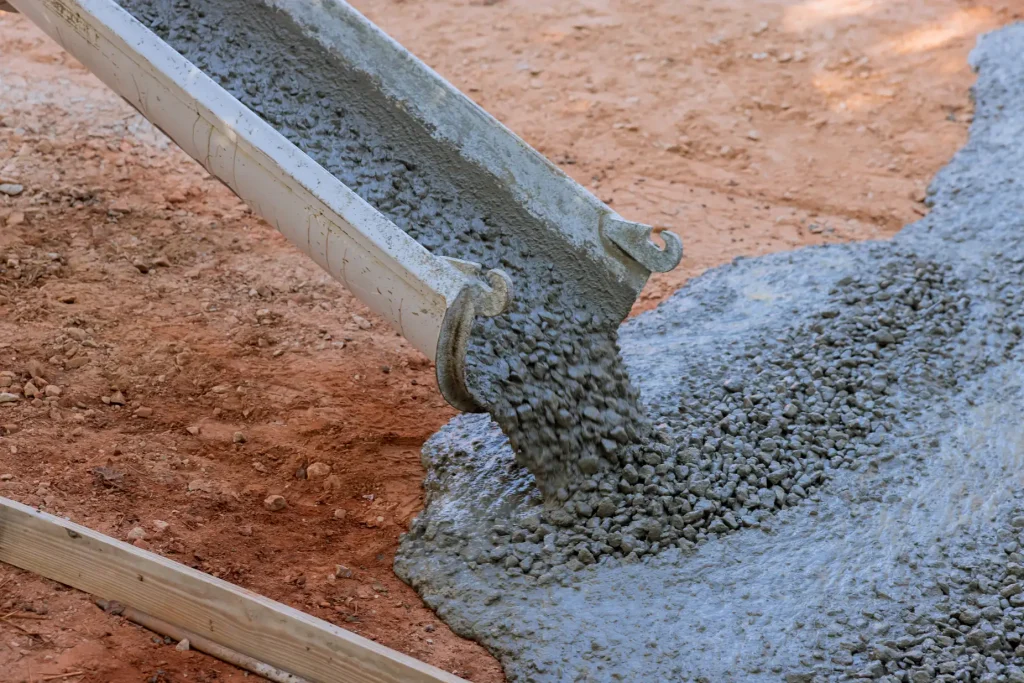
Difference Between Asphalt and Concrete for Your Base
Both asphalt and concrete need proper base preparation, but they behave differently on top of that base. Understanding this helps you choose the right material for your situation.
Asphalt is flexible. It can handle some ground movement without cracking immediately. This makes it more forgiving in Sussex County’s freeze-thaw conditions. If your property has clay-heavy soil that expands and contracts with moisture changes, asphalt typically performs better long-term.
Concrete is rigid. It doesn’t flex, so ground movement causes cracks. If your property has drainage issues or sits on unstable soil, concrete shows problems faster. Areas with clay soil see concrete driveways crack more often because the clay swells when wet and shrinks when dry, moving the concrete above it.
The base requirements are similar for both materials, but concrete demands even more attention to drainage and soil stability. Water that seeps beneath concrete and freezes causes more dramatic damage than it does with asphalt. Concrete can also develop larger cracks that are more expensive to repair properly.
For Sussex County specifically, asphalt handles the climate better. It flexes with temperature changes, repairs blend in more easily, and maintenance is simpler. Concrete offers more design options and lasts longer in ideal conditions, but those ideal conditions are harder to maintain here. Most local contractors will tell you the same thing based on what they’ve seen hold up over twenty years.
Ignoring Drainage Problems
Water destroys driveways. It seeps into cracks, freezes, expands, and breaks pavement apart from the inside out. Poor drainage doesn’t just mean standing water you can see. It means water flowing where it shouldn’t, saturating your base, and creating perfect conditions for freeze-thaw damage.
Most homeowners focus on visible cracks while completely missing the drainage problems causing them. You might notice water pooling after rain, surface erosion, or long-term discoloration from constant dampness. By the time you see these signs, water has already been working on your base for months.
Properties with sloped driveways face their own challenges. Water runs downhill fast. If your driveway descends toward your house, you need a plan to intercept that water before it reaches your garage or foundation.