Summary:
You’re trying to figure out what a new driveway actually costs, and the numbers online don’t match what contractors are telling you. National averages don’t account for New Jersey’s stricter permit requirements, higher labor costs, or the thicker base layers our freeze-thaw cycles demand. You need real numbers for Sussex County—not just installation price, but what you’ll actually spend over the next 20 years. This breakdown shows you both, plus which material survives our winters without turning into a cracked mess by year three. Let’s start with what asphalt actually costs in North Jersey.
Cost to Install Asphalt Driveway in Sussex County
Asphalt driveways in New Jersey cost $5 to $8 per square foot installed in 2026. That’s 15-25% higher than national averages, and there are specific reasons why.
A standard 600-square-foot two-car driveway runs $3,000 to $4,800 for asphalt installation. Your actual price depends on site conditions, how much excavation you need, and whether your existing base is salvageable. If we have to remove old material and build a proper foundation from scratch, you’re looking at the higher end of that range.
North Jersey pricing reflects reality on the ground. Labor costs more here. Permits are stricter. And our climate demands thicker base layers and proper compaction that contractors in warmer states can skip. When someone quotes you $3 per square foot, they’re either using national data or planning to cut corners that’ll cost you later.
Asphalt Cost Per Square Foot: What You're Actually Paying For
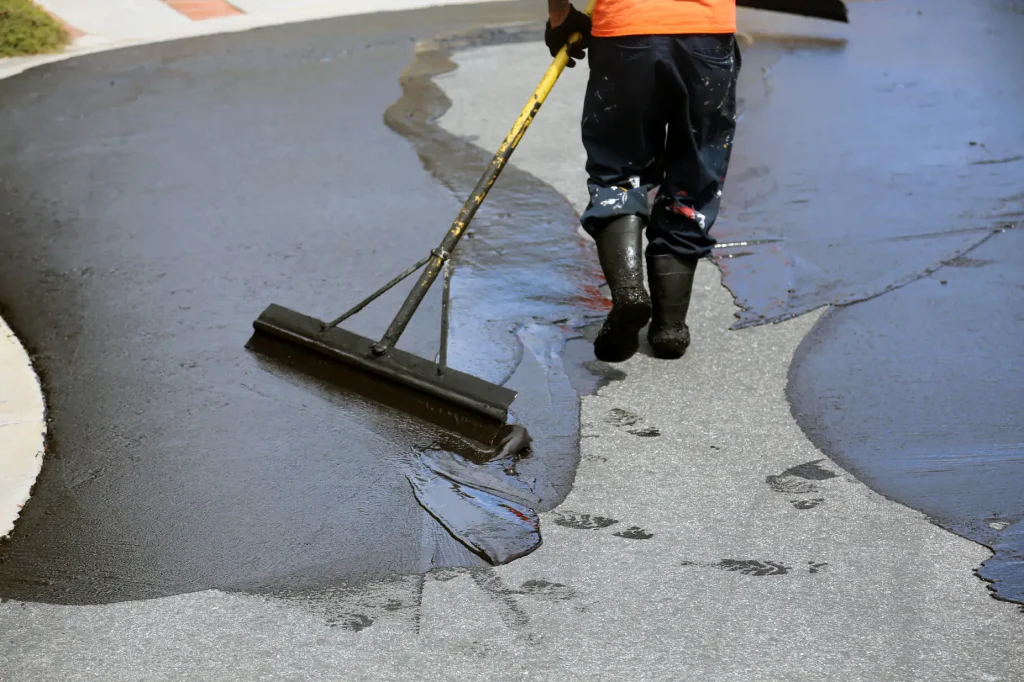
That $5-8 per square foot breaks down into materials, labor, and base preparation. Understanding where your money goes helps you spot contractors who are skimping on the parts that matter.
Materials run $2 to $6 per square foot for hot mix asphalt. The quality varies—high-grade HMA applied at proper temperature costs more than cold mix or recycled material, but it also lasts longer. Contractors who push the cheapest asphalt are setting you up for premature failure.
Labor adds another $5 to $7 per square foot. This covers site preparation, excavation, base installation, asphalt laying, and compaction. Projects requiring significant grading or drainage work hit the higher end. If your property has clay soil or drainage issues common in Sussex County, expect additional costs for proper base preparation.
Base preparation is where many contractors cut corners, and it’s also where driveways fail. A proper base requires excavation to the right depth, installation of compacted crushed stone, and grading for drainage. This foundation determines whether your driveway lasts 5 years or 25 years. Contractors who rush this step save money now but guarantee you’ll need repairs or replacement sooner.
The asphalt itself needs to be applied at the correct temperature and compacted while still workable. Too cool, and it won’t bond properly. Too thin, and it won’t handle freeze-thaw cycles. Proper installation requires knowledge of local conditions—something contractors from outside the area often lack.
Hidden costs can add up quickly. Most Sussex County municipalities require permits for new driveways, adding $50 to $200. If you’re expanding your driveway or changing drainage patterns, you might need engineering plans that cost another $500 to $1,500. Removing existing pavement costs $1 to $3 per square foot depending on thickness. Tree removal, if needed, runs $750 to $2,000 per tree.
Blacktop Driveway Cost vs Concrete: First-Year Comparison
Asphalt looks cheaper upfront, and it is. But that initial savings comes with a maintenance schedule concrete doesn’t require.
Concrete driveways cost $7 to $13 per square foot installed in New Jersey. For that same 600-square-foot driveway, you’re looking at $4,200 to $7,800—roughly $1,200 to $3,000 more than asphalt. That price difference is real, and for homeowners on a tight budget, it matters.
But here’s where the math gets interesting. Asphalt requires sealcoating every 3 to 5 years to protect against moisture and UV damage. Each application costs $200 to $400 for an average driveway. Skip it, and you’ll see cracks and deterioration that lead to expensive repairs or early replacement. Properties that neglect sealcoating typically need complete replacement in 8-12 years instead of the expected 15-20 year lifespan.
Concrete needs less frequent maintenance—occasional cleaning and sealing every few years. When problems occur, they’re expensive to fix ($300-3,000 depending on damage), but they happen less often if the driveway was installed correctly.
Installation timelines differ too. Asphalt can be driven on within 24-48 hours after installation. Concrete requires 7 days of curing before you can use it. For homeowners who can’t afford to lose driveway access for a week, that matters.
The appearance is another factor some homeowners care about. Asphalt gives you that classic dark surface that hides oil stains well. Concrete offers more design options—you can add colors, patterns, or stamped finishes that asphalt can’t match. But those decorative options increase concrete costs to $12-18 per square foot.
Climate performance is where asphalt pulls ahead in North Jersey. Our freeze-thaw cycles are brutal—water seeps into cracks, freezes, expands with tremendous force, then thaws and repeats. Asphalt’s flexibility allows it to handle this movement without fracturing. Concrete’s rigid structure makes it more prone to cracking under these conditions, though proper installation with control joints and adequate reinforcement helps.
Want live answers?
Connect with a Platinum Paving expert for fast, friendly support.
Is Asphalt Cheaper Than Concrete Over 20 Years?
Installation price tells you what you’ll pay this year. Total cost of ownership tells you what you’ll actually spend.
When you factor in maintenance over 20 years, the gap between asphalt and concrete narrows significantly. Asphalt’s lower installation cost gets eaten up by regular sealcoating, crack repairs, and potential resurfacing. Concrete’s higher upfront price is offset by minimal maintenance requirements.
Here’s the 20-year math for that 600-square-foot driveway: Asphalt costs $3,000-4,800 to install, plus $200-400 for sealcoating every 3-5 years (roughly 5-6 applications over 20 years), plus occasional crack repairs at $300-500. Total: $5,000-8,300. Concrete costs $4,200-7,800 to install, plus occasional crack repairs at $300-500, plus periodic sealing at $1,200-2,000 over 20 years. Total: $5,400-9,800.
Cost Difference Between Asphalt and Concrete: Maintenance Reality
The maintenance schedules are different, and so is the work involved. Understanding both helps you decide which fits your situation better.
Asphalt maintenance is frequent but manageable. Sealcoating every 3-5 years protects the surface from moisture, UV damage, and oxidation. The process takes a day, requires the driveway to be empty, and leaves it unusable for 24-48 hours. You’ll also need to fill cracks as they appear—small hairline cracks turn into major structural problems if ignored. The dark color of asphalt hides minor imperfections well, which is nice, but it also means you might miss developing problems until they’re serious.
Concrete maintenance is less frequent but more expensive when needed. Sealing every few years helps prevent stains and extends lifespan. Cracks are more visible on concrete’s lighter surface, so you’ll spot problems earlier. But repairing concrete is trickier—matching the color and texture of existing concrete is difficult, so repairs are often noticeable. When concrete fails, it usually requires sections to be replaced rather than simple patching.
Both materials need proper drainage to survive. Water that pools on or under your driveway accelerates damage regardless of material. Proper grading during installation is essential—this is where local expertise matters. We understand Sussex County’s clay soil conditions and drainage patterns, which helps us prevent problems that out-of-area contractors don’t even see coming.
Winter maintenance differs too. Asphalt’s dark color absorbs heat and helps melt snow and ice faster than concrete. But road salt accelerates asphalt deterioration, so you’ll want to sweep or rinse away salt residue after winter storms. Concrete is more resistant to salt damage but can be stained by certain de-icing chemicals. Both materials benefit from prompt snow removal to prevent freeze-thaw damage.
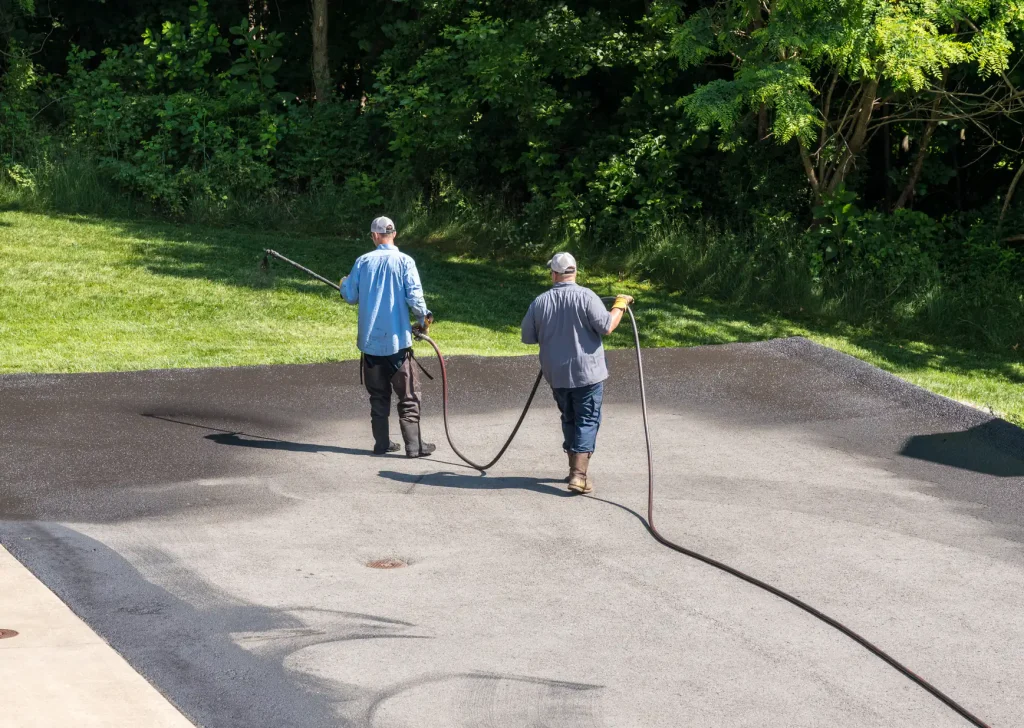
The flexibility to repair is where asphalt shines. Small cracks and holes can be patched relatively easily, and the repairs blend in well. Resurfacing an aging asphalt driveway costs $3-7 per square foot—much less than full replacement. Concrete repairs are more challenging and expensive, but when properly installed, concrete requires fewer repairs overall.
Concrete Durability vs Asphalt in North Jersey Climate
Sussex County’s climate is tough on driveways. We get freeze-thaw cycles that split rock, temperature swings that stress materials, and enough snow to require regular plowing. How each material handles these conditions determines whether you’re calling for repairs in year 3 or year 20.
Asphalt’s flexibility is its strength in cold climates. When water freezes in small cracks and expands, asphalt can flex slightly without fracturing. This doesn’t mean asphalt is immune to freeze-thaw damage—it just handles it better than rigid materials. The key is keeping water out through regular sealcoating and prompt crack repair. Once water gets beneath the surface and into the base layer, freeze-thaw cycles will destroy even properly installed asphalt.
Concrete’s rigidity makes it more susceptible to cracking under freeze-thaw stress. When water penetrates the surface and freezes, it exerts up to 30,000 psi of pressure—enough force to fracture concrete. Proper installation helps: control joints allow concrete to crack in predetermined locations, and adequate rebar reinforcement distributes stress. But even well-installed concrete in North Jersey will eventually show some cracking from our climate.
The base layer matters more than the surface material. A properly prepared base with adequate drainage prevents water from accumulating beneath your driveway. This is where local expertise becomes critical. Sussex County has areas with clay-heavy soil that expands and contracts with moisture changes. Asphalt’s flexibility makes it better suited for these conditions, while concrete’s rigid structure doesn’t handle ground movement as well.
Temperature extremes affect both materials differently. In summer heat above 100°F, asphalt can soften slightly, potentially developing ruts from heavy vehicles. Concrete stays firm in heat but its lighter color doesn’t absorb warmth, so ice and snow linger longer. Neither material is perfect—they’re just suited to different priorities.
Lifespan expectations are realistic when you account for our climate. Properly installed and maintained asphalt lasts 15-20 years in North Jersey, sometimes reaching 25+ years with excellent care. Concrete typically lasts 30-40 years with minimal maintenance. But improperly installed materials fail much sooner—asphalt driveways installed without adequate base preparation or proper compaction can show significant problems within 3-5 years.
Which Driveway Material Makes Sense for Your Budget
There’s no universal “better” choice—just the right choice for your situation. If you’re working with a tight budget and can handle regular maintenance, asphalt delivers solid performance at a lower initial cost. If you want minimal maintenance and can afford the higher upfront price, concrete makes sense for long-term ownership.
What matters most is proper installation. The cheapest material installed incorrectly will fail fast. Either material installed with proper base preparation, adequate drainage, and attention to local soil conditions will serve you well for decades. That’s where working with contractors who actually understand Sussex County conditions makes the difference.
We’ve been installing driveways throughout Morris, Sussex, and Somerset Counties long enough to know what works in our climate and what doesn’t. If you’re ready to move forward with real numbers for your specific property, reach out for a detailed estimate that accounts for your site conditions, drainage needs, and long-term goals.