
Hear from Our Customers

You get a surface that doesn’t buckle when winter hits. Water drains where it should. Snow melts faster because the asphalt absorbs heat. Your driveway or parking lot looks clean, even, professional.
Most importantly, you’re not calling someone back in six months because cracks turned into potholes. A proper installation here in Silver Lake CDP means understanding soil conditions, drainage patterns, and what Essex County weather does to pavement. That’s the difference between 5 years and 20.
The right base, the right materials, the right compaction. That’s what holds up when temperatures swing 80 degrees between January and July. You’re protecting your property value and avoiding the nightmare of emergency repairs that cost three times what prevention would have.
Platinum Paving is a family-owned paving contractor serving Morris, Sussex, and Somerset County. We’re licensed, insured, and we’ve seen what works in this climate and what fails.
You’re not getting a sales rep. You’re working directly with people who make decisions and stand behind them. When we give you a timeline and a price, that’s what happens.
We’re based in Morris County because this is where we live. We know the freeze-thaw cycles. We know the soil. We know which shortcuts other contractors take that cost you money two winters later. Our work lasts because we don’t take those shortcuts.

First, we assess your property. We’re looking at drainage issues, soil stability, and what condition your existing pavement is in. If there’s a problem underneath, we tell you before we pave over it.
Next, we design a plan specific to your site. That means the right base depth for your soil type, proper grading for water runoff, and materials that match your usage. A residential driveway gets different treatment than a commercial parking lot with heavy truck traffic.
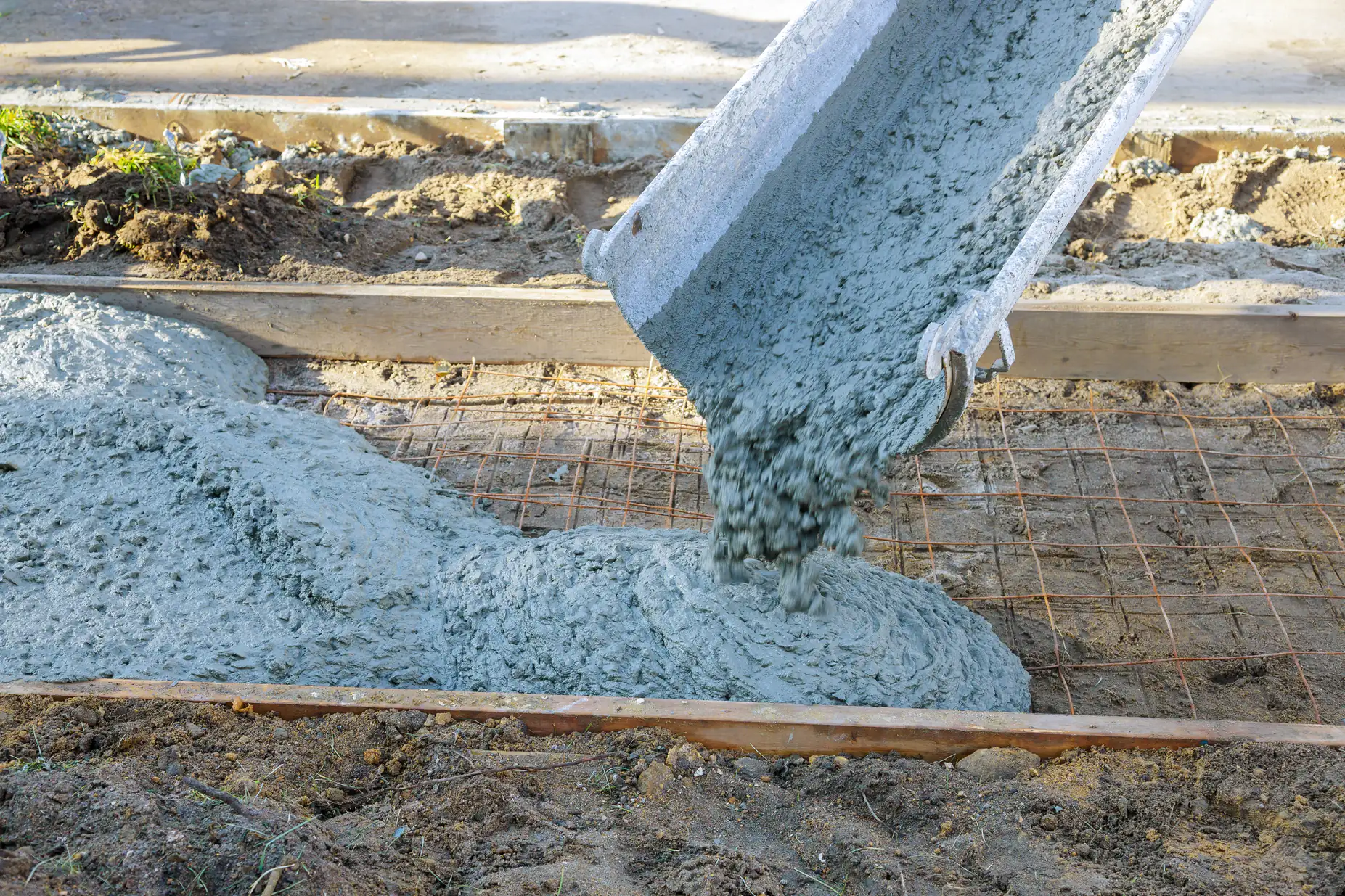
Then we prep the site. Old pavement gets removed if it needs to go. The base gets compacted properly because that’s what prevents settling. We use high-grade hot mix asphalt applied at the right temperature, or Portland cement mixes with rebar reinforcement for concrete work.
Finally, we finish and seal. The surface gets compacted to the right density. Edges are clean. If you’re getting asphalt, we’ll talk about when to seal it. You’ll know exactly what maintenance looks like and when to do it.
Ready to get started?
You get a thorough site evaluation before we touch anything. We’re checking for drainage problems that would undermine new pavement. We’re testing soil stability. We’re measuring existing surfaces and identifying why they failed if they did.
You get materials chosen for Essex County conditions. Hot mix asphalt that stays flexible through temperature swings. Binding agents and sealants that resist cracking. For concrete work, we use proper Portland cement mixes with rebar reinforcement, not the thin pours that crack in the first freeze.
You get a 24-48 hour callback guarantee when you request a quote online. Clear upfront pricing with no surprise charges. A timeline we actually follow. And you get surfaces designed to last 15-20 years with basic maintenance, not 5 years before you’re patching potholes.
This matters in Silver Lake CDP because your pavement faces some of the harshest conditions in New Jersey. Freeze-thaw cycles that would destroy poorly installed surfaces. Summer heat that softens weak asphalt. Heavy traffic that exposes every shortcut. We build for all of it.
Properly installed asphalt here typically lasts 15-20 years with appropriate maintenance. The key word is “properly.” That means a solid base, correct compaction, and materials rated for northern climates.
Essex County’s freeze-thaw cycles are brutal. Water seeps into small cracks, freezes, expands, and turns those cracks into potholes. Asphalt that’s too thin or poorly compacted fails fast. You’ll see surface cracking within two years and major deterioration by year five.
Quality installation makes all the difference. We’re talking about adequate base depth for soil conditions, proper drainage to keep water from pooling, and hot mix asphalt applied at the right temperature and compacted to the right density. Sealcoating every 2-3 years adds protection and extends life. Skip the sealcoating and you’re looking at more frequent repairs.
Asphalt handles freeze-thaw cycles better. It’s flexible, so it expands and contracts with temperature changes without cracking as easily. Concrete is rigid and more prone to cracking when water freezes underneath it.
Asphalt also melts snow faster because the dark surface absorbs and retains heat. That means less shoveling and fewer slip hazards in winter. It’s easier to repair too. If you do get a crack or pothole, patching asphalt is straightforward and blends well. Concrete repairs are more visible and harder to match.
Concrete does have advantages. It lasts longer if installed perfectly and never exposed to salt or freeze-thaw damage, but that’s not realistic here. It also offers decorative options like stamped patterns. For most residential driveways in Silver Lake CDP, asphalt is the smarter choice. It performs better in our climate and costs less to maintain.
Late spring through early fall. You need temperatures consistently above 50°F, ideally 70°F or higher. When it’s colder, asphalt cools too quickly and doesn’t compact properly. That creates a weak surface that fails early.
Most paving companies get slammed in spring because everyone’s dealing with winter damage at once. If you can schedule for late summer or early fall, you’ll often get faster service and sometimes better pricing. The weather’s still warm enough for proper installation, and the rush has died down.
Avoid paving in late fall or winter unless it’s an emergency repair. Even if you get a warm day, overnight temperatures drop and affect how the asphalt sets. You’re better off waiting until spring than risking a poor installation that won’t last. For repairs like crack sealing or patching, you have a bit more flexibility, but new installations really need warm, dry conditions.
Most residential driveways here run $3-7 per square foot depending on site conditions and materials. A standard two-car driveway is roughly 600 square feet, so you’re looking at $1,800 to $4,200 for basic asphalt installation.
That range exists because every property is different. If your existing driveway needs complete removal, costs go up. If drainage is poor and we need to regrade, that adds to it. If access is difficult or the base needs significant work, you’ll be on the higher end. Simple overlay on a solid existing base with good drainage? Lower end.
Commercial paving for parking lots runs $2.25-3.25 per square foot for milling and paving in Northern New Jersey. Larger projects often get better per-square-foot pricing, but they also involve more site work, striping, and drainage considerations. We give you a detailed quote after seeing your property because guessing without seeing the site just leads to surprise charges later.
Water is the main culprit. It seeps into tiny cracks, freezes, expands, and makes those cracks bigger. Every freeze-thaw cycle makes it worse. By spring, you’ve got potholes where you had hairline cracks in fall.
Poor drainage accelerates everything. If water pools on your driveway instead of running off, it’s constantly working its way into the pavement. Weak base preparation is another major cause. If the ground underneath isn’t properly compacted, the pavement settles unevenly and cracks along the stress points.
Prevention starts with proper installation. That means adequate base depth, correct compaction, proper grading for drainage, and quality materials. After installation, sealcoating every 2-3 years fills surface cracks before water gets in. Fixing small cracks immediately instead of waiting stops them from becoming big problems. And keeping your driveway clear of standing water and debris helps too.
We handle both. Commercial parking lots require different planning than residential driveways because of traffic volume, weight loads, and drainage complexity. A parking lot that handles delivery trucks needs a thicker base and stronger asphalt mix than a driveway that sees two cars.
We also deal with striping, ADA compliance, catch basins, and coordination with property managers. Commercial projects often need to be phased so businesses can stay operational. We’ve done parking lots for office buildings, retail centers, and industrial facilities throughout Morris, Sussex, and Somerset County.
The process is similar to residential work but scaled up. Site assessment, proper base preparation, quality materials, correct installation. The stakes are higher because a failing parking lot affects your business operations and liability. We treat commercial paving with the same attention to Essex County climate conditions. Your parking lot faces the same freeze-thaw cycles, just with heavier traffic making any weakness worse.