
Hear from Our Customers

A driveway or parking lot that doesn’t crack after one winter isn’t luck. It’s proper base prep, the right materials, and understanding what freeze-thaw cycles do to pavement in Essex County.
You’re not just getting a smooth surface. You’re getting drainage that works, edges that hold, and asphalt or concrete installed at the right temperature so it cures correctly. That means fewer repairs, less water damage, and a surface that actually lasts through the weather we get here.
When your pavement is done right from the start, you’re not calling someone back in two years. You’re not dealing with pooling water or crumbling edges. You’re getting what you paid for—a driveway that holds up and looks the way it should for a property in Short Hills, NJ.
We’ve been handling residential and commercial paving projects across Morris, Sussex, and Somerset Counties for over two decades. We’re not new to this area, and we’re not learning on your driveway.
We know what Short Hills properties need because we’ve paved hundreds of them. We understand local drainage issues, soil conditions, and how North Jersey winters treat asphalt differently than they do 40 miles south. That’s not something you pick up from a training video.
You’ll work with a crew that shows up on time, gives you a straight answer, and cleans up when the job’s done. We’re licensed, insured, and we’ve built our reputation one driveway at a time in towns just like yours.

We start with a site assessment. That means looking at drainage, checking the base, and figuring out what your property actually needs—not just what’s easiest to install. If there’s a grading issue or a drainage problem, we tell you before we start paving.
Next comes the prep work. We excavate to the right depth, compact the base properly, and make sure water has somewhere to go that isn’t your foundation. This is the part most paving companies near me rush through, and it’s the part that determines whether your driveway lasts five years or twenty.
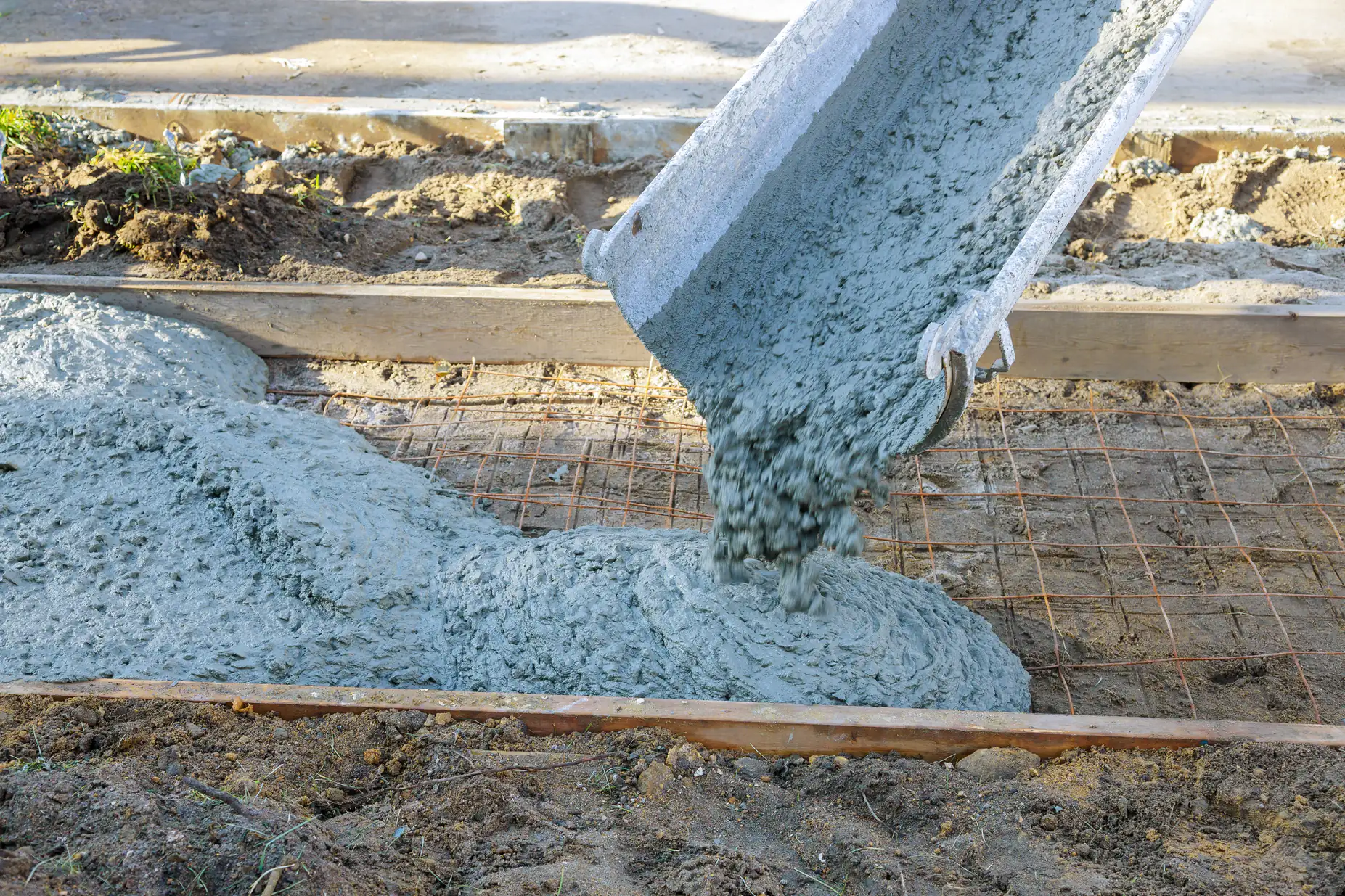
Then we pave. For asphalt, that means hot mix applied at the right temperature and compacted while it’s still workable. For concrete, it’s Portland cement with rebar reinforcement and proper curing time. We don’t cut corners to finish faster.
After the install, we clean up completely and walk you through maintenance. You’ll know when to seal, what to watch for, and how to get the most life out of your investment. Then we’re available if you need us—but if we did it right, you shouldn’t need us for a long time.
Ready to get started?
You’re getting more than just a crew with a paver. Every project includes full site prep, base evaluation, drainage planning, and material selection based on your specific property and how you’ll use the surface.
For asphalt driveways and parking lots, we use high-grade hot mix asphalt that’s engineered for the 40% more freeze-thaw cycles we see in North Jersey compared to Central or South Jersey. That’s not marketing talk—it’s the difference between pavement that cracks in two years and pavement that holds up for decades.
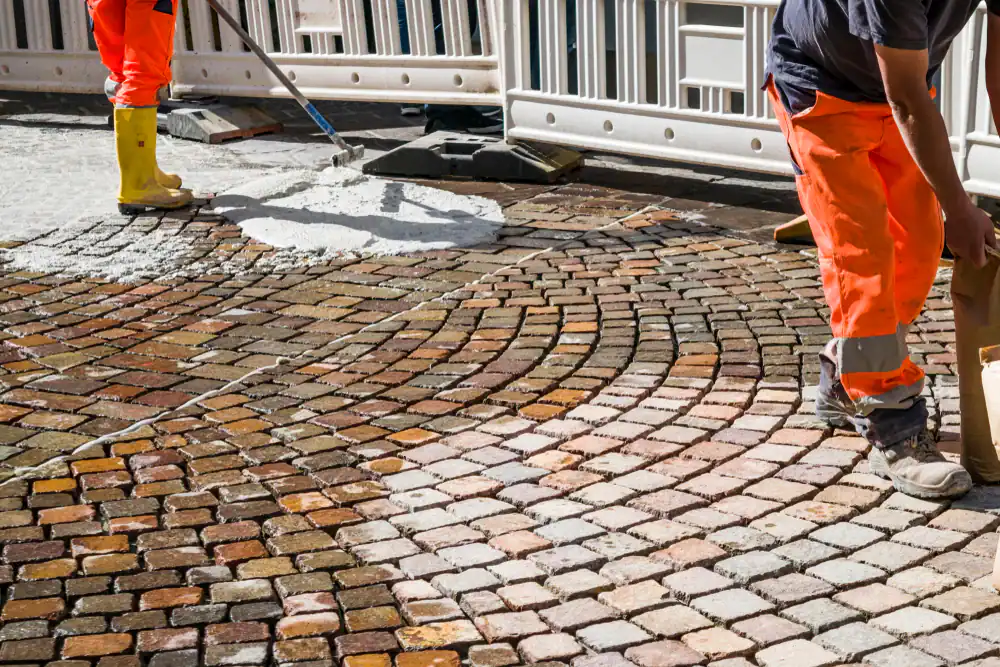
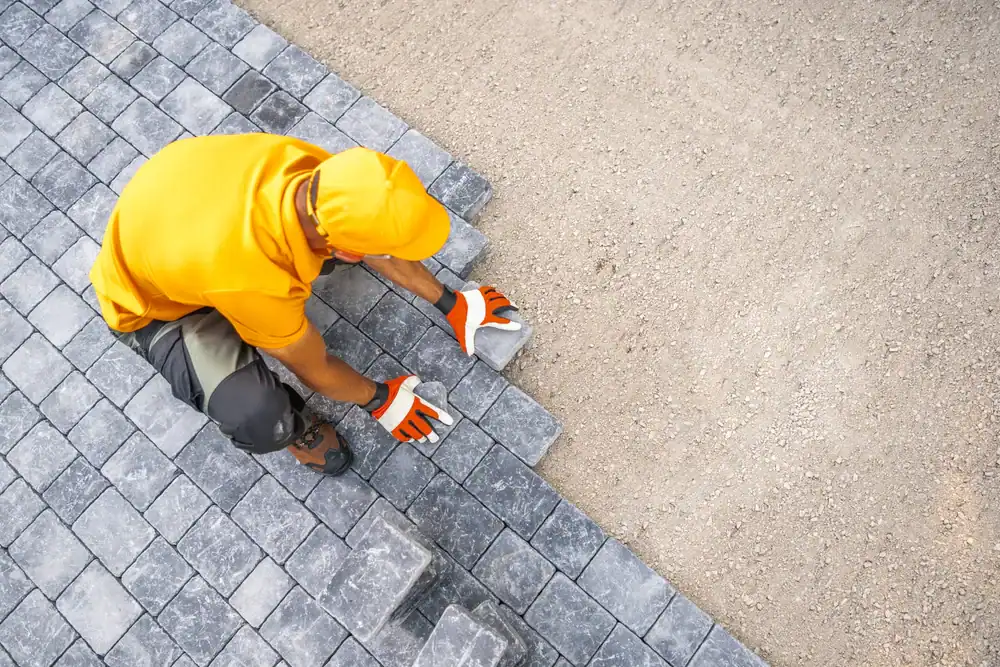
For concrete work, we offer standard poured concrete with rebar reinforcement, plus decorative stamped concrete if you want something that looks more upscale. Paver stones and paver patios are also available for walkways, pool decks, or areas where you want more design flexibility.
We handle permits, coordinate timing around weather, and give you a clear timeline upfront. No surprise charges. No vague estimates. You’ll know what you’re paying and what you’re getting before we start. And if we run into something unexpected underground, we’ll talk through options before we make changes.
Asphalt is more flexible, which helps it handle freeze-thaw cycles without cracking as easily. It’s also faster to install and typically costs less upfront. You’ll need to seal it every few years to protect it from water and UV damage, but maintenance is straightforward.
Concrete is more rigid and can last longer without regular sealing, but it’s more prone to cracking if the base isn’t perfect or if water gets underneath and freezes. It also takes longer to cure—usually about a week before you can drive on it. Concrete gives you more design options, especially if you want decorative stamping or color.
For Short Hills properties, both work well if installed correctly. The choice usually comes down to budget, aesthetics, and how much maintenance you want to deal with. Most homeowners here go with asphalt for driveways because it handles our winters better and costs less to repair if something does go wrong.
For a standard residential driveway, you’re looking at two to four days depending on size and site conditions. That includes excavation, base prep, grading, and paving.
Day one is usually demo and excavation if you’re replacing an old driveway. We remove the old surface, dig down to the right depth, and haul away debris. Day two is base work—bringing in gravel, grading for drainage, and compacting everything properly.
Paving happens on day three for asphalt, and you can usually drive on it within 24 hours. Concrete takes longer to cure—you’ll need to stay off it for about seven days. Weather affects timing, especially in spring and fall when temperatures swing. We won’t pave if it’s too cold or if rain is coming, because that compromises the install.
Because the cracks aren’t the problem—they’re the symptom. The real issue is usually water getting into the base and freezing. When water freezes, it expands with enough force to crack asphalt or concrete. Then it melts, the crack gets bigger, more water gets in, and the cycle repeats.
If your driveway keeps cracking in the same spots, there’s either a drainage problem or the base wasn’t compacted properly when it was installed. Patching the surface doesn’t fix that. You need to address what’s happening underneath.
In Short Hills and the rest of Essex County, we see this constantly because of how many freeze-thaw cycles we get each winter. A driveway that would last 15 years in Virginia might only last 8 here if it’s not built to handle the expansion and contraction. Proper grading, a solid compacted base, and good drainage aren’t optional—they’re the only way to stop the cracking cycle.
Usually, yes. Short Hills is part of Millburn Township, and they require permits for most driveway work, especially if you’re changing the size, grade, or drainage. The permit process ensures the work meets local codes and doesn’t create runoff problems for neighboring properties.
Your paving contractor should handle the permit application as part of the project. It’s not complicated, but it does add a week or two to the timeline before work can start. The township wants to see a site plan showing dimensions, drainage, and how stormwater will be managed.
If you’re just resurfacing an existing driveway without changing anything structural, you might not need a permit. But it’s worth confirming before you start. Doing unpermitted work can cause issues if you ever sell the house or if a neighbor complains about drainage. We pull permits for every job that requires one, so you don’t have to worry about it.
Late spring through early fall—basically May through October. Asphalt needs to be installed when temperatures are consistently above 50 degrees so it can compact and cure properly. If it’s too cold, the material hardens before it’s fully compacted, and you end up with a weaker surface.
Summer is ideal because you get warm ground temperatures and predictable weather. The asphalt stays workable longer, which means better compaction and a smoother finish. Concrete can be poured in cooler weather, but it cures slower, which extends the timeline.
We don’t recommend paving in late fall or winter in North Jersey. Even if you get a warm day, the ground temperature is still cold, and that affects how well the base and pavement bond. If you need emergency repairs in winter, we can do temporary patches, but full installations should wait until spring.
For asphalt, you’re typically looking at $8 to $15 per square foot depending on the condition of the base, how much excavation is needed, and site access. A standard two-car driveway runs between $5,000 and $12,000. Concrete costs more—usually $12 to $20 per square foot, or $7,000 to $18,000 for the same size driveway.
Those ranges cover full removal and replacement with proper base prep. If you’re just resurfacing asphalt that’s in decent shape, the cost drops to around $3 to $6 per square foot. But resurfacing only works if the base is solid and there aren’t major drainage issues.
Decorative options like stamped concrete or paver stones cost more—sometimes $20 to $30 per square foot depending on the pattern and materials. Every property is different, so the best way to get an accurate number is to have someone look at your site. We give clear upfront pricing with no hidden fees, and we’ll walk you through what’s driving the cost so you understand what you’re paying for.