
Hear from Our Customers

You’re looking at a surface that handles New Jersey’s freeze-thaw cycles without cracking apart by year three. That means proper excavation depth, compacted aggregate base, and hot mix asphalt applied at the right temperature—not shortcuts that look fine until next spring.
Your driveway or parking lot becomes an asset, not a liability. No more standing water after storms. No more patching the same spots every year. No more explaining to customers why your lot looks like a minefield.
When the work’s done right, you’re looking at 15 to 20 years of performance with basic maintenance. That’s sealcoating every few years and crack filling when needed—not a full replacement because someone skipped the base prep to save a few bucks on the quote.
Platinum Paving is a third-generation paving contractor based in Morris County. We’ve been handling asphalt and concrete work throughout Rockaway, Dover, Morristown, and surrounding towns for over 20 years.
We’re not the cheapest option you’ll find. We’re the one that shows up when we say we will, explains what needs to happen and why, and guarantees the work with actual warranties that cover materials and labor—typically 2 to 5 years depending on the scope.
You’ll get a callback within 24 to 48 hours after requesting a quote online. No runaround, no pressure tactics, just a straightforward conversation about what your property needs and what it’ll cost.

First, we measure and assess your site. That includes checking drainage, looking at the existing base if there is one, and identifying any soft spots or problem areas that’ll cause issues down the road if ignored.
Next comes excavation if needed. We remove failed material and build a properly graded, compacted aggregate base—usually 4 to 6 inches depending on traffic load. This step determines whether your pavement lasts 5 years or 20, so we don’t skip it.
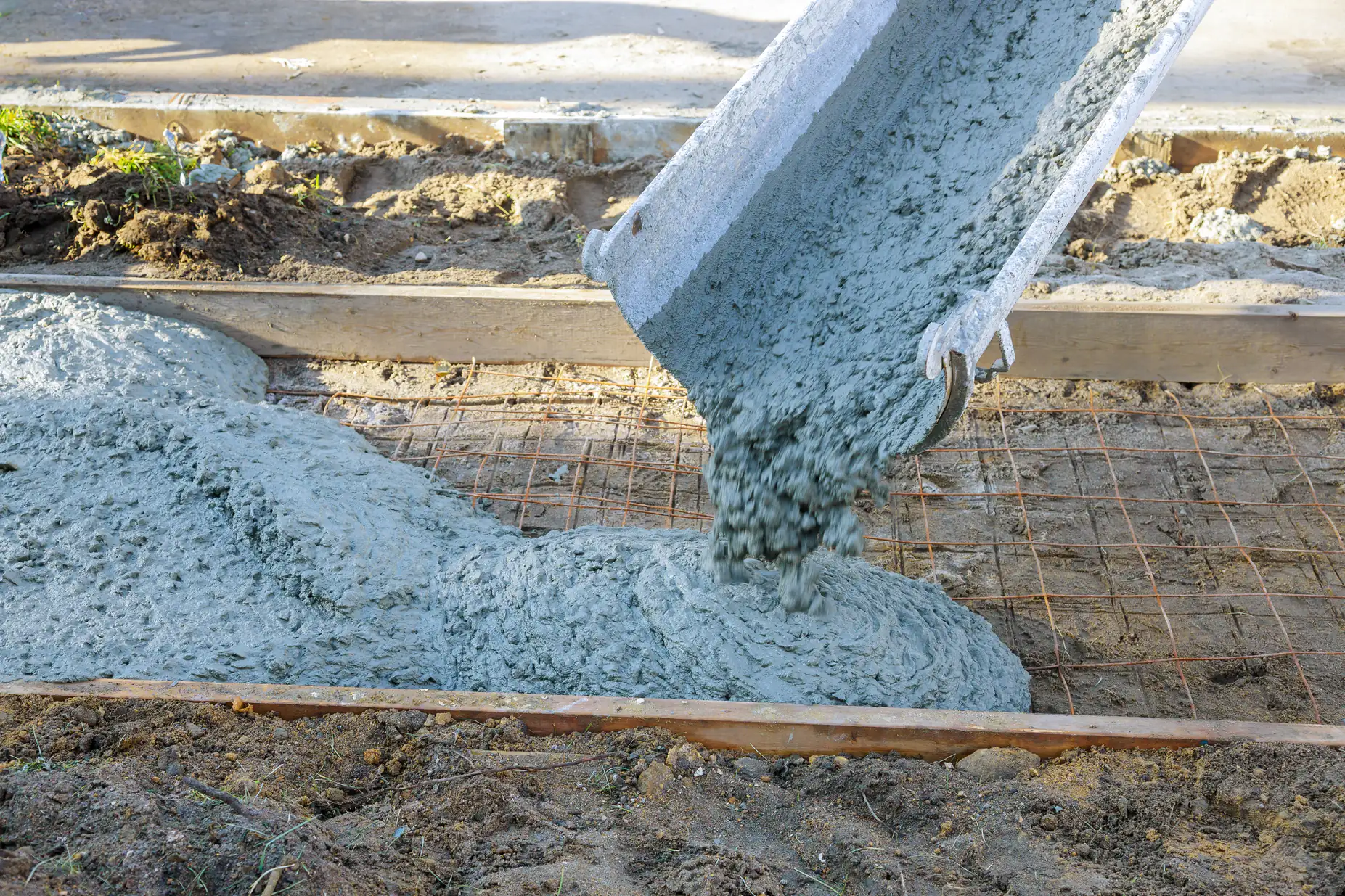
Then we apply high-grade hot mix asphalt at the proper temperature, or pour Portland cement concrete with rebar reinforcement if that’s the better fit for your project. For decorative work, we offer stamped concrete patterns that hold up better than pavers in freeze-thaw conditions.
Final grading ensures water drains away from structures. We’re not leaving until the site’s clean and the surface is ready for traffic within 24 to 48 hours for asphalt, or 7 days for concrete.
Ready to get started?
You’re getting new construction, resurfacing, or full-depth repair depending on what your property actually needs—not what’s easiest to sell. That includes driveways, parking lots, walkways, and paver patios using quality materials from established manufacturers.
Rockaway’s weather is brutal on pavement. You’ve got freeze-thaw cycles all winter, heavy spring rains, summer heat that softens asphalt, and fall moisture that seeps into cracks. We account for that in our mix design and installation process, selecting binder grades and aggregate characteristics that match local temperature swings.
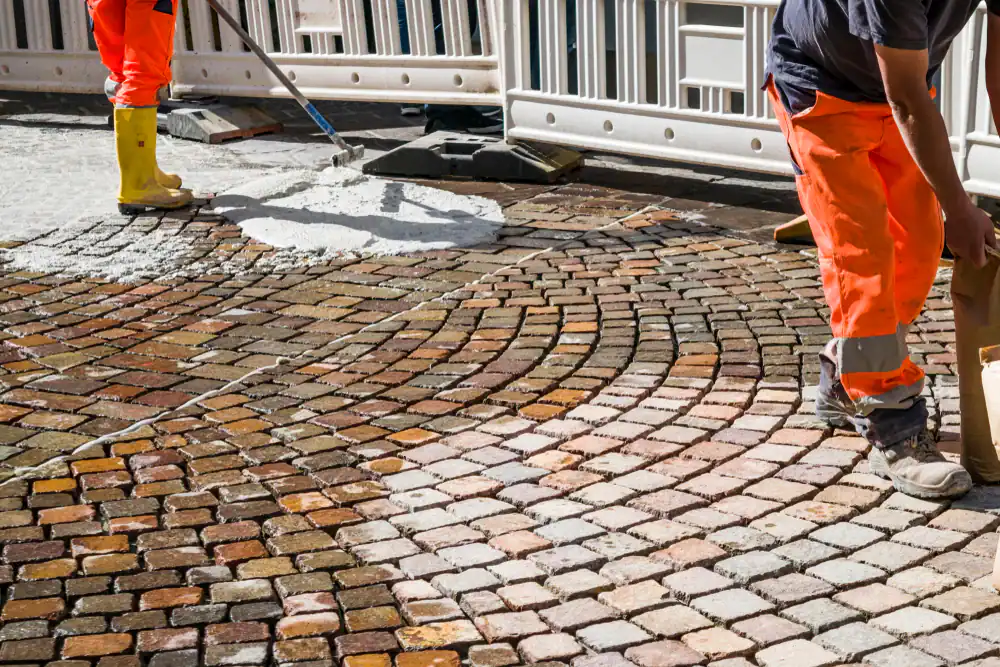
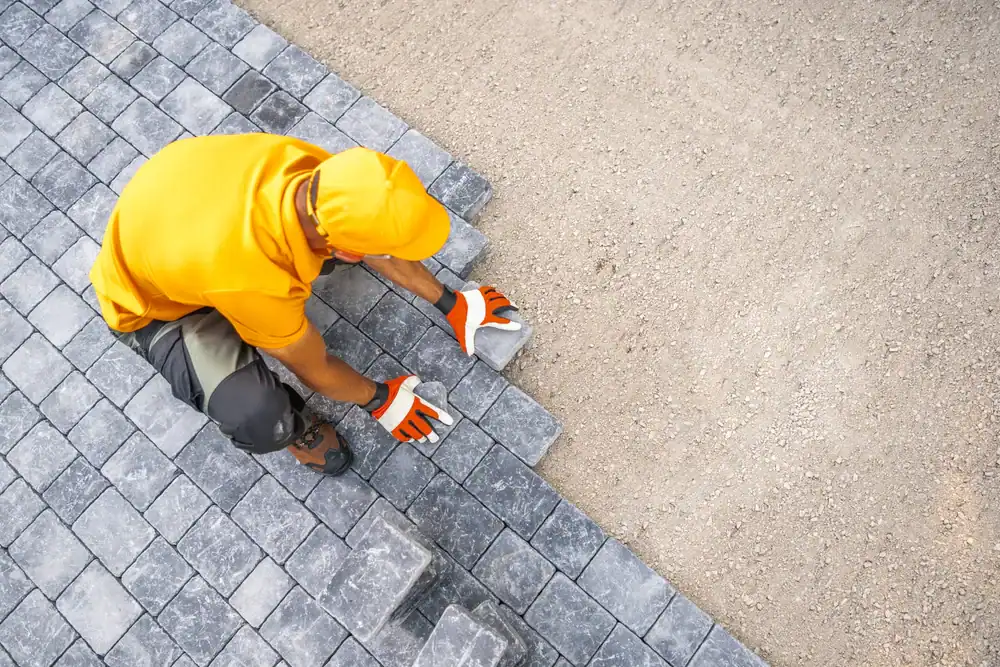
Maintenance services include sealcoating to extend surface life, crack filling to prevent water intrusion, parking lot striping for commercial properties, and drainage solutions when water’s causing problems. We also handle decorative paver stones for patios and walkways when you want something beyond standard blacktop or concrete.
Commercial clients get flexible scheduling—evenings or weekends if that’s what keeps your business running. Residential clients get the same attention to detail without the markup some companies add just because it’s a driveway instead of a parking lot.
Most residential driveways in Rockaway run between $3,000 and $7,000 depending on size, current condition, and how much base work is needed. A standard two-car driveway that’s roughly 600 square feet with moderate prep work typically lands around $4,500 to $5,500.
That price includes excavation of failed material if present, 4 to 6 inches of compacted aggregate base, 2 to 3 inches of hot mix asphalt, and proper grading for drainage. If your existing base is solid and just needs resurfacing, costs drop because we’re only adding a new asphalt layer.
Prices have climbed over the past few years—liquid asphalt went from $299 per ton in 2016 to $460 per ton in 2021, and it hasn’t dropped much since. That’s why getting work done sooner rather than later usually saves money, since materials costs tend to increase at the start of each season.
Properly installed asphalt lasts 15 to 20 years in New Jersey if you maintain it. That means sealcoating every 2 to 3 years and filling cracks before they spread. Skip maintenance and you’re looking at 8 to 12 years before you need major repairs or replacement.
New Jersey’s freeze-thaw cycles are the main enemy. Water seeps into small cracks, freezes, expands, and breaks the pavement apart from underneath. Once that process starts, it accelerates fast. Sealcoating blocks water penetration and protects the binder from UV damage and chemical spills.
Base preparation matters more than the asphalt itself. If the aggregate base isn’t properly compacted or thick enough for the traffic load, the surface will crack and deform no matter how good the asphalt is. That’s why cheap quotes that skip base work end up costing more—you’re repaving in 5 years instead of 15.
Resurfacing means milling off the top layer of damaged asphalt and applying a new 1.5 to 2-inch surface layer over the existing base. It works when the base is still solid but the surface is worn, cracked, or faded. Costs about 40% to 60% less than full replacement.
Full-depth replacement means tearing out everything down to the subgrade, rebuilding the aggregate base, and installing new asphalt. You need this when the base has failed—soft spots, major settling, alligator cracking, or drainage problems that resurfacing won’t fix.
Most driveways older than 20 years need full replacement unless they were overbuilt initially. Parking lots depend on traffic volume and maintenance history. We’ll tell you which one makes sense after looking at the site—there’s no point resurfacing over a failed base just to do the job twice.
Usually yes, especially if you’re changing the driveway footprint, altering drainage patterns, or working near the street. Rockaway Township requires permits for most paving work to ensure proper grading, stormwater management, and compliance with local codes.
Your contractor should handle permit applications as part of the job. It’s not complicated, but it does require submitting site plans and waiting for approval before work starts. Skipping permits can result in fines and potentially having to tear out the work if an inspector shows up.
Some simple resurfacing jobs within the existing footprint might not require permits, but it’s worth confirming with the township building department before starting. Most reputable paving companies near Rockaway know local requirements and factor permit costs into quotes upfront—if someone’s pushing to skip permits to save money, that’s a red flag.
Asphalt costs less upfront, handles freeze-thaw cycles better, and is easier to repair when damage occurs. Concrete lasts longer if maintained properly but costs roughly twice as much and can crack badly if the ground shifts underneath. For most Rockaway homeowners, asphalt makes more sense.
Concrete works well for decorative applications where you want stamped patterns or specific colors. It also handles heavy loads better, which matters for commercial properties with truck traffic. But in residential settings with New Jersey winters, asphalt’s flexibility gives it an edge—it expands and contracts with temperature changes instead of cracking.
Maintenance differs too. Asphalt needs sealcoating every few years but repairs are straightforward and blend in well. Concrete doesn’t need sealing as often but when it cracks, repairs are visible and expensive. If you’re prioritizing durability and cost-effectiveness for a standard driveway, asphalt is usually the better choice.
You can drive on new asphalt within 24 to 48 hours after installation, but it takes about 6 to 12 months to fully cure and reach maximum hardness. During the first few days, avoid sharp turns with the wheel stationary and don’t park in the same spot repeatedly—the surface is still soft and can mark.
Hot weather extends the waiting period because asphalt stays softer longer when temperatures are above 85 degrees. Cold weather speeds it up. We’ll give you specific guidance based on conditions when we finish your job.
For the first year, be gentle with the surface. Don’t use kickstands on motorcycles or jack stands directly on the asphalt. Avoid gasoline or oil spills—they break down the binder. After the first winter, the pavement’s fully cured and you can treat it normally. Sealcoating after the first year adds a protective layer and extends the surface life significantly.