
Hear from Our Customers

A driveway or parking lot that lasts starts with understanding what breaks pavement in the first place. Around here, it’s not just traffic. It’s water getting into cracks, freezing overnight, and expanding with enough force to split asphalt wide open.
When water freezes, it exerts up to 30,000 psi of pressure. That’s why a hairline crack in October becomes a pothole by March. North Jersey sees 40% more freeze-thaw cycles than Central or South Jersey, which means your pavement takes a beating most contractors don’t account for.
Proper installation means grading for drainage first, compacting a solid base, and using hot mix asphalt applied at the right temperature. It means thinking about what happens when snow melts in February, not just how it looks in July. When it’s done right, you’re looking at 20 years of use instead of repairs every few seasons.
We’ve been working in Morris, Sussex, and Somerset Counties for over 20 years. We’re not new to Pleasantdale’s soil conditions or how temperature swings affect base stability around here.
Our crew handles residential driveways, commercial parking lots, and everything in between. We use high-grade hot mix asphalt and Portland cement mixes reinforced with rebar when concrete makes more sense. The owner, Dominick, is on-site from start to finish, not just for the estimate.
You’ll get a callback within 24 to 48 hours after requesting a quote online. No runaround, no disappearing after the deposit. Just clear pricing and a schedule we actually stick to.

First, we assess your site. That means looking at drainage, soil composition, and how water currently moves across your property. Poor drainage destroys pavement faster than almost anything else, so if there’s a problem, we address it before we pour anything.
Next comes site prep. We excavate to the right depth, grade for proper water runoff, and compact a solid aggregate base. This step determines whether your pavement lasts two decades or two years. Shortcuts here always show up later.
Then we apply the surface. For asphalt, that’s hot mix applied at the correct temperature and compacted for a dense, resilient finish. For concrete, it’s a strong Portland cement mix, often with rebar reinforcement, finished to your specs—whether that’s a standard broom finish or decorative stamped patterns.
After installation, we walk you through maintenance. Sealcoating asphalt every few years. Crack sealing before winter. Small steps that turn a $200 repair into avoiding a $2,000 one.
Ready to get started?
Every project starts with proper site preparation. We’re talking about grading that actually directs water away from your foundation, not toward it. We compact the base in layers because that’s what prevents settling and cracking down the road.
For asphalt work, we use high-grade hot mix asphalt designed for northern New Jersey’s climate. The mix matters. So does the temperature when it’s applied and how it’s compacted. Get any of those wrong and you’re looking at premature failure.
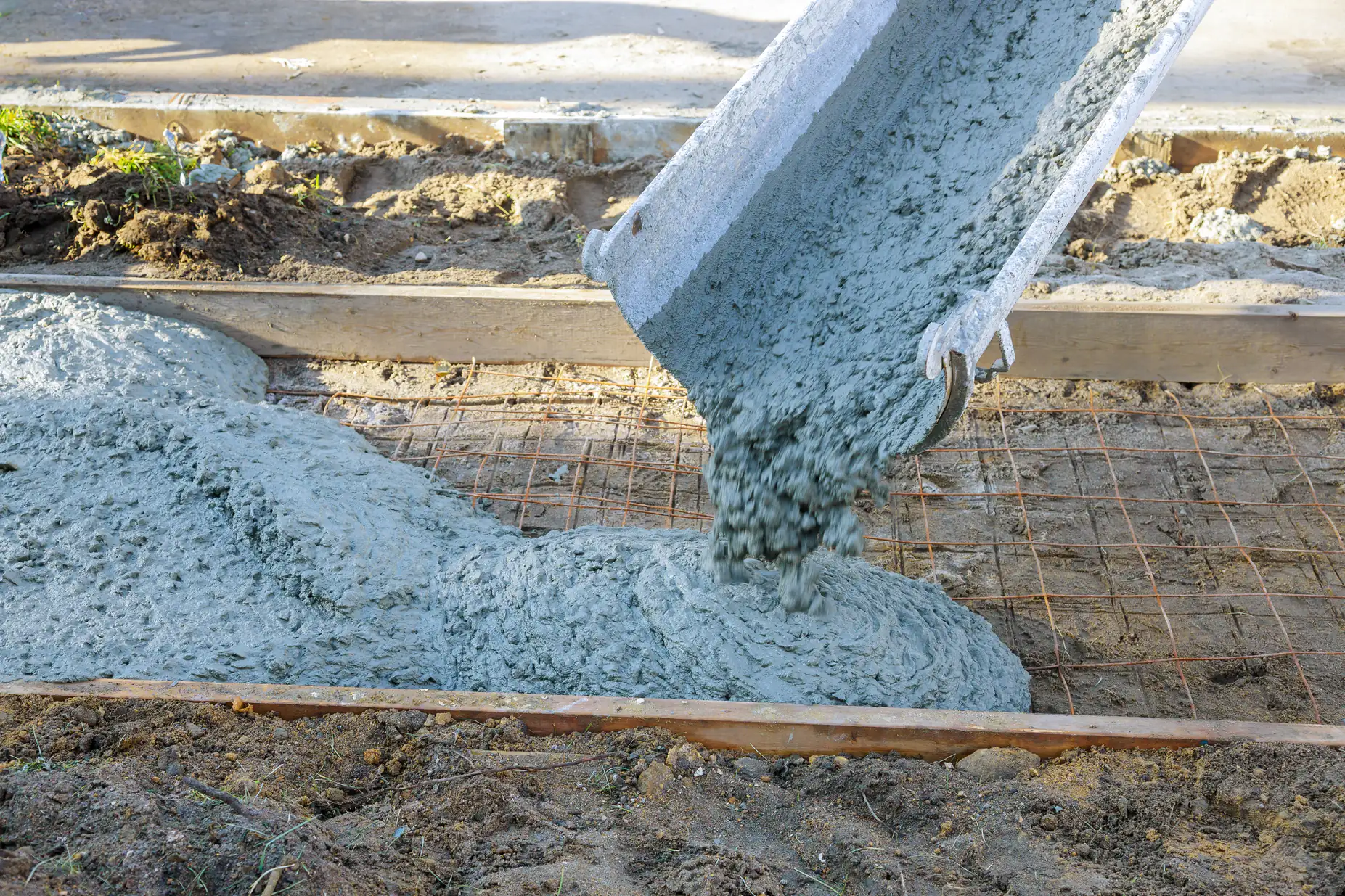
Concrete projects get the same attention. We use Portland cement mixes with rebar reinforcement for driveways and parking areas that see heavy use. If you want decorative stamped concrete, we offer that too—patterns that hold up to weather and traffic, not just look good for a season.
You’ll also get transparent pricing up front. No surprise charges when the job’s halfway done. And if something comes up during excavation—a drainage issue or soil problem—we’ll explain what it is, why it matters, and what it costs to fix before moving forward.
Properly installed asphalt should last 15 to 20 years in this area, but that depends entirely on installation quality and maintenance. North Jersey’s freeze-thaw cycles are brutal. We see 40% more of them than Central Jersey, and each cycle puts stress on your pavement.
If the base wasn’t compacted right or drainage wasn’t addressed during installation, you’ll start seeing cracks and settling within five years. Water gets in, freezes, expands, and breaks the asphalt apart from underneath. That’s not a material problem—it’s an installation problem.
Regular maintenance extends life significantly. Sealcoating every two to three years protects the surface from UV damage and water penetration. Crack sealing before winter prevents small issues from becoming expensive ones. A $200 crack sealing job in the fall can save you from a $2,000 pothole repair in the spring.
Asphalt costs less up front and handles freeze-thaw cycles better because it flexes slightly. Concrete costs more initially but lasts longer and offers more design options like stamped patterns or decorative finishes.
Asphalt needs sealcoating every few years to maintain its protective layer. It’s also easier to repair—you can patch sections without it being obvious. Concrete doesn’t need sealcoating, but if it cracks, repairs are more visible and often more expensive.
For Pleasantdale’s climate, both work well if installed correctly. The choice usually comes down to budget and aesthetics. If you want a lower upfront cost and don’t mind periodic maintenance, asphalt makes sense. If you want something that requires less ongoing attention and offers more visual options, concrete is worth the investment.
Because standing water destroys pavement faster than traffic ever will. When water sits on or near your driveway or parking lot, it seeps into small cracks and the base layer underneath. In winter, that water freezes and expands, creating pressure that cracks asphalt and shifts concrete.
Proper grading directs water away from the pavement and your foundation. That means sloping the surface so water runs off to appropriate drainage areas, not pooling in low spots or running toward your house. Many properties in this area have clay-heavy soil that doesn’t drain well naturally, which makes proper grading even more critical.
We also look at where water is coming from—downspouts, neighboring properties, natural grade. If there’s a drainage problem, we address it during site prep. Fixing it after the pavement is down costs significantly more and usually means tearing out sections to regrade properly.
Most residential driveways in this area run between $3,000 and $8,000 depending on size, material, and site conditions. A standard two-car asphalt driveway typically falls in the $4,000 to $6,000 range. Concrete costs more—usually $6,000 to $10,000 for the same size.
Site prep affects cost significantly. If we need to excavate deeper due to poor soil, address drainage issues, or remove old pavement, that adds to the total. Properties with challenging access or significant grading needs cost more because they require more labor and materials.
We provide clear estimates after assessing your property. That includes breaking down material costs, labor, site prep, and any additional work needed. No vague ranges or surprise charges halfway through. If something unexpected comes up during excavation, we explain what it is and what it costs before proceeding.
Late spring through early fall—roughly May through October—offers the best conditions for paving. Asphalt needs warm temperatures to cure properly, and concrete needs moderate temperatures to set without cracking.
Asphalt should be installed when temperatures are consistently above 50 degrees, ideally between 70 and 90 degrees. Cold weather causes asphalt to cool too quickly, preventing proper compaction. Hot mix asphalt applied in cold conditions won’t bond correctly and will fail prematurely.
Concrete is more forgiving with temperature but still needs to cure without freezing. Extreme heat can cause it to set too quickly and crack, while freezing temperatures during the curing process will ruin the structural integrity. Spring and fall offer the most stable conditions for concrete work in this area.
Usually, yes. Most municipalities in Morris County require permits for new driveway installation or significant repaving work. Requirements vary by town, but generally you’ll need a permit if you’re changing the driveway’s footprint, altering drainage, or doing major reconstruction.
Simple resurfacing—putting a new layer of asphalt over an existing driveway in good condition—sometimes doesn’t require a permit, but that depends on local ordinances. It’s worth checking with your local building department before starting work.
We handle permit applications as part of our service. That includes submitting site plans, ensuring the work meets local codes, and coordinating inspections if required. Skipping permits can create problems if you sell your home later, and some towns actively enforce violations with fines or orders to remove unpermitted work.