
Hear from Our Customers

You’re tired of watching cracks spread across your driveway every spring. Water pools near your garage. The surface looks worn before it should.
A properly installed driveway changes that. The right base preparation stops premature cracking. Correct grading prevents water from sitting where it shouldn’t. Quality materials—whether hot mix asphalt or reinforced concrete—give you a surface that handles Morris County weather without falling apart in five years.
Your property value goes up. Maintenance costs go down. And you stop worrying about what your driveway looks like when someone pulls up to your house.
That’s what happens when the foundation work is done right and the materials match what Lake Hiawatha properties actually need.
We’ve been installing driveways and parking lots across Morris County for over 20 years. That means we know what works in Lake Hiawatha—and what fails after the first winter.
We’re licensed, insured, and based right here in Morris County. We’re not showing up with leftover asphalt from another job or disappearing after we collect payment. You get upfront pricing, a clear timeline, and a crew that knows the difference between doing it fast and doing it right.
Lake Hiawatha sits near I-80 and I-287, which means your driveway sees regular use. We account for that. We also account for drainage patterns common to properties near the lake, soil conditions in Parsippany-Troy Hills, and the freeze-thaw cycles that crack poorly installed pavement every single year.

It starts with site evaluation. We look at your existing surface, drainage, soil conditions, and how you’ll use the space. That tells us what prep work is required and which materials make sense for your property.
Next comes excavation and base installation. We remove old pavement if needed, grade the area for proper water runoff, and compact the sub-base. This step determines whether your driveway lasts 15 years or starts cracking in three. Most failures happen because this part was rushed.
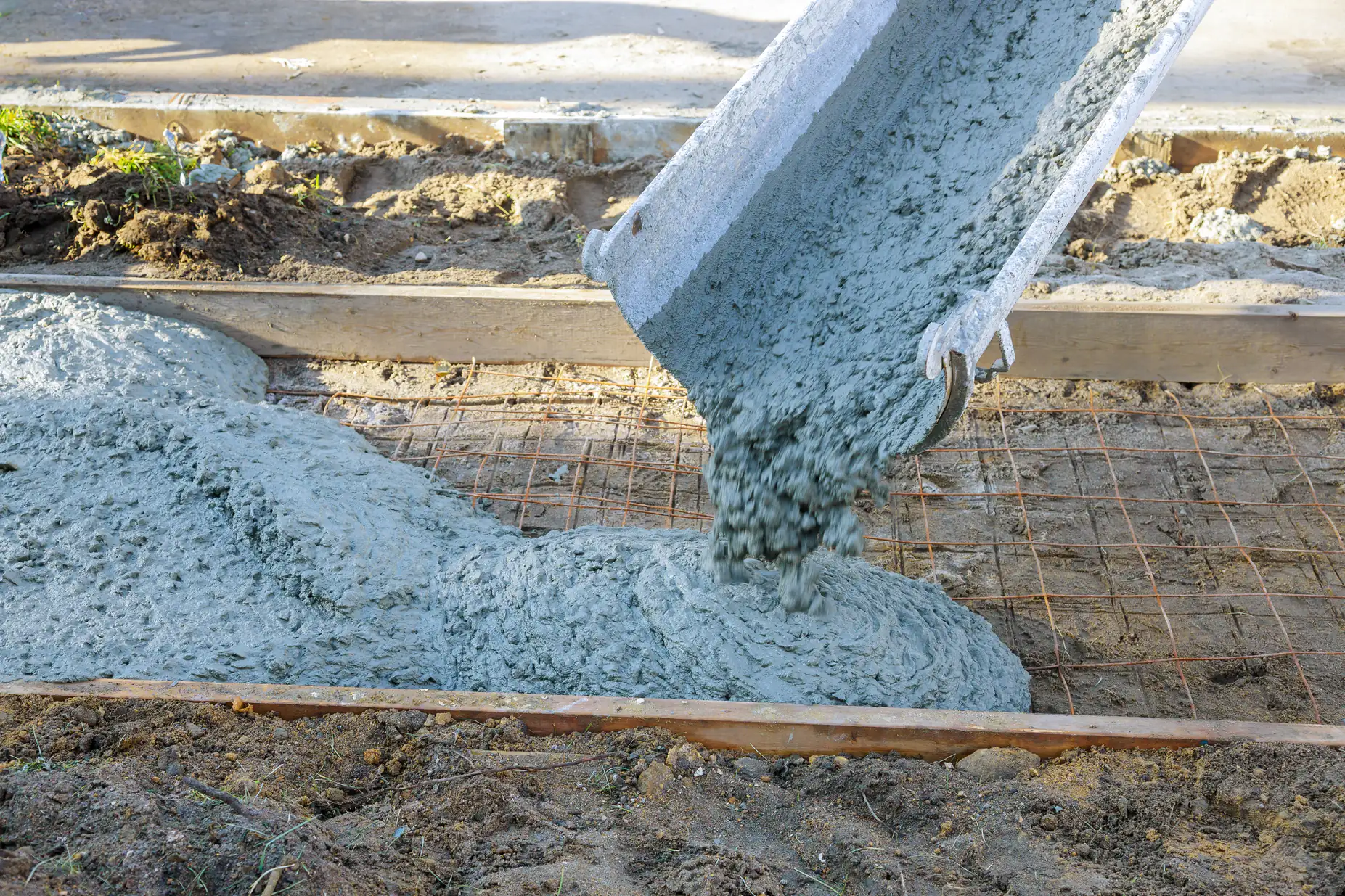
Then we install the surface. For asphalt, that means applying hot mix at the right temperature and compacting it while it’s still workable. For concrete, it’s pouring a Portland cement mix—often with rebar reinforcement—and finishing it to the correct slope and texture.
A standard residential driveway in Lake Hiawatha usually takes one to three days, depending on size and site conditions. Larger commercial projects take longer. We’ll give you a realistic timeline upfront, and we stick to it.
Ready to get started?
You get proper site preparation—excavation, grading, and base compaction done to prevent future settling or cracking. We don’t skip steps to finish faster.
You get materials suited to New Jersey’s climate. For asphalt, that’s high-grade hot mix asphalt applied at proper temperature. For concrete, it’s durable Portland cement mixes, often reinforced with rebar for added strength. We also offer decorative stamped concrete if you want something beyond a standard finish.
You get clear communication. We walk you through what’s happening at each stage, answer questions without making you feel like you’re bothering us, and keep you updated if anything changes.
Lake Hiawatha properties often deal with drainage challenges due to proximity to the lake and local soil conditions. We factor that into every job. Proper slope and grading aren’t extras—they’re part of the baseline work that keeps water from pooling on your driveway or eroding your foundation.
And you get pricing that doesn’t change halfway through the project. No surprise charges. No “we found something else” upsells unless there’s a legitimate issue we couldn’t see until excavation—and even then, we talk to you before moving forward.
A properly installed asphalt driveway typically lasts 15 to 20 years in Morris County, assuming you keep up with basic maintenance like sealcoating every few years. The lifespan depends heavily on the quality of the base preparation and how well the surface was compacted during installation.
Lake Hiawatha’s freeze-thaw cycles are tough on asphalt. Water seeps into small cracks, freezes, expands, and makes those cracks bigger. If the base wasn’t compacted correctly or the drainage wasn’t set up to move water off the surface, you’ll see premature cracking and settling.
That’s why the prep work matters more than the top layer. A driveway installed over a poorly compacted base might look fine for a year or two, but it won’t make it to 15. We spend the time on excavation, grading, and compaction because that’s what actually determines how long your driveway lasts.
Asphalt costs less upfront and can be installed faster. It’s flexible, which helps it handle ground movement without cracking as easily. It does require sealcoating every two to three years to protect it from UV damage and water infiltration. Lifespan is usually 15 to 20 years with proper maintenance.
Concrete costs more initially and takes longer to cure—you’re usually waiting about a week before you can drive on it. But it lasts longer, often 25 to 30 years or more, and it doesn’t need sealcoating. It’s more rigid, so it can crack if the ground shifts or if the base wasn’t prepared correctly. You can also add decorative finishes like stamping or coloring, which isn’t an option with asphalt.
For Lake Hiawatha properties, both work well if installed correctly. Asphalt is the more common choice for residential driveways because of the lower cost and faster installation. Concrete makes sense if you want a longer lifespan and don’t mind the higher upfront investment.
Check that they’re licensed and insured to work in Morris County. Any legitimate paving company will provide proof of both without hesitation. Insurance protects you if something goes wrong on your property. Licensing confirms they meet the requirements to do the work legally.
Ask for references or examples of recent work in Lake Hiawatha or nearby towns. A contractor who’s been operating locally for years should have no problem providing that. Be wary of anyone who shows up unsolicited offering steep discounts for “leftover materials” from another job—that’s a common scam in the paving industry.
Get everything in writing. The scope of work, materials being used, timeline, and total cost should all be documented before any work starts. If a contractor is vague about pricing or won’t commit to a written agreement, walk away. You should also avoid paying the full amount upfront. A deposit is normal, but the bulk of payment should come after the work is completed to your satisfaction.
Most cracking comes from poor base preparation, inadequate drainage, or freeze-thaw cycles. If the ground beneath your driveway wasn’t compacted properly, it will settle unevenly over time. That creates stress points where cracks form. Water is the other major culprit—when it pools on the surface or seeps into the base, it weakens the structure.
In Lake Hiawatha, freeze-thaw cycles accelerate the problem. Water gets into small cracks, freezes overnight, expands, and makes the crack bigger. By spring, you’ve got a problem that needs repair. Proper grading during installation prevents water from pooling. A well-compacted base prevents settling. And regular maintenance—like sealcoating asphalt every few years—keeps water from penetrating the surface.
You can’t eliminate cracking entirely. Asphalt and concrete both expand and contract with temperature changes. But you can significantly reduce it by making sure the installation is done right from the start. That means hiring a paving contractor who doesn’t cut corners on excavation, base prep, and drainage.
Cost depends on size, material choice, site conditions, and how much prep work is needed. Asphalt typically runs less per square foot than concrete, but you’ll need to factor in sealcoating costs every few years. Concrete costs more upfront but requires less ongoing maintenance.
If your existing driveway needs to be removed, that adds to the cost. If there are drainage issues or the ground needs significant grading, that also increases the price. A straightforward residential driveway replacement on a property with good drainage and minimal site prep will cost less than a job that requires extensive excavation and base work.
We provide upfront quotes that break down what’s included. No vague estimates or surprise charges later. Material costs have been rising over the past few years—asphalt prices in particular have gone up significantly—but we’re transparent about pricing from the start. You’ll know what you’re paying for and why before we start any work.
It depends on the condition of the existing surface. If your current driveway has minor surface damage but a solid base, an overlay might work. That’s where we apply a new layer of asphalt over the old one. It’s faster and costs less than full removal and replacement.
But if the base is compromised—meaning there’s significant cracking, settling, or drainage problems—an overlay won’t fix the underlying issue. You’ll just end up with the same problems showing through the new layer within a year or two. In those cases, full removal and proper base preparation are necessary.
We evaluate the existing surface before recommending a solution. If an overlay makes sense and will actually hold up, we’ll tell you. If the base needs to be redone, we’ll explain why. The goal is a driveway that lasts, not a quick fix that fails in a few years.