
Hear from Our Customers

You’re not paying for fresh blacktop. You’re paying to stop dealing with the same cracks, the same water pooling, the same emergency calls every year.
When pavement is installed right for this climate, water drains where it should. The base doesn’t shift when the ground freezes. Your driveway doesn’t turn into a liability when someone pulls in during winter.
That’s what happens when site prep isn’t rushed, when the base is compacted correctly, and when the asphalt goes down at the right temperature. Most paving contractors near you skip one of those steps. The pavement looks fine for six months, then falls apart.
Hopatcong sits in one of the hardest climates for pavement in New Jersey. You get more freeze-thaw cycles than most of the state. Water gets into cracks, freezes, expands, and tears apart anything that wasn’t built to handle it. If your contractor doesn’t account for that, you’re repaving in five years instead of fifteen.
We’ve spent over 20 years working in Morris, Sussex, and Somerset Counties. We’re not a franchise. We’re not flipping crews between states.
Every job gets walked by someone who knows what North Jersey weather does to pavement. We’ve seen what happens when drainage isn’t handled. We’ve torn out work from companies that used cold asphalt or skipped compaction.
You’ll talk to the same people from estimate to cleanup. Dominick, the owner, is on-site for most jobs. If something needs to change mid-project, you’re not waiting three days for approval from someone in another state. That’s how we’ve earned a 4.5-star rating across more than 75 customers who were tired of getting burned by cheaper bids.

First, we look at your property. Not from a truck. We check drainage, look at the existing base, measure slope, and figure out what’s causing problems if you’re dealing with damage.
Then you get a written estimate that breaks down what’s included. No line items that say “site prep” without explanation. You’ll know what’s getting excavated, how deep the base goes, and what materials we’re using.
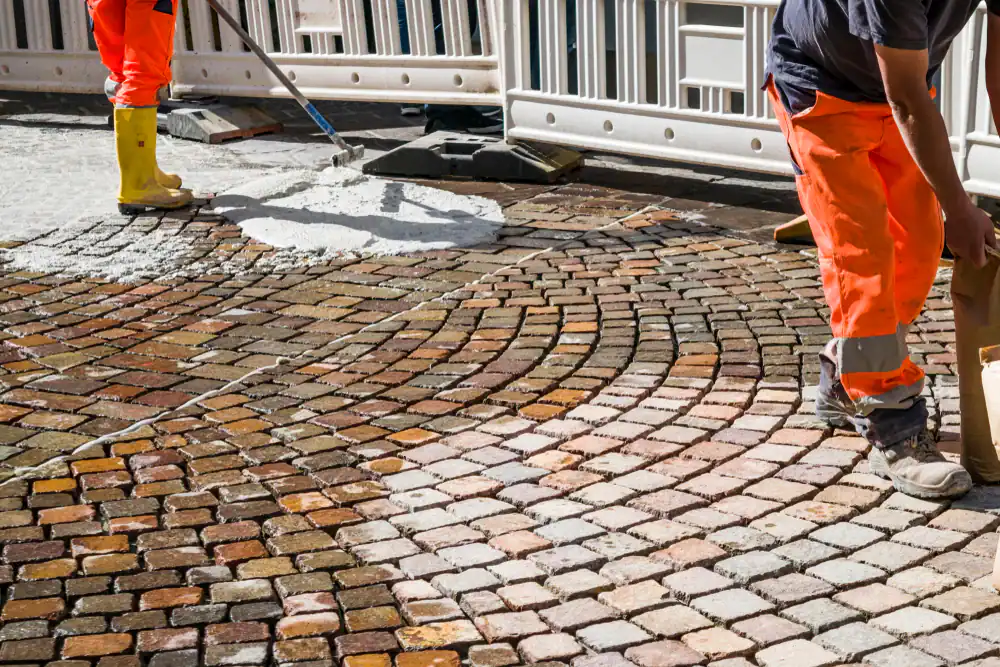
Once you approve it, we schedule the work. Site prep comes first. That means removing old pavement, clearing debris, grading for proper drainage, and compacting the base until it won’t shift. This step is where most paving companies near you cut corners. We don’t.
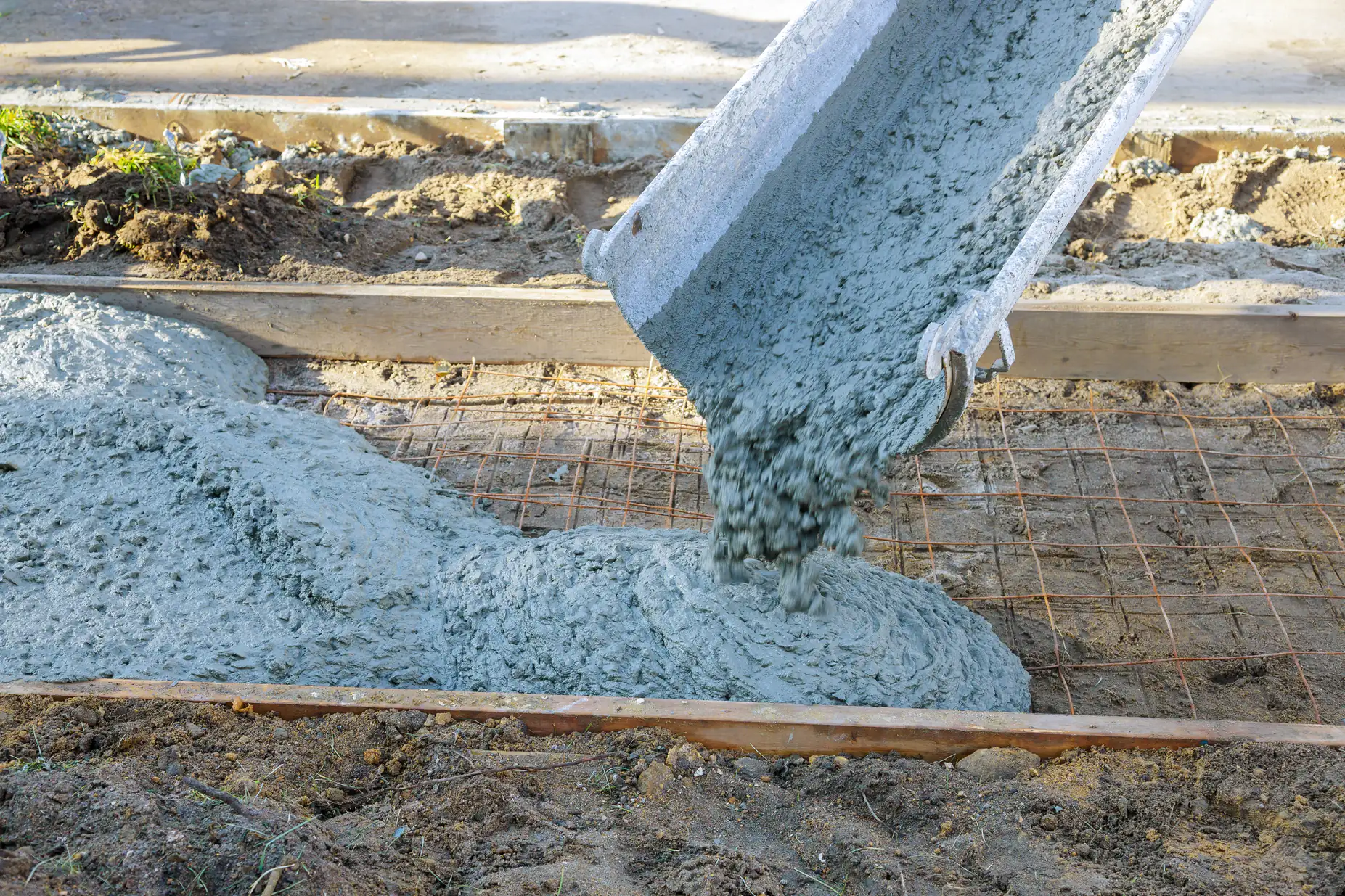
After the base is ready, we bring in hot mix asphalt applied at the right temperature. If you’re getting concrete, we use Portland cement mixes with rebar reinforcement. The surface gets finished, compacted again, and left to cure properly.
You’re not walking or driving on it until it’s ready. We’ll tell you exactly how long that takes based on weather and what we installed.
Ready to get started?
You’re getting full site prep. That’s excavation, grading, and a compacted aggregate base built to handle freeze-thaw cycles. If drainage is a problem, we fix it before anything gets paved.
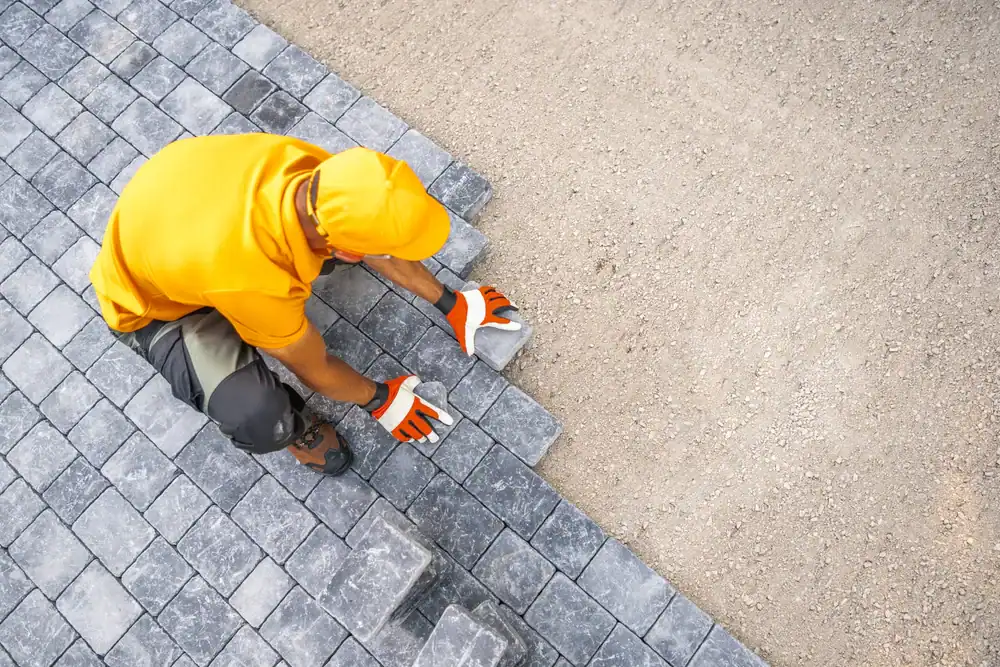
For asphalt work, we use high-grade hot mix asphalt applied at proper temperature. For concrete, it’s Portland cement with rebar reinforcement. If you want decorative stamped concrete or paver patios, we handle that too.
Every job in Hopatcong comes with the same approach: engineer it right the first time so you’re not calling someone back in three years. That means proper slope for drainage, a base that won’t settle, and materials that hold up when temperatures swing from 18°F in January to 82°F in July.
Most residential driveways here run between $5,500 and $12,000 depending on size and condition. Commercial parking lots cost more, typically $2.25 to $3.25 per square foot. But here’s what matters: if it’s done right, you’re looking at 15 to 20 years before you need to think about replacement. That only happens if the contractor knows how to build for this climate.
You’ll also get a 24 to 48 hour callback guarantee when you request a quote online. We don’t leave you waiting while your driveway turns into a mud pit.
With proper installation and basic maintenance, you’re looking at 15 to 20 years. That’s realistic for Hopatcong if the base was compacted correctly and drainage was handled.
The problem is that most driveways around here don’t hit that number. They start cracking in five or six years because the base wasn’t deep enough, the asphalt went down too cold, or water was allowed to pool and seep underneath.
North Jersey gets about 40% more freeze-thaw cycles than the southern part of the state. When water freezes, it expands by about 10% and can exert up to 30,000 psi of pressure. If your pavement has weak spots, that pressure will tear it apart. The only way to avoid that is to start with a solid base, proper compaction, and materials designed to flex slightly without cracking. That’s not standard practice for every paving contractor in the area, but it should be.
Freeze-thaw cycles and poor drainage. Water gets into small cracks, freezes overnight, expands, and makes the crack bigger. When it melts, more water gets deeper into the base. Repeat that 30 times a winter and your driveway is destroyed.
The other issue is base preparation. If the aggregate base isn’t thick enough or wasn’t compacted properly, it shifts when the ground freezes. That movement cracks the pavement above it.
A lot of asphalt companies near you will lay new pavement over a bad base to save time. It looks great for a season. Then it fails. If your driveway is near the lake or on a slope, drainage becomes even more important. Water has to move off the surface and away from the base. If it doesn’t, you’re dealing with erosion under the pavement, which leads to sinking, cracking, and expensive repairs.
Late spring through early fall. Specifically, late April through early October when temperatures are consistently above 50°F and rain isn’t constant.
Asphalt needs warm weather to cure properly. If it’s too cold, the material doesn’t compact right and you end up with a weaker surface. If it’s too hot—like mid-July—the asphalt can become too soft during installation, which also creates problems.
The ideal window is May, June, September, and early October. That’s when most paving contractors are busy, so if you’re planning work, get on the schedule early. By the time spring hits, contractors are already booked out for weeks. A lot of property owners wait until they see damage, then realize they’re stuck waiting because everyone else had the same idea. If you know your driveway needs work, schedule it in winter for a spring install.
For a standard residential driveway, expect $5,500 to $12,000. That range depends on size, current condition, and how much excavation is needed.
If your existing driveway is in decent shape and just needs resurfacing, you’ll be on the lower end. If we’re tearing everything out, regrading for drainage, and starting from scratch, it’s going to cost more. But that’s the work that actually matters if you want pavement that lasts.
Commercial projects are different. Parking lots typically run $2.25 to $3.25 per square foot. A 10,000 square foot lot is looking at $22,500 to $32,500 for full replacement. Repairs and patching cost less, but if the base is failing, patching is just delaying the inevitable. You’ll get a written estimate that breaks down what’s included so there’s no confusion about what you’re paying for.
Yes, but not right away. You should wait at least six months after installation to let the asphalt fully cure. After that, seal coating every two to three years will extend the life of your driveway.
Seal coating protects against water penetration, UV damage, and chemicals like oil or salt. In Hopatcong, where you’re dealing with freeze-thaw cycles and road salt all winter, that protection matters.
Here’s what most people get wrong: they seal coat too early or too often. If you do it before the asphalt cures, you’re trapping oils that need to evaporate. If you do it every year, you’re building up layers that can peel. The right schedule is once every two to three years, applied in warm, dry weather. It’s not expensive, and it’s a lot cheaper than repaving a driveway that failed early because water got into the base.
It depends on the condition of the base underneath. If the existing pavement is structurally sound and the base isn’t shifting, we can overlay new asphalt on top. If there’s cracking, sinking, or drainage problems, the old pavement needs to come out.
Overlaying saves money and time, but it only works if the foundation is solid. If we pave over a failing base, you’re just covering up a problem that will show up again in a year or two.
Most driveways in Hopatcong that are 10+ years old need full removal. The freeze-thaw cycles here are hard on pavement, and by the time you’re seeing surface damage, there’s usually base damage too. We’ll inspect it during the estimate and tell you what makes sense. If an overlay will work, we’ll recommend it. If it won’t, we’ll explain why so you’re not wasting money on a temporary fix.