
Hear from Our Customers

Your driveway stops cracking every spring. Water drains where it should instead of pooling near your foundation. Your parking lot looks professional, not patched together.
That’s what happens when a paving company near you actually knows the soil conditions in Morris County and doesn’t cut corners on base prep. You’re not calling someone back in 18 months because the surface is already failing.
The difference isn’t always visible on day one. It shows up three winters later when your neighbor’s driveway is a mess and yours still looks clean. That’s the outcome you’re paying for—durability that matches the investment.
Platinum Paving is a family-owned asphalt and concrete paving company based in Morris County. We’ve worked in Caldwell, NJ long enough to know what fails here and why—poor drainage, thin base layers, asphalt applied when it’s too cold.
We’re not the paving contractor who disappears after the job or the one who lowballs the estimate and then hits you with change orders. Every project gets a transparent quote, a realistic timeline, and the owner’s direct involvement from start to finish.
Caldwell sits in one of the toughest freeze-thaw zones in New Jersey. That means your pavement needs proper depth, the right mix, and a base that won’t shift when the ground moves. We’ve seen what happens when contractors skip those steps, and we don’t.

First, we assess your site—drainage patterns, soil type, current damage. If water’s been pooling or the base is compromised, we address it before anything gets paved. Skipping this step is why most driveways fail early.
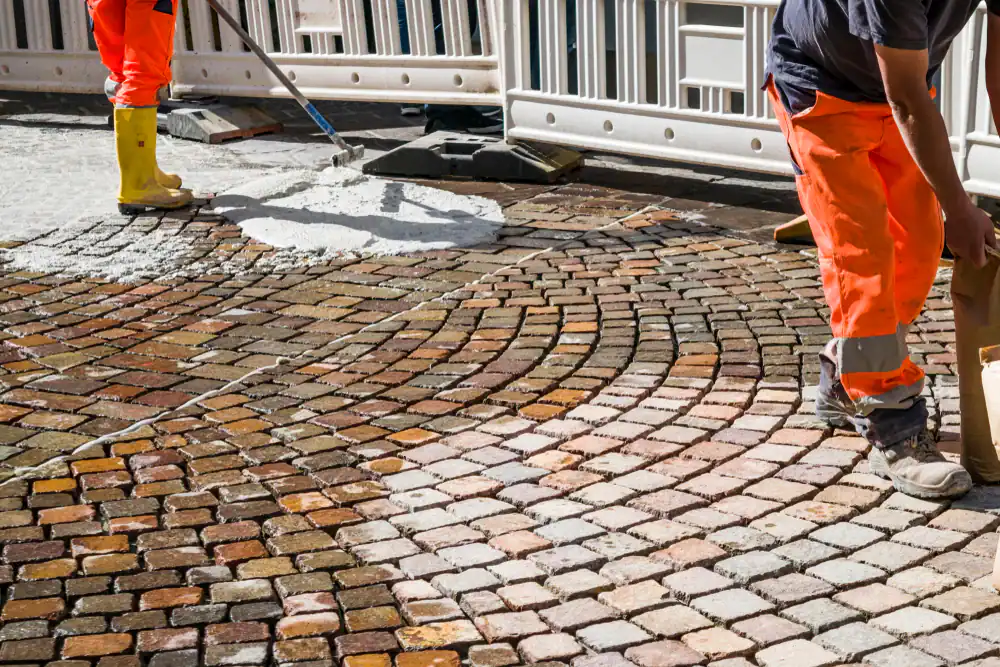
Next comes excavation and grading. We remove old material, compact the subgrade, and install a stone base that’s thick enough to handle North Jersey winters. This is where most paving companies near you cut costs, and it’s the part you’ll regret if they do.
Then we apply hot mix asphalt at the right temperature or pour concrete with proper rebar reinforcement, depending on your project. The material has to be installed when conditions are right—not rushed because the weather’s turning. We compact everything in layers, check the grade, and make sure water moves away from structures.
You get a 24-48 hour callback guarantee when you request a quote. Once we start, the timeline doesn’t drag. You’ll know what’s happening and when, and the job gets finished on schedule.
Ready to get started?
You’re getting full-service paving—driveways, parking lots, roadways, patching, sealcoating, and line striping. If it’s asphalt or concrete and it needs to handle Morris County weather, we do it.
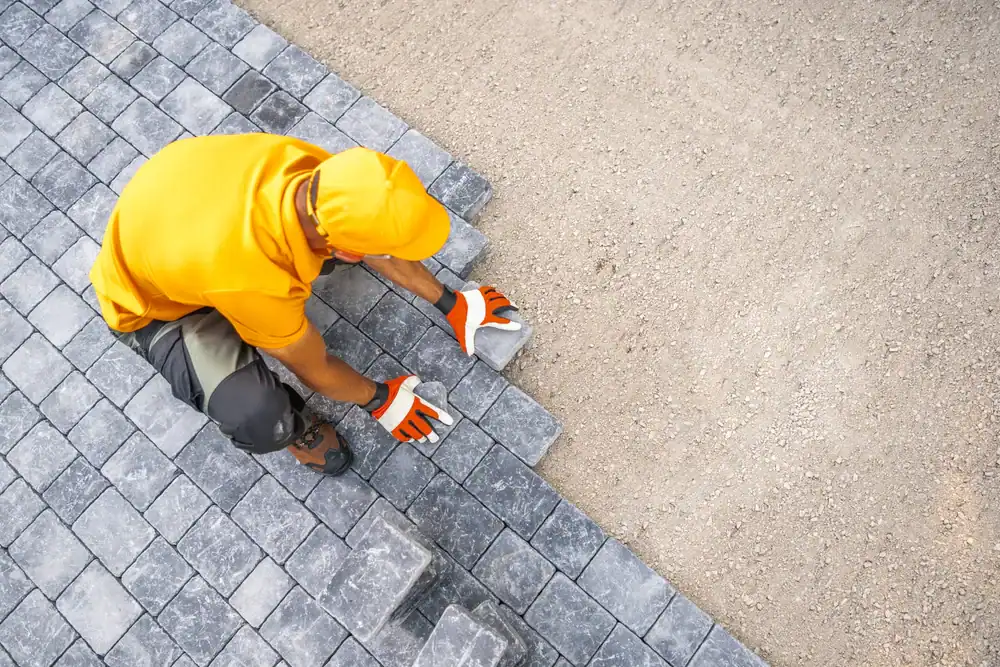
For residential work in Caldwell, NJ, that means driveway installations with proper pitch for drainage, decorative stamped concrete if you want it, and repairs that actually fix the problem instead of covering it up for six months. We also handle paver patios and walkways when the project calls for it.
Commercial clients get ADA-compliant parking lot construction, full resurfacing, pothole repair, and striping that meets code. Caldwell has a mix of older properties and newer developments, and both need pavement companies near them who understand local regulations and site-specific challenges.
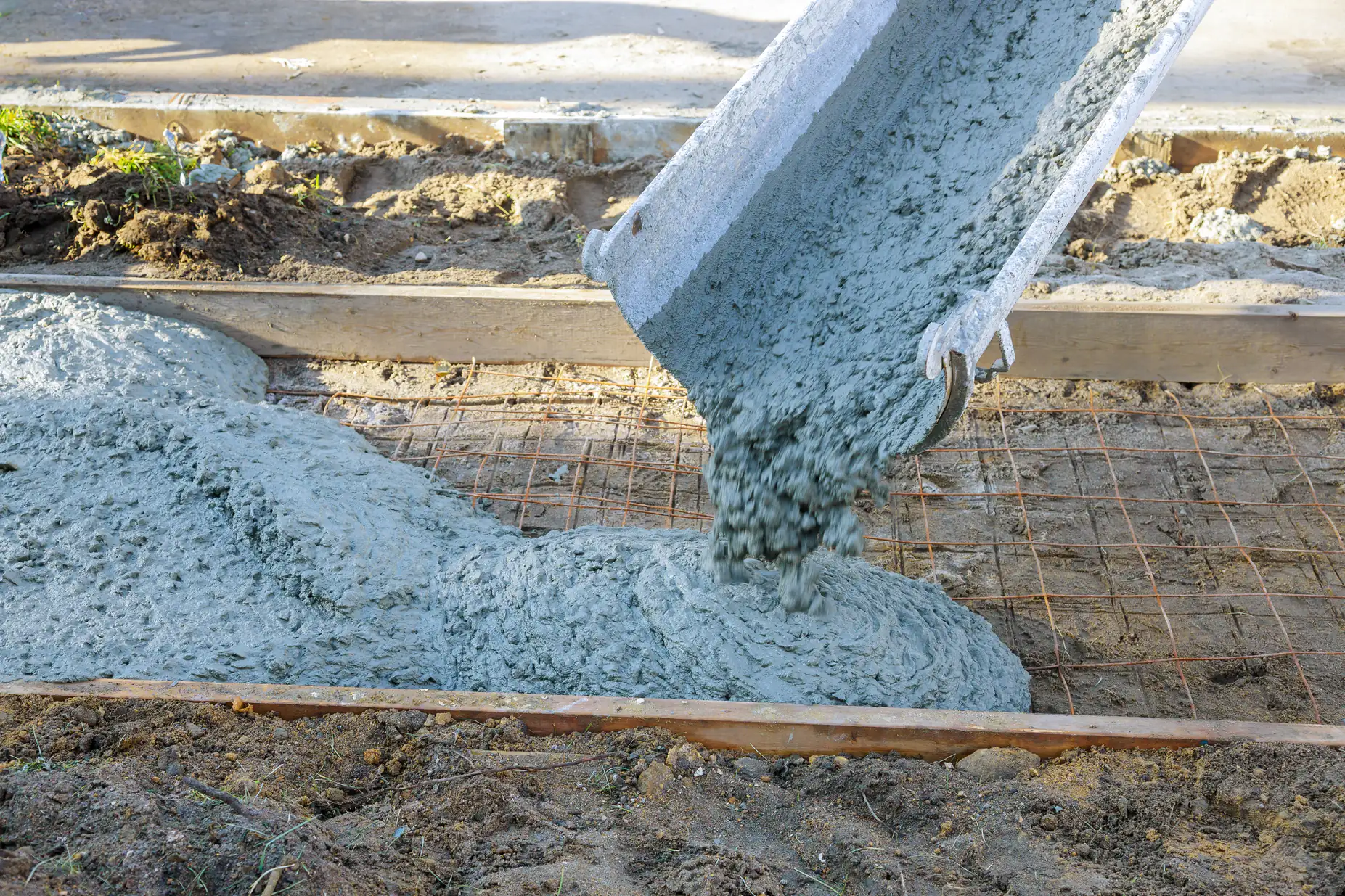
Every job comes with a warranty covering materials and workmanship. We use high-grade hot mix asphalt applied at proper temperature and Portland cement mixes with rebar reinforcement for concrete. The materials matter as much as the installation, and we don’t compromise on either.
A properly installed asphalt driveway in Caldwell, NJ should last 15 to 20 years with basic maintenance. That means sealcoating every 2-3 years and fixing small cracks before they turn into bigger problems.
The lifespan depends heavily on the base. If the stone base is too thin or poorly compacted, you’ll see cracking and settling within the first few years no matter how good the asphalt is. Morris County’s freeze-thaw cycles are brutal, and water that gets under the surface will expand when it freezes and destroy the pavement from below.
Most driveways that fail early weren’t installed wrong on the surface—they failed because the contractor skipped proper excavation and base prep. That’s the part you can’t see once it’s paved, and it’s the part that determines whether your driveway lasts two decades or two winters.
Asphalt costs less upfront and handles freeze-thaw cycles better because it’s flexible. Concrete costs more but lasts longer and offers decorative options like stamped patterns. Both work in Caldwell, NJ if installed correctly.
Asphalt needs sealcoating every few years to protect it from UV damage and water penetration. Concrete doesn’t need sealing as often, but when it cracks, repairs are more visible and harder to blend in. Asphalt repairs are easier to patch and less noticeable once they settle.
For driveways with heavy use or steep grades, asphalt usually makes more sense. For properties where curb appeal matters and you want a decorative finish, concrete gives you more design flexibility. The real deciding factor isn’t which material is better—it’s which one fits your budget, maintenance preference, and how you use the space.
If you’ve got a few small cracks and the surface is still mostly intact, you can repair it. If more than 30% of the driveway is damaged, has deep potholes, or the base is failing and causing sinking, you’re looking at replacement.
Alligator cracking—those interconnected cracks that look like reptile skin—means the base has failed. You can patch the surface, but it’s going to keep breaking up because the problem is underneath. Same with areas that are sinking or holding water. That’s a base issue, not a surface issue.
Small cracks along the edges or a few shallow spots can be patched and sealed. If you’re patching the same areas every year, that’s a sign the whole thing needs to be redone. A good paving contractor will tell you honestly whether a repair will hold or if you’re just delaying the inevitable. Most homeowners wait too long and turn a $3,000 repair into a $10,000 replacement.
Late spring through early fall—basically May through October—is ideal for paving in New Jersey. Asphalt needs to be applied when ground temperatures are consistently above 50°F, and it cures best in warm, dry conditions.
If you wait until late October or November, you’re gambling with the weather. A cold snap can prevent proper compaction, and asphalt that doesn’t compact right will break down faster. Concrete has a little more flexibility with temperature, but it still cures better in moderate conditions without extreme heat or freezing nights.
Summer is the busiest season for asphalt companies near you, so if you want to get on the schedule, reach out in early spring. Waiting until August means you might not get the work done until the following year. The other advantage of booking early is that contractors aren’t rushing to finish jobs before winter, which means better attention to detail on your project.
Most residential driveway paving in Caldwell, NJ doesn’t require a permit if you’re repaving an existing driveway in the same footprint. If you’re expanding the driveway, changing drainage patterns, or affecting stormwater runoff, you’ll likely need approval from the town.
Commercial paving projects almost always require permits, especially if they involve parking lot expansions, new curb cuts, or ADA compliance updates. The town wants to make sure stormwater is managed correctly and that the work meets local codes.
Your paving contractor should know whether a permit is needed based on the scope of work. If they’re not sure or they tell you to handle it yourself, that’s a red flag. A local contractor who’s been working in Morris County for years knows the permitting process and can tell you upfront what’s required. Skipping a required permit can cause problems later if you sell the property or if a neighbor complains.
A standard two-car asphalt driveway in Caldwell, NJ typically runs between $4,000 and $8,000, depending on size, site conditions, and how much prep work is needed. Concrete costs more—usually $6,000 to $12,000 for the same size driveway.
Those numbers assume normal conditions: decent drainage, no major excavation, standard thickness. If your site has poor soil, needs extensive grading, or requires drainage solutions, the cost goes up. Same if you’re removing old concrete or dealing with a steep slope.
The cheapest quote isn’t always the best deal. If one paving company near you is significantly lower than everyone else, they’re either cutting corners on materials, skipping base prep, or planning to hit you with change orders once they start. A detailed quote that breaks down excavation, base material, asphalt thickness, and grading tells you a lot more than a single number. You want to know what you’re paying for, not just what it costs.