
Hear from Our Customers

A professionally installed driveway or parking lot isn’t just about looks. It’s about drainage that directs water away from your foundation instead of pooling near your garage. It’s about a base that won’t shift when the ground freezes and thaws six times in February.
When we apply high-grade hot mix at the right temperature and compact it properly, you get a surface that flexes with temperature changes instead of cracking apart. When we pour concrete with proper rebar reinforcement and the right Portland cement mix, it resists the salt damage that turns other driveways into flaking messes after three winters.
The difference shows up in year five. Your neighbor who went with the cheapest paving company is patching cracks and dealing with drainage problems. Your surface still looks clean, drains properly, and hasn’t cost you a dollar in repairs.
We work across Morris, Somerset, and Sussex Counties. We’re based in Morris County, which means we know exactly what Bound Brook properties deal with: clay soil that shifts, freeze-thaw cycles that never quit, and drainage challenges that come with older neighborhoods built on slopes.
We’ve paved driveways in Bradley Gardens where water runs downhill toward the house. We’ve resurfaced commercial lots in Somerville that see snow plow damage every winter. We’ve replaced residential driveways in Martinsville where tree roots created heaving issues.
That’s not marketing talk. It’s just what happens when you focus on one region long enough to understand its specific problems.

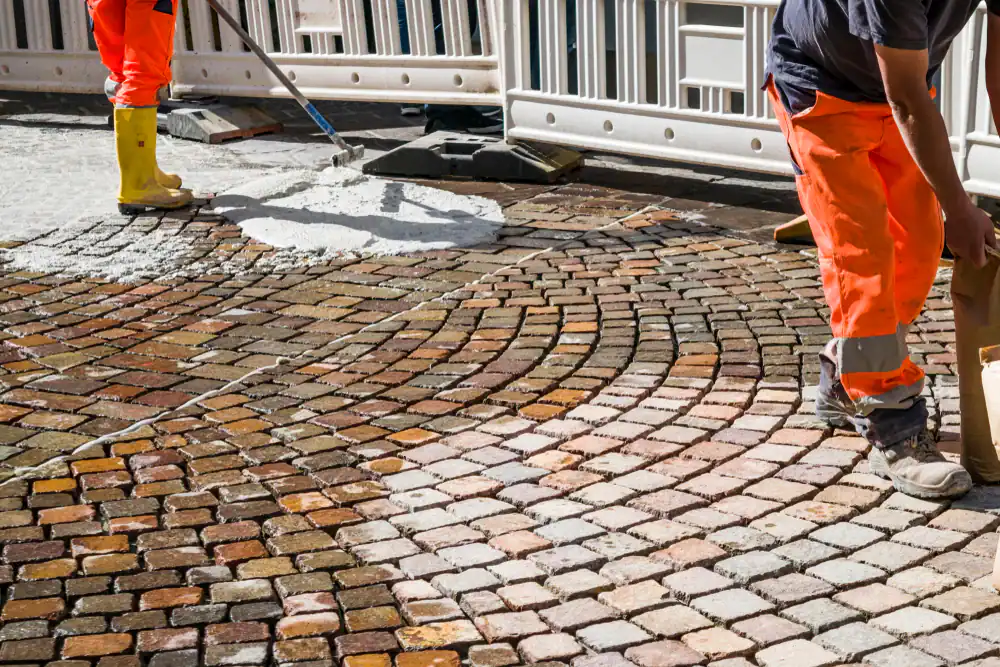
First, we clear and remove the old surface if there is one. That includes breaking up failed asphalt or concrete and hauling away the debris. If your base has settled or shifted, we address that before anything else goes down.
Next comes grading and compaction. We slope the surface so water moves away from structures, not toward them. We compact the base in layers because a single pass with a roller doesn’t cut it. This step determines whether your new pavement lasts eight years or twenty.
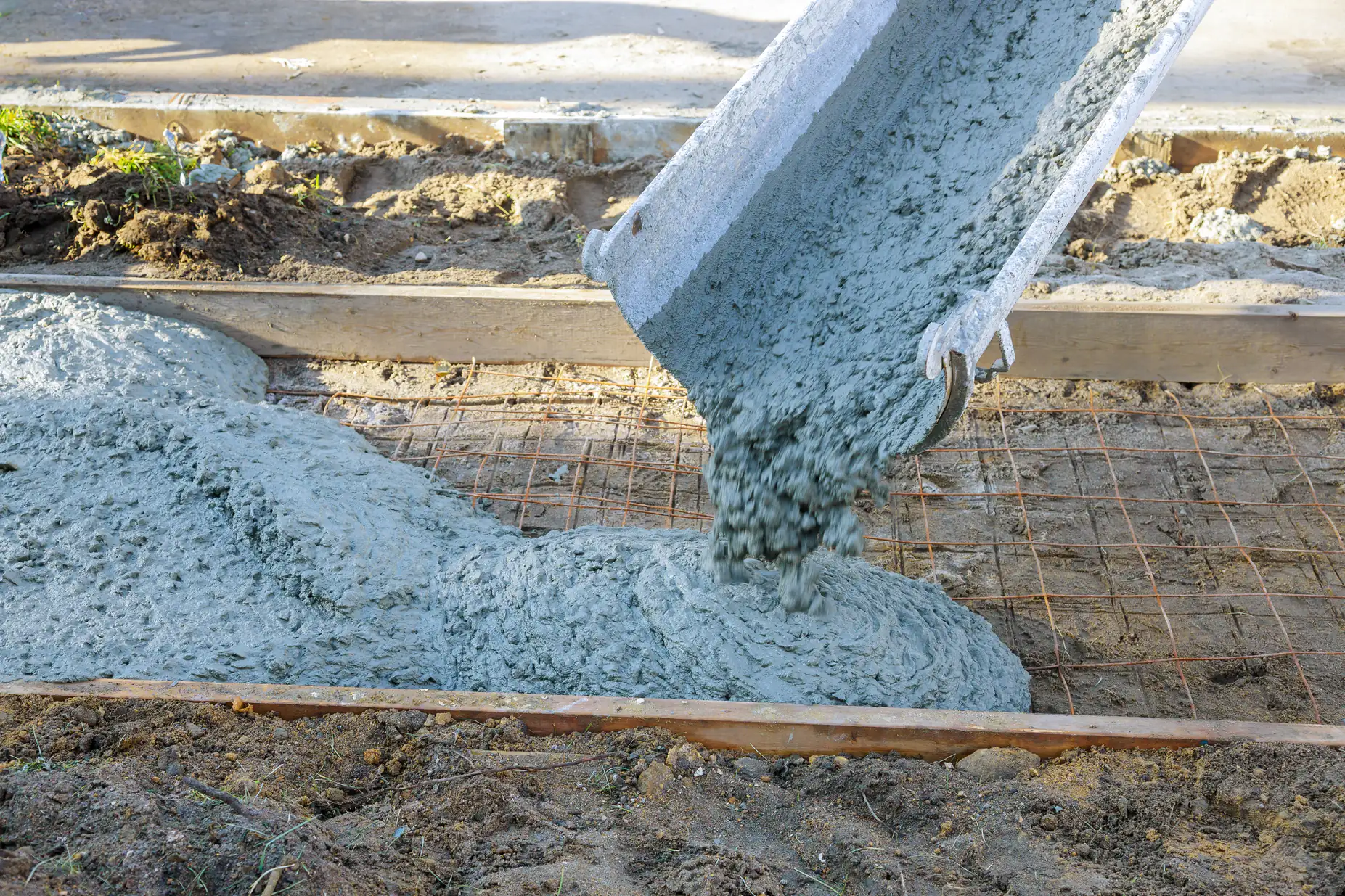
Then we apply the surface material. For asphalt, that means hot mix asphalt delivered at the right temperature and applied at the proper thickness for your traffic load. For concrete, it means Portland cement with rebar reinforcement, poured in sections with control joints that prevent random cracking.
Final step is edging and cleanup. We trim edges for a clean look, make sure transitions to existing surfaces are smooth, and remove equipment and materials from your property. Most residential driveways take two to three days from start to finish, depending on size and site conditions.
Ready to get started?
Site preparation matters more than most homeowners realize. In Bound Brook and surrounding areas, we’re often dealing with clay soil that holds water. We excavate to proper depth, install aggregate base material, and compact in lifts. If drainage is an issue, we address it during this phase, not after the pavement fails.
For asphalt work, we use high-grade hot mix asphalt applied at manufacturer-specified temperatures. Thickness depends on use: residential driveways typically get three inches of compacted asphalt over a prepared base, while commercial parking lots often need four inches or more to handle heavier loads and snow plow traffic.
Concrete paving includes rebar reinforcement and control joints placed at proper intervals. We offer standard broom finish for traction or decorative stamped patterns if you want something beyond basic gray. In areas like Basking Ridge and Bernardsville where aesthetics matter, stamped concrete driveways are common. In commercial applications around Parsippany and Morristown, we focus on durability and ADA-compliant slopes.
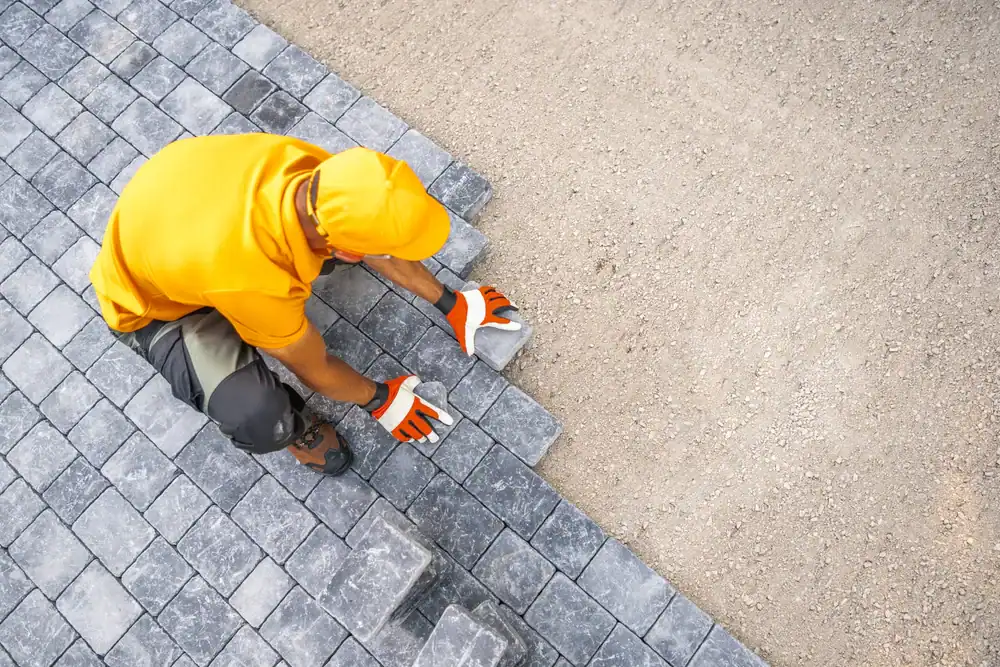
We also handle paver patios and walkways using interlocking concrete pavers. These work well in areas where you want permeability or where tree roots make solid concrete impractical.
Properly installed asphalt in North Jersey typically lasts 15 to 20 years before needing replacement. That assumes decent maintenance: sealcoating every three to four years and filling cracks as they appear.
The lifespan depends heavily on installation quality. If the base wasn’t compacted properly or the asphalt was applied too thin, you’ll see failure in five to eight years. If drainage wasn’t addressed during installation, water will undermine the base and cause premature cracking.
New Jersey’s freeze-thaw cycles are brutal. Water seeps into small cracks, freezes, expands, and breaks the pavement apart. That’s why crack filling matters. A quarter-inch crack this spring becomes a pothole by next winter if you ignore it. The asphalt itself holds up fine to cold temperatures. It’s the water infiltration and base failure that kills driveways early.
Asphalt costs less upfront and handles freeze-thaw cycles better because it flexes slightly with temperature changes. Concrete costs more initially but offers more design options and doesn’t need sealcoating.
In Morris and Somerset County, asphalt makes sense for most residential driveways. It’s repairable, it handles salt reasonably well, and it doesn’t show salt staining the way concrete does. If you crack a section, we can cut it out and patch it without replacing the whole driveway.
Concrete works well when aesthetics are a priority or when you want a decorative finish. Stamped concrete driveways in patterns or colors cost more but look sharper than standard asphalt. The tradeoff is that concrete shows salt damage more visibly, and repairs are more noticeable. A concrete patch never quite matches the original pour.
For commercial properties with heavy traffic, both materials work. The choice usually comes down to budget and maintenance preferences. Asphalt needs sealcoating every few years. Concrete doesn’t, but it costs more upfront.
Residential asphalt driveways in the Bound Brook area typically run $8 to $15 per square foot installed, depending on site conditions and access. A standard two-car driveway of 600 square feet costs roughly $5,000 to $9,000 for complete removal and replacement.
Concrete costs more, usually $12 to $20 per square foot for standard finish. Decorative stamped concrete runs higher, sometimes $18 to $25 per square foot depending on pattern complexity.
Those ranges assume normal conditions: decent access for equipment, no major drainage issues, and standard excavation depth. If we’re dealing with difficult access, extensive base repair, or drainage problems that need addressing, costs go up. Properties on slopes or with limited equipment access take longer and cost more because everything is harder.
The cheapest quote isn’t always the best value. If a paving contractor is significantly lower than everyone else, they’re either cutting corners on base preparation, using thinner asphalt, or skipping steps that matter for longevity. You’ll pay for it later in premature failure and costly repairs.
Late spring through early fall is ideal for paving in North Jersey. Asphalt needs warm temperatures to cure properly. Most paving companies won’t install asphalt once temperatures consistently drop below 50 degrees at night.
Summer is peak season, which means longer lead times. If you want work done in July, you’re probably calling in April or May to get on the schedule. Spring and fall offer better availability and sometimes better pricing because we’re trying to fill schedules.
Concrete is less temperature-sensitive than asphalt but still needs decent conditions. We can pour concrete in cooler weather, but cold temperatures slow curing and require additives or blankets to protect the fresh concrete. That adds cost and complexity.
Winter paving is possible in emergencies but not ideal. Cold asphalt doesn’t compact properly, and you’re likely to have issues with the finished surface. If you’ve got a failing driveway in January, temporary patching is smarter than rushing a full replacement that won’t perform well.
Yes, but not immediately. New asphalt needs six to twelve months to cure before the first sealcoating. Sealing too early traps oils in the asphalt that need to evaporate during the curing process.
After that initial curing period, sealcoating every three to four years extends pavement life significantly. Sealcoat protects against UV damage, water infiltration, and salt. It’s not just cosmetic. Unsealed asphalt oxidizes faster, becomes brittle, and develops cracks sooner.
In North Jersey, where we use road salt heavily, sealcoating matters more than in milder climates. Salt accelerates the freeze-thaw damage that already happens naturally. A sealed surface resists that damage better than bare asphalt.
Sealcoating costs a fraction of what repaving costs. For a typical residential driveway, you’re looking at $300 to $600 every few years versus $5,000 to $9,000 for replacement. The math is pretty straightforward. Regular maintenance extends your pavement’s life from 12 years to 20 years in many cases.
It depends on the condition of what’s there now. If your existing asphalt is structurally sound with minor surface cracking, an overlay can work. We apply a new layer of asphalt over the old surface, adding years of life at lower cost than full removal and replacement.
If the existing pavement has base failure, drainage problems, or significant cracking and heaving, overlay won’t fix the underlying issues. You’ll just have new asphalt failing in the same pattern as the old stuff. In those cases, removal and proper base repair is the only solution that makes sense.
For concrete driveways, overlay options are limited. We can apply a thin asphalt overlay over concrete in some situations, but it’s not ideal. Concrete and asphalt expand and contract at different rates, which can cause bonding issues. Most concrete replacement jobs require full removal.
We’ll evaluate your existing surface and give you an honest assessment. If overlay will work and save you money, we’ll tell you. If it won’t hold up and you need full replacement, we’ll explain why. The goal is a surface that lasts, not just the cheapest option that gets us off your property quickly.