
Driveway Paving in Stony Hill, NJ

Driveways That Actually Last

Professional asphalt and concrete driveway installation that stands up to New Jersey weather and daily use.

A newly paved black asphalt driveway curves through a green lawn with trees and landscaping. A few pavers and tools are on the grass beside the driveway, and people are seen working in the distance.

Hear from Our Customers

A shiny blue dump truck with chrome accents is parked on a dirt lot, surrounded by trees and other trucks in the background under a partly cloudy sky.

Professional Driveway Installation Services

What You Get With Quality Paving

Your driveway handles everything. Daily traffic, New Jersey winters, summer heat, and everything in between. When it’s done right, you don’t think about it.

A properly installed driveway means no more worrying about cracks spreading every winter. No more water pooling near your foundation. No more explaining to guests why they need to park on the street.

You get a smooth, professional surface that enhances your property value and actually stays that way. The kind of driveway that makes your neighbors wonder who did the work.

Stony Hill Driveway Contractors

We Know Local Conditions

We’ve been installing driveways throughout Stony Hill and surrounding areas for years. We understand how New Jersey soil conditions affect foundation preparation and drainage requirements.

Every project starts with proper site evaluation. We know which materials work best in this climate and how to prepare surfaces that won’t shift or crack with seasonal changes.

Local contractors who show up when scheduled and deliver what we promise. No surprises, no excuses.

Two workers are paving a road; one operates an orange paving machine while the other smooths the fresh asphalt beside a grassy field under a partly cloudy sky.

Driveway Installation Process

How Professional Installation Works

First, the site gets evaluated for drainage, soil conditions, and proper grading. This determines the foundation requirements and material specifications for your specific location.

Next comes excavation and base preparation. The existing surface is removed, the area is graded for proper water flow, and a stable base is installed. This foundation work determines how long your driveway will last.

Finally, the new surface is installed using professional equipment and quality materials. Whether asphalt or concrete, the installation follows industry standards for thickness, compaction, and finishing. The result is a driveway built to handle daily use and weather conditions.
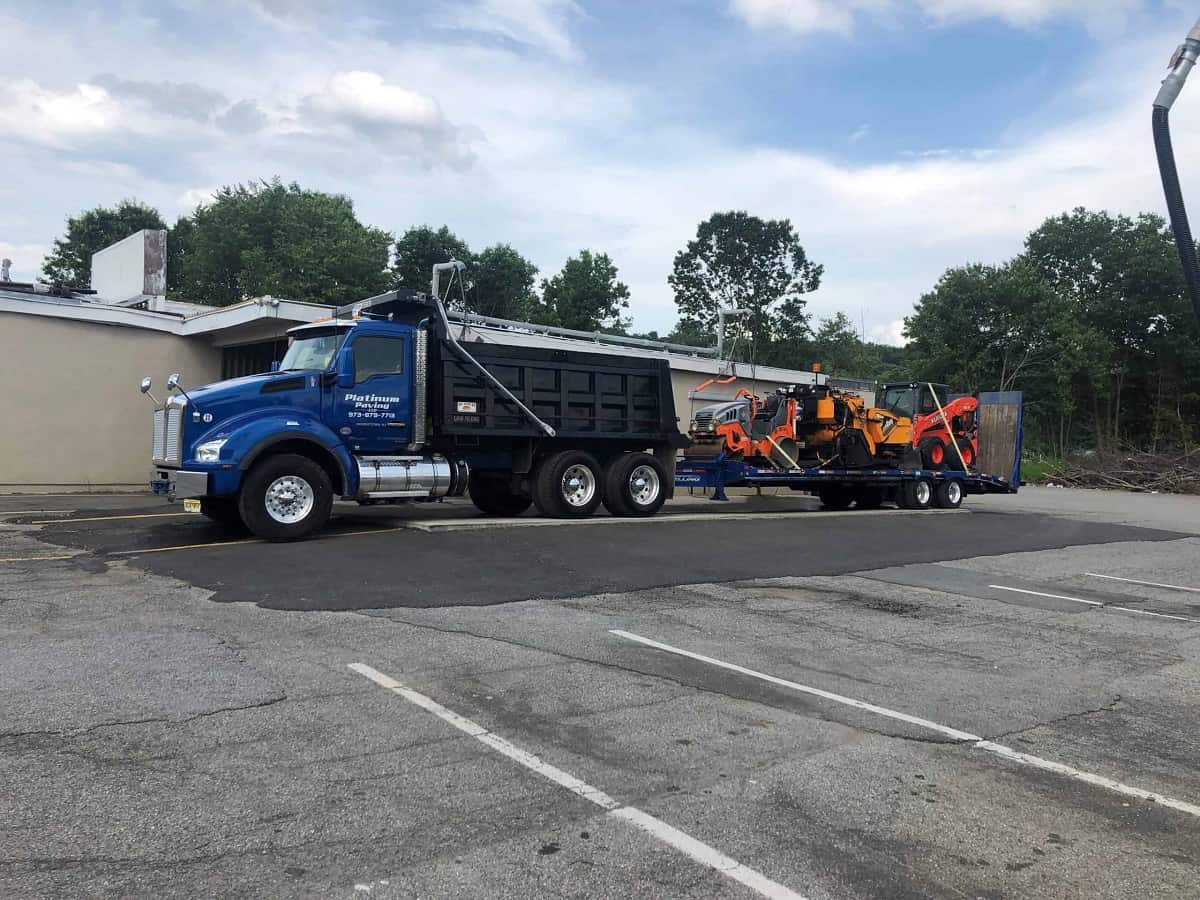
A blue dump truck is parked in a lot, towing a trailer that carries orange construction equipment. Trees and a building are visible in the background, and the parking lot is mostly empty.

Ready to get started?

Explore More Services

About Platinum Paving

Get a Free Consultation

Residential Driveway Paving Options

What's Included in Professional Paving

Complete driveway installation includes site preparation, proper drainage setup, and professional-grade materials. Both asphalt and concrete options are available, depending on your preferences and budget.

Asphalt driveways offer durability and cost-effectiveness, with the flexibility to handle ground movement. Concrete provides a longer lifespan and more design options, though at a higher initial investment.

Every project includes proper base preparation, which most homeowners never see but determines everything about long-term performance. Stony Hill’s soil conditions require specific attention to drainage and foundation stability to prevent future problems.

A newly paved asphalt driveway leads to a gray house. Yellow caution tape blocks the entrance, and construction materials and a white pickup truck are on the sides. Trees and dirt surround the area.
Most residential driveway installations take 2-3 days from start to finish, depending on size and complexity. Day one typically involves excavation and base preparation. Day two covers the actual paving installation. Weather conditions can affect the timeline, especially for concrete installations that require specific temperature ranges for proper curing. You’ll be able to walk on the new surface within 24 hours, but vehicles should wait 3-7 days depending on the material used.
Asphalt typically costs less upfront, usually running 30-50% less than concrete for the same area. However, concrete lasts longer and requires less maintenance over time. Asphalt needs resealing every 3-5 years, while concrete can go decades with minimal maintenance. The choice often comes down to budget priorities – lower initial cost with asphalt, or higher upfront investment with concrete for longer-term value. Both materials perform well in New Jersey’s climate when properly installed.
Surface cracks and minor wear can usually be handled with resurfacing, which costs significantly less than full replacement. However, if you’re seeing large cracks, significant settling, or drainage problems, the foundation likely needs attention that only full replacement can address. Edge deterioration, multiple patches, or cracks that keep returning after repair typically indicate foundation issues. A professional evaluation can determine which approach makes the most sense for your specific situation and budget.
A professionally installed driveway typically returns 75-85% of its cost in property value, according to real estate professionals. Beyond the financial return, a quality driveway significantly improves curb appeal and eliminates a major maintenance concern for potential buyers. Cracked or deteriorating driveways often become negotiation points that cost more than the repair would have. In Stony Hill’s competitive real estate market, a well-maintained driveway is expected rather than exceptional, but a poor one definitely hurts your position.
Asphalt driveways need resealing every 3-5 years to maintain weather protection and appearance. Regular cleaning and prompt repair of any cracks prevent water infiltration that leads to bigger problems. Concrete requires less routine maintenance but benefits from occasional cleaning and sealing every 5-10 years. Both materials last longer when kept clean of oil stains and debris. Snow removal should be done carefully to avoid damage from metal shovels or harsh chemicals that can deteriorate the surface over time.
Asphalt driveways can typically handle vehicle traffic after 3-7 days, depending on weather conditions and thickness. Concrete requires 7-10 days for full curing before vehicle use. You can walk on both materials within 24-48 hours. Hot weather extends curing times, while cooler temperatures may require longer wait periods. Rushing this timeline can cause permanent damage like tire marks, cracks, or surface deformation. We’ll provide specific guidance based on the materials used and current weather conditions during your installation.