
Driveway Paving in Royce Valley, NJ

Driveways That Actually Last

Professional asphalt and concrete driveway installation that stands up to New Jersey weather year after year.

A newly paved black asphalt driveway curves through a green lawn with trees and landscaping. A few pavers and tools are on the grass beside the driveway, and people are seen working in the distance.

Hear from Our Customers

A shiny blue dump truck with chrome accents is parked on a dirt lot, surrounded by trees and other trucks in the background under a partly cloudy sky.

Professional Driveway Installation Services

What You Get With Us

Your driveway takes a beating. New Jersey winters, summer heat, constant traffic – most driveways start showing cracks and wear within a few years. That’s what happens when corners get cut.

You need a surface that handles the freeze-thaw cycles without cracking apart. Something that drains properly so you’re not dealing with ice patches every winter. A driveway that looks good and adds value to your property instead of making it look run-down.

When we install your driveway, you get proper base preparation, quality materials, and installation techniques that account for local soil conditions and weather patterns. The result is a surface that maintains its appearance and structural integrity for years, not months.

Royce Valley Paving Contractors

We Know New Jersey Driveways

Platinum Paving has been handling residential driveway projects throughout New Jersey for years. We understand what works in this climate and what doesn’t.

Every driveway we install uses proper base preparation and materials designed for New Jersey’s weather conditions. We’ve seen what happens when contractors skip steps or use subpar materials – that’s why we don’t.

Our team focuses exclusively on residential driveway services in the Royce Valley area. We know the local soil conditions, drainage requirements, and building considerations that make the difference between a driveway that lasts and one that needs replacing in a few years.

Two workers are paving a road; one operates an orange paving machine while the other smooths the fresh asphalt beside a grassy field under a partly cloudy sky.

Driveway Paving Process

Here's How We Handle Your Project

First, we evaluate your property’s drainage, soil conditions, and access requirements. This determines the base preparation needed and helps us identify any potential issues before we start digging.

Next comes excavation and base preparation. We remove existing materials, grade for proper drainage, and install a compacted stone base. This foundation work is what separates driveways that last from ones that fail early.

Then we install your new asphalt or concrete surface using professional-grade equipment. Proper compaction and finishing techniques ensure a smooth, durable surface. We handle cleanup and final grading so your new driveway integrates properly with your existing landscape.
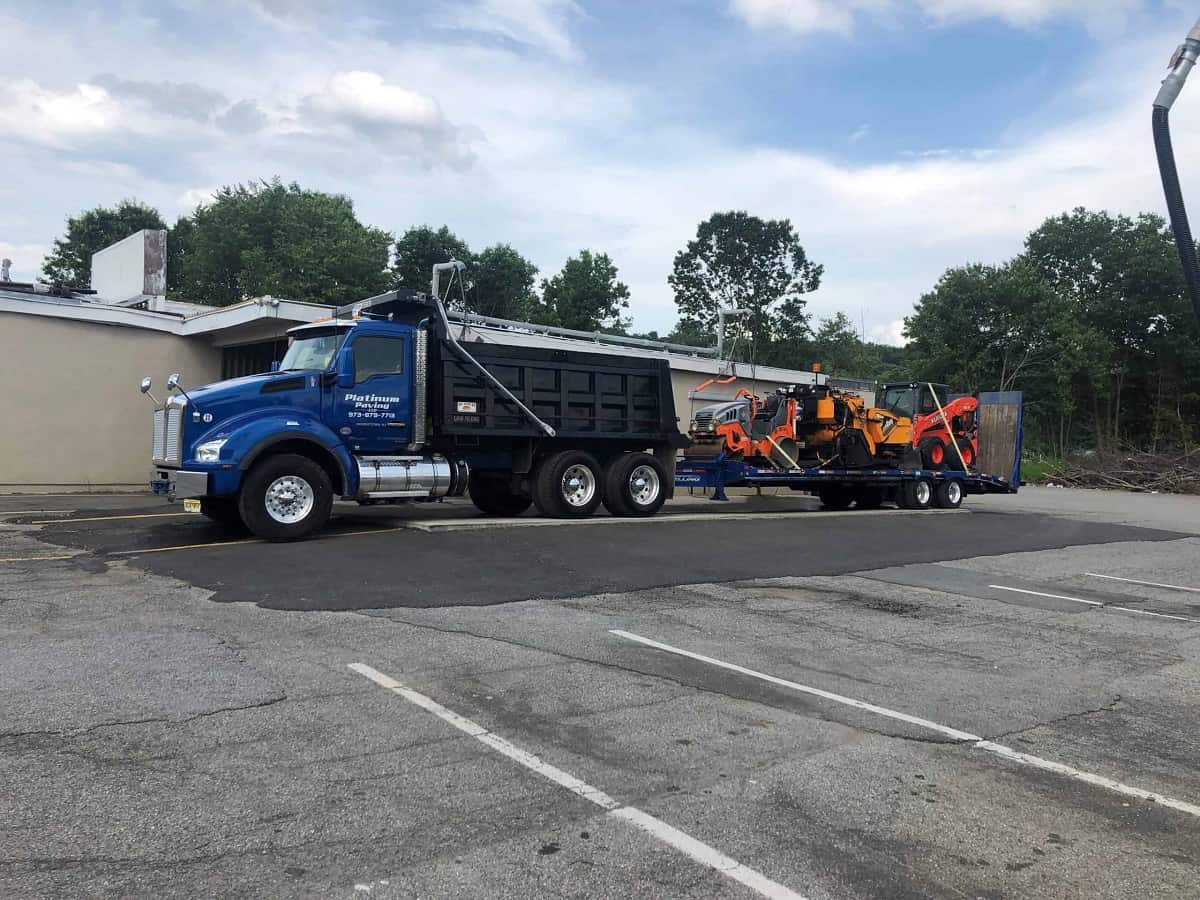
A blue dump truck is parked in a lot, towing a trailer that carries orange construction equipment. Trees and a building are visible in the background, and the parking lot is mostly empty.

Ready to get started?

Explore More Services

About Platinum Paving

Get a Free Consultation

Residential Driveway Services

What's Included In Every Project

Every driveway installation includes proper excavation, base preparation, and professional-grade materials. We handle permits, utility marking, and coordinate any necessary inspections.

You get options for both asphalt and concrete surfaces, depending on your preferences and budget. Asphalt offers cost-effectiveness and easy maintenance, while concrete provides longevity and design flexibility. We’ll explain the pros and cons of each for your specific situation.

We also handle driveway resurfacing for existing surfaces that need renewal, and repair services for driveways with isolated damage. Every project includes proper drainage considerations and integration with your existing landscape and hardscaping.

A newly paved asphalt driveway leads to a gray house. Yellow caution tape blocks the entrance, and construction materials and a white pickup truck are on the sides. Trees and dirt surround the area.
Most residential driveway installations take 2-3 days from start to finish. Day one involves excavation and base preparation. Day two covers the actual paving or concrete pour. Day three handles finishing work and cleanup. Weather can extend this timeline, especially for concrete projects that need proper curing time. We’ll give you a realistic schedule during your estimate and keep you updated if conditions require adjustments.
Asphalt costs less upfront and handles freeze-thaw cycles well, making it popular in New Jersey. It’s easier to repair and can be resurfaced when it shows wear. Concrete lasts longer and offers more design options, but costs more initially and can crack if not properly installed. Both work well here – your choice usually comes down to budget, appearance preferences, and how long you plan to stay in the home.
If you’re seeing widespread cracking, multiple potholes, or areas where the surface is breaking apart, replacement usually makes more sense than patching. Surface-level cracks and isolated damage can often be repaired effectively. Age matters too – driveways over 15-20 years old with significant damage typically need replacement. We can assess your current driveway and give you honest feedback about whether repair or replacement offers better value.
Driveway costs depend on size, material choice, site conditions, and access requirements. Asphalt typically runs less than concrete, but both require proper base preparation for lasting results. Steep grades, poor drainage, or difficult access can increase costs. We provide detailed written estimates that break down materials, labor, and any additional work needed. This way you know exactly what you’re paying for before we start.
Asphalt driveways can typically handle light traffic within 24-48 hours, but we recommend waiting a full week before parking heavy vehicles or making sharp turns. Concrete needs 7-10 days before regular use and up to 28 days to reach full strength. We’ll give you specific guidelines based on weather conditions and the materials used. Following these recommendations prevent damage and ensures your driveway performs as expected.
Yes, we coordinate utility marking through New Jersey One Call and handle any required permits for your project. Most driveway replacements don’t require permits, but new installations or significant changes to drainage might. We know local requirements and take care of the paperwork so you don’t have to navigate municipal offices. This is included in our service – no additional fees for permit coordination or utility marking.