
Driveway Paving in Rockaway, NJ

Driveways Built to Last Decades

Professional asphalt and concrete driveway installation that handles New Jersey weather without constant repairs.

Freshly paved black asphalt driveway curves through a green lawn, bordered by stone edging. Paving Contractors Morris, Sussex & Somerset County, NJ have tools and paving stones visible on the grass, all surrounded by tall trees and a sunny sky.

Hear from Our Customers

A blue dump truck with "Platinum Paving" written on the door is parked on a dirt lot in NJ, surrounded by trees and other trucks under a partly cloudy sky. Trusted by Sussex & Somerset County as premier paving contractors Morris.

Professional Driveway Installation Services

What You Get With Professional Installation

Your driveway stops being a problem. No more dodging potholes when you pull in. No more water pooling against your foundation after heavy rains. No more embarrassment when neighbors and guests see cracked, uneven pavement.

A properly installed driveway handles everything New Jersey throws at it. The freeze-thaw cycles that destroy cheap work don’t touch quality installation with proper base preparation. You get smooth, even surfaces that drain correctly and look professional for years.

The difference shows up in your daily life. Easier snow removal in winter. No more scraping your car’s undercarriage on broken pavement. Property value that reflects the quality of your home’s exterior.

Rockaway Driveway Paving Contractors

Local Contractors Who Know This Area

We’ve been handling driveway projects throughout Rockaway and Morris County for years. We understand how this area’s soil conditions, drainage patterns, and weather cycles affect pavement longevity.

Local contractors know things that out-of-town crews miss. We know which base preparations work in Rockaway’s soil. We know how to grade for proper drainage given the area’s topography. We know which materials perform best in this climate.

You’re working with contractors who live and work in this community. Our reputation depends on the driveways we install holding up year after year.

A worker in a blue shirt smooths the edge of freshly laid asphalt while another operates an orange paving machine on a rural road—Paving Contractors Morris, Sussex & Somerset County, NJ ensure quality results amid grass, bare trees, and a cloudy sky.

Driveway Paving Process Rockaway

How Professional Installation Actually Works

First, we assess your site and discuss material options. Asphalt offers cost-effectiveness and easier repairs. Concrete provides longer lifespan and more design options. We explain the real differences so you can make an informed choice.

Next comes proper excavation and base preparation. This step determines whether your driveway lasts five years or twenty-five years. We excavate to proper depth, install appropriate base materials, and compact everything to specifications.

Installation follows with professional equipment and techniques. Proper grading ensures water flows away from your foundation. Quality materials are applied at correct thickness. Final compaction creates smooth, durable surfaces that cure properly.
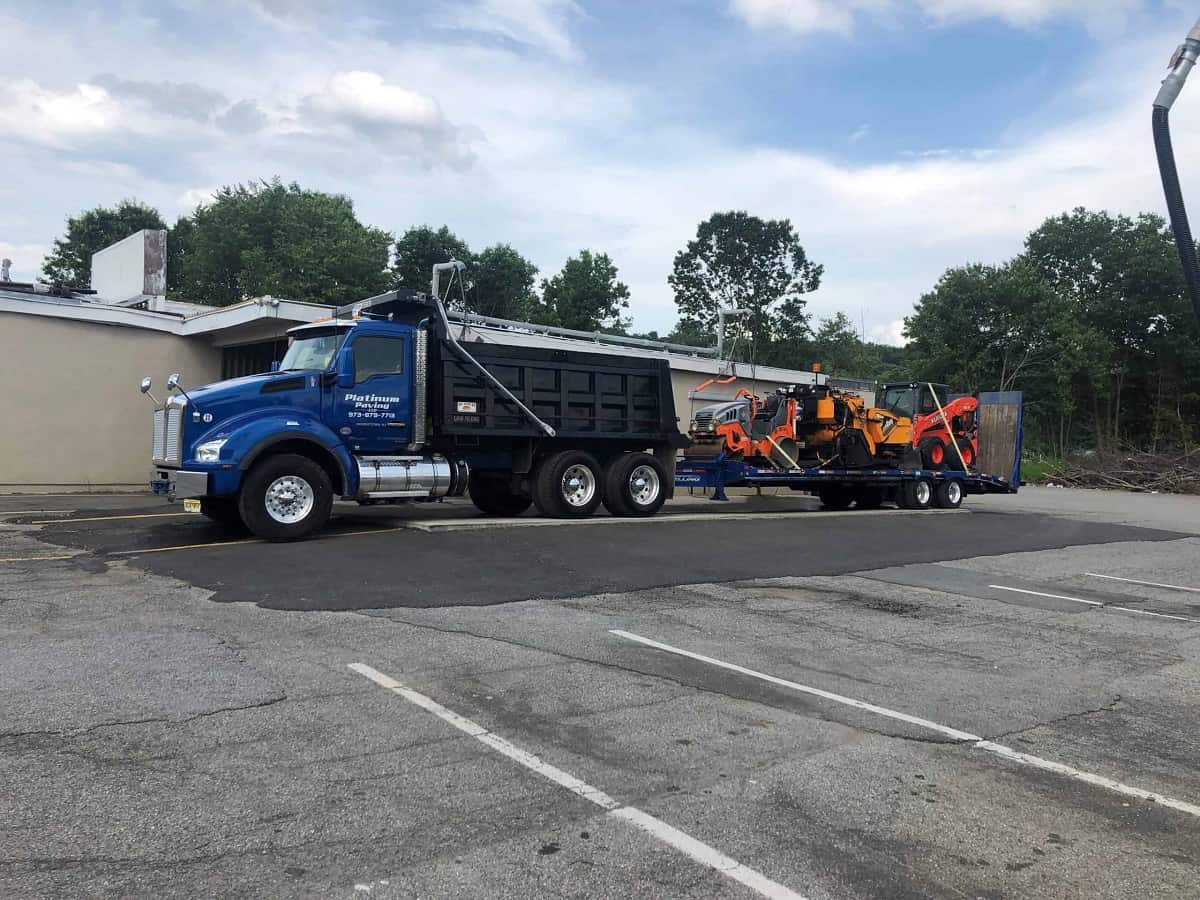
A blue dump truck with a black bed, used by Paving Contractors Morris, NJ, is parked in a lot towing a flatbed trailer with orange construction equipment. Trees and a building are visible in the Sussex & Somerset County background.

Ready to get started?

Explore More Services

About Platinum Paving

Get a Free Consultation

Asphalt Concrete Driveway Options

Complete Driveway Services Available

We handle new driveway installation, complete resurfacing, and targeted repairs. Whether you’re building new construction or replacing a failing driveway, we have the equipment and experience for quality results.

Asphalt driveways offer excellent value for Rockaway homeowners. They handle freeze-thaw cycles well, repair easily when needed, and provide smooth surfaces for years. Concrete driveways cost more upfront but last longer and offer more decorative options.

Resurfacing services extend the life of structurally sound driveways with surface problems. We evaluate whether resurfacing makes sense or if complete replacement provides better long-term value. Honest assessment saves you money and prevents future headaches.

A newly paved asphalt driveway by Paving Contractors Morris, Sussex & Somerset County, NJ leads to a gray two-story house. Construction materials and a truck are nearby, with yellow caution tape blocking access. Trees surround the area.
Most residential driveway installations take 2-3 days from start to finish. Day one involves excavation and base preparation. Day two covers asphalt installation and initial compaction. Day three handles final details and cleanup. Weather can extend timelines, especially during New Jersey’s unpredictable spring and fall seasons. We schedule projects with buffer time so unexpected rain doesn’t create major delays. Larger driveways or complex drainage situations may require additional time, but we discuss realistic timelines upfront so you can plan accordingly.
Both materials handle New Jersey weather well when properly installed, but they behave differently. Asphalt flexes with freeze-thaw cycles, making it less likely to crack from temperature changes. It also melts snow and ice faster due to heat absorption. Concrete lasts longer overall but can crack if water freezes in small cracks. Concrete also offers more decorative options and doesn’t need periodic sealing like asphalt. Cost-wise, asphalt runs about 30-40% less than concrete initially. Your choice depends on budget, appearance preferences, and how long you plan to stay in your home.
Asphalt driveways typically run $3-6 per square foot installed, while concrete ranges $4-8 per square foot. Your actual cost depends on site conditions, driveway size, and any drainage work needed. Difficult access, significant excavation, or complex drainage solutions increase costs. We provide detailed estimates after evaluating your specific site conditions. Beware of quotes that seem too good to be true – they usually involve shortcuts in base preparation or material thickness that create problems later. Quality installation costs more upfront but saves money over the driveway’s lifetime.
Late spring through early fall provides ideal conditions for driveway installation. Asphalt works best in temperatures above 50 degrees, while concrete can be installed in cooler weather with proper techniques. Summer heat can make asphalt installation challenging during extreme temperatures. Fall installation works well but must be completed before consistent freezing weather arrives. Spring installation depends on ground conditions – wet, frozen ground delays projects. We monitor weather forecasts and soil conditions to schedule installations when conditions support quality results rather than rushing to meet arbitrary deadlines.
Asphalt driveways benefit from seal coating every 3-4 years to protect against water penetration and UV damage. Clean oil stains promptly – they soften asphalt over time. Avoid heavy vehicles or equipment that can create ruts in hot weather. For concrete driveways, seal joints annually and clean stains quickly. Both materials last longer with good drainage, so keep gutters and drainage systems functioning properly. Shovel snow carefully to avoid scraping with metal tools. Address small cracks quickly before they become major problems. Regular maintenance costs far less than premature replacement.
It depends on the underlying structure and extent of damage. Surface cracks, minor settling, and worn surfaces often qualify for resurfacing or targeted repairs. However, driveways with failed bases, extensive cracking, or significant settling typically need complete replacement. We evaluate the foundation, drainage, and overall structural integrity before recommending repair versus replacement. Attempting to repair fundamentally failed driveways wastes money and creates ongoing problems. We provide honest assessments because our reputation depends on recommending solutions that actually solve your problems long-term rather than temporary fixes that fail quickly.