
Driveway Paving in Pumptown, NJ

Get a Driveway That Actually Lasts

Professional asphalt and concrete driveway paving that handles New Jersey winters without constant repairs.

A newly paved black asphalt driveway curves through a green lawn with trees and landscaping. A few pavers and tools are on the grass beside the driveway, and people are seen working in the distance.

Hear from Our Customers

A shiny blue dump truck with chrome accents is parked on a dirt lot, surrounded by trees and other trucks in the background under a partly cloudy sky.

Professional Driveway Installation Services

What You Get With Quality Paving

Your driveway stops being a problem. No more dodging potholes or worrying about what winter will do to cracked asphalt.

You get a smooth, properly graded surface that drains water away from your foundation instead of pooling it there. The kind of driveway that adds value to your property instead of making you cringe every time you pull in.

When it’s done right the first time, you’re not calling contractors every few years for patches and band-aid fixes. You’re getting decades of reliable performance from materials that can handle what New Jersey weather throws at them.

Experienced Pumptown Paving Contractors

We Know New Jersey Driveways

We’ve been handling residential driveway projects throughout Pumptown and surrounding areas for years. We understand how freeze-thaw cycles affect asphalt and concrete, and how proper installation prevents the drainage problems that plague so many local driveways.

We work with homeowners who’ve dealt with contractors who disappeared mid-project or used subpar materials. That’s why we focus on transparent communication and quality materials that perform long-term.

Every project gets the same attention whether it’s a simple resurfacing job or a complete new driveway installation.

Two workers are paving a road; one operates an orange paving machine while the other smooths the fresh asphalt beside a grassy field under a partly cloudy sky.

Driveway Paving Process Explained

Here's How Your Project Works

First, the existing surface gets properly removed and the base gets prepared. This isn’t the step to cut corners on – poor base preparation is why driveways fail early.

Next comes grading and drainage work. Water needs somewhere to go that isn’t your foundation or your neighbor’s yard. Proper slope and drainage prevent the pooling that leads to ice patches and premature deterioration.

Then the new asphalt or concrete goes down using commercial-grade equipment. Hand tools and small equipment don’t compact material the same way, which shows up as problems later. Finally, everything gets finished with clean edges and proper curing time before you can use it.
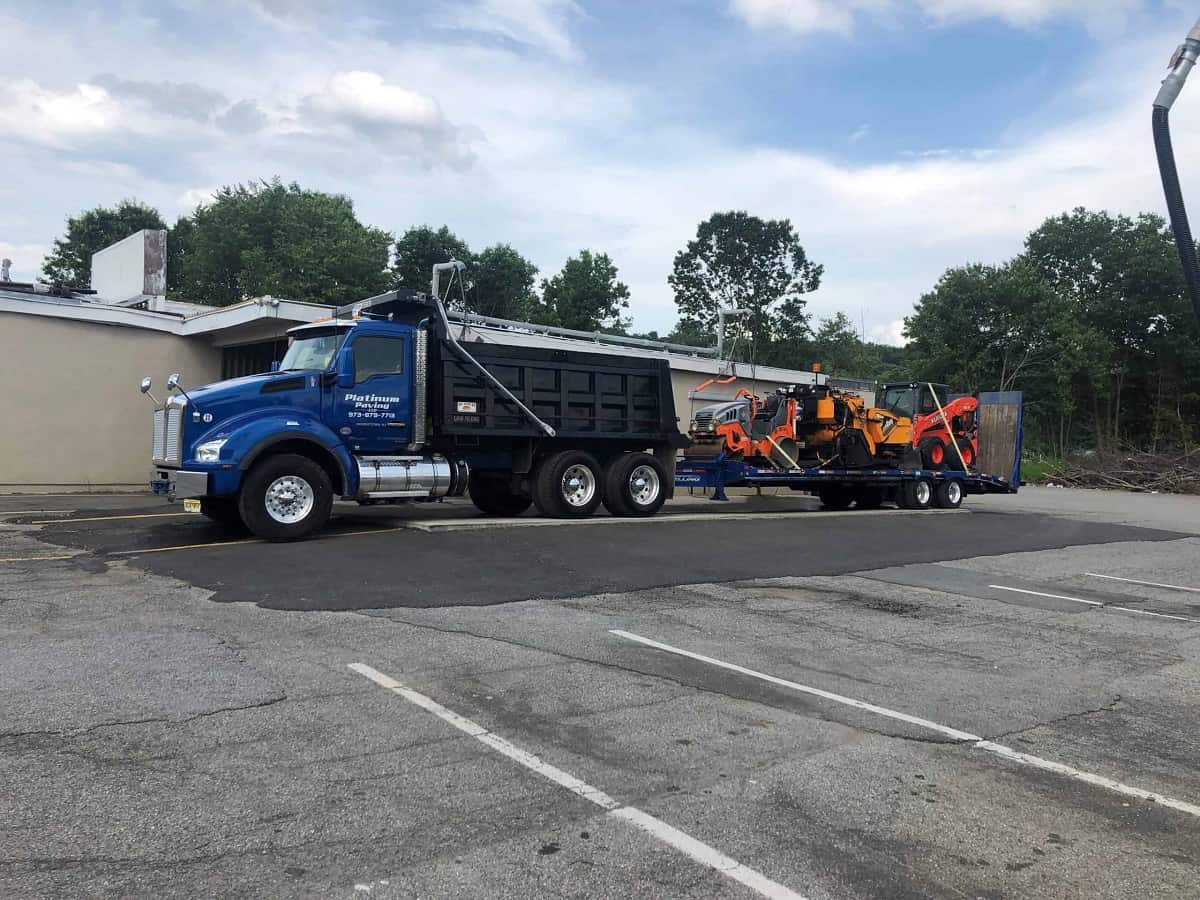
A blue dump truck is parked in a lot, towing a trailer that carries orange construction equipment. Trees and a building are visible in the background, and the parking lot is mostly empty.

Ready to get started?

Explore More Services

About Platinum Paving

Get a Free Consultation

Complete Driveway Paving Solutions

What's Included in Your Project

Every driveway paving project includes proper site preparation, base work, and professional-grade materials. Whether you’re getting asphalt driveway paving or concrete installation, the foundation work determines how long your investment lasts.

Pumptown’s clay soil and seasonal weather changes require specific techniques that generic contractors often miss. Proper compaction, adequate base thickness, and correct drainage slope aren’t optional extras – they’re what separate a quality job from one that needs repairs in two years.

You also get cleanup and disposal of old materials, so you’re not left dealing with piles of broken concrete or asphalt chunks. The job isn’t finished until your property looks better than when our crew arrived.

A newly paved asphalt driveway leads to a gray house. Yellow caution tape blocks the entrance, and construction materials and a white pickup truck are on the sides. Trees and dirt surround the area.
Most residential driveway paving projects take 1-3 days depending on size and complexity. Day one typically involves removal of old material and base preparation. Day two is when new asphalt or concrete gets installed. Larger driveways or those requiring extensive drainage work may need additional time. Weather can affect the timeline since asphalt shouldn’t be installed in wet conditions or when temperatures are too low. You’ll get a realistic timeline upfront so you can plan accordingly.
Asphalt costs less upfront and can be resurfaced when it eventually wears out. It handles freeze-thaw cycles well but needs periodic sealing. Concrete costs more initially but lasts longer and requires less maintenance. It can crack in severe freeze-thaw conditions but won’t develop the surface wear that asphalt does. For Pumptown’s climate, both work well when installed properly. Your choice usually comes down to budget, appearance preferences, and how long you plan to stay in the home.
Driveway paving costs depend on size, material choice, site conditions, and how much prep work is needed. Asphalt typically runs less per square foot than concrete, but every project is different. Driveways requiring extensive excavation, drainage work, or dealing with challenging soil conditions cost more than straightforward replacements. The only way to get accurate pricing is with an on-site evaluation. Beware of quotes given over the phone or based on satellite images – they’re usually too low and lead to change orders later.
Spring through fall offers the best conditions for driveway paving in New Jersey. Asphalt installation requires temperatures above 50 degrees and dry conditions. Concrete can be installed in slightly cooler weather but also needs protection from freezing during the curing process. Summer and early fall are ideal because materials perform better in warm weather and there’s less risk of weather delays. Winter emergency repairs are possible but not ideal for full installations. Planning your project for late spring or summer gives the best results.
Most driveway replacement projects don’t require permits if you’re staying within the existing footprint. However, expanding your driveway, changing drainage patterns, or working near property lines may require township approval. If your project affects stormwater runoff or involves work in setback areas, permits are typically needed. Pumptown’s requirements can be specific, so it’s worth checking with the township before starting. A reputable contractor will know local requirements and help you understand what’s needed for your specific project.
New asphalt can typically handle light vehicle traffic after 24-48 hours, but it continues curing for several months. Heavy vehicles or sharp turns should be avoided for the first week. Concrete driveways need 7-10 days before regular vehicle use, though you can walk on them sooner. Temperature and humidity affect curing times – hot weather speeds the process while cool, humid conditions slow it down. Your contractor will give you specific guidance based on the materials used and current weather conditions.