
Driveway Paving in Prospect Plains, NJ

Get a Driveway That Lasts Decades

Professional asphalt and concrete driveway installation that handles New Jersey winters without cracking or settling.

A newly paved black asphalt driveway curves through a green lawn with trees and landscaping. A few pavers and tools are on the grass beside the driveway, and people are seen working in the distance.

Hear from Our Customers

A shiny blue dump truck with chrome accents is parked on a dirt lot, surrounded by trees and other trucks in the background under a partly cloudy sky.

Professional Driveway Installation Services

Your Property Value Just Went Up

A properly installed driveway does more than look good. It handles the weight of your vehicles without cracking, channels water away from your foundation, and gives you a smooth surface that won’t damage your car’s suspension.

You’ll stop worrying about potholes ruining your tires or guests commenting on your cracked pavement. Instead, you get a clean, professional entrance that makes your whole property look well-maintained.

The right materials and installation technique mean you’re looking at 15-20 years before you need to think about major repairs. That’s real value for your investment.

Prospect Plains Driveway Contractors

We Know New Jersey Driveways

Platinum Paving has been installing and repairing driveways throughout New Jersey for years. We understand how freeze-thaw cycles, heavy rains, and summer heat affect pavement in this region.

Our team uses commercial-grade equipment and materials designed for New Jersey’s climate. Every project starts with proper site preparation and drainage planning because shortcuts today mean expensive repairs tomorrow.

Platinum Paving is licensed, insured, and committed to doing the job right the first time. We’ve built our reputation on quality workmanship and straightforward communication with Prospect Plains homeowners.

Two workers are paving a road; one operates an orange paving machine while the other smooths the fresh asphalt beside a grassy field under a partly cloudy sky.

Driveway Paving Process

Here's How Your Project Works

First, our team evaluates your site and discusses your needs. This includes checking drainage, measuring the area, and explaining material options. You’ll get a clear estimate with no hidden costs.

Next comes excavation and base preparation. This step determines how long your driveway lasts, so we do it with proper equipment and attention to grading. The base gets compacted to prevent settling and cracking.

Finally, the asphalt or concrete gets installed using commercial equipment. The surface is graded for proper drainage and finished smooth. Most residential driveways are ready for light use within 24-48 hours, with full curing complete in about a week.
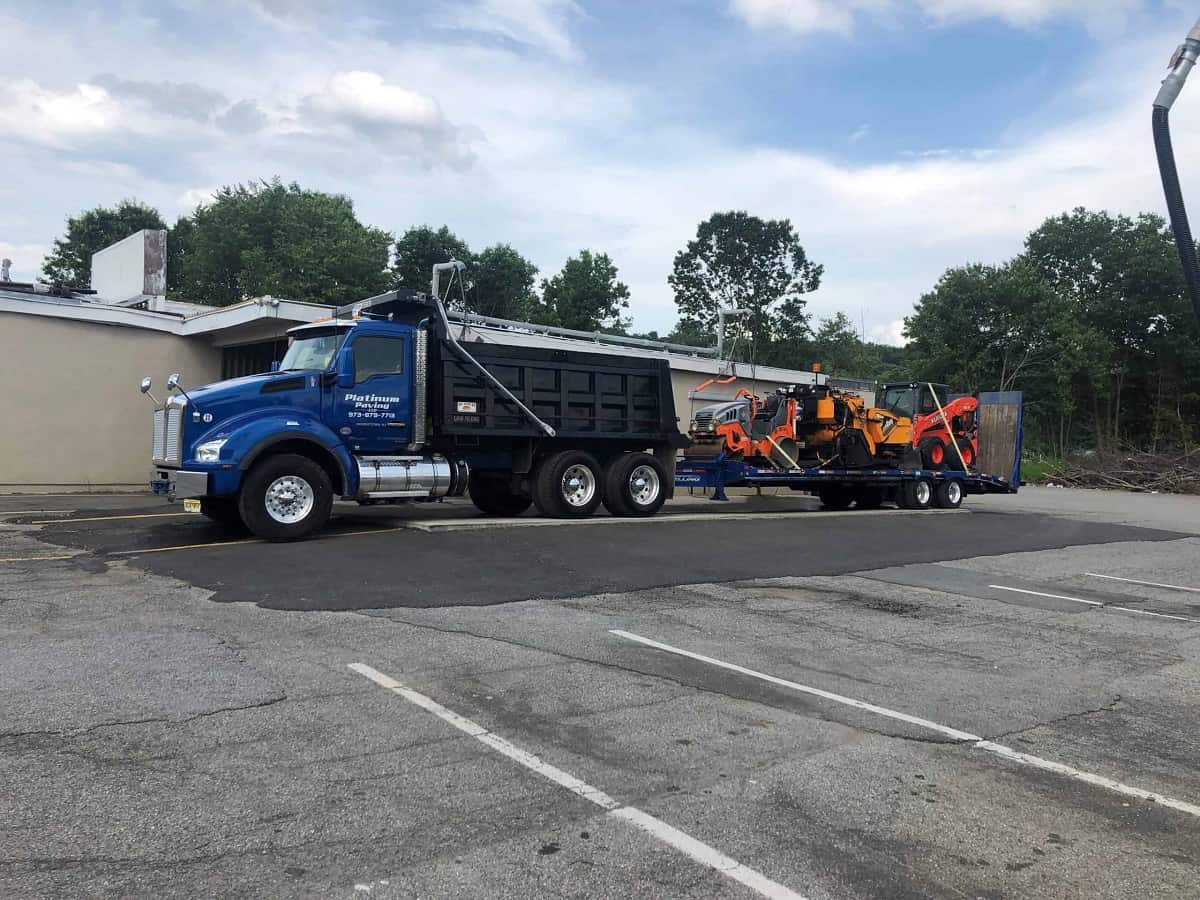
A blue dump truck is parked in a lot, towing a trailer that carries orange construction equipment. Trees and a building are visible in the background, and the parking lot is mostly empty.

Ready to get started?

Explore More Services

About Platinum Paving

Get a Free Consultation

Asphalt and Concrete Driveway Options

Materials That Handle New Jersey Weather

Asphalt driveways offer flexibility during freeze-thaw cycles and can be resurfaced when needed. They’re cost-effective, cure quickly, and handle heavy vehicles well. Asphalt works particularly well for longer driveways and areas with moderate slopes.

Concrete driveways provide a longer lifespan and more design options, including stamped patterns and color choices. They resist oil stains better and maintain their appearance with minimal maintenance. Concrete works well for shorter driveways and areas where appearance is a priority.

Both materials require proper installation techniques specific to New Jersey’s soil conditions and climate. The choice often comes down to your budget, aesthetic preferences, and how you use your driveway. We can help you understand which option makes the most sense for your specific situation.

A newly paved asphalt driveway leads to a gray house. Yellow caution tape blocks the entrance, and construction materials and a white pickup truck are on the sides. Trees and dirt surround the area.
Most residential driveway installations take 2-3 days from start to finish. Day one involves excavation and base preparation. Day two includes final grading and material installation. Weather can extend the timeline, and larger or more complex driveways may require additional time. You can typically park on asphalt within 24-48 hours, though it’s best to avoid heavy vehicles for the first week. Concrete requires 7 days before full use. We’ll give you specific timing based on your project and current weather conditions.
Asphalt costs less upfront and handles freeze-thaw cycles better, making it popular in New Jersey. It can be resurfaced when it shows wear, extending its life cost-effectively. Concrete costs more initially but lasts longer and offers more design options like stamped patterns or colors. Concrete resists oil stains better and maintains its appearance with less maintenance. Both materials work well here when installed properly. Your choice usually depends on budget, how long you plan to stay in the home, and whether appearance or cost is your priority.
Driveway costs depend on size, material choice, site conditions, and any special features you want. Asphalt typically runs less per square foot than concrete, but every project is different. Factors like drainage issues, excavation requirements, and permit needs affect the final price. The best approach is getting a detailed estimate based on your specific property. This lets you see exactly what’s included and compare options fairly. We provide clear, written estimates that break down materials, labor, and any additional work needed for your project.
Permit requirements depend on your specific project and local regulations. New driveway installations often require permits, especially if they involve changes to drainage or connect to public roads. Driveway expansions or modifications to existing driveways may also need approval. The permitting process typically involves submitting plans showing the proposed work and paying applicable fees. We can help you understand what permits your project needs and assist with the application process. It’s always better to check requirements upfront rather than deal with compliance issues later.
A properly installed asphalt driveway typically lasts 15-20 years with basic maintenance like occasional sealcoating. Concrete driveways often last 25-30 years or more. The actual lifespan depends on several factors: quality of installation, local climate, how much traffic it gets, and how well you maintain it. New Jersey’s freeze-thaw cycles are hard on pavement, so proper installation with adequate base preparation is crucial. Regular maintenance like crack sealing and sealcoating can extend asphalt life significantly. Heavy vehicles, poor drainage, or installation shortcuts will reduce lifespan considerably.
Asphalt driveways benefit from sealcoating every 2-3 years to protect against water penetration and UV damage. Small cracks should be sealed promptly to prevent water from getting underneath and causing bigger problems. Concrete driveways need less regular maintenance but should have cracks sealed when they appear. Both materials last longer with good drainage, so keep gutters and drainage systems working properly. Avoid using rock salt directly on concrete in winter, as it can cause surface damage. Regular cleaning and prompt attention to small issues will keep either material looking good and functioning properly for years.